Hepper is reader-supported. When you buy via links on our site, we may earn an affiliate commission at no cost to you. Learn more.
How Big Is a Cat Brain? 5 Vet-Approved Facts


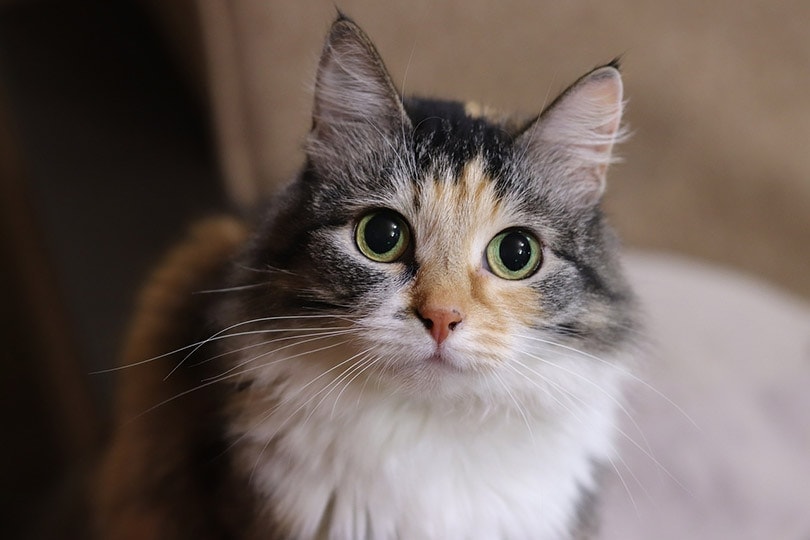
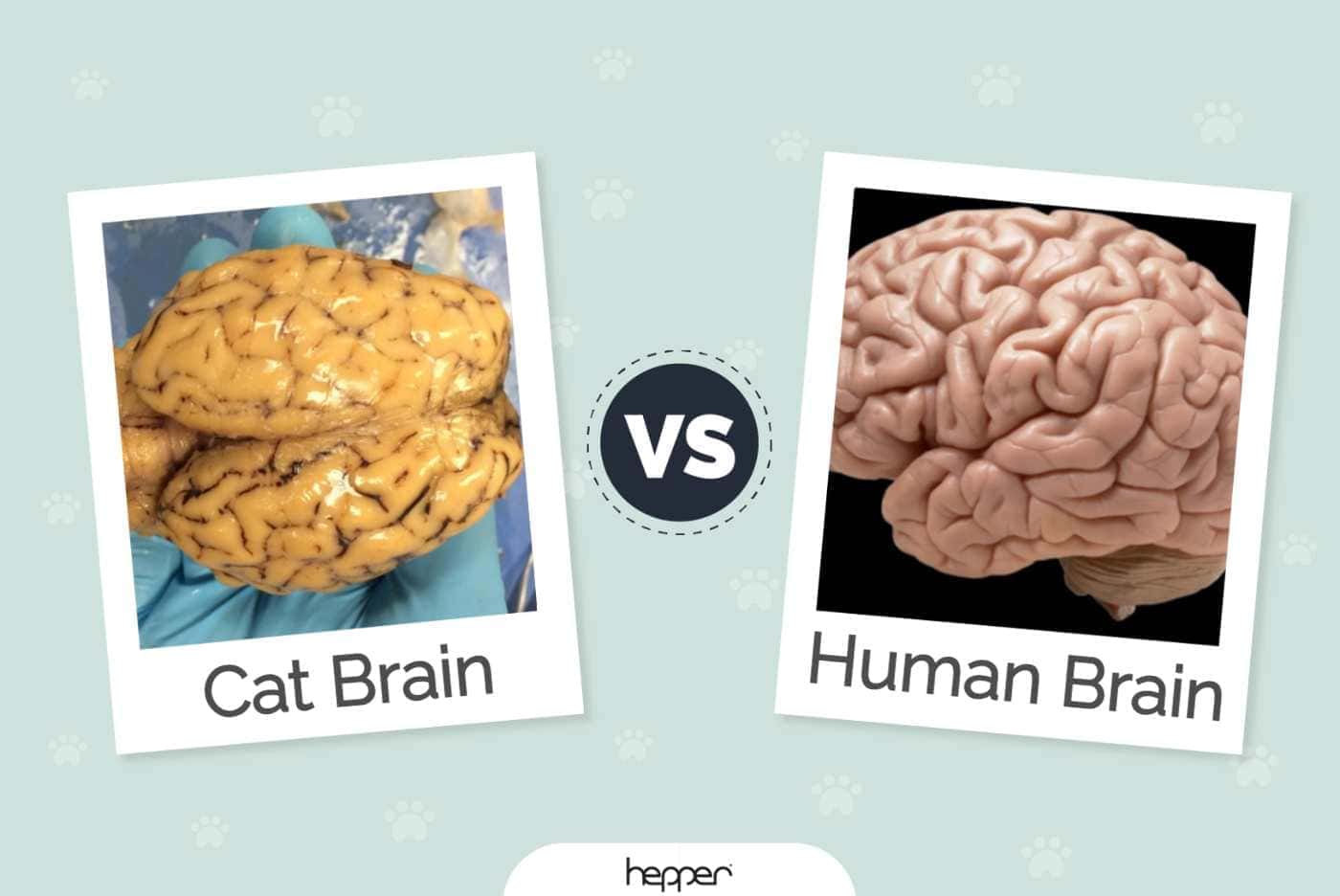
One might assume because cats are considered intelligent, quick, sharp, and smart that they must have a big brain or at least a decent-sized one. Surprisingly, a cat’s brain is relatively small when compared to other species. It is only around 5 centimeters (2 inches)—not much bigger than your pinky finger, weighing in at around an ounce or 25–30 grams. A cat’s brain accounts for just under 1% of its body mass, compared to about 2% in a human and about 1.2% in dogs, and contains around 300 million neurons 1.
Felines are fascinating creatures, displaying and acting with a lot of intelligence, and can even pick on emotions and emotional states from their owner, which figures, given a cat’s brain structure, are 90% similar to our human ones. While research into the cat’s brain is still fairly low, it is ongoing, with new information being discovered as time progresses. But what are some interesting facts we know about the feline brain already?

The 5 Cat Brain Facts
1. Cats Dream
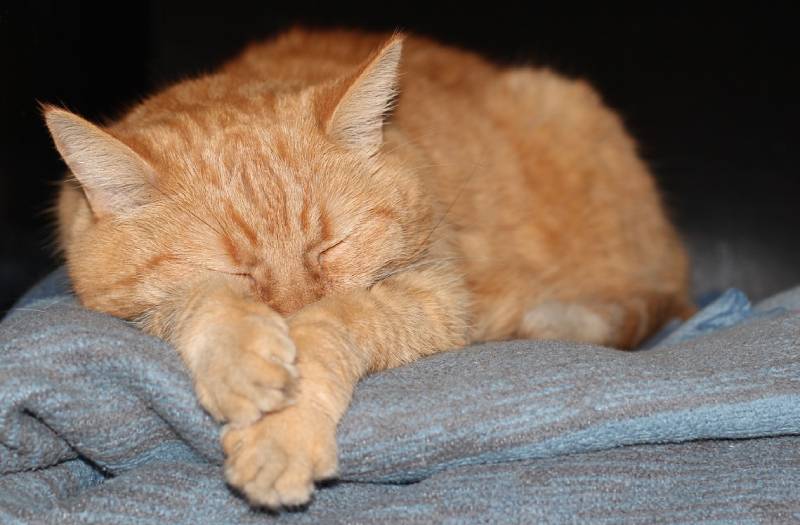
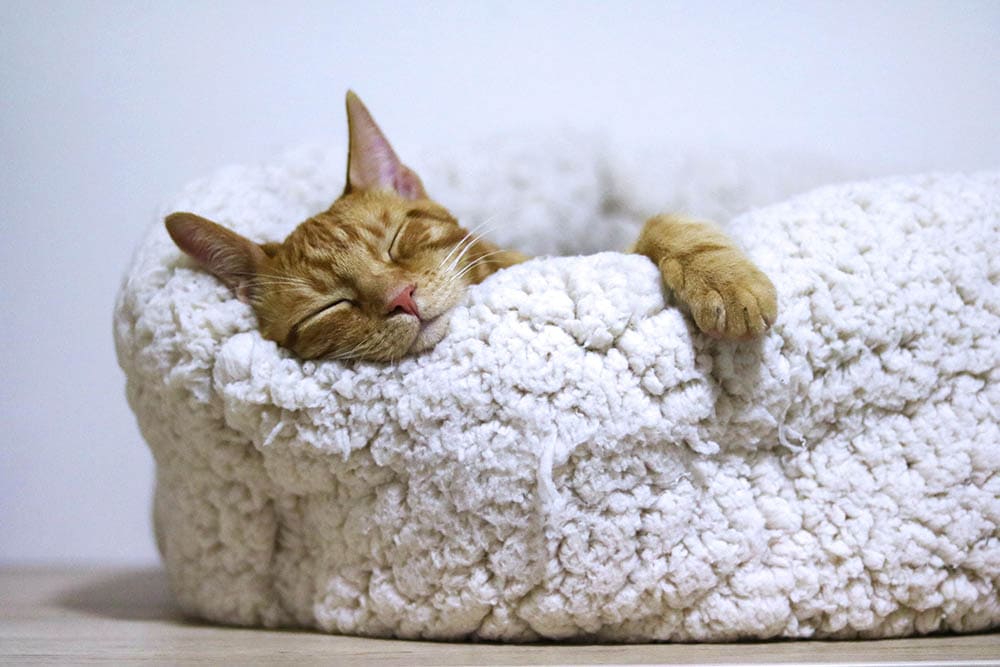
You may be surprised to read that when your cat is asleep and they become twitchy, wiggle their feet, swish their tail, or move their lips, they are more than likely dreaming, and it is not merely a myth. Like humans, cats enter the stages of both rapid eye movement (REM sleep) and non-rapid eye movement sleep 2. It is during the rapid eye movement portion of their sleep that it is believed your feline embarks on their dreams in the same way humans do, although we do not yet know the quality of the dreams cats have 3.
2. Their Long-Term Memory May Be Better Than Their Short-Term Memory
Memory is one function and ability of the cerebral cortex part of the brain. It stores information (from the past mostly) and is used as a recall center to judge a current event or situation, solve problems, or learn new skills. Memory is how a kitten learns actions, habits, and behaviors from their mother and environment.
Cats, the same as humans, also possess long- and short-term memory, but in cats, long-term memory is thought to be more refined and superior than their short-term memory.
Contrary to popular belief a cat can be trained, either by using positive reward training much like we do in dogs or by simply observing their human owner repeatedly undertaking a task, like opening a cupboard door. Don’t be surprised if they copy you one day! Factors such as diet, human interaction, age, and intelligence all affect their memory ability.
3. They Can Recognize Voices
Although not researched widely and in-depth, in 2013 a study found that cats can indeed recognize the voice of their owners, indicating that cats can use vocal recognition alone in recognizing humans 4. They demonstrate recognition of the voice by orientation behavior (ear and head movement), not behavior (tail movement and vocalization).
4. They Have Sensorimotor Intelligence
Experiments have shown that cats do not fall for objects or items disappearing. Known as object permanence, it refers to an object, a toy for example, that has been placed out of sight and no longer visible. As adult humans, we know the object is still there even though we can’t see it, but many animals and even young babies don’t know this or possess this perception, and they believe the item has literally gone.
Cats, however, are not fooled and don't believe this and know very well the prize or object of interest and intrigue is still there! They will often sit waiting for it to return or poke around looking for it. This is an especially useful skill in hunting and catching prey, and they can also use it for determining hidden items in boxes or containers
5. There Are Age-Related Neurological Disorders
Cats can suffer from age related cognitive dysfunction. Signs of this condition include disorientation, excessive sleeping, changes in their sleep-wake pattern, toileting outside the litter tray and loud vocalizing. Many of the signs resemble those seen in humans with dementia or Alzheimer’s disease. It has been noted by animal behaviorists and specialists that cat owners themselves play a role in dramatically delaying senile behavior and disabilities in older cats.
Final Thoughts
The brain and its functions are a complex and interesting part of the body, capable of far more than we may ever understand. There are numerous abilities of the brain, enough to write books on, but it is interesting to note how the cat’s brain is designed and functions exactly how felines need it to in order to survive and enjoy their lives.
While more information will surely unravel over the years, it’s certain from these five facts alone that cats are exceptionally clever creatures, and it is an intelligence to be respected not underestimated.
See also: How Smart Are Cats? Our Vet Answers
Sources
Featured Image Credit: Svetlbel, Pixabay
Get Hepper In Your Inbox


Pet care tips from our vets and experts, straight to your inbox.
You may opt-out at any time. View our Privacy Policy for more information.
Annaliese began her career as a veterinary nurse in Edinburgh, later advancing her qualifications with a diploma in advanced veterinary nursing in surgery from London. Her work in small and mixed veterinary practices led her to become a head nurse, where she trained other veterinary nurses, managed the nursing department, conducted nurse clinics, and developed new patient care protocols.
Throughout her career, Annaliese has cared for thousands of patients and their owners, setting higher standards in nursing regimes with a focus on surgery and anesthesia. She co-authored multiple veterinary nursing textbooks and contributed to various mainstream publications in the UK and USA. After more than twenty years in the veterinary and pet care professions, she retired from clinical practice to pursue full-time writing. Having cared for thousands of patients and owners, Annaliese specialized in surgery and anesthesia. She was asked to co-author several veterinary nursing textbooks and contributed to a number of other publications in the UK and USA. After more than two decades in the veterinary and pet care industries, she retired her scrub suit and now works as a full-time writer.
Annaliese Morgan has been a dedicated veterinary nurse for over two decades, having completed a diploma in advanced veterinary nursing in surgery from London and qualifying from Edinburgh. Her professional experience includes managing a nursing department, training other veterinary nurses, providing patient care, and running nurse clinics in both small and mixed veterinary practices.
As an expert in surgery and anesthesia, Annaliese has treated thousands of patients and owners. In addition to being asked to co-author multiple veterinary nursing textbooks, she has written for a variety of publications in the UK and USA. After a long and successful career in the veterinary and pet care professions, Annaliese now dedicates her time to writing full-time. You can find out more about her work at www.annaliesemorgan.com.
Join the conversation
Ask a question, share your story, or send private feedback.