Hepper is reader-supported. When you buy via links on our site, we may earn an affiliate commission at no cost to you. Learn more.
How Do Cat Eyes Work? Vet-Reviewed Feline Physiology


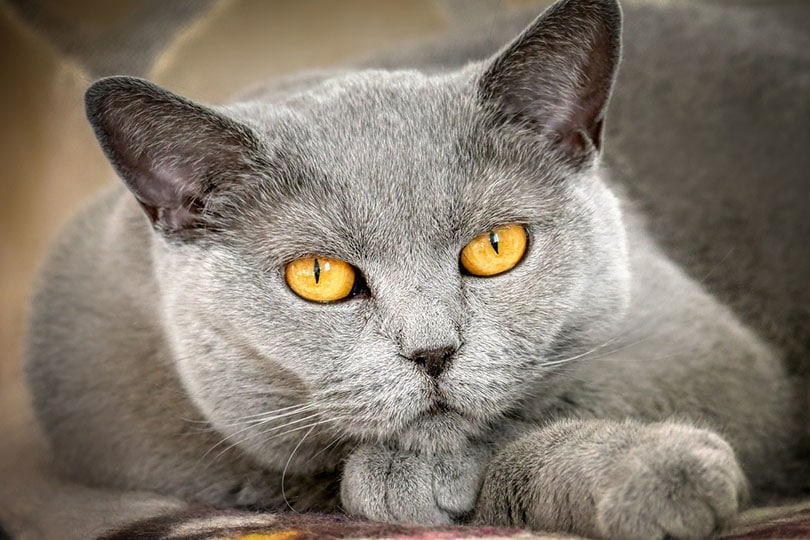
Have you ever watched your cat chasing after a bug or climbing a cat tree and wondered how your kitty sees the world? Do our favorite felines see shapes and colors the same we do? Can they be colorblind? How do they seem to see so well at night? And how do they manage to chase the smallest flying insects with no trouble?
If you've ever stopped to ponder how a cat's eyes work, keep reading! Today we’re looking at the physiology of vision in cats, and we have plenty of answers for you.

Structure of the Feline Eye
While we’ll never be able to truly know what our cats see when they look at the world, we can figure out a general idea of how things look to them by looking at the structure of the feline eye.
Sclera and iris
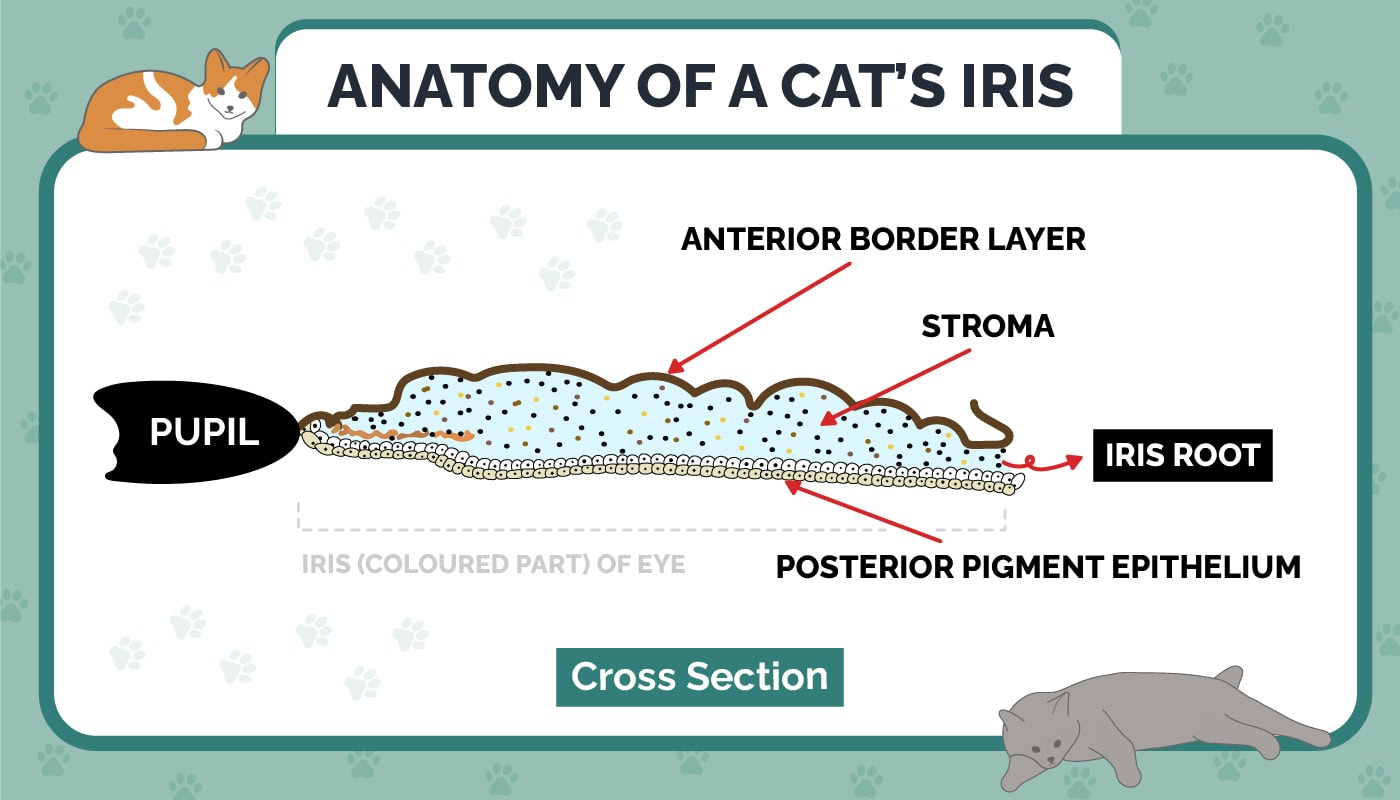
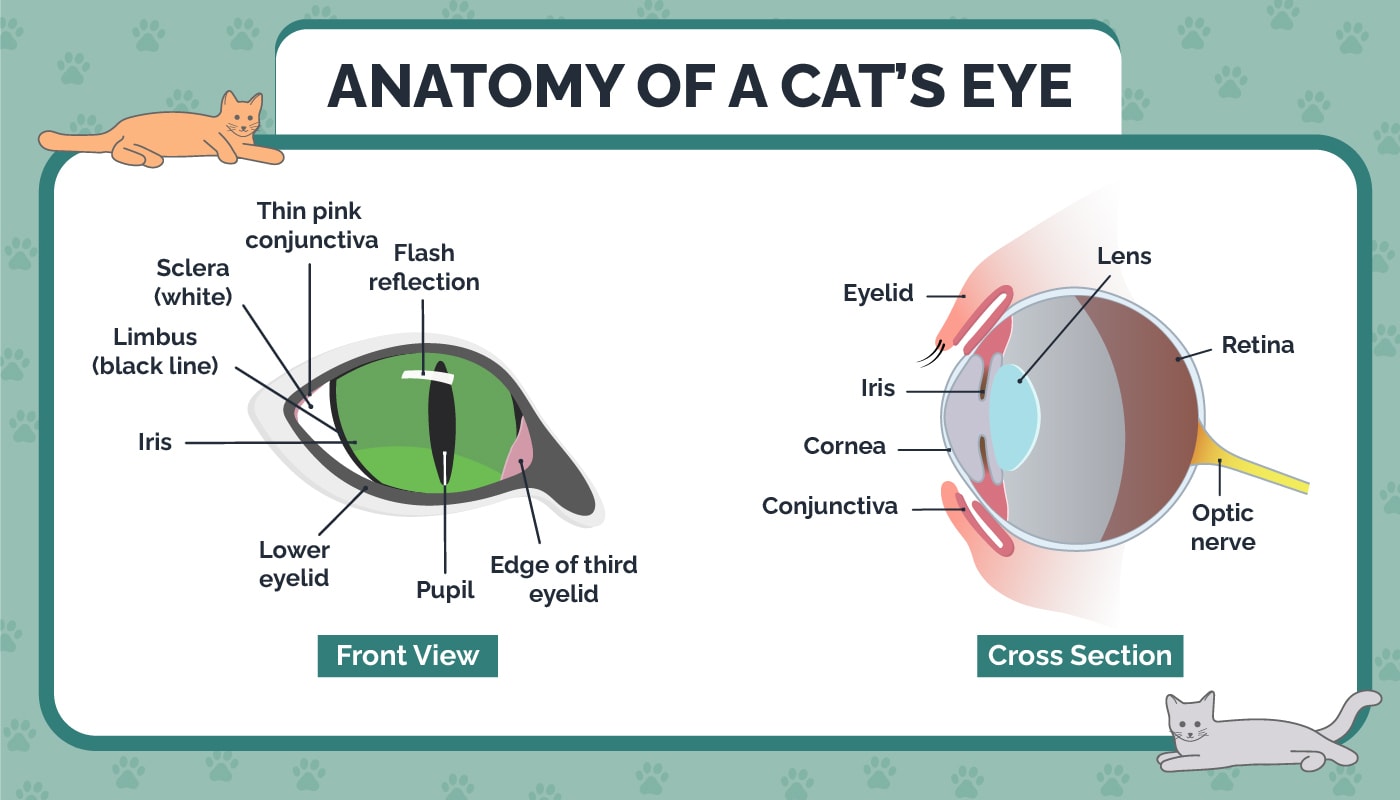
As far as structure goes, the eye of a cat is very similar to ours. The external structure, also called fibrous tunic, is composed of the sclera and the cornea. The “sclera” is the outer layer of the eye, also known as the white of the eye, and it is covered by a thin membrane called conjunctiva. Inside the eye, again just like us, cats also have an iris, which is the colored part of the eye that is responsible for controlling the amount of light that enters the eye through a “hole” called the pupil.
Lens
That isn’t all that’s similar, though! Like us, the feline eye contains a lens; this lens allows cats (and us) to focus more on objects that are at a distance. This process is called “accommodation.” In humans, this is achieved through slight changes in the lens curvature; our lenses become flatter or rounder when the object is far away or close, respectively. On the other hand, cats’ and other carnivores’ lenses achieve accommodation through subtle movement of the lens inside the eye; the lens moves forwards and backwards to focus on nearby and distant objects. The changes that occur in the cat’s lens are more limited than ours, giving a lower accommodative power.
Retina (rods and cones)
Also, like humans, the eye of a cat has a retina, and this is where some of the most significant differences between the human and feline eye lie. Why is that? The retina contains light-sensitive cells called photoreceptors—you’re likely familiar with the main types, which are two: rods and cones. Cones are responsible for color vision. Both cats and humans have three cone populations, but we believe that cats’ color vision is not as rich as ours, likely because the number of cones in their retina is far lower than ours. However, our kitties have several more rods than we do. Rods are very sensitive to low light levels, giving them better night vision! That night vision also gets an important boost from a structure known as the tapetum lucidum. This part of the eye is reflective and magnifies how much light is coming in, which equals a greater ability to see at night.
Cornea
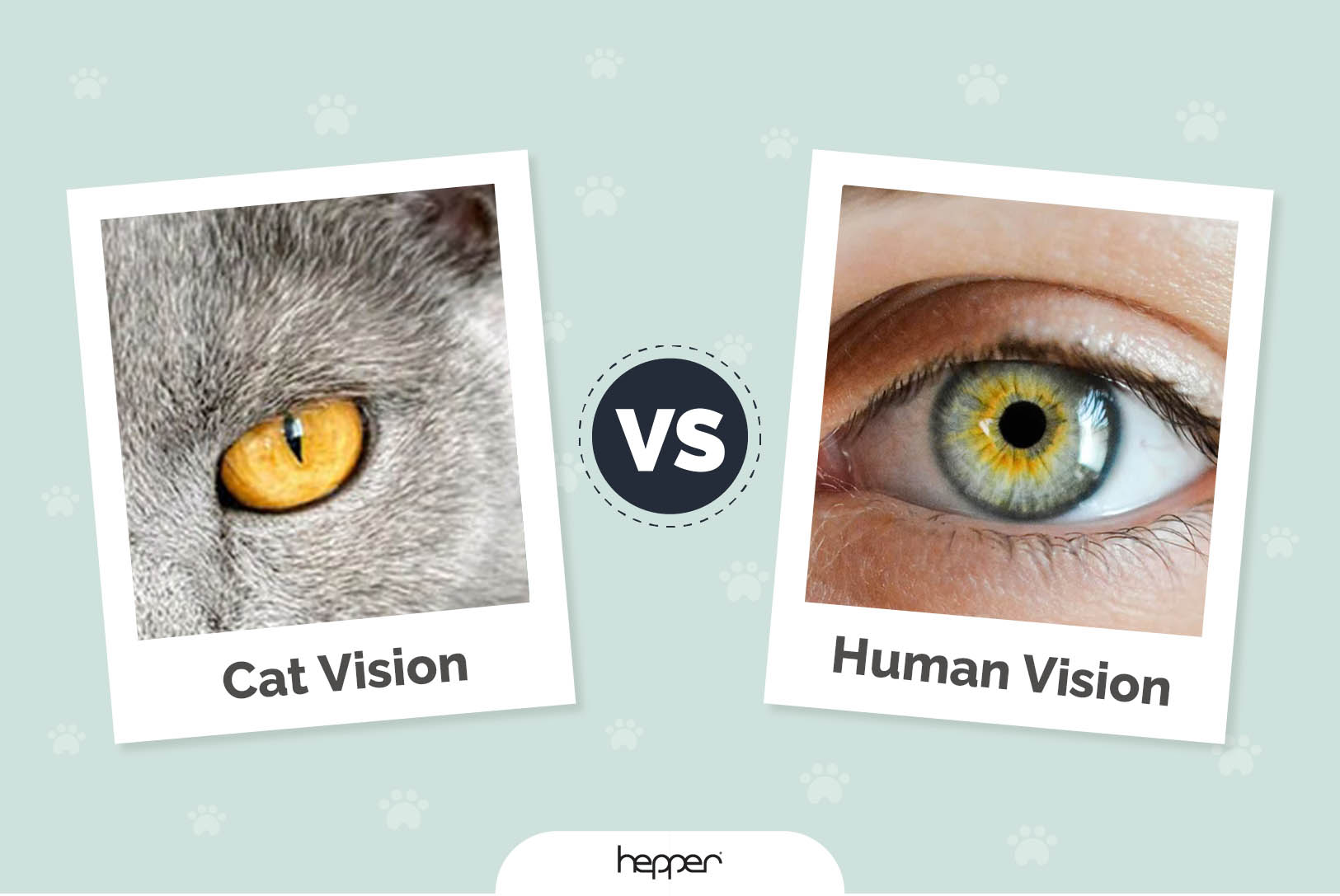
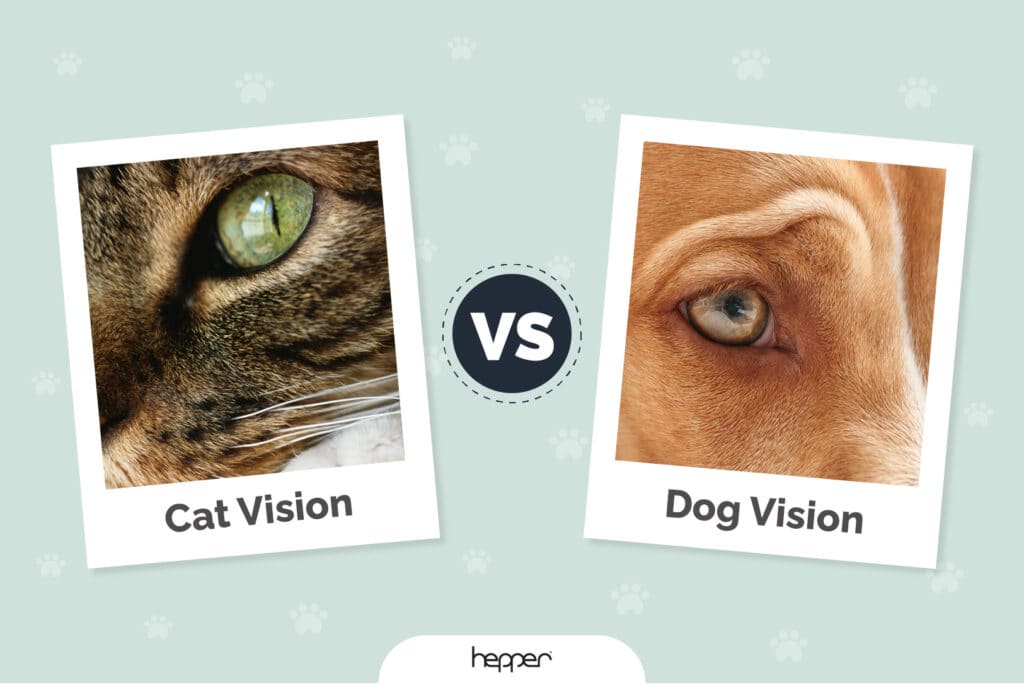
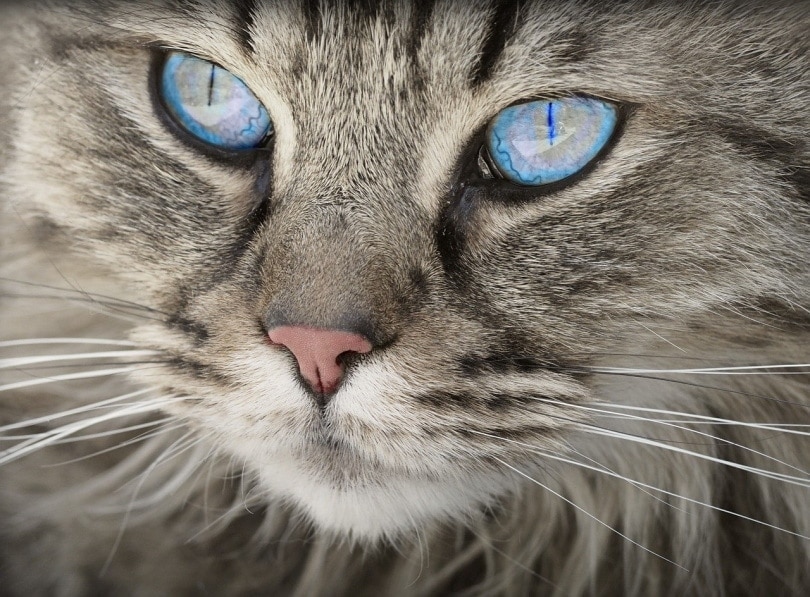
Finally, the cat eye has a cornea like ours, which is the part of the eye that lets light in, then focuses it to the retina in the back of the eye. However, the feline cornea is much larger than ours, so more light is allowed in. Then there’s the pupil of the cat eye, which, unlike ours, is vertical and in the shape of a slit. The pupil lets more or less light into the eye by changing size, and the slit-shaped pupil on felines allows greater control over how much light gets in.


Feline Vision
Now that you know all about the structure of a cat’s eye, you’re probably asking yourself how all that relates to a cat’s vision. How do those differences between a cat eye and a human eye translate into what our kitties see?
Visual Fields
What is a visual field? A visual field references the area one can see when the eyes are focused on a single point (peripheral vision). Peripheral vision covers what can be seen above, below, to the side, and straight ahead to where one is looking. And cats have a definite advantage when it comes to peripheral vision because theirs is wider than ours at 200 degrees.
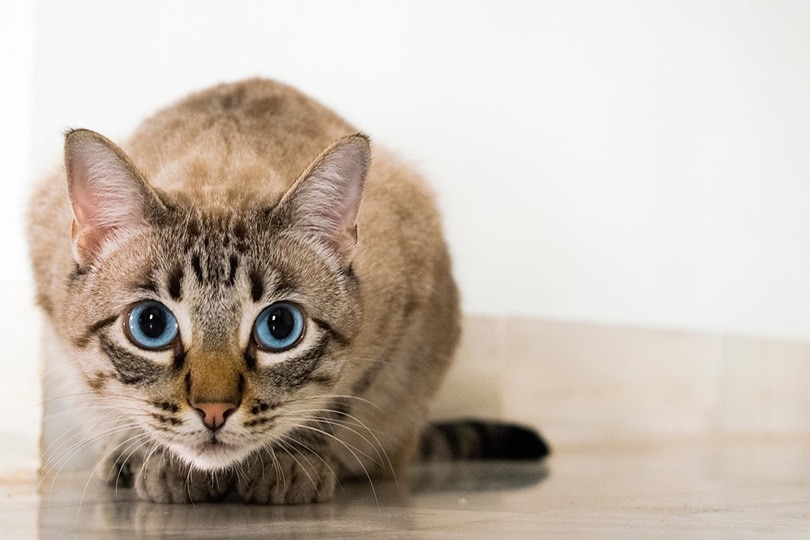
However, cats are predators, so they have a lesser visual field than prey animals. How so? Felines have eyes that face the front, whereas prey animals have lateral orbits. Front-facing eyes give our cats a large frontal binocular vision field, vital for gauging depth perception. And having vertical pupils also seems to aid in gauging depth perception, as these help with the side-to-side displacement the eye uses in stereopsis.
Though our kitties do well with depth perception (which is important so they can successfully leap at prey), they can’t see behind them, leaving them with a huge blind spot. Prey animals, though, have a smaller frontal binocular visual field, but because they have two lateral monocular vision fields that are rather large, they can see nearly 360 degrees around them. (Which is helpful when a predator might jump out at any moment!)

Visual Acuity
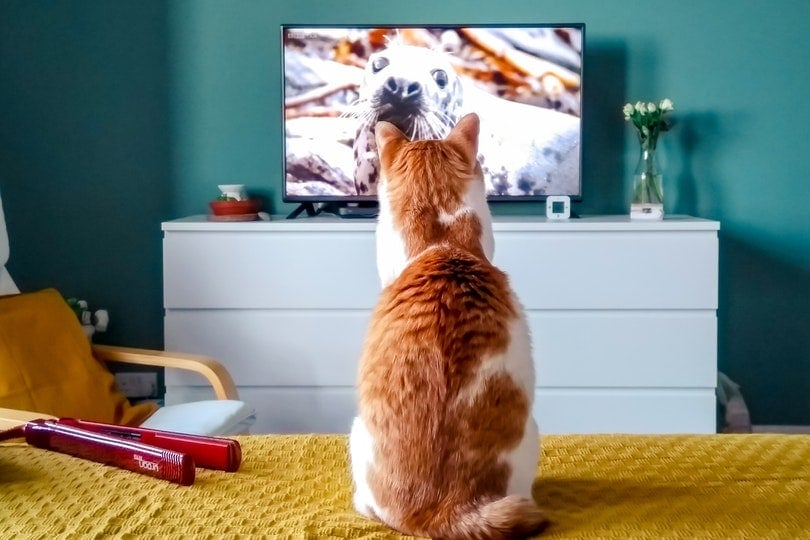
You’ve heard the phrase “20/20 vision” before, right? Well, that’s referencing visual acuity or how clearly (or unclearly) one can see. A cat’s visual acuity can be approximately 20/150. What does that mean, exactly? Essentially, if it’s something a person with perfect vision can see from 150 feet away, a cat would need to be 20 feet away to see it clearly. That means the kitty’s vision is blurrier for objects close to their face than your own is.
Why is it blurrier? Most likely, the reason is that felines can’t change the shape of their lenses as we do to focus on a nearby object. This nearsightedness could be why your cat sometimes reaches out with its paw to touch your face; perhaps the cat is ensuring you’re still there. It’s also why our cats rely on their ears, noses, and whiskers to figure out what’s right there by them. A feline’s whiskers help them feel what’s around by transmitting external information to sensory cells. And because cats have an extraordinary sense of smell, they can pick up more on what’s around them.
Color Vision
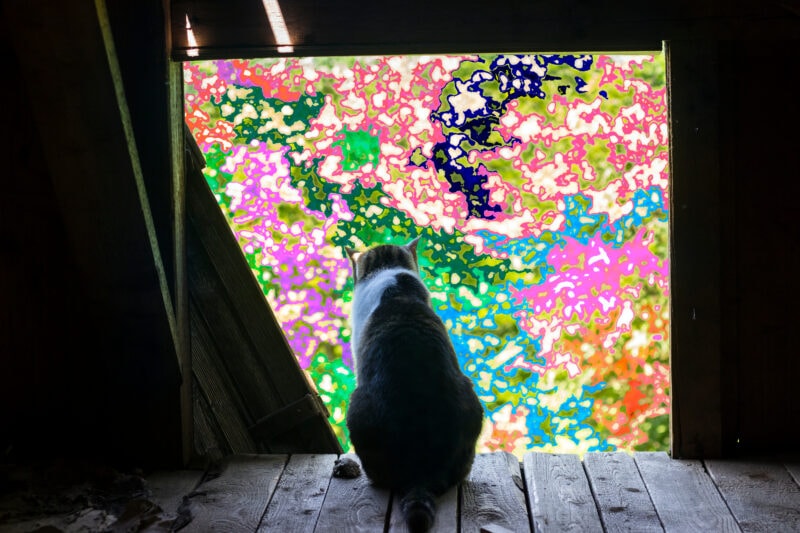
Many people think that felines can’t see color at all but see in shades of grey instead. But that’s incorrect. Felines are trichromats, meaning their eyes contain three cone populations that should allow them to see the colors red, blue, and green. That doesn’t mean they see colors as we do, though. It's thought that felines see colors the same way a person who is colorblind would. What does that mean exactly? Most likely, our feline friends can see greens and blues with no trouble, but colors in the red range might appear more like green or blue than red. Keep that in mind next time you’re getting toys for your kitty; they’ll likely enjoy green and blue toys more than other colors!
Night Vision
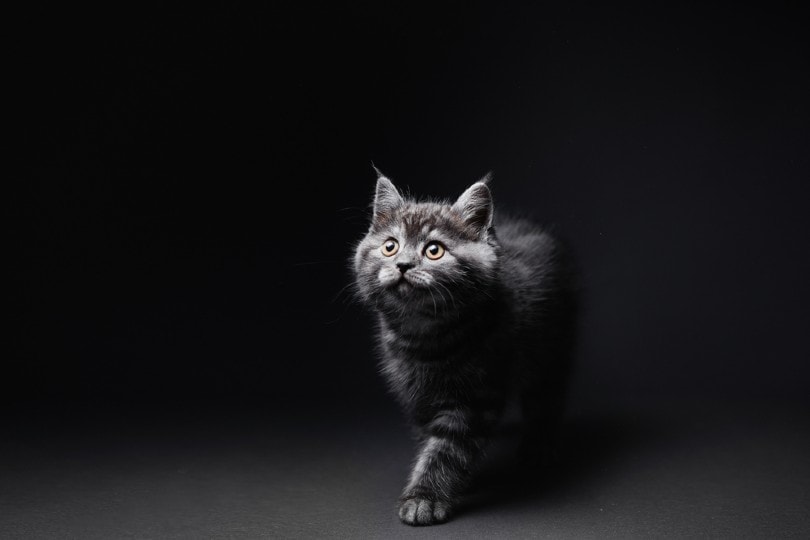
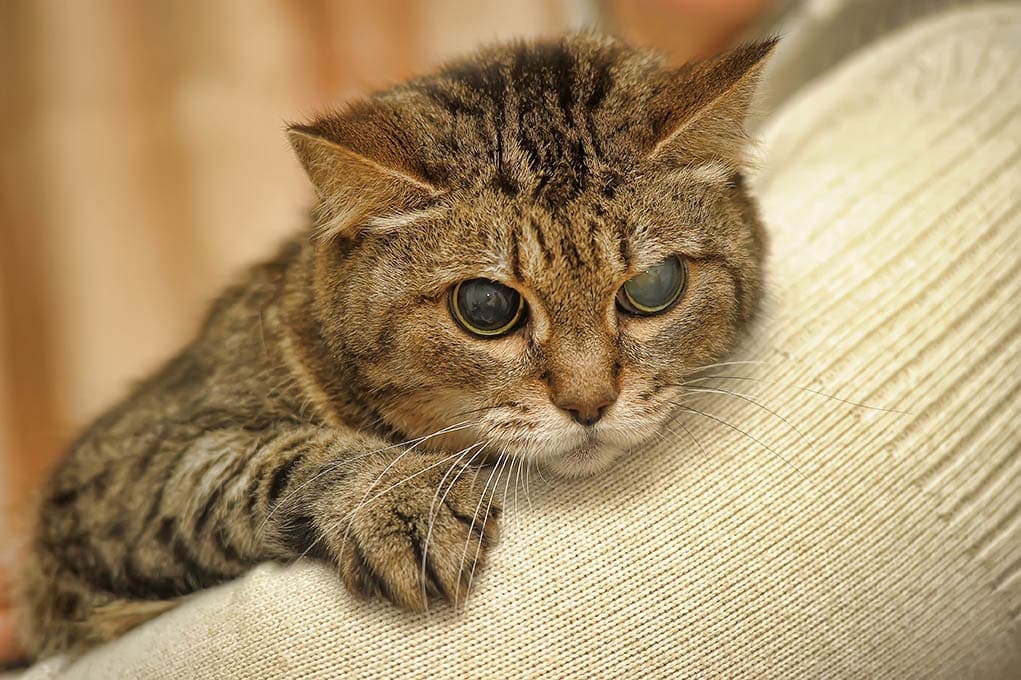
Felines clearly have much better night vision than we do, but why? The feline eye contains many more rods than a human's, and rods are what help kitties see better in the dark and in low light. The eye of a cat has so many rods it's thought that cats can see in roughly 1/6 of the light amount we would need to be able to see.
The tapetum, located behind the retina, also aids with night vision. This structure acts as a mirror and reflects the light back to the retina to stimulate rods and cones twice. With this reflection, your cat is better able to pick up on the least amount of light available. This structure is why your cat’s eyes can seem to shine at night.
Motion Detection
If you’ve ever wondered how your cat keeps track of a mouse running for its life or an insect flying around, then we have the answer. Those rods in the eyes that help our kitties see at night have a high sensitivity and that sensitivity gives our pets a greater ability for motion detection. These rods make your cat particularly sensitive to subtle movement and also allow your pet a higher “flicker fusion rate”. What does that mean exactly? The flicker fusion rate is the number of identical images shown per second that are perceived not as continuous but as separate still images. A human’s flicker fusion rate is about 50 images per second, while a feline’s is 70.
Blinking
Do cats blink? It might not seem like they do, but that’s because when your kitty blinks with its upper and lower eyelids, it looks more like a squint. Felines also don’t have to blink as often as we do. While we blink a lot to help moisturize the eye, our cats have a third eyelid (the nictitating membrane) that moves diagonally across the eye and helps to keep the surface of the eye lubricated and clean. This slower blink rate allows your pet to focus on things, such as prey, for longer periods. And focusing for longer on something means the kitty doesn’t make any motion that would scare away whatever it’s looking at, increasing the chances of hunting success.
Final Thoughts
Felines and humans view the world in similar ways with a few minor differences because the structure of our eyes is quite alike. While cats have less color vision than we do, they definitely win out when it comes to night vision, peripheral vision, and the ability to detect motion. However, our kitties are much more near-sighted than we are, so they have more trouble seeing objects right in front of them. Luckily, their whiskers and sense of hearing and smell take up the slack here.
Now, next time you see your cat tracking something throughout the house, you’ll know exactly how they’re able to do so!
Sources
Featured Image Credit: Albrecht Fietz , Pixabay
Get Hepper In Your Inbox


Pet care tips from our vets and experts, straight to your inbox.
You may opt-out at any time. View our Privacy Policy for more information.
Misty Layne lives out in the woods in small-town Alabama with her two Siamese—Serafina and Jasper. She also has an array of stray cats, raccoons, and possums who like to call her front porch home. When she’s not writing about animals, you’ll find her writing poetry, stories, and film reviews (the animals are, by far, her favorite writing topic, though!). In her free time, Misty enjoys chilling with her cats, playing piano, watching indie and foreign films, photographing abandoned places, and catching up on her never-ending TBR list.
Join the conversation
Ask a question, share your story, or send private feedback.