Hepper is reader-supported. When you buy via links on our site, we may earn an affiliate commission at no cost to you. Learn more.
How Far Can Cats See? Vet-Reviewed Feline Vision Facts


In this article
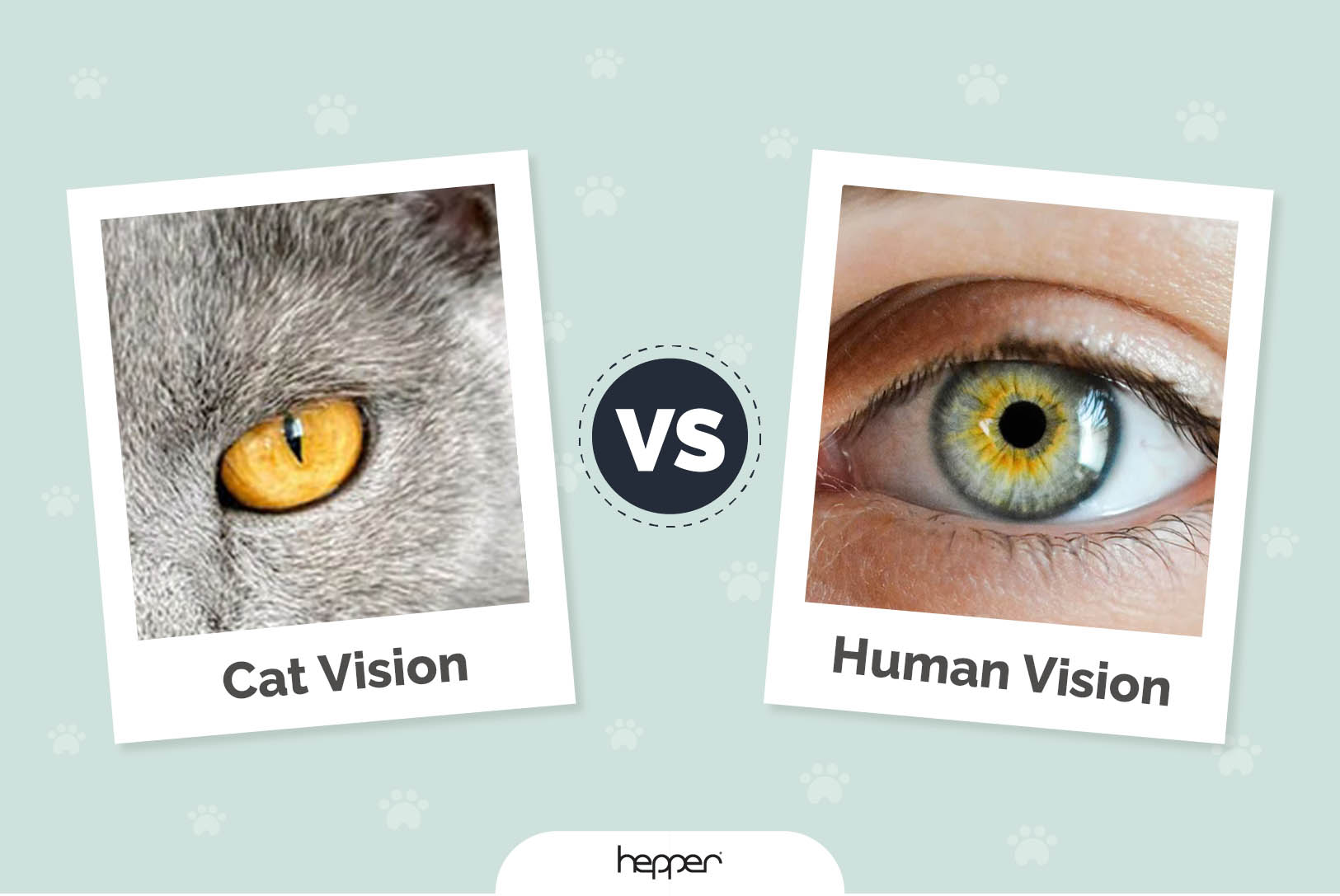
As notorious hunters, cats are expected to have perfect vision. Their ability to spot mice scurrying around is impressive, as is their night vision. However, it can be surprising to know that cats’ visual acuity is not as sharp as ours. Cats have to be more than seven times closer to an object to see it as sharply as we do. In other words, what a cat sees being 20 feet (6 meters) away equals what we normally see being 150 feet (45 meters) away.
While we’ve all heard speculation about how well dogs can see, the same can’t be said about felines. We might adore them to bits, but unfortunately, they seem to be less worthy of study than canines.
To make up for the lapse and answer a few questions, we put together this guide.

Why Can't Cats See Far Away?
While most humans can see clearly for 100–200 feet, to our cats, the world that far away just looks blurry. It's the downside of having excellent night vision.
Their near-sightedness is caused by the anatomy of their eyes. While they’re perfect for hunting in hours of low light, they’re not great at focusing on objects too close or too far away. For objects up close, you’ll find that your cat will use their whiskers to “see” clearly.
Interestingly, this near-sightedness differs slightly between indoor and outdoor cats. While an outdoor feline might be better with close-up objects, your house cat is better able to see things farther away.
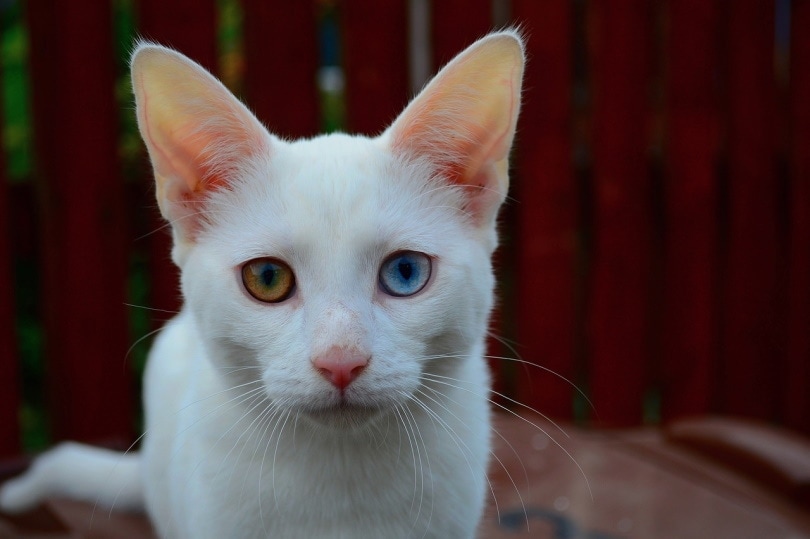
How Do Cats See the World?
The variations in human eyes and those of our cats are why we each see the world in different ways.
Distances
Knowing that cats are considered nearsighted, you’re probably wondering how they can navigate the world and see things at a distance. If you have an outdoor cat that runs to greet you from the end of the street as you come home from walking the dog, this can be even more confusing! Since they can’t pick out details far away, it seems unlikely that they’d recognize us at all.
As hunters, cats rely more on their other senses, like their senses of smell and hearing. Their determined patience when it comes to waiting out prey helps too. When it comes to running to join you at the end of the road, those senses are what come into play more than their sight.
Your cat is familiar with your scent and the sound of your voice. Both of these things tell them who just rounded the corner.

Color and Night Vision
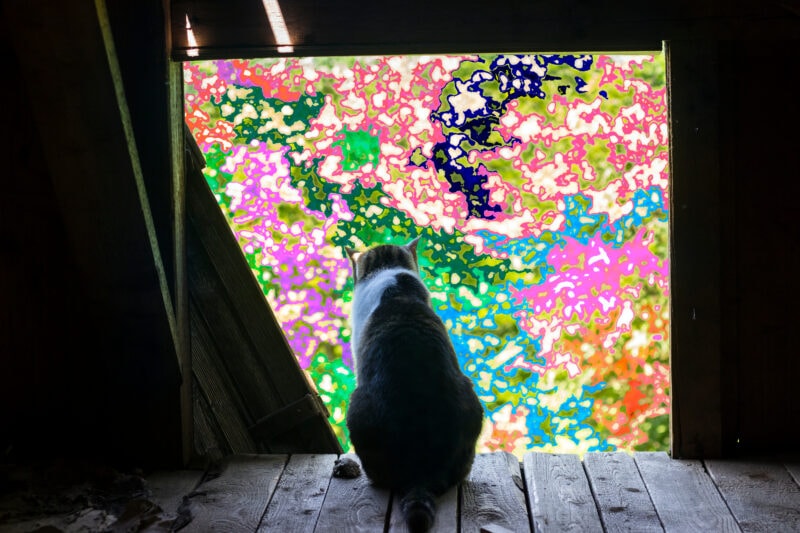
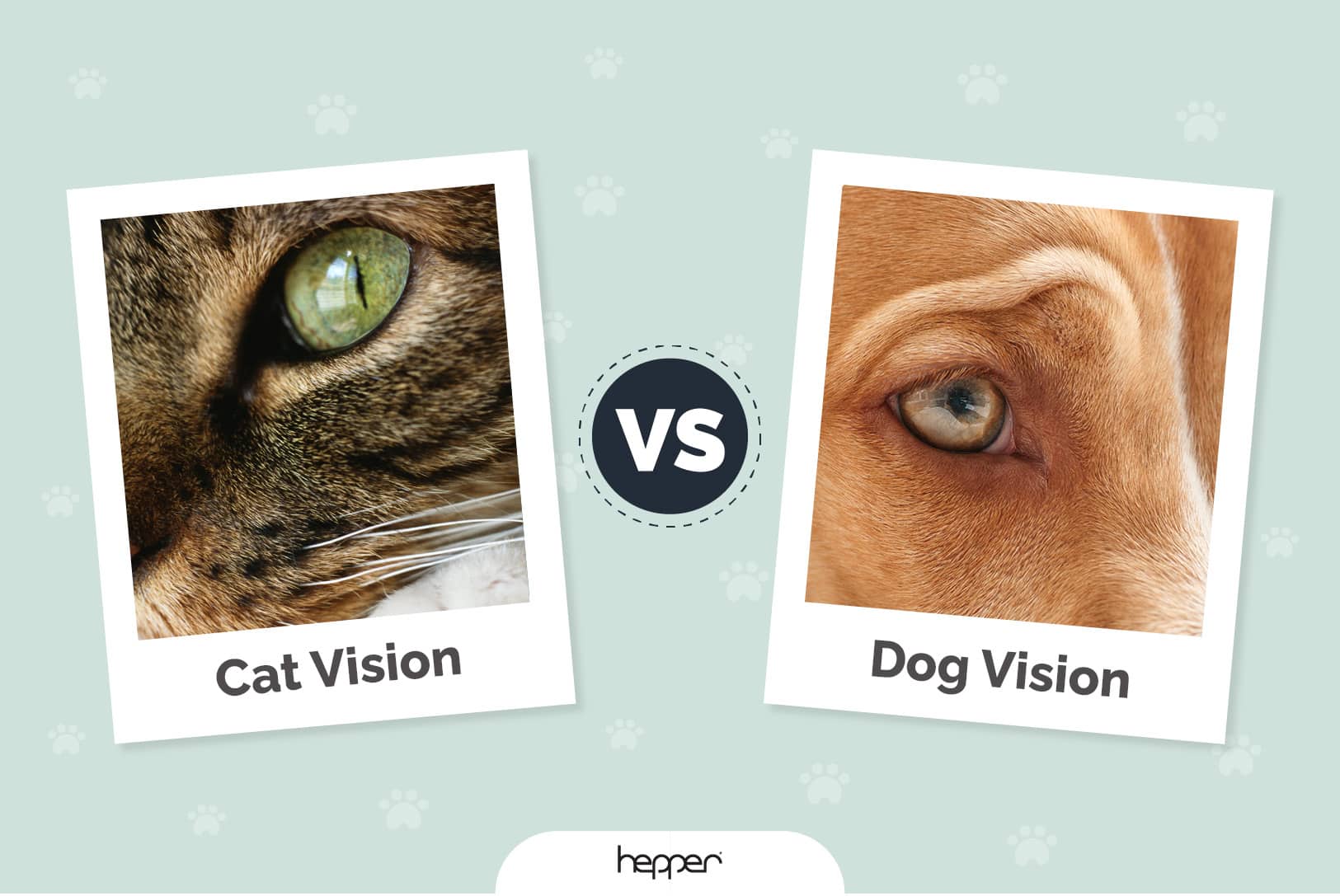
Cats are similar to dogs in their ability to see colors. Cats, dogs, and humans have two types of photoreceptors (light-sensitive cells) in the retina: cones and rods. The type, concentration, and distribution of these cells is what determines how an animal can see during day and night and how sharp their sight is.
Cones are responsible for color vision and visual acuity and work best in bright light. Rods, on the other hand, are responsible for vision in low light conditions and motion detection. Both cats and dogs have more rods than cones, and this is why both species have limited color vision, lower visual acuity, and a better ability to see at night.
Dogs have two types of cone photoreceptors, and cats have been found to have three types; however, their color vision is considered to be similar and generally not as rich as ours. One should consider that the number of cone cells is lower than rods, which contributes to the fact that cats have enhanced night vision and poorer color vision. The rods in their eyes enable cats to thrive during the times that they're most active. Since they're most active at dusk and dawn, the ability to draw in more light to see is beneficial.
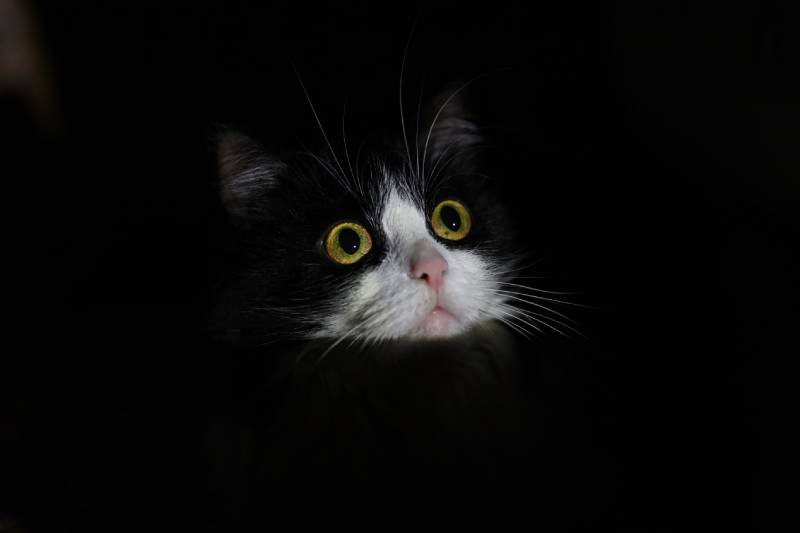
Their nightly escapades are also supported by a special structure in their eyes. They have mirror-like cells—in a layer called the tapetum lucidum—behind their retina, which helps reflect light to the photoreceptors twice. It’s the tapetum that makes cats’ eyes glow when light hits them.
Motion
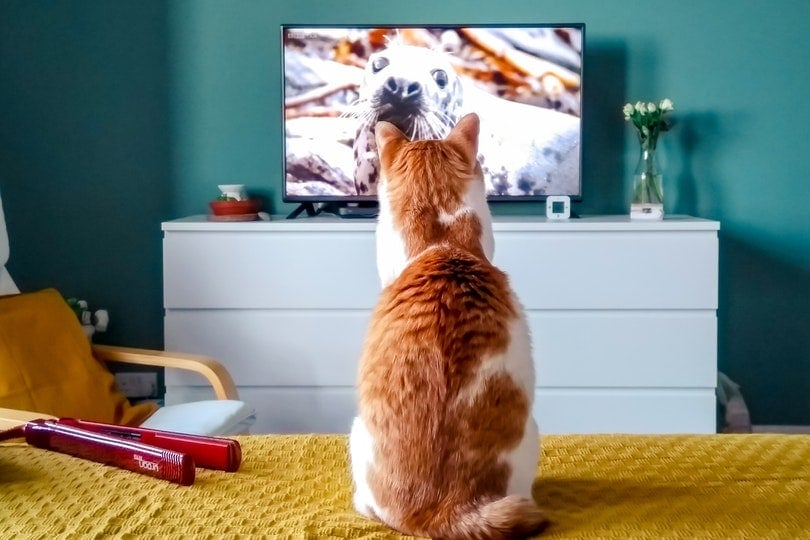
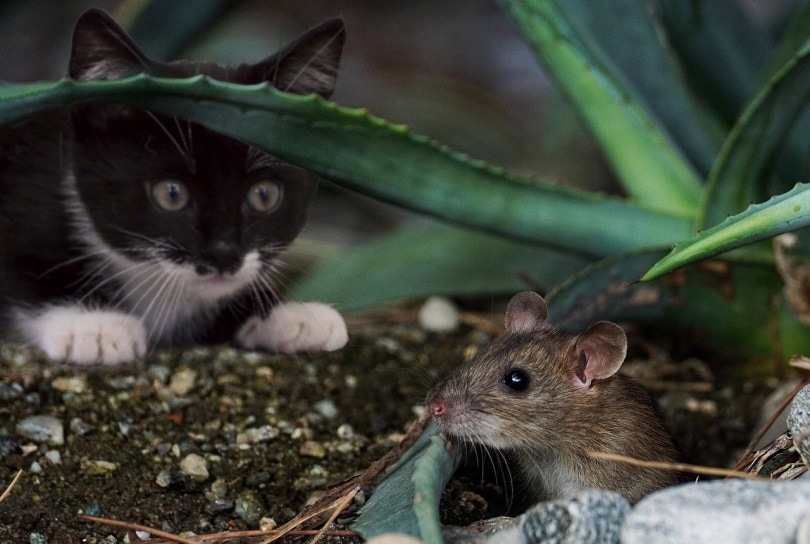
The fact that cats’ retinas have a much higher concentration of rods than cones and that cats have five times more rods than humans in the retinal periphery means that cats find it easier to see fast-moving objects. While they can struggle to notice things moving slowly, quick movements are more easily picked up. A dragonfly or a mouse hiding in your kitchen are all prime targets.
Your cat’s ability to notice motion is why their playfulness comes out more when they’re faced with something that moves, whether that’s your toes or a toy.

Visual Field
Cats might not rely solely on their eyesight when it comes to catching mice, but they do have an extra edge when it comes to seeing. Despite certain limitations when it comes to sight, their frontal orbits give cats a 200° total visual field, including a 140° frontal binocular field and two lateral monocular fields of 30° each.
We only have a 180° view, so you can guess how much this extra sight line helps when it comes to catching prey.
Final Thoughts
All predators have their weaknesses. For cats, it’s their ability to see over long distances. Unlike humans, cats need to be 20 feet (6 meters) away to see an object as sharply as we do being 150 feet (45 meters) away. In addition to this, they’re not great at focusing on objects too close in front of them, but they rely on their sense of smell and whiskers to compensate for this.
Their limited visual acuity doesn't stop them from excelling at hunting prey, though. With their excellent night vision, enhanced ability to detect movement, superior senses of smell and hearing, and boundless patience, cats are among the best hunters in the world.
See Also:
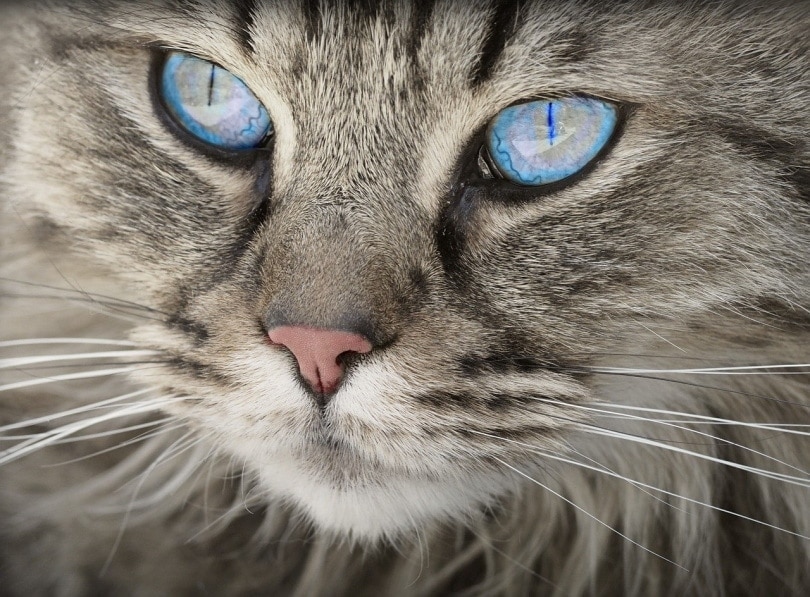
Featured Image Credit: cocoparisienne, Pixabay
Get Hepper In Your Inbox


Pet care tips from our vets and experts, straight to your inbox.
You may opt-out at any time. View our Privacy Policy for more information.
Nicole is a lover of animals of all sizes but is especially fascinated with the feline variety. She’s the proud mom of Baby, a Burmese, and works every day so he can relax in the sunshine or by the fire. She’s always had a cat in her home and has spent countless days with others, observing behaviors and softening up even the grouchiest of the lot. Nicole wants to share her kitty expertise with you so you and your cat can live happy, healthy, and care-free.
Join the conversation
Ask a question, share your story, or send private feedback.