Hepper is reader-supported. When you buy via links on our site, we may earn an affiliate commission at no cost to you. Learn more.
How Long Does It Take for Cats to Give Birth? Vet-Approved Facts & Stages



In this article
When people are pregnant, we buy every book under the sun and do tons of research to prepare for the big event. But when a cat is pregnant, we may not know when to start.
The process of giving birth is similar in all mammals, but the time it takes can vary. Female cats can become pregnant as young as four months old, and they go into heat every few weeks from spring to early fall.
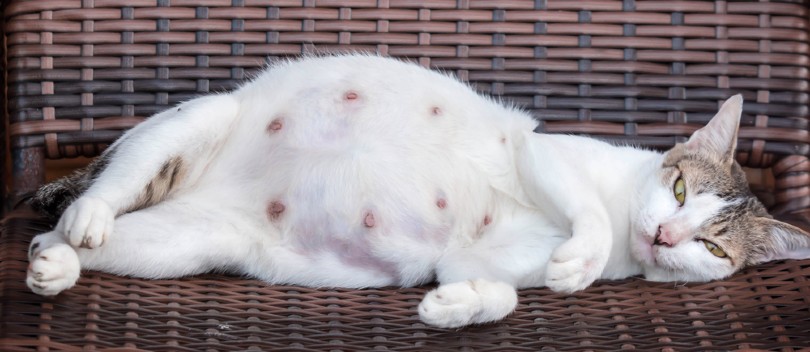
Once pregnant, the process takes about 63-67 days. So, a cat can have multiple pregnancies and litters in one year.

Stages of Kittening
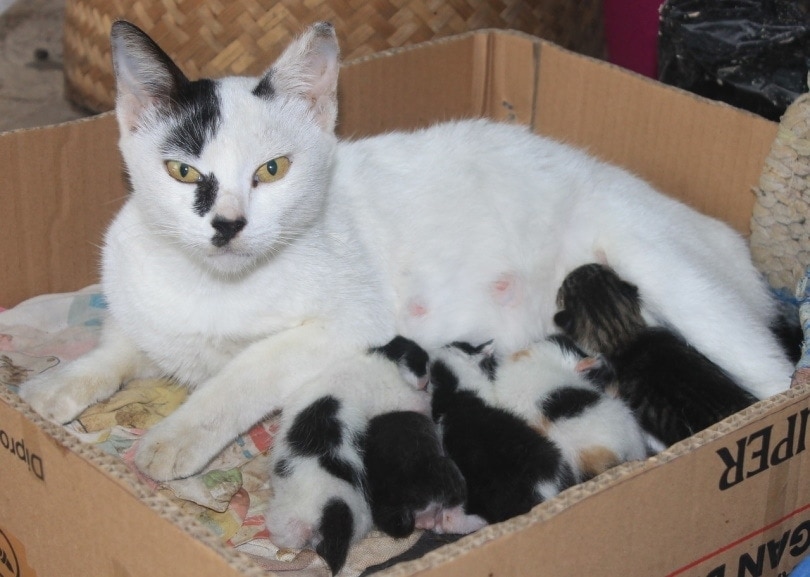
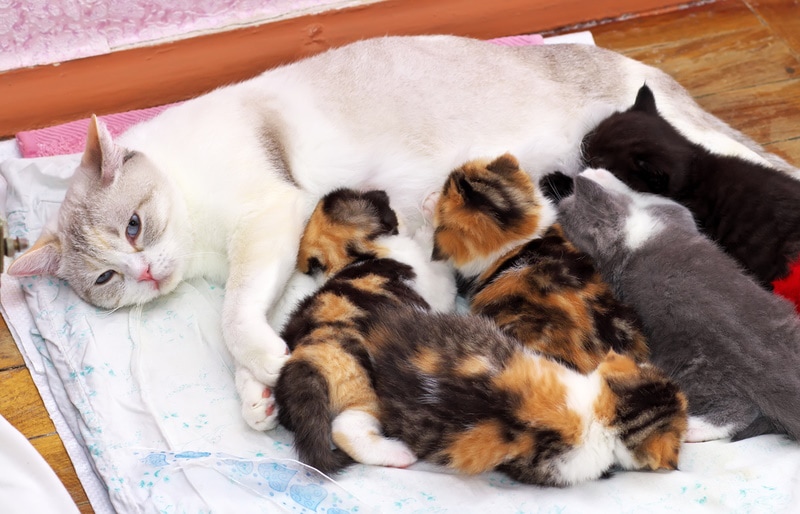
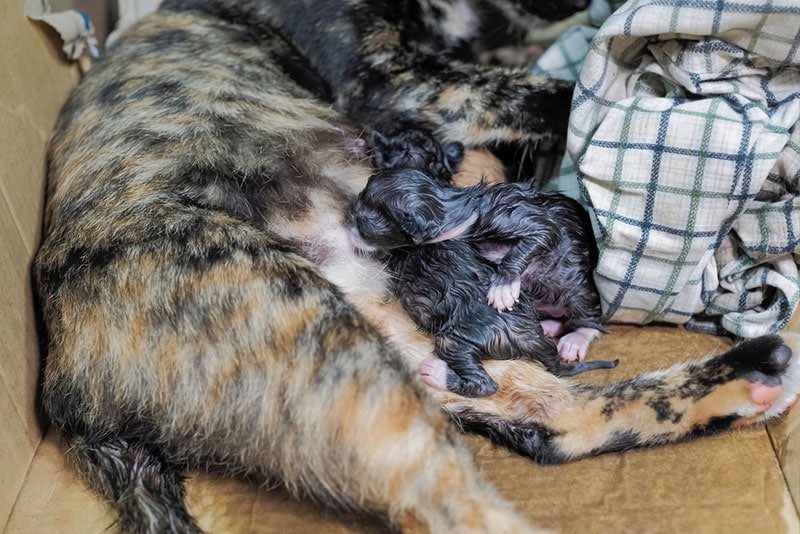
Birth is divided into three stages, and the second and third stages are repeated for each kitten. The time between the delivery of each kitten ranges from 10 minutes to 60 minutes. After the start of the second stage, birth is complete at around six hours, but it could take as long as 12 hours.
The first stage of kittening lasts around 36 hours, but queens that have had multiple litters could have a shorter first stage.
During this stage, queens have:
The second stage is when the delivery begins. This includes:
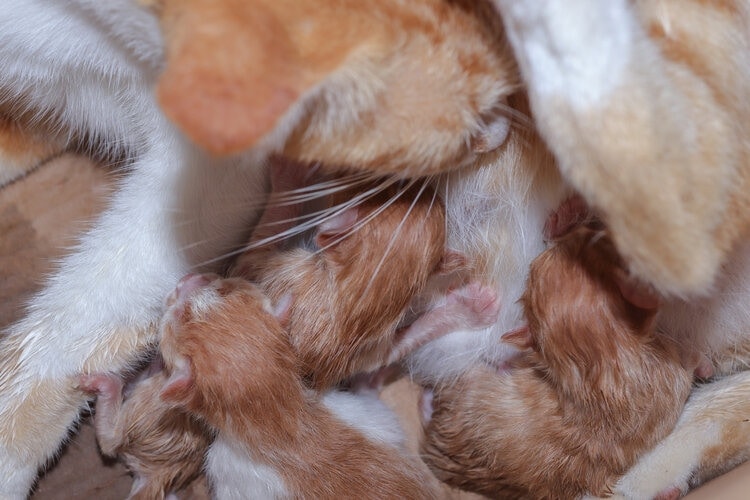
During the third stage of kittening, the membrane and placenta are passed. This usually happens immediately after each kitten is born, but on occasion, a few kittens will come out, followed by their membranes.
Normally, the queen will eat the placenta to hide evidence of the birth, but it is important to try to count the number of placenta bags to ensure each one passes for each kitten. If any are retained, call your vet.
For about three weeks following birth, the queen may have a slight bloody discharge. This is normal. If the discharge is profuse, lasts longer than a week, has a green coloration, or smells foul, it could indicate a problem, and you should call your vet for advice.
Possible Complications of Kittening
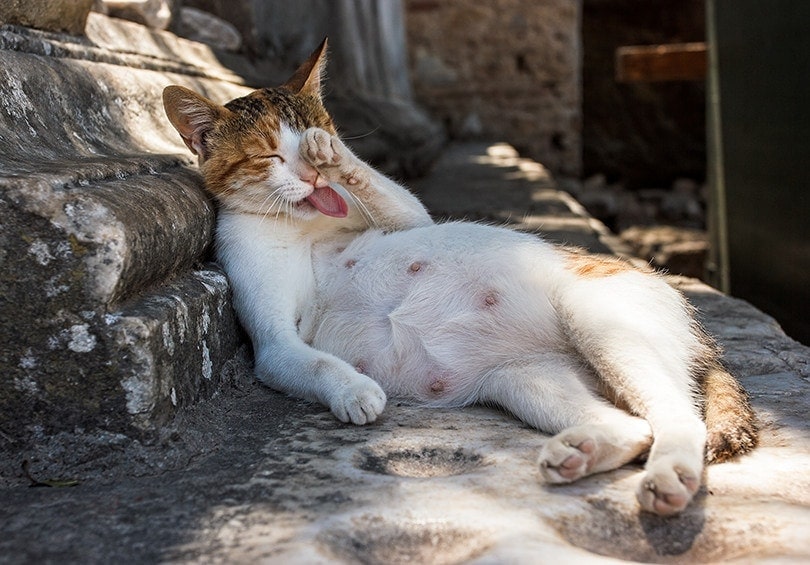
Like other animals, cats can deliver kittens without any help from humans. It is best to stand back and let nature take its course.
If your cat experiences complications or difficulty, you should speak to your vet for guidance and advice.
There are some things you can do to help:
If you do need to help the kittening process, make sure to speak to your vet. Your involvement could lead to mismothering or a heightened risk of infection.
When to Call a Vet
You should call your vet if:
If there are complications, kittens may need to be delivered by cesarean section. This may constitute an emergency, so contact your vet as soon as possible.
Conclusion
Fortunately, cats are just as self-sufficient during birth as with everything else. Your cat’s birth will mostly be you standing back and observing this miracle, but if your cat has complications or difficulty, it’s important to call your vet right away.
See also:
Sources
Featured Image Credit By: Boy67, Shutterstock
Get Hepper In Your Inbox


Pet care tips from our vets and experts, straight to your inbox.
You may opt-out at any time. View our Privacy Policy for more information.
Nicole is a lover of animals of all sizes but is especially fascinated with the feline variety. She’s the proud mom of Baby, a Burmese, and works every day so he can relax in the sunshine or by the fire. She’s always had a cat in her home and has spent countless days with others, observing behaviors and softening up even the grouchiest of the lot. Nicole wants to share her kitty expertise with you so you and your cat can live happy, healthy, and care-free.
Join the conversation
Ask a question, share your story, or send private feedback.