Hepper is reader-supported. When you buy via links on our site, we may earn an affiliate commission at no cost to you. Learn more.
Why Do Cats Purr After Giving Birth? Should I Worry?

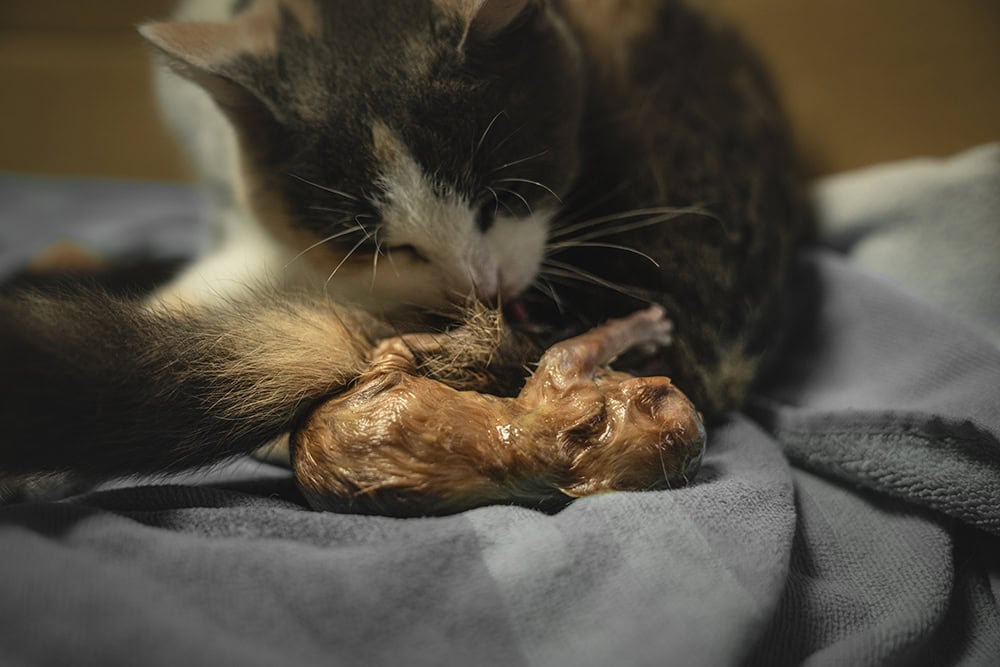
It is common knowledge that cats purr, but what about when they are giving birth? If your cat purrs during labor, don’t panic—it is completely normal. Cats tend to purr under a variety of circumstances, from feeling content and relaxed to being in pain or stressed out.
Giving birth certainly falls under the latter two, so it is not surprising that your cat might purr while she’s going through the laborious and sometimes painful process. Purring is also a self-soothing behavior for cats. It stimulates the release of endorphins, a hormone that helps with pain management.
That being said, if you’re worried about your cat’s health or think something might be wrong, it’s always best to contact your veterinarian for instructions. They’ll be able to give you peace of mind and make sure your kitty is on the road to a healthy recovery.

Is It Normal for My Cat to Purr After Giving Birth?
Purring is a sign of contentment in cats, so it’s not surprising that your kitty might purr after giving birth. However, if your cat is purring excessively or seems to be in pain, it’s important to take her to the vet for a check-up. Excessive and loud purring can sometimes be a sign of disease, so get your cat checked out if you’re at all concerned.
What to Watch for After Cat Gives Birth?
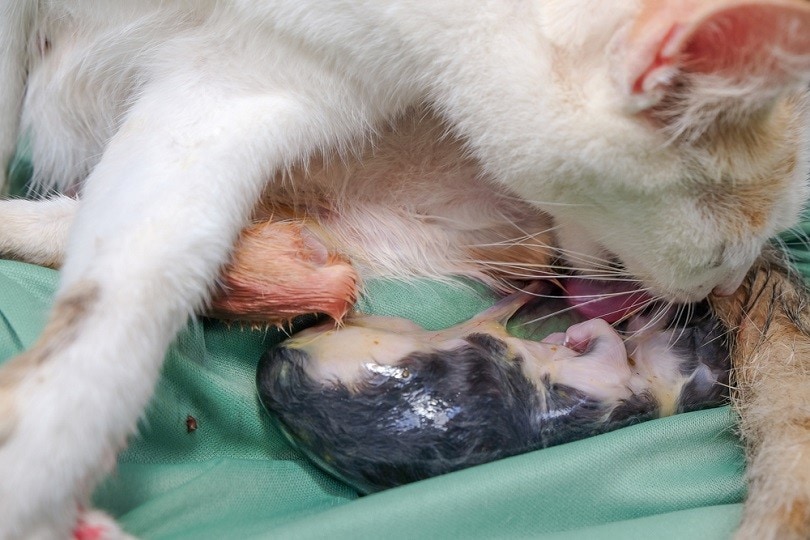
As a responsible cat parent, it’s important to be aware of the signs that your cat is in discomfort after giving birth. While some discomfort is normal, excessive crying, bleeding, or refusal to eat are all causes for concern. If you notice any of these things, contact your veterinarian immediately.
Another thing to keep an eye on is your kitty’s temperature. Normal body temperature for a cat is between 101.0 and 102.5 degrees Fahrenheit, so if her temperature spikes above it, she may be developing an infection and will need to see the vet right away. It is normal for a female cat’s body temperature to drop to 98-99° Fahrenheit about 24 hours before labor.
Finally, keep an eye on your kitty’s milk production. If she stops producing milk, her milk production decreases, or you notice a change of color or smell, it could be a sign of an infection or other health issue. Again, contact your vet if you notice this.
So, should you worry if your cat purrs after giving birth? Not necessarily. Some discomfort and even a little bit of bleeding are to be expected, but if you notice any of the other signs mentioned above, it’s best to err on the side of caution and contact your vet.
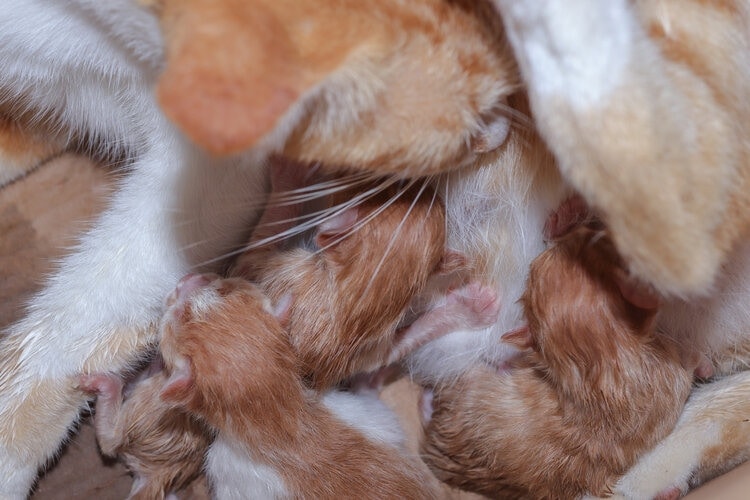
Why Do Mother Cats Purr While Nursing?
As you’ve seen, purring is a natural response to a variety of stimuli for cats. It’s a way to communicate contentment and also seems to have some calming effects on both the cat who is purring and those around her. So it makes sense that a mother cat would purr while nursing her kittens.
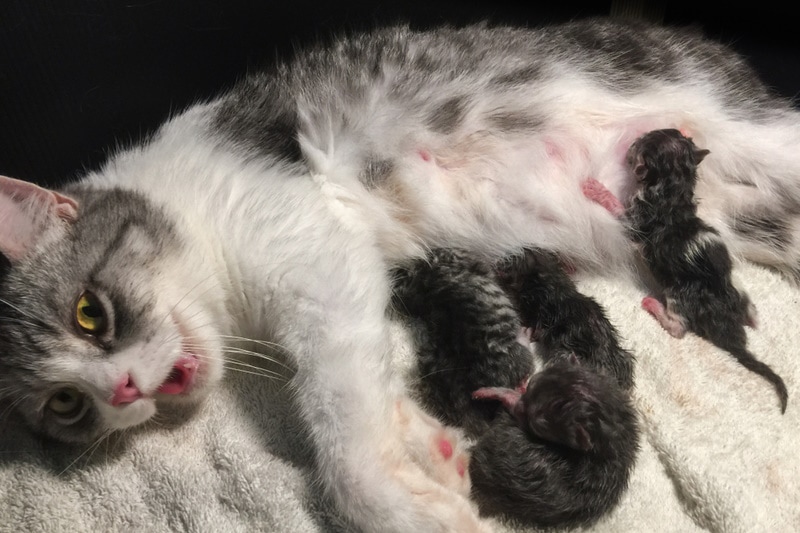
Purring may help mothers bond with their kittens, and it also seems to help with the flow of milk. Milk production is stimulated by a cascade of hormones released in response to the sound of a cat purring. So if your kitty is purring away while nursing her kittens, it’s probably because she’s content and everything is going smoothly.
Of course, every cat is different. Some mothers may not purr while nursing, and that’s perfectly normal. If your kitty is purring, though, there’s no need to worry. It’s just a sign that she’s happy and comfortable.
In Conclusion
So, why do cats purr after giving birth? It’s not entirely clear, but it may be a way of self-soothing or a sign of contentment. If your cat is purring and seems happy, there’s no need to worry. However, if your cat is also showing signs of distress, such as crying or restlessness, it’s best to take her to the vet to make sure everything is okay.
Sources
Featured Image Credit: Goldziitfotografie, Shutterstock
Get Hepper In Your Inbox


Pet care tips from our vets and experts, straight to your inbox.
You may opt-out at any time. View our Privacy Policy for more information.
Pets are Jordyn’s passion, cats especially. Whenever she has the opportunity, she loves to learn about them and share her knowledge with everyone. She is devoted to her tabby cat named Jack and works hard to buy him his favorite treats and toys. Discovering new ways to better care for her pet is always on her to-do list, and she is eager to help pet parents everywhere who have similar pursuits. In her spare time, she loves to read, write, and take long walks. She has a creative spirit, which often helps her to come up with funny cat names.
Join the conversation
Ask a question, share your story, or send private feedback.