Hepper is reader-supported. When you buy via links on our site, we may earn an affiliate commission at no cost to you. Learn more.
How to Help a Cat Give Birth: Vet-Verified Facts to Consider


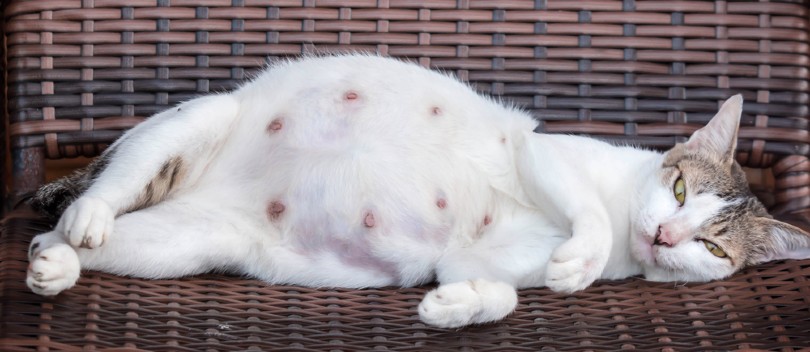
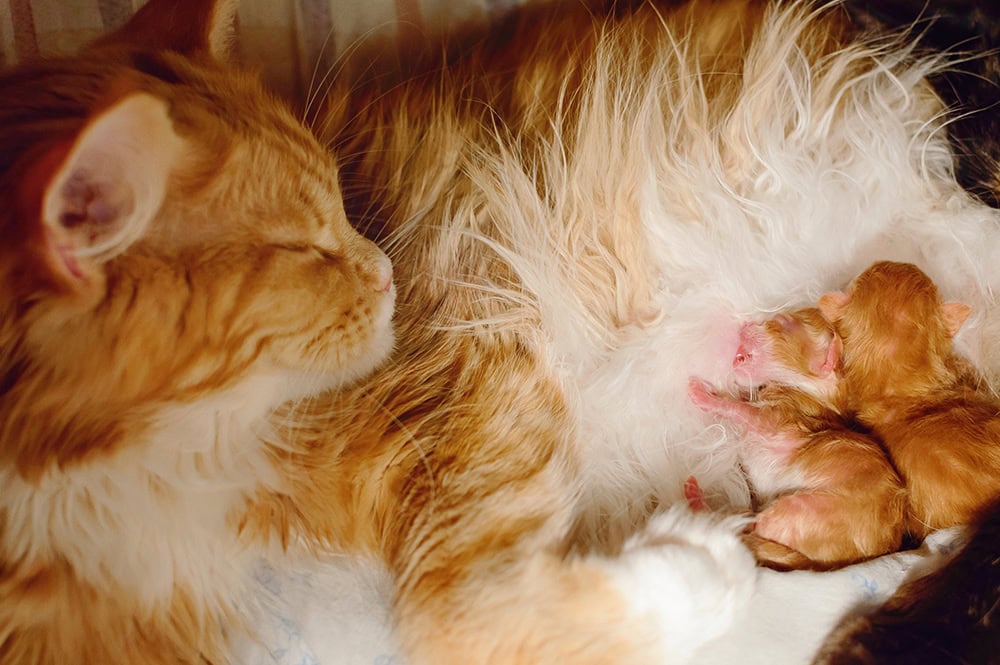
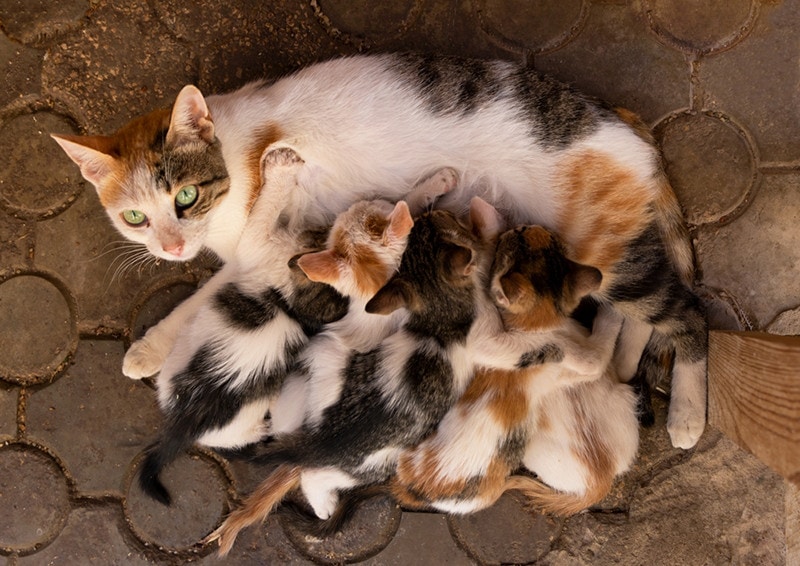
Having a cat that is ready to give birth is an exciting experience. You can’t wait to meet the new kittens and enjoy the fun they bring to a home. It’s also a nerve-wracking time. As a pet parent, you’re always worried that something could go wrong with your cat. This leaves you wondering how you can help your cat give birth. If we’re being honest, it’s best to allow your cat to do what comes naturally. Of course, that isn’t always possible. Below we’ve created a list of ways you can help your cat deliver her kittens if the situation calls for it.

How to Help a Cat Give Birth
1. Don’t Intervene Unless It’s Necessary
Seeing your cat yowling and straining to give birth can be distressing. It’s a normal reaction for a pet parent to want to intervene and help out in some way. However, giving birth is a natural process for your cat. If you truly want to help her, it’s best to give her space while keeping a close eye on the situation in case you’re needed.
2. Have Supplies Ready
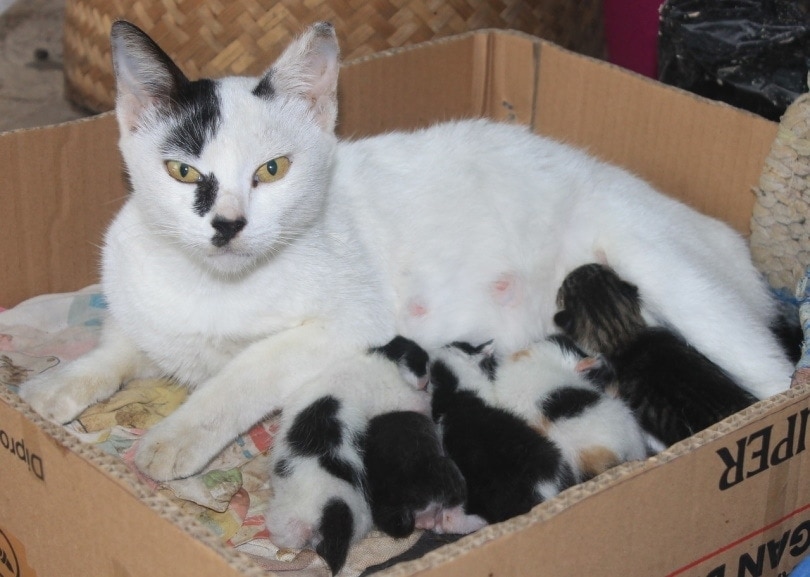
It’s important to have supplies your cat will need, and items you could potentially need in the case of issues on hand before the big day. Of course, the nesting box should be provided to your cat a few weeks in advance, but here’s a list of other items you could need during the birthing process.
- Absorbent pads for lining the nesting box
- Several towels to help with cleaning or helping with kittens if there is an issue
- Disposable gloves to use if you’re needed
- Paper towels for cleaning the birthing area
- Trash bin to have nearby for disposal of towels and other materials
- Basket to place any soiled laundry into
- Clean scissors and dental floss to use if the mother doesn’t cut the umbilical cord
- Cleaning alcohol and cotton balls to sterilize the scissors before they are used (sterilizing takes time, so do this ahead of time just in case you must step in and help)
- Kitten feeding bottles and replacement formula for worst-case scenarios

3. Make Sure the Nesting Box is Warm
During the first 2 weeks of a kitten’s life, they need temperatures between 85 and 90 degrees Fahrenheit. It’s up to you to ensure the nesting box is warm enough. If you feel that it isn’t, a heating pad for animals can be used. Please remember, however, that there should be several layers between the heating pad and the kittens that are being born. Use the heating pad beneath the nesting box with a towel covering it. Inside, use several layers on that side. You can leave the other side for the mother and kittens to cool if they need it.
4. Clear the Sac
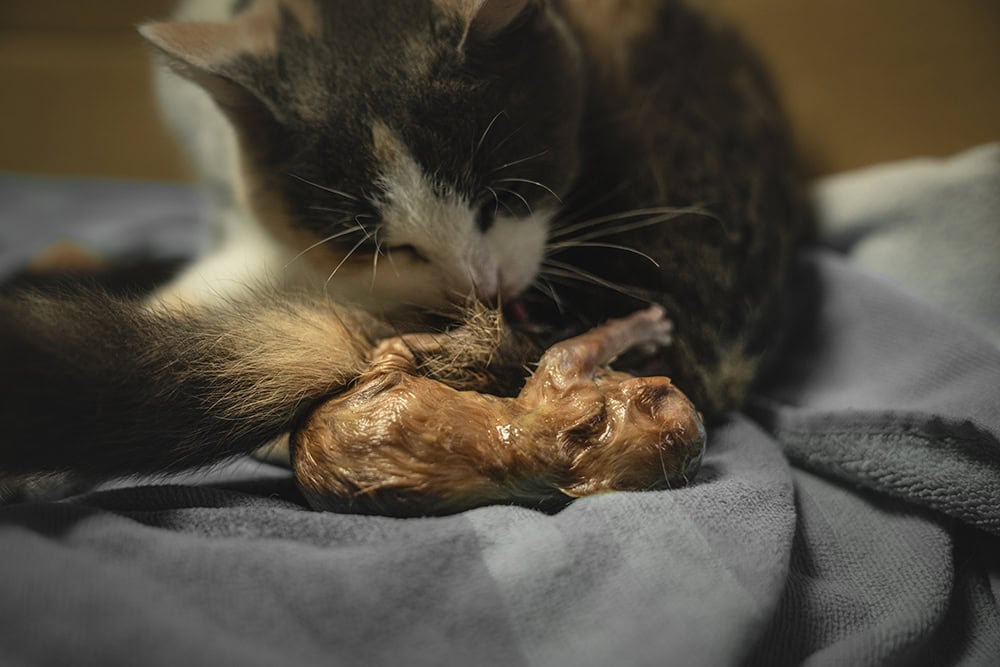
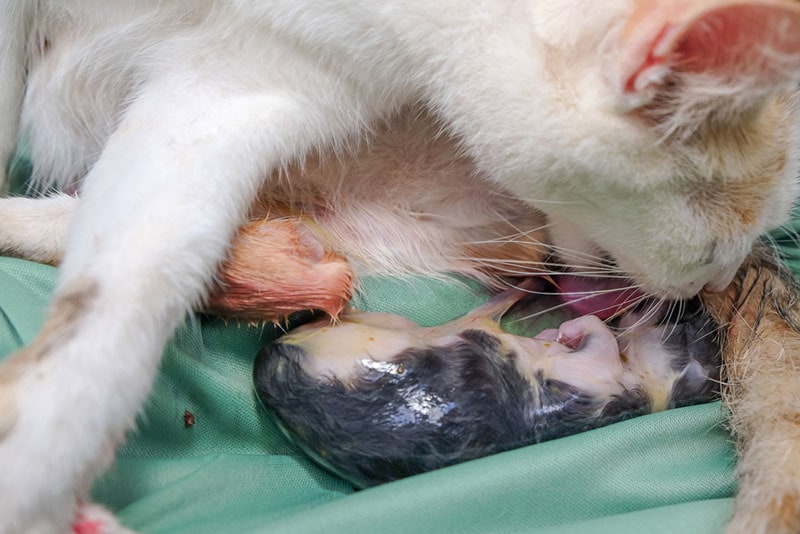
In an ideal situation, once a kitten is born, the mother will clear the amniotic sac by licking it. She’ll also lick each kitten to clear their nasal passages and stimulate their breathing. If your cat doesn’t do this within a minute of the kitten being born, you’ll need to step in. To do this, wash your hands, then put on disposable gloves. Take the kitten from the sac and clear any fluid from the mouth while holding the kitten in a head-down position. Use a clean towel to ensure that there is no debris on the kitten, then turn them upright. Using gentle pressure, rub the kitten with a towel to stimulate breathing. Then offer the kitten back to the mother to see if she continues by removing the umbilical cord. If the mother cat refuses to clear the sac with each kitten she births, you’ll be left doing this each time.
5. Help With the Umbilical Cord
If the mother refuses to remove the umbilical cord, it’s up to you. Take the dental floss you gathered as part of your necessities list, and tie a knot in the umbilical cord roughly 1 inch away from the kitten’s body. Use the scissors you previously disinfected to cut the cord on the other side of the knot (away from the kitten’s body). Once this is done, clean the kitten, then return them to the mother. Like with the sac, if the mother refuses to do this with the other kittens, you’ll need to intervene.
6. Monitor the Nursing Kittens
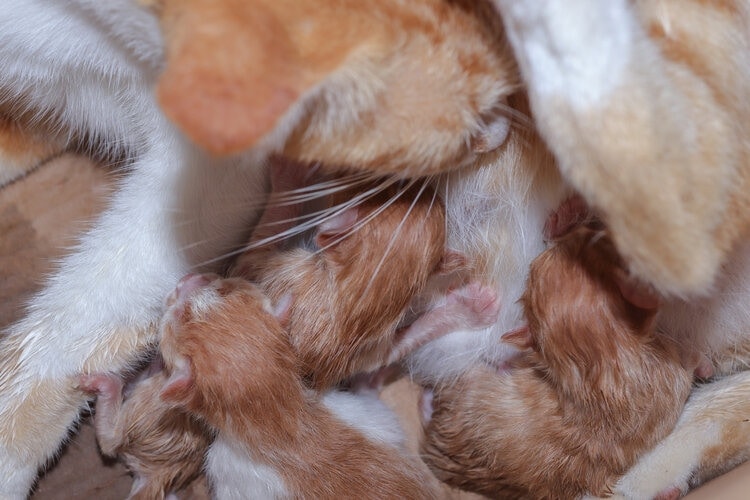
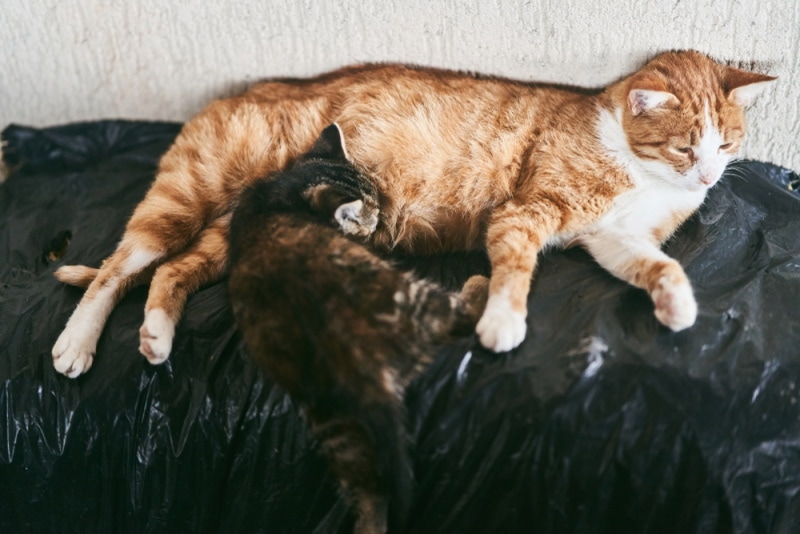
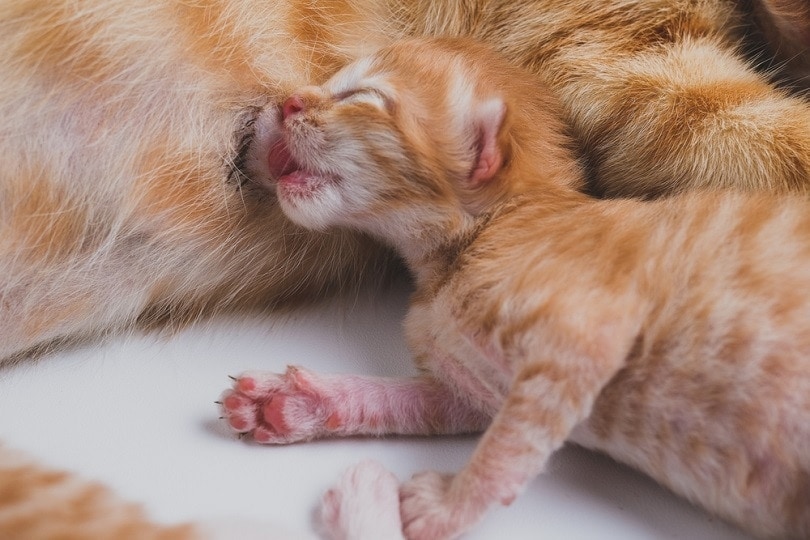
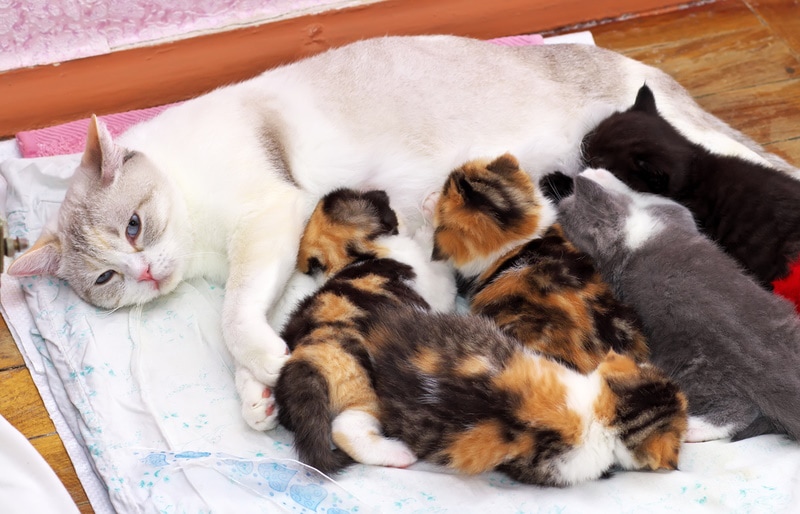
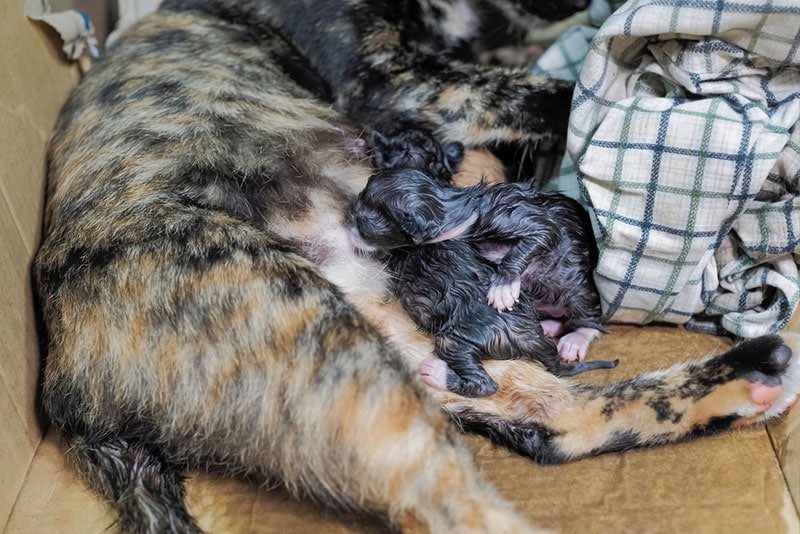
Don’t be surprised if you see newborn kittens nursing while the mother is still giving birth. Kittens need to nurse within the first 1 to 2 hours of being born. This is when the mother is producing colostrum, which is highly beneficial for newborn kittens. If you notice kittens that aren’t nursing immediately like they should, contact your veterinarian. They will walk you through what to do. If all else fails, you may need to use the kitten formula you had on hand for emergencies.
7. Watch Your Cat Closely
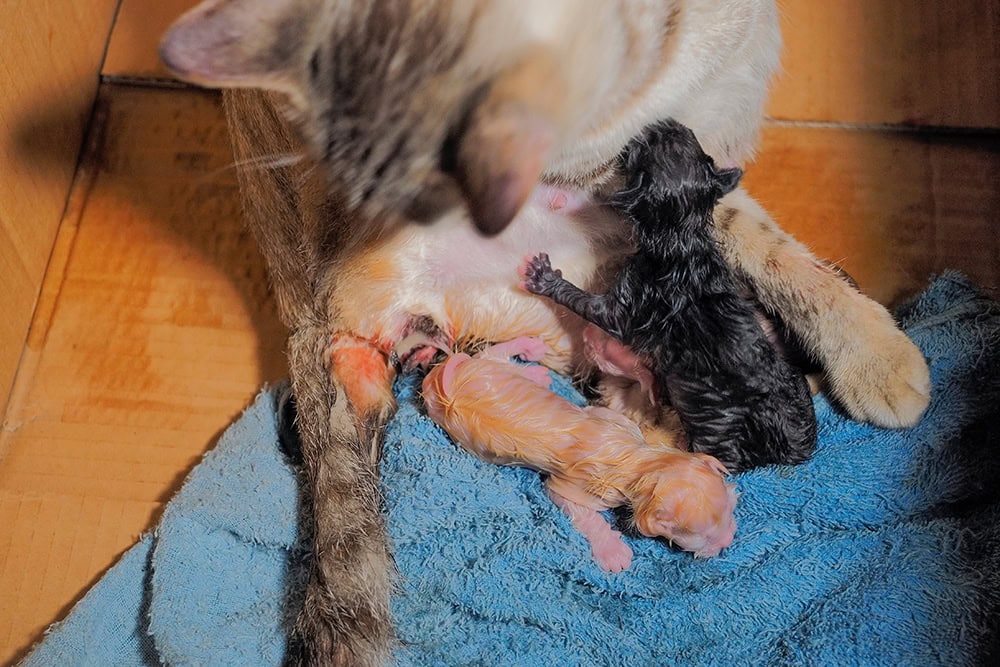
As your cat gives birth, she should expel a sac with or after each kitten. If you notice that the number of kittens birthed and the number of sacs expelled are different, pay close attention to your cat. If she doesn’t pass the missing sacs within 24 hours, she needs to see a veterinarian for assistance.
8. Be Aware of a Heartbreaking Situation
Unfortunately, stillbirths are possible when kittens are born. If this happens, you should remove the kitten from the box and the mother’s sight. This will allow her to focus on the other kittens instead of on the one she has lost.
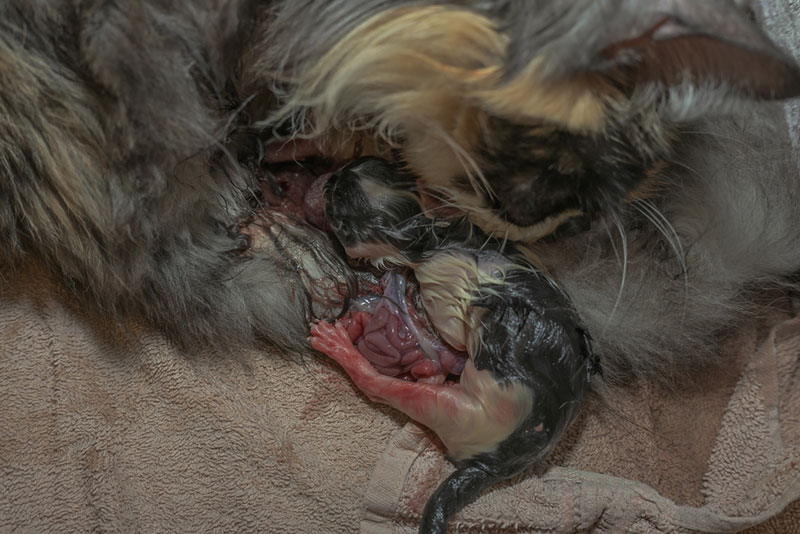
Contact a Veterinarian If Your Cat Has Issues Delivering
There are a few things that can happen while kittens are being born that should result in an immediate call to the veterinarian. Let’s take a look at these.
- If the delay between kittens reaches or surpasses the 4-hour point and the mother cat is straining, a kitten is likely still inside
- You see a bubble of air or a kitten in the birthing canal, and 15 minutes have passed without a delivery.
- Heavy bleeding that does not stop or stops and starts again can be a hemorrhage and could be dangerous for the mother.
- The kittens aren’t nursing or lactating as they should.
Final Thoughts
In the perfect scenario, the best way you can help your cat give birth is by standing witness to the side without bothering her. However, anything can happen. For this reason, you should always be prepared for anything. The most important thing to remember is to keep a close eye on your cat while she becomes a mother. This will help you know if things are going smoothly, whether you need to assist, or if a veterinarian needs to be contacted.
Featured Image Credit: Yuttana Joe, Shutterstock
Get Hepper In Your Inbox


Pet care tips from our vets and experts, straight to your inbox.
You may opt-out at any time. View our Privacy Policy for more information.
Melissa was born and raised in the mountains of East Tennessee where she spent her time writing in an old notebook and playing outside with her pets. As an avid animal lover, she has brought many into her home over the years. Currently, she is the mom of 5 fur babies. Her 2 cats, Princess and Pepper are total opposites who demand attention. Her dogs Jazzy, Whitey, and Demon are full of spunk and keep the entire family on their toes.
Beyond life as an animal mom, Melissa is a dedicated wife and mother to 2 children. Writing in her old notebook led her down the path of becoming not only a freelance writer but a published Indie author under the pen name, Rena Marin.
Join the conversation
Ask a question, share your story, or send private feedback.