Hepper is reader-supported. When you buy via links on our site, we may earn an affiliate commission at no cost to you. Learn more.
Do Cats Eat Their Placenta? Vet-Verified Facts & FAQ

In this article
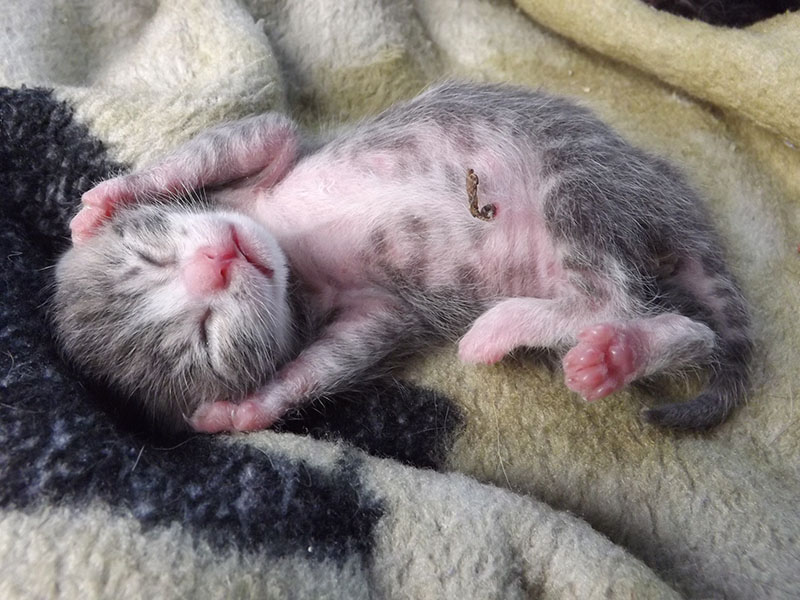
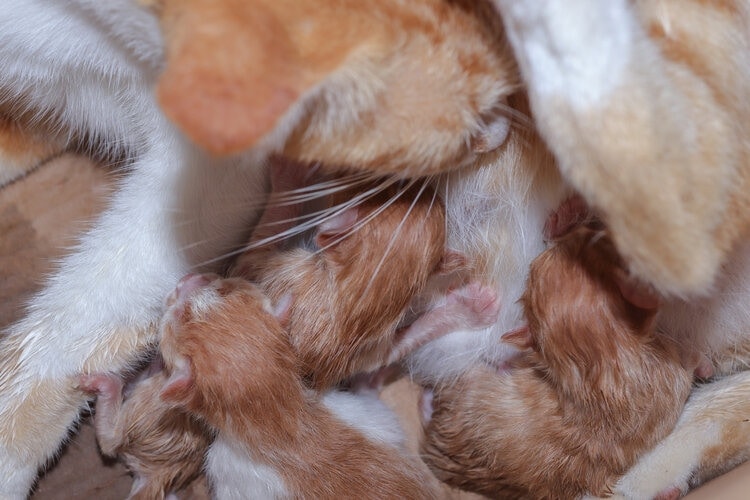
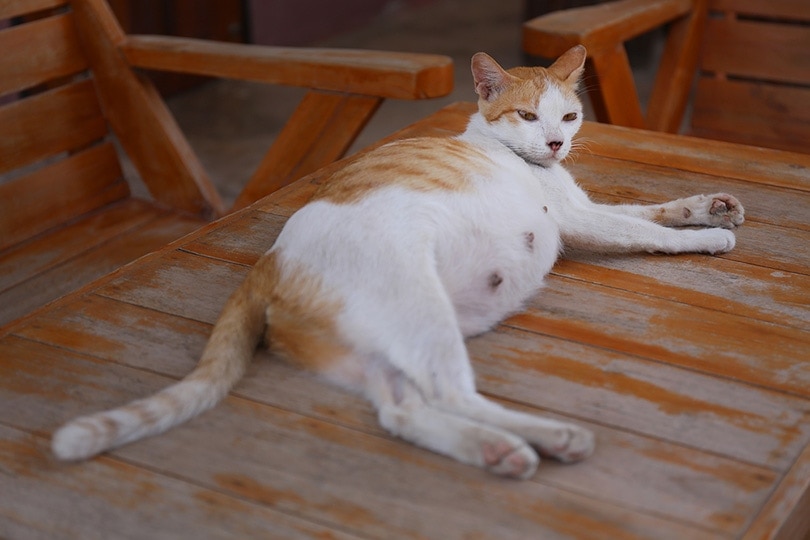
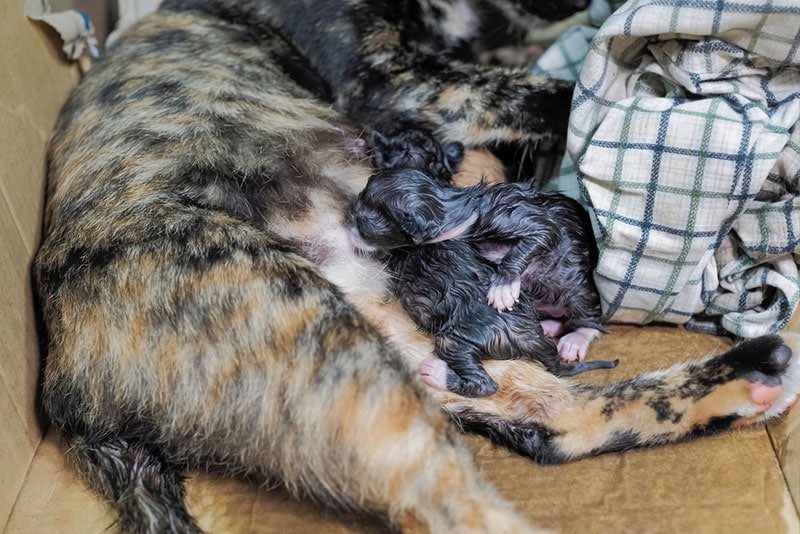
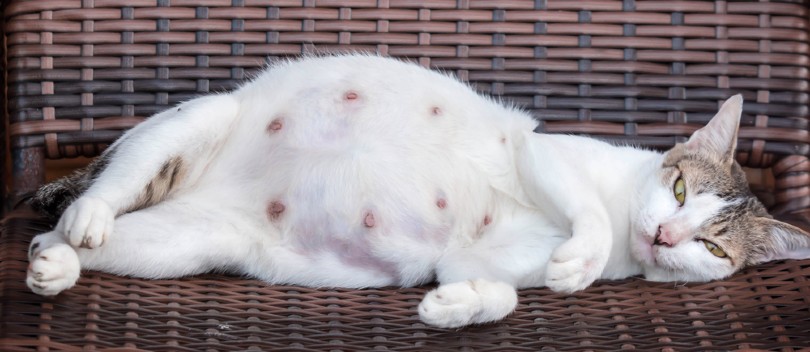
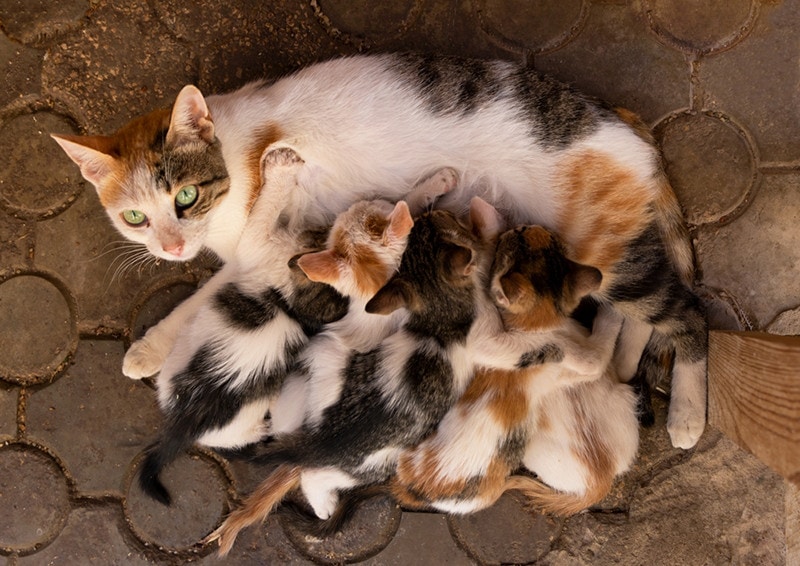
You may have noticed that the animal kingdom behaves quite differently than humans when it comes to birth-related habits. One such unusual behavior that often puzzles pet owners is the consumption of the placenta after birth. Many cats do eat the placenta post-birth, a behavior known as placentophagy.
While this may seem strange to us, it’s a common occurrence among many animals. Let’s explore this topic further to gain a better understanding of it.

Understanding Placentophagy in Cats
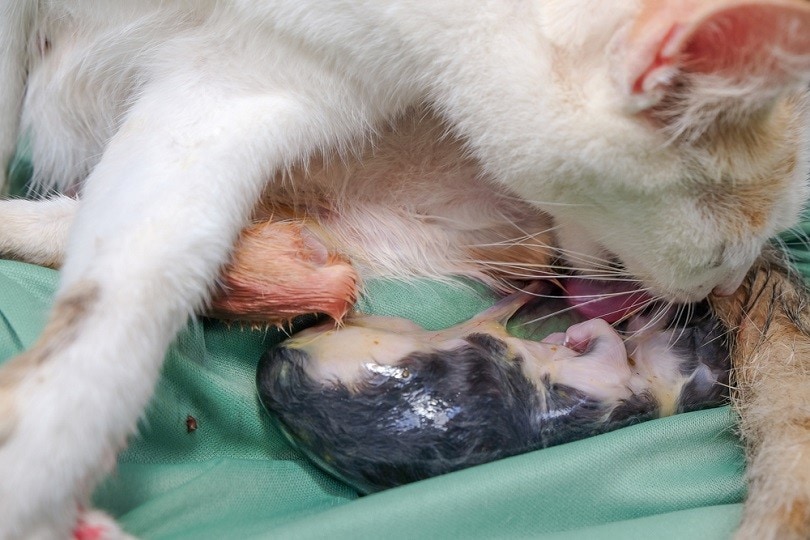
Placentophagy, or the act of consuming the placenta, is a common behavior among many mammals, and that includes domestic cats. This habit dates back to their wild ancestors and can be seen in many feral and domestic cats today.
The placenta is a unique organ that forms during pregnancy to provide nutrients and oxygen to the unborn kittens. After birth, the placenta is no longer necessary and is normally expelled from the cat’s body. But instead of leaving it behind, many cats instinctively eat it.
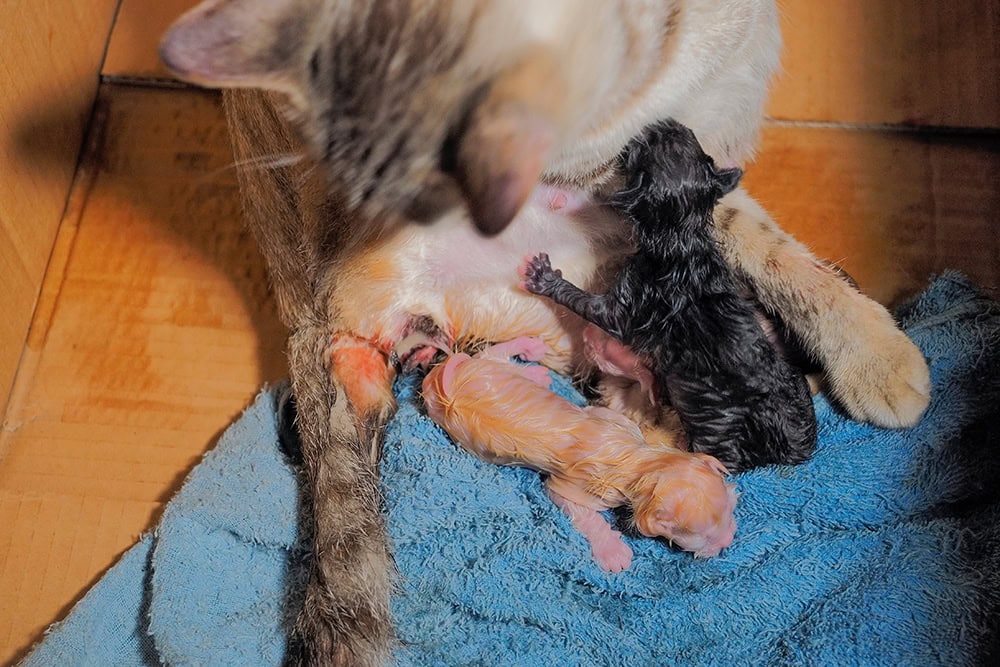
Why Do Cats Eat Placenta When Giving Birth?
There are several theories as to why cats engage in placentophagy. For one, it’s believed to be a throwback to their wild roots. In the wild, leaving the placenta behind could potentially attract predators to the mother and her newborns, so consuming it helped protect the family.
Another theory revolves around the nutritional benefits of the placenta. It is rich in nutrients like protein and iron, which can be beneficial for the mother cat, especially after the physically demanding process of giving birth. Consuming the placenta may help her to recover more quickly and be better able to care for her kittens.
Additionally, some believe that the hormones found in the placenta can help promote mothering behavior and stimulate milk production, though this is more of a speculative hypothesis than a scientifically proven fact.
Is Placentophagy Safe for Cats?
Yes, by and large, it is safe for a cat to consume the placenta. This is a normal and instinctual behavior deeply ingrained in feline nature, likely tracing back to their wild ancestors. If a pet owner tries to prevent a cat from eating her placenta, it could potentially induce stress or anxiety in the animal, disrupting the natural course of events post-birth.
However, it is worth noting that, in some uncommon instances, the consumption of multiple placentas might lead to mild health issues. If a cat has birthed a particularly large litter and chooses to eat all the placentas, it could result in an upset stomach or even diarrhea.
This is due to the sudden intake of rich nutrients and hormones. In such cases, monitoring the cat’s health and consulting with a vet if signs persist is highly recommended.
What Happens if a Cat Doesn’t Eat the Placenta?
If a cat decides not to eat her placenta, there’s absolutely no need for concern. Just like any other behavioral aspect, there can be variations in how different cats react post giving birth. Not all cats will engage in placentophagy, mirroring the diverse behaviors found among their wild counterparts.
When the cat doesn’t eat the placenta, the responsibility falls upon the pet owner to remove it. This is crucial for maintaining a clean, sanitary environment for the mother and her newborn kittens.
Leaving the placenta could attract insects, cause unpleasant odors, or even introduce infection risks. Therefore, it’s always a good practice to keep the birthing area clean and free from any potential health hazards.
Keeping Your Pet Healthy and Safe
While a cat eating a placenta may be somewhat off-putting, remember that it’s a natural behavior and generally not harmful. However, ensuring your cat’s health and safety should always be your top priority, especially during the vulnerable time of giving birth.
Here are a few essential tips:
Conclusion
Cats eating their placenta is a natural and generally safe behavior, dating back to their wild ancestry and providing potential nutritional benefits. However, not all cats will do this, and it’s not a cause for concern if they choose not to.
As a pet owner, your primary focus should be on providing a safe and healthy environment for your cat and her kittens before, during, and after birth. After all, your four-legged friend relies on you to help ensure her safety and the safety of her adorable new additions.
Sources
Featured Image Credit: hemro, Shutterstock
Get Hepper In Your Inbox


Pet care tips from our vets and experts, straight to your inbox.
You may opt-out at any time. View our Privacy Policy for more information.
Nicole is a lover of animals of all sizes but is especially fascinated with the feline variety. She’s the proud mom of Baby, a Burmese, and works every day so he can relax in the sunshine or by the fire. She’s always had a cat in her home and has spent countless days with others, observing behaviors and softening up even the grouchiest of the lot. Nicole wants to share her kitty expertise with you so you and your cat can live happy, healthy, and care-free.
Join the conversation
Ask a question, share your story, or send private feedback.