Hepper is reader-supported. When you buy via links on our site, we may earn an affiliate commission at no cost to you. Learn more.
How to Clean a Turtle Tank: 9 Vet-Reviewed Tips


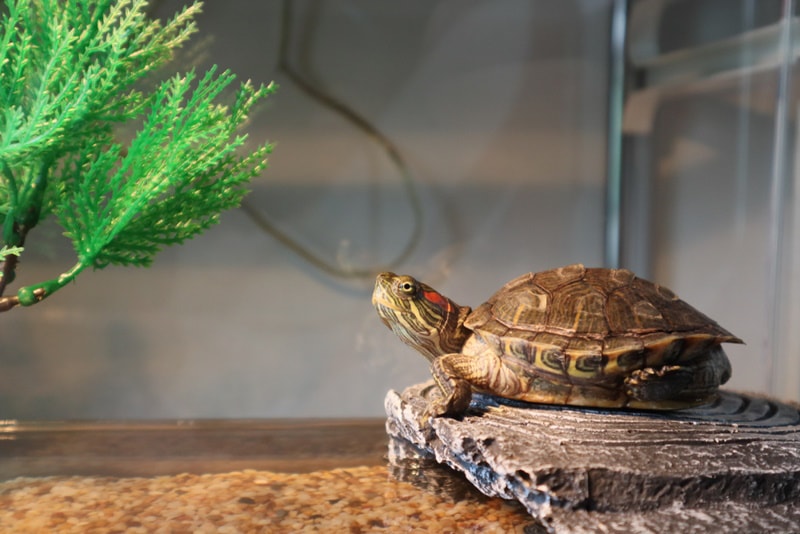
Turtles rarely raise a fuss, but that doesn’t give us any slack in how we nurture them. Every pet turtle deserves a clean turtle tank, and while it can be a hassle, the regular ritual of refreshing the space can make all the difference in their quality of life. Here’s a look at nine expert tips on cleaning your turtle tank to keep your pet healthy and happy in their home.

The 9 Tips on How to Clean a Turtle Tank
1. Empty the Tank and Give Your Turtle a Temporary Home
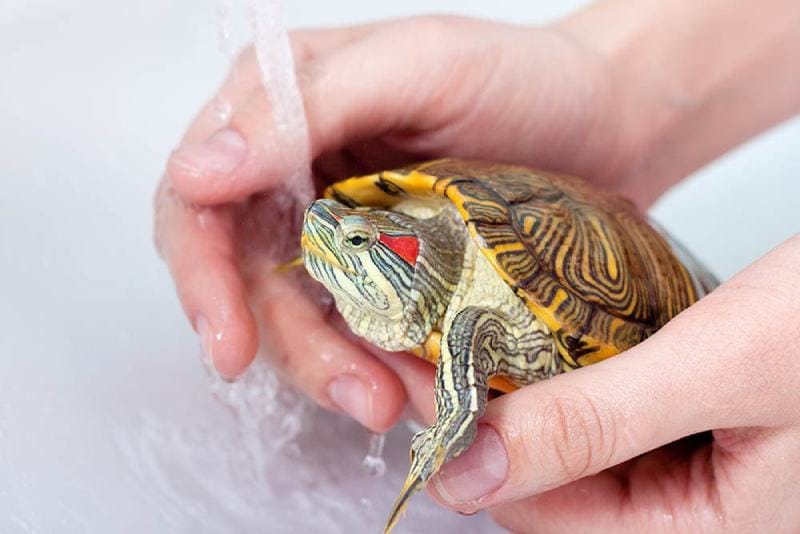
Empty the turtle tank before cleaning. Remove stationary features, pumps, and your turtle, transplanting them to a dedicated container for momentary holding. The temporary tank should have enough room for your turtle to swim and a rock to stand on. Don’t forget to clean this container after each use, as your turtle will likely transfer Salmonella and assorted pathogens to it. For the same reason, always thoroughly wash your hands after handling your turtle and cleaning their tank.
All accessories except the filter, lights, and other powered tools should go in a separate bin to await cleaning. The rocky substrate can stay in the tank as you rinse it, but you should replace any organic material with the fresh substrate after deep cleaning. Get an extra set of hands to help, and empty some of the water to ease lifting and moving the tank to the cleaning location.
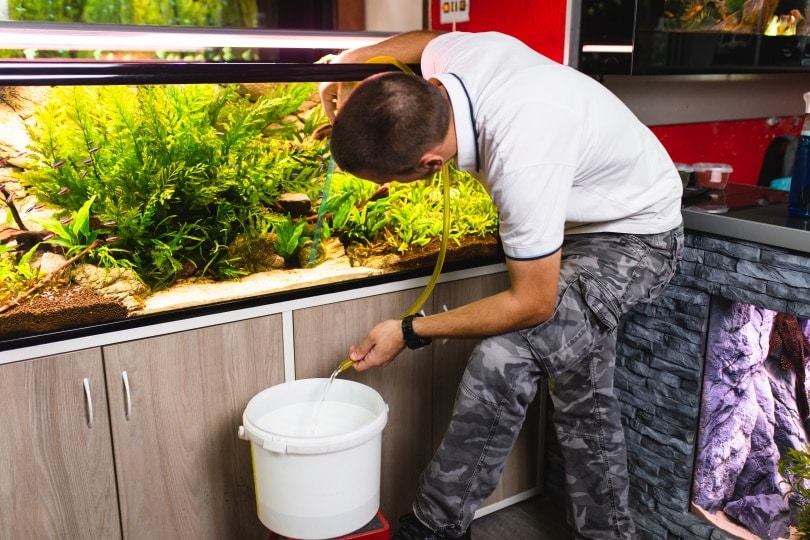
For easier tank cleaning, get an aquarium maintenance device like the Python No Spill tool,1 an all-in-one siphon/gravel cleaner/fill hose. The system facilitates the process during your weekly water changes and monthly deep cleans, helping you skip the challenges of emptying and refilling the tank.
2. Rinse the Substrate
Rinsing rock substrate is simple, and it only requires a few rounds of filling the tank to cover the base, swishing, and dumping. Perform this step 4–5 times. The water will eventually run clear.
3. Clean the Interior
With the substrate rinsed, you can perform a deep clean. You’ll need a commercial turtle safe cleaner or DIY cleaner to scrub down the walls. A few options to use as a cleaning solution include:
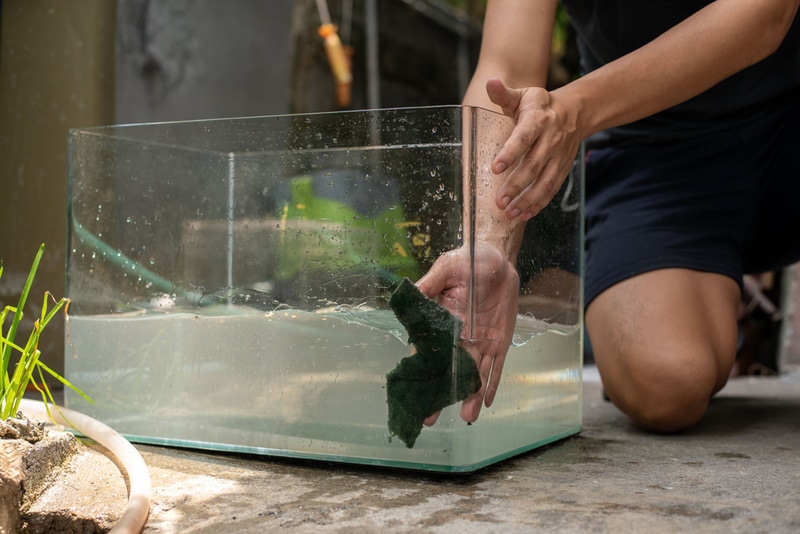
Scrub the tank inside and out with a sponge or rag, covering every side. Let the solution sit for about 10 minutes to disinfect, taking the opportunity to clean the rest of the tank accessories. When finished, rinse the tank thoroughly, removing any leftover cleaning solution. Mop with a dry piece of clean cloth or leave it outside to dry.
4. Clean the Rocks
You can wash your rocks, platforms, and other accessories by hand in regular tap water. A scrub brush is handy here, as the nooks and crannies in the various items can house algae, crusty buildup, and other gunk.
5. Don’t Wash Your Water Filter
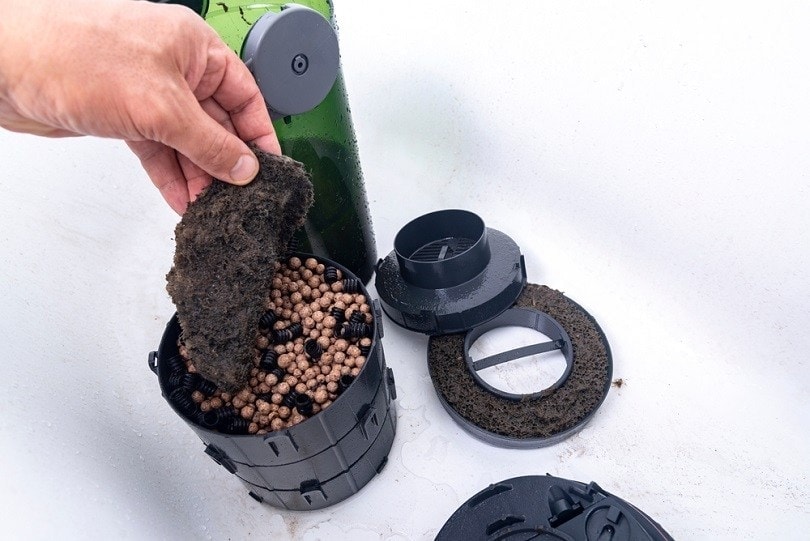
The water filter needs a refresh during your tank cleaning, but the internal media shouldn’t need a complete replacement unless it’s unusable, which can take several months. You don’t want to sanitize or even clean it too thoroughly, as the filter houses much of the beneficial bacteria you built up to manage the nitrogen cycle. You don’t want to deplete your bacteria and have to start from the ground up in re-establishing it.
Even rinsing with tap water could harm the beneficial bacteria in the filter, as chlorine and other chemicals can kill them off. To protect these microbes, preserve some of your old tank water to clean the filter components. Remove glaring debris and rinse out the pieces to eliminate clogs.
6. Dechlorinate Fresh Water
Before filling your tank with fresh water, you’ll have to dechlorinate it. Tap water contains chlorine and various treatments that can harm your turtle, requiring a product like API Tap Water Conditioner before you can add it to the tank.
7. Check the Water’s pH and Chemical Composition
A testing kit like Aquarium Test Strips will allow you to test the pH and ammonia, nitrite, and nitrate levels in your turtle’s tank to see the condition of the water cycle. The levels won’t be perfect following each cleaning, but it will give you a baseline to see whether you need to make adjustments. For most turtles the ideal water temperature is 75-85°F to keep your turtle comfortable.

8. Do Water Changes Regularly
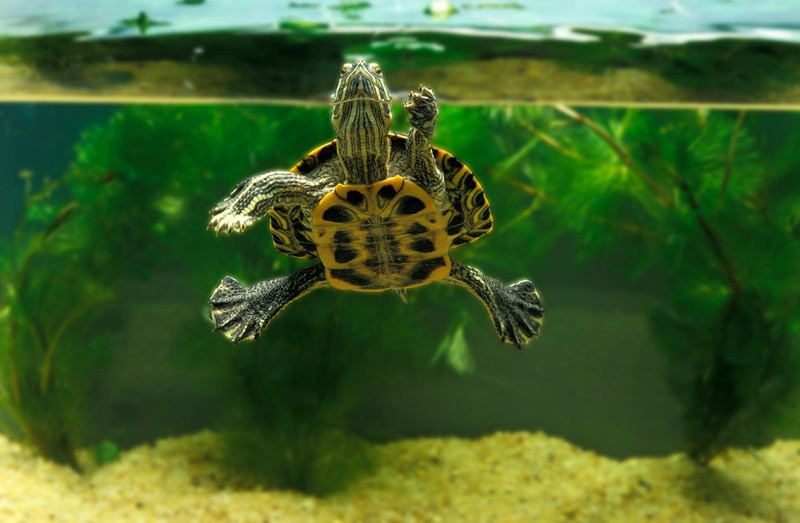
Water changes are critical weekly chores to keep your turtle’s tank fresh and tolerable between monthly deep cleans. Place your turtle in a temporary container, and remove roughly 25–50% of the tank’s water with a siphon or bucket. Loosen any algae stuck to the tank beforehand so your siphon can remove as much gunk as possible.
9. Clean Debris Daily
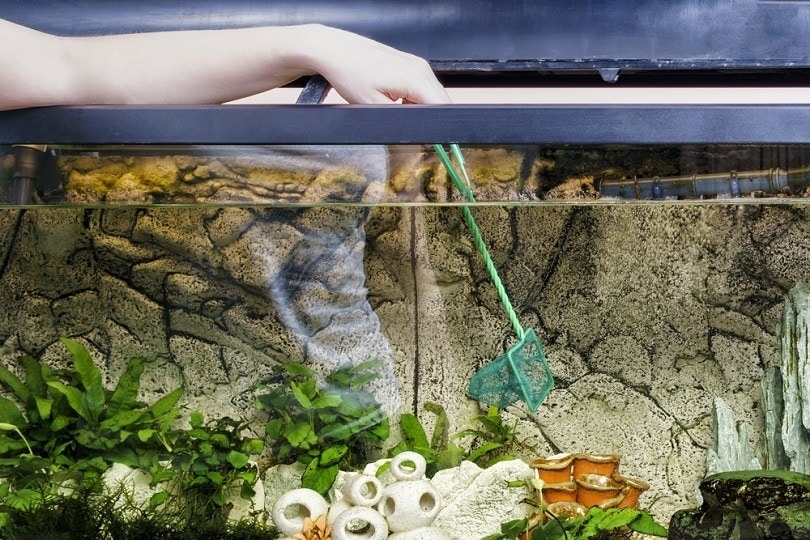
Poop, leftover food, and other debris can quickly contribute to a dirty tank. Sparing a few minutes to extract large chunks of degradable waste will keep your tank fresh between water changes. A small, netted tool can work for this, or you can use a suction tool like an eyedropper to pick out pieces one by one.
How Often Should You Clean a Turtle Tank?
Turtle tanks typically need a complete cleaning about once a month, though you may need to do it more frequently if your turtle dirties the habitat quickly. Removing, rinsing, and deep cleaning the tank will keep the water balanced and your turtle de-stressed and as spry as possible. Dry habitats, such as those for box turtles, need more infrequent cleanings, though you should swap their water containers out every few days.
Final Thoughts
Turtle tanks don’t stop getting dirty, and with their tight living quarters, you need to work extra hard to give your turtle some relief. Follow these expert tips for keeping your turtle’s tank clean, and monitor their comfort level after each change. It can feel like a daunting monthly chore for you and your turtle, but both of you will come away happy after every deep cleaning.
Featured Image Credit By: Mark Leung, Shutterstock
Get Hepper In Your Inbox


Pet care tips from our vets and experts, straight to your inbox.
You may opt-out at any time. View our Privacy Policy for more information.
Nicole is a lover of animals of all sizes but is especially fascinated with the feline variety. She’s the proud mom of Baby, a Burmese, and works every day so he can relax in the sunshine or by the fire. She’s always had a cat in her home and has spent countless days with others, observing behaviors and softening up even the grouchiest of the lot. Nicole wants to share her kitty expertise with you so you and your cat can live happy, healthy, and care-free.
Join the conversation
Ask a question, share your story, or send private feedback.