Hepper is reader-supported. When you buy via links on our site, we may earn an affiliate commission at no cost to you. Learn more.
Intervertebral Disc Back Disease (IVDD) in a French Bulldog - Signs and Care (Vet Answer)
In this article
Most people have heard of intervertebral disc disease (IVDD)—whether in people, dogs, cats, or other species.
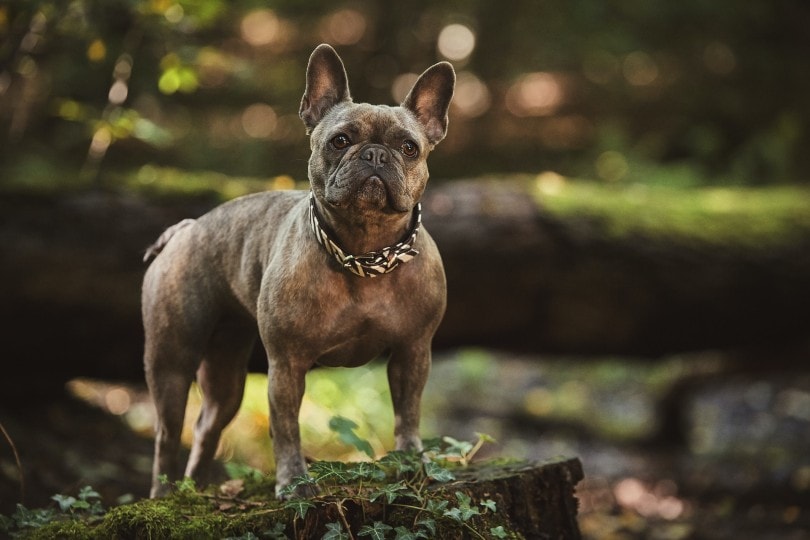
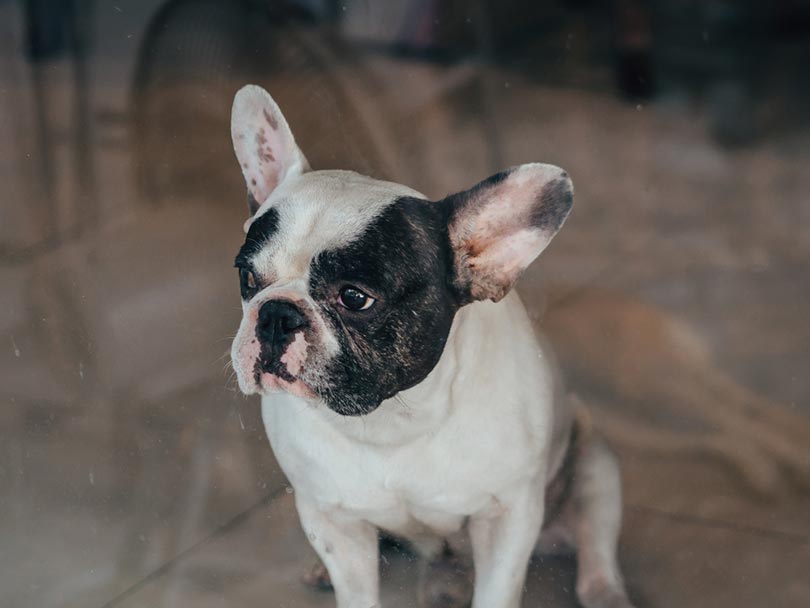
While intervertebral disc disease is not unique to French Bulldogs, they are certainly at risk of developing the issue. When a French Bulldog develops IVDD, it can have serious consequences, such as impacting their ability to walk, stand, urinate, and defecate. It can also be extremely painful.
IVDD is a serious issue, and, at minimum, requires a veterinary exam to properly diagnose and identify what options might exist for further treatment or care. Treatment is often quite extensive, which can include surgery to address entrapped nerves to try and rectify the problems created by faulty discs.
Read on to learn more about IVDD, the signs, and the care of French Bulldogs that experience this disease.

What Is Intervertebral Disc Disease?
Intervertebral disc disease, or degenerative disc disease, is a malfunction of a disc that is situated next to the spinal cord. Normally, these discs act as spacers or shock absorbers within the spine. They are what enable the bones in the spine, called vertebrae, to move in relation to one another—which is how we can twist, stand, walk, and make normal spinal movements. Without them, it would be like trying to walk around with a broomstick strapped to your back. Normal movement would be nearly impossible!
Over time, these intervertebral discs can harden and bulge, or spontaneously rupture—both of which can impinge the nearby spinal cord and its function. The spinal cord is basically the tract of all the nerves in the limbs and organs, that become grouped together, and run through a protective cage created by the individual vertebrae. But if one of these discs ruptures or bulges, it can put pressure on the spinal cord, and subsequently cause problems.
Frenchies experiencing such disc issues can experience anything from pain, to trouble walking or standing, as well as any activities that require these abilities—such as eating, using the toilet, playing, etc.
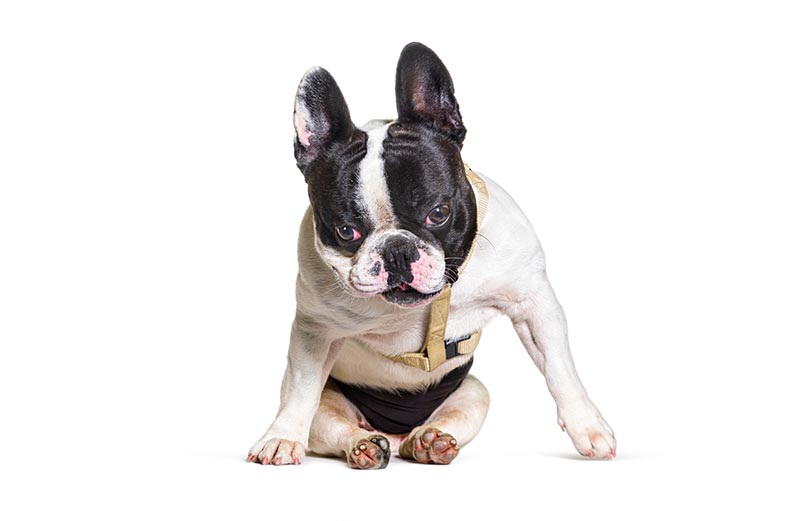
What Is the Cause of IVDD in French Bulldogs?
The cause of IVDD in French Bulldogs is the same as in any other species.
Discs are comprised of two parts, almost like a jelly donut. The outer portion is firm and fibrous, but the inner portion is much softer. If the outer fibrous part is damaged during a fall or trauma or becomes defective over time, then the inner portion can bulge out, generally in the direction of the spinal cord.
Because the spinal cord is contained within the bony canal created by the vertebrae, the nerves in that area can become pinched and lose function—either partly or completely.
Where Are the Signs of IVDD?
Signs of IVDD can include:

What Are the Potential Dangers of IVDD?
- After slipping the first disc, a dog may have others slip in the future.
- Despite extensive treatment, there is a chance that a dog may not fully recover their mobility.
- Severely affected animals require treatment (generally surgery) within 24 hours of initial disc rupture, in order to achieve the best chance at recovering.

Frequently Asked Questions (FAQ)
What is the treatment for IVDD?
IVDD is staged on a scale of 1-5, with 5 being the most affected by the disease. Earlier stages may simply self-correct, and require little or no treatment at home. Pain meds or anti-inflammatories may be prescribed by your vet.
However, later stages of the disease, that cause more severe clinical signs, may require corrective surgery to be treated. Sometimes, dogs that start with the earlier stages of the disease will progress to more severe stages, or may not respond to home treatment. They, too, may be recommended for surgical treatment. In dogs with the most severe stage of the disease, surgery is generally considered an emergency, and immediate corrective action should be taken.
What does surgery entail?
Surgery aims to remove pressure from the spinal cord caused by the damaged disc. This can involve creating a surgical opening in the affected region of the vertebra, which allows the disc to bulge in another direction. This helps take the pressure off the spinal cord, thus, allowing normal function to return.
Damaged disc material may also be removed during the procedure. It can take days to weeks for dogs to fully recover from the surgery. It is important to know that, unfortunately, some dogs won’t respond, in spite of surgery.

What does homecare look like for French Bulldogs with IVDD?
If your dog has surgery, they will often remain in the hospital for a few days afterwards, to monitor their response to the procedure. Care is also often extensive in this phase, and can include assisted walks with various support devices, as well as as help with feeding, and urinating (sometimes a catheter is placed to assist).
Once your dog returns home, they may still require help to stand and walk—especially with tasks like posturing to urinate or defecate. Your vet or a vet tech will demonstrate the various techniques by which assistance can be given, which generally includes a supportive sling, placed under the abdomen to take some of your dog’s bodyweight off their limbs.
Ensuring that your dog also receives any prescribed medications, and has comfortable bedding to sleep on, are also important parts of the homecare routine. Sometimes, physical therapy routines will be prescribed. These can usually be done at home, though some dogs may also be referred to a veterinary physical therapist for further treatment.
How is IVDD diagnosed?
Diagnostic imaging performed in a vet clinic is generally helpful in ruling out other causes. However, not all clinics have the required technology, or surgical expertise, to treat the disease. Therefore, your vet may refer you to a specialist for these procedures.
Since other diseases (such as fibrocartilaginous embolisms) can look similar to IVDD, this imaging is important for determining what is actually causing any clinical signs you’re noticing.

Conclusion
Intervertebral disc disease in French Bulldogs is not a topic to be taken lightly! Because it can severely impact a dog’s daily life, and because successful outcomes can depend on quick intervention, it is important to be able to recognize it, and to know which next best steps to take.
Remember, any difficulty in a dog’s ability to walk is not normal, even if it is just one or two legs. If you see issues such as these, contact your vet as soon as possible!
Sources
Featured Image Credit: Rachata Teyparsit, Shutterstock
Get Hepper In Your Inbox


Pet care tips from our vets and experts, straight to your inbox.
You may opt-out at any time. View our Privacy Policy for more information.
As a veterinarian, Lauren is happy to share her experience in emergency medicine and cats, with everyone. She enjoys sharing insightful, real life tips for having cats as part of your life, and what to do in critical situations with your pets.
Lauren is a vet with over a decade of experience in cats and dogs, along with infectious diseases. She loves teaching, and lectures for students, owners, and clinicians, on various topics.
Lauren received her degrees from Murdoch University, in Perth.
Experience
Education
Join the conversation
Ask a question, share your story, or send private feedback.