Hepper is reader-supported. When you buy via links on our site, we may earn an affiliate commission at no cost to you. Learn more.
How To Teach Your Dog to Talk with Buttons in 5 Simple Steps


In this article
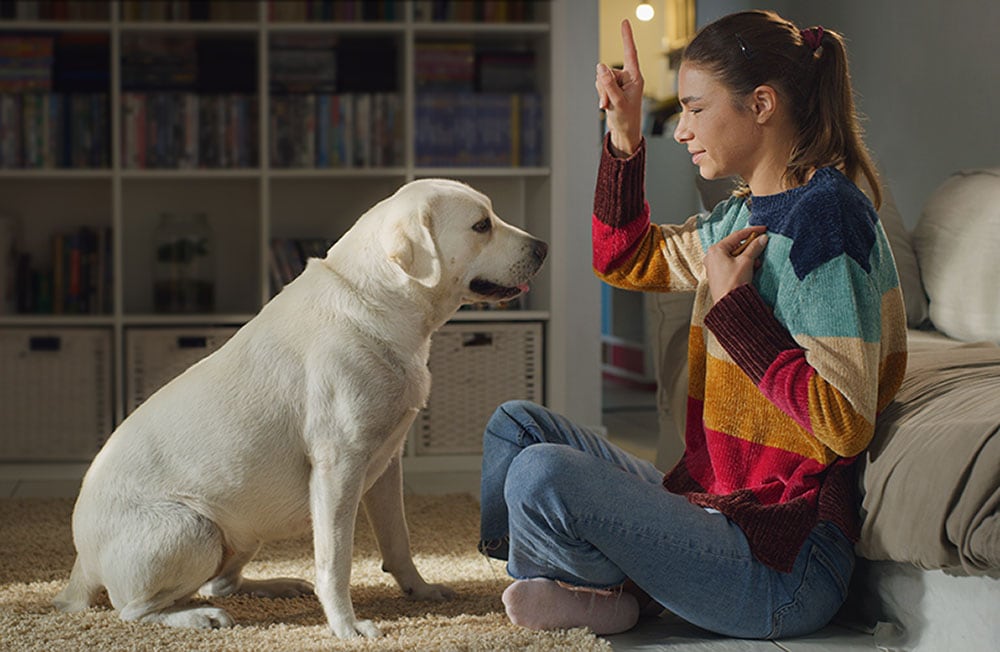
Wouldn’t it be wonderful if your dog knew how to talk? Dogs are extremely smart creatures and can quickly learn all kinds of tricks. Although they cannot actually “talk,” you can teach your dog to talk with buttons.
Teaching your dog to communicate through buttons is not too hard as long as you know what you need to do. In this article, we will cover everything you need to teach your dog to talk with buttons.

Can Dogs Communicate Like Humans?
Dogs can communicate with us, although not like humans do. Instead, they can talk to us in a canine-like way. Typically, dogs will express their feelings and needs through vocalization like barking and their body language. Still, you must remember that speech and communication are different.
They do not have the ability of speech, but they can understand our words and can communicate in their manner. Once you introduce buttons to your dog, you might not know if your beloved pet is making an observation or request or if the dog is just playing and pushing buttons.
However, you will be able to teach your canine to use human words in their own way and build associations with specific actions. Your pup will also be able to connect cues made in different contexts to make a specific meaning.
Once your dog learns to talk with buttons, it’s up to you to determine if you’re having a conversation with your dog or if it’s just making simple requests, observations, or asking for toys and activities.
The 5 Simple Steps to Teach Your Dog to Talk With Buttons
1. Supplies
Before you begin this exciting adventure of communication with your dog, you need to gather all the supplies for this training, including:
- Recordable buttons/ Talking buttons/ Answer buzzers
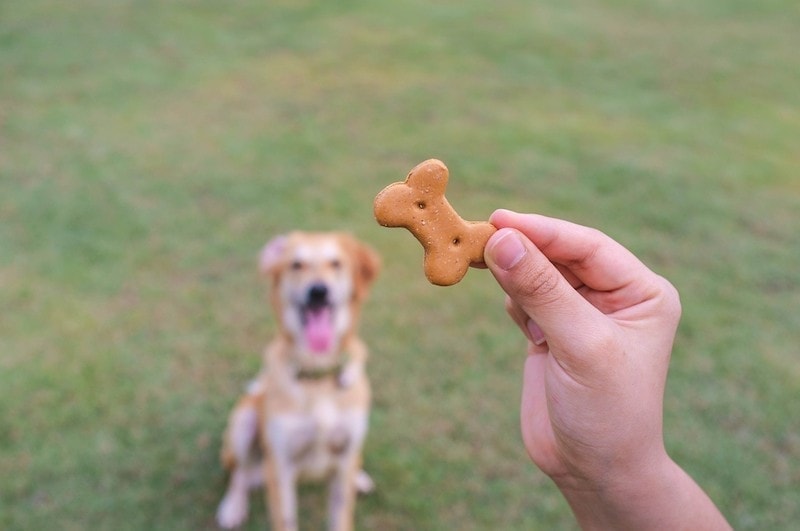
- Reward treats
- Props
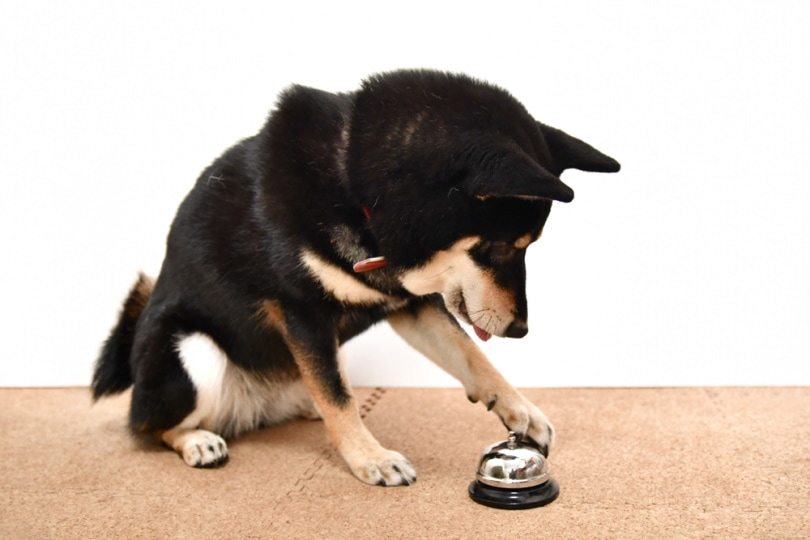
You should brainstorm ideas about where to place the buttons. Regardless of the location, the buttons should be firmly on the ground, so you can attach them to foam floor tiles.
2. Talk to Your Dog Every Day
Dogs are fast learners, and if you talk with them from an early age, they’ll be able to understand the meaning behind the words you normally use. One of the key things to help your dog through this learning process and prepare it for what’s coming; meaning you should talk to your dog daily, helping it tie specific actions with words.
3. Choose Appropriate Words and Associations
Before you start the button training, it’s important to observe the words you’re using and try to stay aware of your vocabulary patterns. For example, if you refer to every meal with words like “eat” or “food,” you should stick to that phrase for that activity. Or, if you always use words such as “potty” to describe going outside, you should always use the same wording to help your puppy connect it with the activity that’s going to happen.
You should always strive to choose appropriate words and associations because those will be the starting point of your dog learning to communicate through buttons. Remember to choose words your dog hears the most and stay consistent. Repetition with those phrases will allow your canine to adjust to the whole learning process much more manageable.
Once you choose the words you use the most, you can record them to the buttons and place them in the areas connected with your activity. Of course, the precise location can vary, so you can try out multiple options until you find something appropriate for you and your dog.
4. Introduce the Buttons and Show Your Dog How to Use Them
Once you’ve set up the buttons, you should introduce them to your dog. It’s better to start small with only a couple of buttons, while you can introduce new ones later in the process. At this stage, you need to show your dog what the buttons are for, so you should push the button associated with your current activity.
The goal is that, instead of forcing your dog, you should express to your dog that this is a form of communication and not just a button-pushing trick. If you repeat the button pushing every time you do the activity the button represents, your dog will mirror your behavior.
Over time, your dog will realize it can press the button once it wants to engage in that specific activity. Teaching your dog to talk with buttons is not a fast process, so you need to stay patient and give your dog enough time to adjust to using the buttons. Remember that the key to learning to communicate through buttons is consistency.
The more you practice, the faster your dog will learn the words and realize it can also use them to talk with you. When you notice that your canine is mirroring you and pressing the buttons when it wants to do a specific activity, you should praise it and give the dog what it’s asking for to show you understood the request.
5. Introduce New Buttons
When your dog masters the buttons you currently set up, you can add more buttons with words describing different activities and aspects of your dog’s daily routine. You can also introduce games, toys, emotions, or anything similar in the same manner, rewarding your dog once it learns to express that through the buttons.
Think about the words your dog knows, from people, objects, and trained tricks to various experiences. Through the button learning process, your dog can learn to use buttons for everything you frequently experience in your daily life.
With time, your dog will be able to request activities and objects and even express its emotions through the buttons.

How To Choose Locations for New Words?
Adding new words without changing the current positions of the buttons will allow your dog to transition to the new words smoothly and efficiently. Choosing the locations for new words is individual as everyone functions in a different way. However, some people categorize similar words together to help the dog adjust to them more rapidly.
What Should I Do if My Dog Is Hesitant and Nervous Around the Buttons?
Your dog might be hesitant or nervous with the first introduction of the buttons, but it’s nothing that should worry you. Canines are naturally born explorers, and they could feel under pressure if you keep leaning over them and observing them while they push and play with the buttons.
It could be helpful to allow your dog to explore the buttons on its own for a while to grasp a better sense of what they’re all about. You could also introduce blank buttons without words first to take the edge off your pet. In any circumstances, avoid forcing or obligating your dog to use the buttons.
It should be a fun and playful way for you to bond and connect and not something your dog needs to do. By practicing our steps and showing the modeling technique to your dog, it will feel safe enough to use the buttons without pressure.
Conclusion
Dogs are smart, and they pick up new things quite fast, so as long as you’re patient with your dog, you can teach it how to communicate with you. Remember to take baby steps and allow your dog to adjust to the buttons and the new environment. Consistency, patience, and practice will be your best friends while teaching your dog to talk with buttons.
Sources
Featured Image Credit: HQuality, Shutterstock
Get Hepper In Your Inbox


Pet care tips from our vets and experts, straight to your inbox.
You may opt-out at any time. View our Privacy Policy for more information.
Visnja is a content writer that covers various topics such as DIY, pets, home improvement, travel, gardening, and more.
She is a young mom and a college student, who didn’t have enough time to balance her personal and work life, so after multiple years of working a regular 9 to 5 job, she decided to pursue her passion and make a living out of it. She has been writing for a couple of years, helping people find valuable and interesting information online.
Join the conversation
Ask a question, share your story, or send private feedback.