Hepper is reader-supported. When you buy via links on our site, we may earn an affiliate commission at no cost to you. Learn more.
How To Tell If Your Cat Has Fleas - 8 Signs & Symptoms
In this article
Fleas can become a nasty infestation and pest on our feline friends. Fleas can affect both indoor and outdoor cats, so it is difficult to prevent either feline from catching fleas.
One of the most noticeable signs that a cat has fleas is excessive itching, but most cat owners will be surprised to know that there are a range of other ways to tell if your cat has fleas. Not every itchy cat has fleas, so it is important to learn how to tell through other symptoms whether your cat may be suffering from a flea infestation.
This article will give you detailed insight as to whether your cat may have fleas or not, by explaining common signs of flea infestations in cats and how you can deal with them.

Can Cats Have Fleas Without Seeing Them?
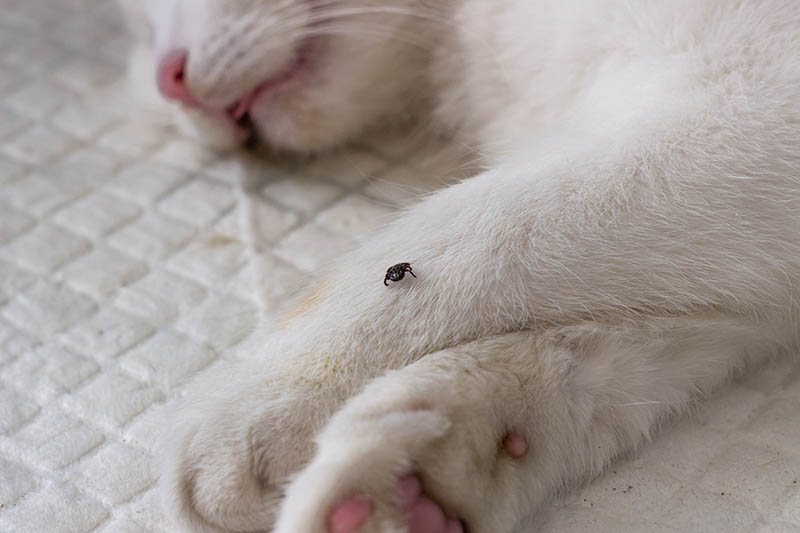
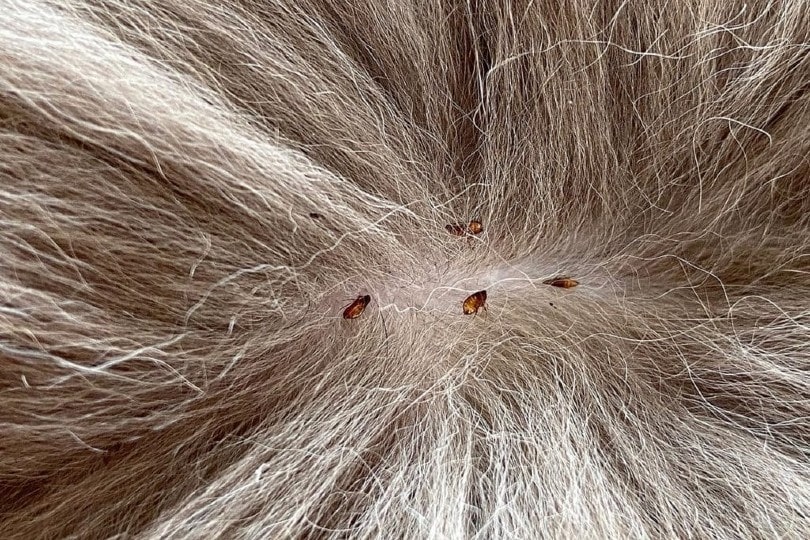
Your cat may have fleas even if you cannot see anything on their fur. For some cats, the fleas gather in a certain area (usually around the neck or base of their tail) and can not be seen on other parts of the body. You will need to look closely to identify the small pin-prick-sized fleas on your cat’s body.
Flea eggs are generally difficult for the human eye to see clearly, so your cat may have unhatched flea eggs sitting in their fur even if the live fleas have been removed. Furthermore, flea eggs can fall from your cat’s fur and land in carpets, sandy areas, and on your household furniture. These flea eggs can later hatch and reinfest your cat even after your cat is free from adult fleas and their larvae.
This makes it important to vigorously clean the environment if you suspect that your cat has fleas. Furniture and carpets should be vacuumed and cleaned regularly while your cat is in the process of being treated for fleas.
8 Ways To Tell If Your Cat Has Fleas
Scratching is not the only way to tell if your cat has fleas and there are many other ways you can use to determine whether your cat has fleas. Generally, if your cat has shown more than three of the following signs, then it usually means they may be suffering from a flea infestation.
1. Excessive Grooming and Hair Loss
Cats are habitual groomers and spend most of their time grooming themselves to keep their fur clean. During flea infestations, a cat may be showing signs of excessive grooming and in more severe cases, they may be biting at their fur which can cause hair loss in that specific area.
Cats will lick and chew repeatedly to try and eliminate the itchy sensation. This can then result in bald patches, typically along their lower back where their tail connects, along their legs, and between their shoulder blades.
You may also discover that your cat's skin and coat quality are deteriorating, becoming dry and dull, and flaky skin is also common. This is because your cat will spend more time trying to rid themselves of the itchy feeling the fleas cause, rather than sticking to their usual grooming habits.
2. Intense and Frantic Scratching
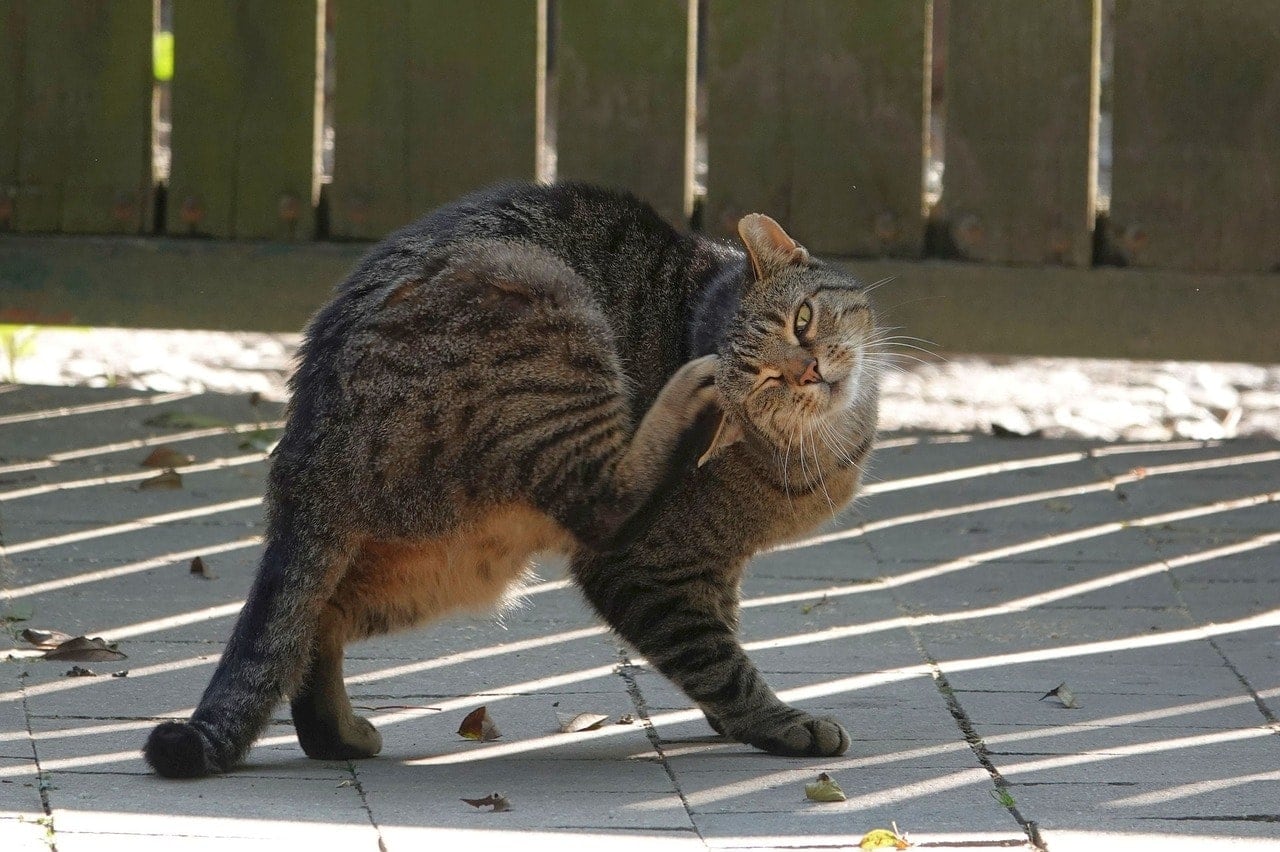
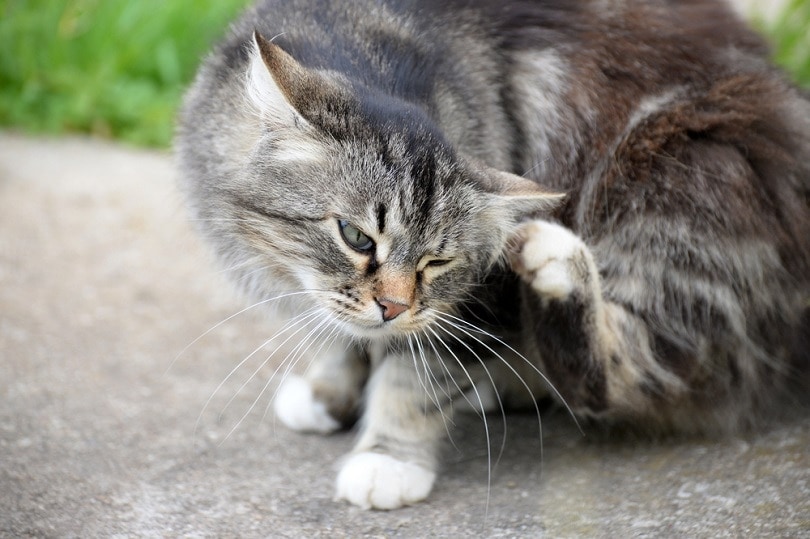
The fleas that crawl around on your cat's skin can make them feel very itchy. Your cat may begin a new habit of chewing at its fur or scratching uncontrollably. Your cat will scratch itself to try to rid the itchy feeling of fleas crawling and sucking on their blood.
It can get quite uncomfortable, and most cats will spend a good portion of their day and night intensely scratching.
Since cats regularly groom themselves, cat owners may have a difficult time telling the difference between a cat scratching and licking themselves as a form of grooming and whether it's due to fleas. It is easier to tell if a dog has fleas for this exact reason. Dogs rarely groom themselves to such an extent as cats do, so dog owners will notice quickly if their dog is scratching and licking abnormally.
3. Avoiding Certain Parts Of Your Home
Fleas naturally thrive in a warm environment with porous surfaces, such as furniture, carpets, and bedding. Fleas will rarely survive on hardwood surfaces like tablets and tile flooring.
If you notice that your cat has begun to avoid these areas of the house, then it could indicate that they are aware that fleas are inhabiting these areas. They are trying to stay away from the fleas!
Cats are highly intelligent animals and will stay clear of areas that cause them discomfort.
You can also opt to try methods to rid the fleas from your household. Diatomaceous earth is a natural powder that is not harmful to cats and many other common pests, but it dries out the fleas’ eggs and exoskeleton, which prevents infestations from inhabiting these porous surfaces.
4. Muscle Loss, Pale Gums, Lethargy
In more severe cases where your cat has been infested with a large number of fleas for a prolonged time, they may begin showing signs of anemia from all the tick bites.
Pale gums, muscle loss, and lethargy are common signs of anemia (low red-blood-cell count), which happens when many fleas continuously consume your cat’s blood, or if they infest a specific area which leads to deep wounds that may bleed excessively.
This is known as flea anemia, and it is most common in kittens, seniors, or sick cats according to Dr. Steve Weinberg, a knowledgeable veterinarian from 911 Vets.
5. Tiny Pepper-Like Specks on Your Cats Fur
Flea dirt is also commonly seen with cats suffering from a large flea infestation. This can be seen by dark brown specks on your cat’s fur and skin. This is the fleas’ feces (or waste), and it sticks to your cat’s fur and skin, causing an unhygienic environment.
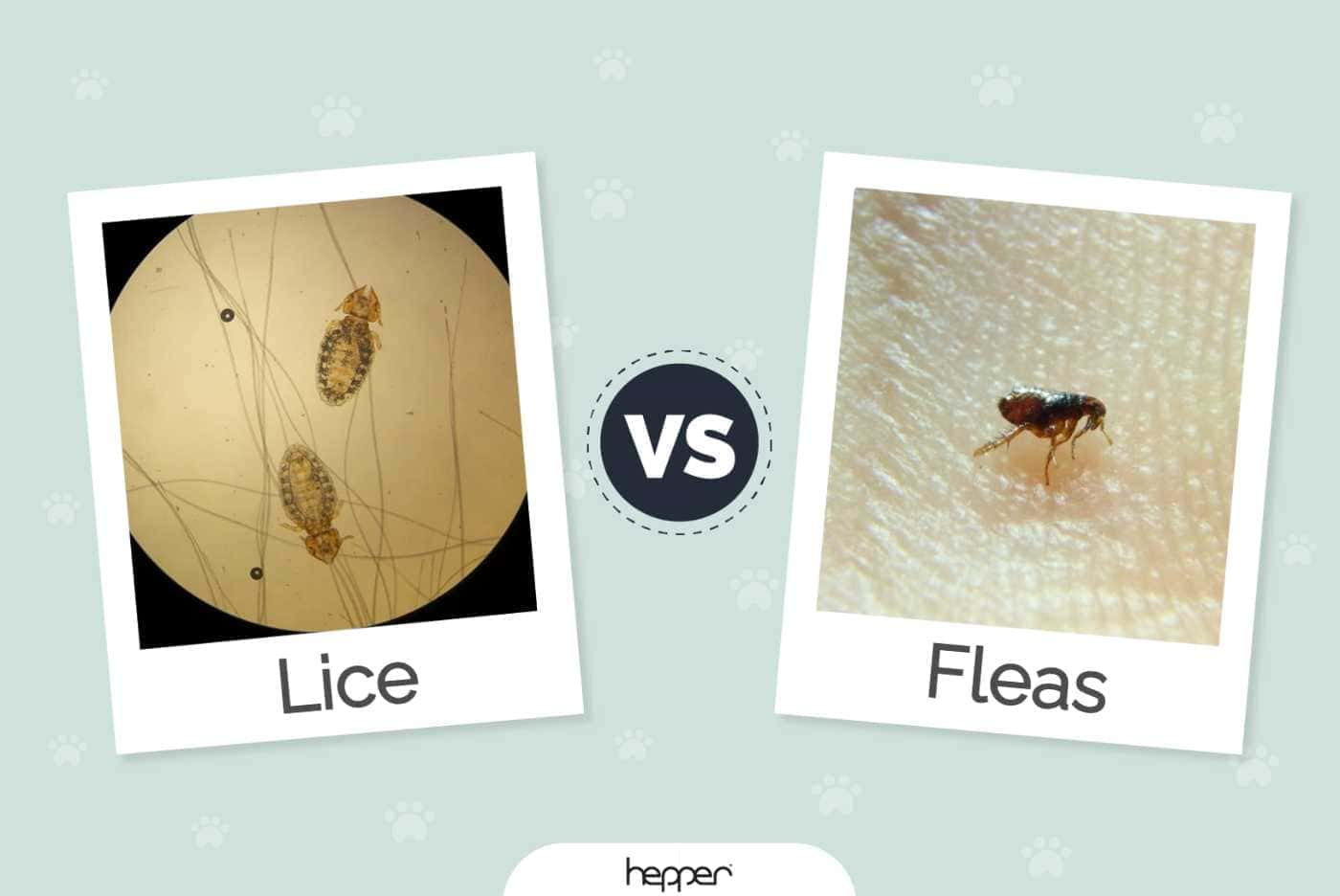
If you use a lice comb (which is relatively inexpensive and primarily used for humans), then it will collect these brown feces and, in some cases, the fleas and their eggs themselves.
These feces are composed of your cat's digested blood and will turn red if you mist them on a paper towel.
6. Red Skin Lesions or Scabs
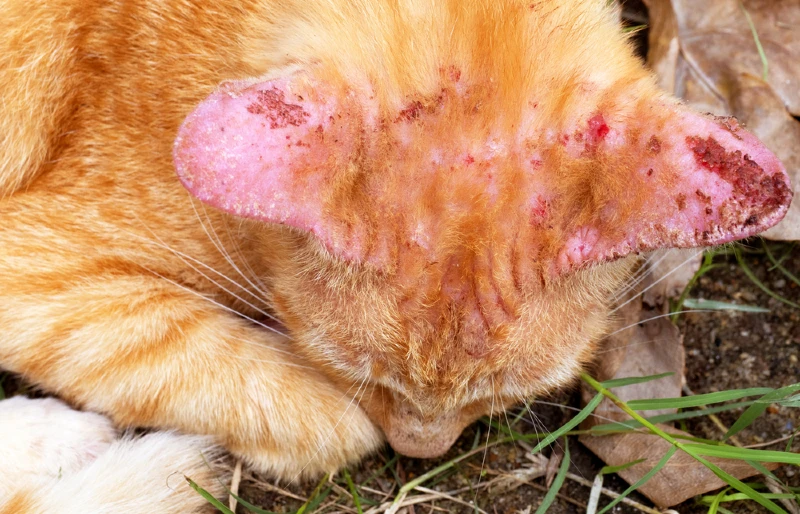
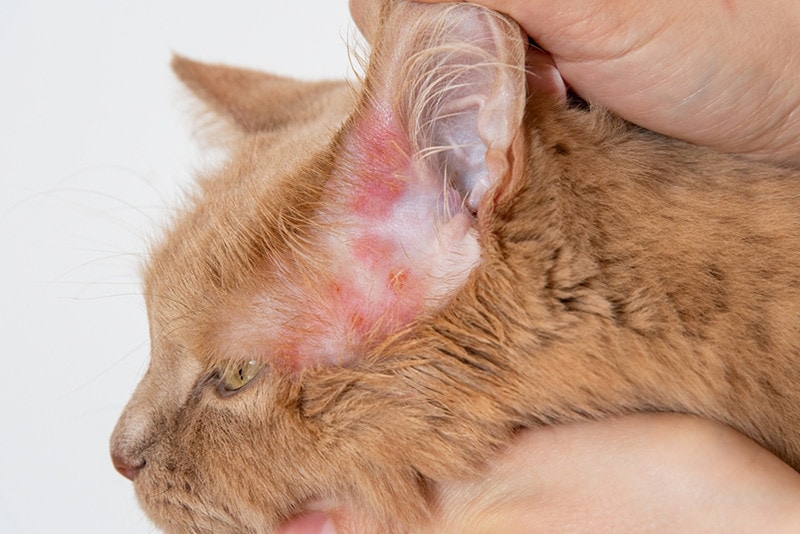
Some cats are sensitive to flea saliva, which is deposited on their skin when the flea bites them, which can lead to their skin becoming red and inflamed. These lesions are mostly found on your cat's back, face, and neck. Not only are these lesions itchy, but they can be quite uncomfortable and sore for your cat.
Your cat will chew on these lesions to relieve the itchiness, which can cause them to ooze blood and scab during the healing process.
This condition is called flea allergy dermatitis and cats suffering from this condition brought on by the fleas may also suffer from fatal anemia.
7. Agitation and Restlessness
All the discomfort brought on by fleas is bound to make any cat agitated and restless. It can also cause them to show significant behavioral changes that they never displayed before.
Even the calmest and most laid-back cat will start to show agitation through growling, shaking, constant meowing, and visible bodily discomfort once they have been infected with fleas.

8. Pin-Sized Insects Crawling On Your Cats Fur
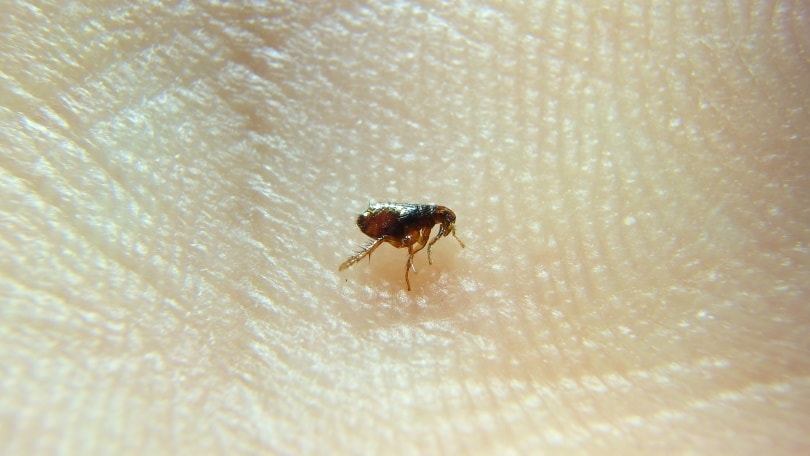
The most obvious indicator that your cat has fleas is if you can spot the fleas crawling on your cat’s skin. The body color of fleas ranges from black to reddish-brown (if the fleas have recently fed on your cat’s blood).
With cats suffering from heavy infestations, there is a good chance that you would see their eggs on your cat’s fur and skin. Fleas usually gravitate to specific areas of your cat’s body, such as the nape of their neck, tail, and hind legs.
You can use a handheld magnifying glass to see the fleas more clearly. If you brush or comb your cat, hold a paper towel underneath so that the fleas can fall onto it. If you see moving tiny insects on the paper towel, then there’s no doubt your cat has fleas.

Final Thoughts
It is better to help prevent your cat from catching fleas, rather than having to deal with them once your cat is already infested. Keeping your cat on a monthly free-prevention program can help combat any possible flea infestations. This can work alongside outdoor flea control sprays and powders which can be used during the summer and spring months when fleas are most prominent.
Your cat's veterinarian can give you recommendations on anti-flea methods, such as oral medications and topical sprays or powders that will help prevent your cat from catching fleas.
See Also:
Can My Cat Get Fleas in the Winter? Vet Approved Facts & Advice
Does Febreze Kill Fleas? Vet-Reviewed Tips on Safety & Effectiveness
Featured Image Credit: KanphotoSS, Shutterstock
Get Hepper In Your Inbox


Pet care tips from our vets and experts, straight to your inbox.
You may opt-out at any time. View our Privacy Policy for more information.

Sarah is residing in South Africa with her partner and pets. She currently is interested in veterinary science and ichthyology, which she wants to study alongside her main passion: pet content writing. Sarah has over 60 fish including goldfish, tropicals, shrimp, and snails. She also keeps hamsters and a tarantula and wishes to provide quality content for readers and allow others to learn from her knowledge and experience. Sarah has much experience in all aspects of pet care, and providing the world with knowledge on ethical pet ownership is her lifelong dream.
Join the conversation
Ask a question, share your story, or send private feedback.