Hepper is reader-supported. When you buy via links on our site, we may earn an affiliate commission at no cost to you. Learn more.
How to Tell if Your Cat Has a Tick: 8 Vet-Approved Steps to Locate & Remove


In this article
Ticks are small, eight-legged arachnids that feed on the blood of an animal or human host. Once a tick latches onto the skin, it can remain there for several days while it continues to feed. During this time, it can transmit diseases1 to the host.
Cats who frequent heavily wooded or grassy areas are at the highest risk of getting ticks. Since ticks attach to the skin, they are not easily noticed just by looking at your cat. If cats spend a great deal of time outdoors, they should be checked for these parasites. In this article, we look at ways to spot ticks on your cat and what you can do if you find them. Let’s get started.

What Am I Looking For?
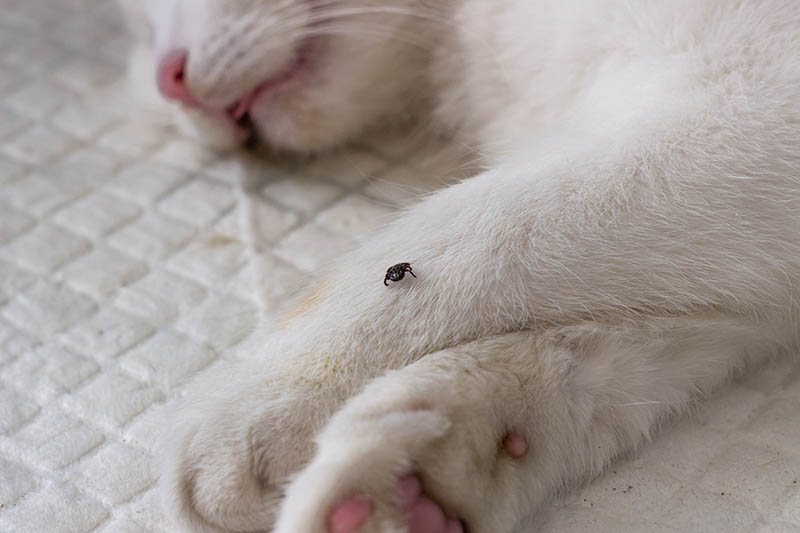
Before you can start to check your cat for ticks, you must know what you’re trying to find. Ticks can appear anywhere on your cat's body but tend to stay near the head, neck, ears, and feet, where the hair is thinner and the skin is easier to reach.
Ticks are between 1 millimeter and 1 centimeter long, depending on how old they are. Adult ticks look like spiders with eight legs and have dark, oval-shaped bodies. The body gets larger and darker the longer the tick feeds and engorges with blood.
Since this parasite is firmly attached to your cat, your instinct may be to pry it off immediately. However, tick removal can be tricky because you don’t want to rupture the tick or leave the head stuck in your cat’s body. Safe and thorough tick removal is necessary.

Before You Begin
It’s best to gather all the necessary tools before you start looking for ticks on your cat. This way, you won’t lose track of the tick and have to find it again after going to fetch an item. Have everything that you need right there for easy tick removal. You’ll need:
- Tweezers
- A tick-removal tool
- Latex gloves
- Antiseptic wipes
- A sealed container
- Someone to help you, if available
A tick-removal tool is best for safely removing ticks from your cat, but if you don’t have access to one, tweezers can work. Tweezers with pointed tips are better than angled or beveled tips, which can break up the tick and leave pieces behind.
Antibacterial soap and water on a soft cloth can be used in place of antiseptic wipes. The tick bite must be cleaned after the tick is removed.
If you don’t have another person to help you, you can remove the ticks yourself. It’s easier if another person holds your cat still for you, but this can be a one-person job if necessary.

How to Locate & Remove Ticks in 8 Steps
1. Feel over your cat's fur
Put on the latex gloves, and run your hands over your cat’s fur. Ticks will feel like hard lumps on the skin. For long-haired cats, work your hands into their undercoats to feel for any lumps.

2. Examine the lump
When a lump is discovered, carefully part the hair down to the skin and examine it. Ticks have eight legs and dark, oval-shaped bodies. You will clearly see their legs. This is how you can distinguish between ticks and lumps that are part of your cat’s skin. For cats with thick coats, you may need to add a drop or two of water to the hair to part it and see down to the skin.
3. Use tweezers or a tick removal tool
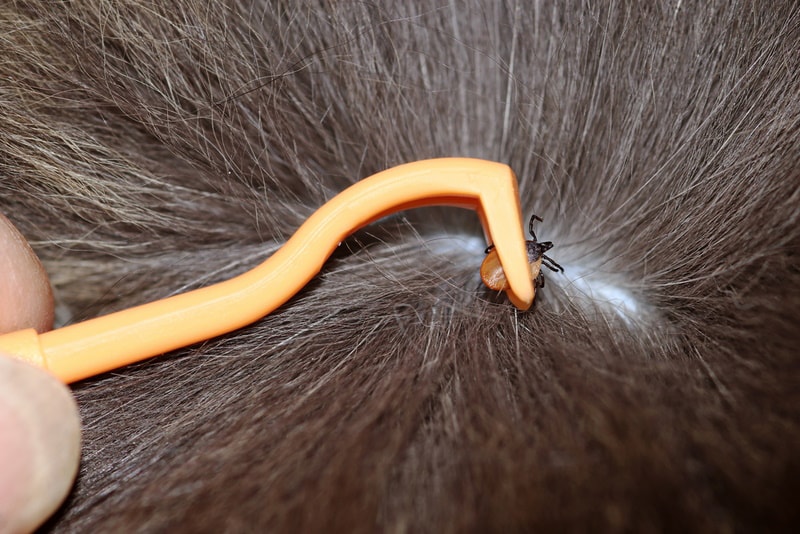
Grab your tweezers or tick-removal tool. You don’t want to leave the tick’s head stuck in your cat’s skin. Complete removal of the tick is necessary to avoid infections. If you pull the tick and pieces of it remain in your cat’s skin, continue pulling those out until you’ve removed them all. Place the tweezers or tool over the body of the tick and as close to your cat’s skin as possible. Then, pull carefully straight out to remove the entire tick without squeezing it. This should be one fluid motion. Don’t stop and start again, as this can make you lose your grip and cause your cat to get anxious. It may take a minute of constant pulling to get the tick to release from the skin.
4. Try to identify the tick
Once you’ve removed the entire tick, place it in a sealed container. Take a photo of the tick in case you need to identify the type of tick that bit your cat. If your cat starts showing signs of illness, this will help your vet know how to proceed with treatment.
5. Clean skin
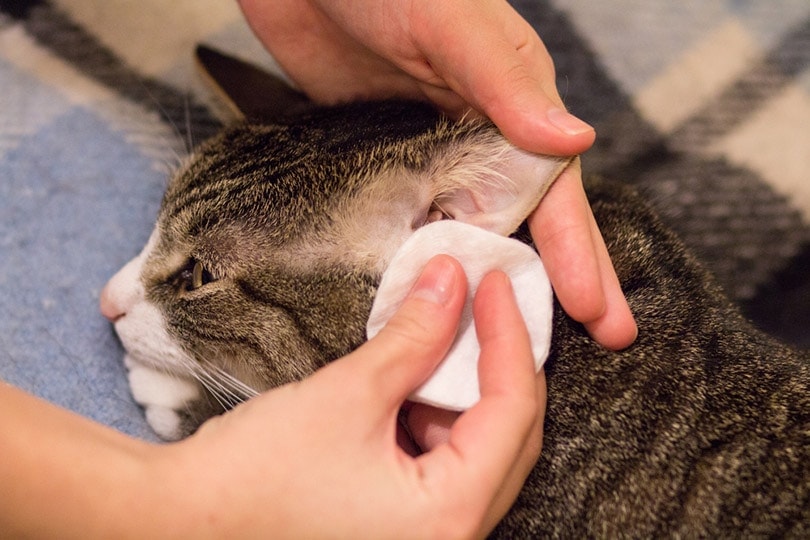
Clean the affected bite area with antiseptic wipes or soap and water on a soft cloth.
6. Repeat
Repeat the process until you don’t feel or see any more ticks on your cat.

7. Clean your tools
Dispose of your gloves and the sealed container of ticks. Clean your tweezer or tick-removal tool with disinfectant.
8. Seek professional help if you are struggling
If you are struggling to remove a tick and you can’t get it, or if you’ve left parts of the tick in your cat’s skin, bring your cat to the vet for treatment.
Should I Burn Ticks?
Never attempt to burn, drown, or otherwise harm ticks, especially while they are still attached to your cat. Not only can this injure your cat, but the ticks are likely going to be unaffected by anything other than being forcibly removed by hand.
Watch for Signs of Illness
Once the ticks are removed, keep an eye on your cat for any signs of illness. Ticks can transmit diseases.
Cytauxzoonosis is a tick-borne disease that specifically affects members of the cats. Signs develop around 10 days after a tick bite. These will include:
- Lethargy
- Fever
- Difficulty breathing
- Pale gums
Cats will usually also be anemic and dehydrated upon an examination by a veterinarian. This disease can eventually affect the cat’s organs and cause death if left untreated.
Lyme disease is transmitted through tick bites. While this disease tends to affect dogs more than cats, cats are still at risk if they’ve had ticks. Signs include:
- Fever
- Lameness
- Loss of appetite
- Fatigue
- Stiff joints
- Pain when moving
This disease can move on to affect your cat’s nervous system, heart, and kidneys. If you notice these signs in your cat, take them to a veterinarian right away.
Preventing Ticks on Your Cat
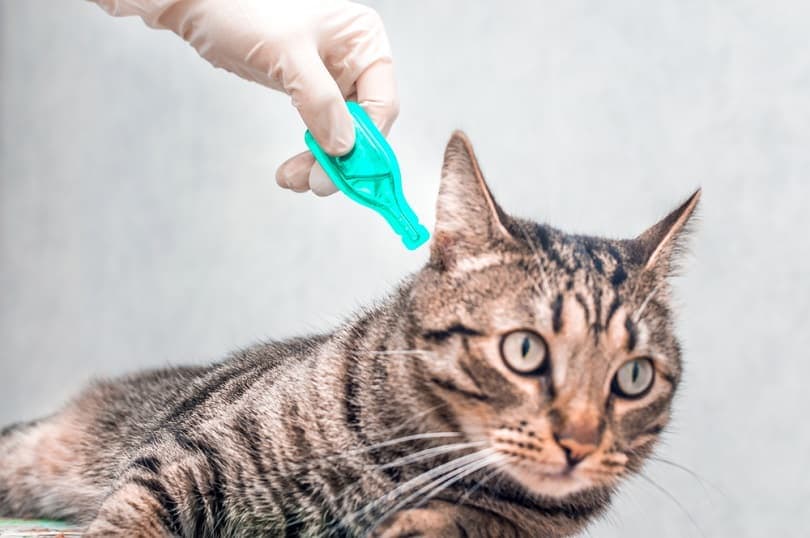
The best way to keep ticks off your cat is to prevent them in the first place. Prescription monthly preventative products that are applied topically to your cat’s skin are most effective at killing and preventing ticks and other parasites. Talk to your vet about the tick prevention that would be best for your cat.
Over-the-counter products like tick collars, sprays, and powders are less effective at preventing ticks. Collars need to be replaced. Sprays and powders must be frequently reapplied in order to work properly.
Only use products meant for use in cats. Using tick prevention made for dogs can be toxic to your cat and potentially fatal.
Final Thoughts
Ticks are a pain, but your cat doesn’t have to give up exploring the great outdoors to stay safe. Finding and removing ticks quickly is the key to preventing diseases in your cat.
By following the steps in this article, you can safely remove ticks from your cat’s skin. Watch for any signs of illness, as these could indicate tick-borne diseases that require treatment from a veterinarian.
To prevent ticks in the future, use a tick-prevention product made for cats. Talk to your vet about which one is right for your cat.
We hope that you’ve learned new information on how to remove a pesky tick the next time that you find one on your cat.
See also:
Is It Possible for Cats to Get Lyme Disease? Keep Your Cat Safe!
Why Is Your Cat Leaving Blood Drops on the Floor: 7 Vet-Reviewed Reasons
Featured Image Credit: Topolszczak, Shutterstock
Get Hepper In Your Inbox


Pet care tips from our vets and experts, straight to your inbox.
You may opt-out at any time. View our Privacy Policy for more information.
Nicole is a lover of animals of all sizes but is especially fascinated with the feline variety. She’s the proud mom of Baby, a Burmese, and works every day so he can relax in the sunshine or by the fire. She’s always had a cat in her home and has spent countless days with others, observing behaviors and softening up even the grouchiest of the lot. Nicole wants to share her kitty expertise with you so you and your cat can live happy, healthy, and care-free.
Join the conversation
Ask a question, share your story, or send private feedback.