Hepper is reader-supported. When you buy via links on our site, we may earn an affiliate commission at no cost to you. Learn more.
Why You Should Never Buy a One-Gallon Fish Tank: Our Vet Explains

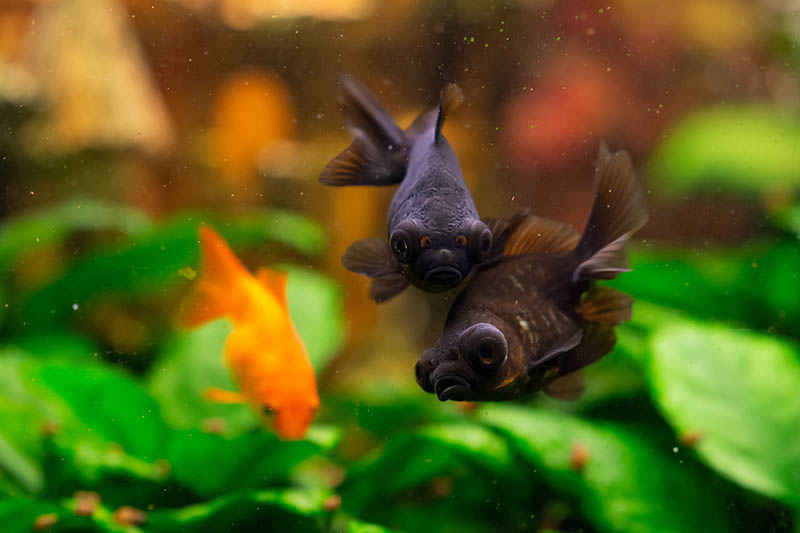
We're all familiar with the picture of a fishbowl and a single fish inside. This image has been so normalized that most people are unaware that keeping fish in a one-gallon tank is far from ideal and even unethical. Here are the most important reasons why you should not buy a one-gallon tank for your fish.

The 6 Reasons Why You Should Never Buy a One-Gallon Fish Tank
1. Water Quality
Your fish breathes, eats, defecates, and lives in the tank’s water. Therefore, proper water quality is a huge part of successful fish keeping. Lower-than-ideal water quality will result in poor quality of life, diseases, and death. The reality of the average fish’s lifespan and replacement rate is alarming, and most cases can be traced back to the quality of the water they live in. After breaking down the central aspects of proper water quality control, it's obvious that a smaller tank does not translate to a better or easier-to-keep tank.
2. Hygiene
For the inexperienced fishkeeper, a one-gallon tank might seem like the best idea for an easy start. After all, they are small, so they should be easier to keep clean, right?
Nothing is further from the truth. Having less water volume means that the water will constantly be at risk of upsetting its delicate balance. An extra pinch of food might be enough to start a cascade effect that will quickly pollute the small amount of water. Since there is little volume for dilution, there is also very little room for mistakes, and when things change, they change fast.
Likewise, your fish’s waste will quickly build up in such a small amount of water. A one-gallon tank will need more time investment and regular attention than a larger tank. Constantly replacing most of the water just to keep it clean means that achieving homeostasis and building a healthy aquatic ecosystem is impossible.
3. Filtration
A big part of successful fishkeeping is the filtration system. The filter helps clean the water by filtering out and allowing the removal of debris and large waste particles. Another crucial part of a fish tank filtration system is that it supports the establishment of microorganisms that convert waste and help to clear up the water. The filtration system helps to recreate an aquatic ecosystem.
Unfortunately, there is no filter small enough for a one-gallon tank. While many filters on the market are sold for “1-X gallon tanks,” the reality is different. In a one-gallon tank, this system will create a very strong current due to the small volume of water and the reduced space. This results in very stressful conditions for the fish. A fish that is constantly having to work hard to move around and swim will be less healthy and have poor life quality.
4. Water Temperature
Each fish species needs a specific water temperature range to survive and thrive. Tropical fish normally need water heaters added to the tank in order to replicate the water temperature ranges of their natural habitats. Fish are extremely susceptible to water temperature changes since unlike mammals, they have no physiological control of their body temperature.
Tiny one-gallon tanks normally do not have a heater, so the fish in this kind of tank are regularly exposed to quick temperature drops and rises caused by normal day and night temperature changes. The larger the volume of water, the slower environmental temperature transfer will occur.
Moreover, even the smallest nano heaters available are much more likely to cause faster overheating of the water temperature in such a small tank.
Water that is too cold, too hot, or changes too suddenly will negatively affect your fish. A larger volume tank is easier to keep at a stable temperature.
5. Natural Behavior
Space
It might seem like a no-brainer for some, but many potential fish keepers have not considered how important the amount of space is. A one-gallon tank forces fish to constantly turn around. Fish need room to swim.
A one-gallon tank is not large enough for a fish to display its most basic natural behavior of swimming. Behavioral problems such as glass surfing, where fish swim up and down in the fish tank, are commonly reported in fish living in tiny tanks. Glass surfing in fish is the equivalent of pacing in another pet. It is an aberrant behavior that undoubtedly reflects an animal’s anxious state of mind and far-from-ideal conditions.
Even if, against all the odds, the fish keeper manages to keep proper water quality in a one-gallon tank, this is still not good enough. The extremely limited space itself is stressful for your fish. That stress results in poor health and a compromised immune system, leading sooner or later to disease.
Social Behavior
Many fish species live in schools. There are a few exceptions of fish that need to be kept individually, and some fish can do well alone, but many species need a school. A one-gallon tank is not large enough for one fish. so it definitely does not allow for more than one fish.

Final Thoughts
While a one-gallon tank might be thought of as a cheaper, smaller, and easier-to-keep version of a full aquarium, the reality is far different. A one-gallon tank is challenging to keep up, does not allow the development of a healthy aquatic ecosystem, and is susceptible to water temperature and quality changing much too quickly. One-gallon tanks create stressful situations, making fish more susceptible to disease and preventing them from displaying basic natural behaviors and enjoying a good quality of life. If you are thinking about getting pets, it’s important to remember that their lives will depend on you. We should all strive to provide our pets with the best possible living conditions. Educating ourselves about the species we wish to care for is an important first step. It gives us the real power to discern what is best and what needs to be avoided.
Featured Image Credit: Vlad Siaber, Shutterstock
Get Hepper In Your Inbox


Pet care tips from our vets and experts, straight to your inbox.
You may opt-out at any time. View our Privacy Policy for more information.
Paola Cuevas is a veterinarian and animal behaviorist, with over 18 years of experience working with a variety of species. Her passion is animal welfare and focuses on the importance of preventive medicine. Paola has skills in the fields of nutrition, microscopy, clinical pathology, diagnostic imaging, and endoscopy as well as extensive experience in animal training through positive reinforcement. As our in-house veterinarian, Paola is very happy to share her knowledge and experience with our readers and hopes to be helpful with any issue presented by your non-human family members.
Join the conversation
Ask a question, share your story, or send private feedback.