Hepper is reader-supported. When you buy via links on our site, we may earn an affiliate commission at no cost to you. Learn more.
Where Did Axolotls Come From? Origin, History & Vet Approved Facts


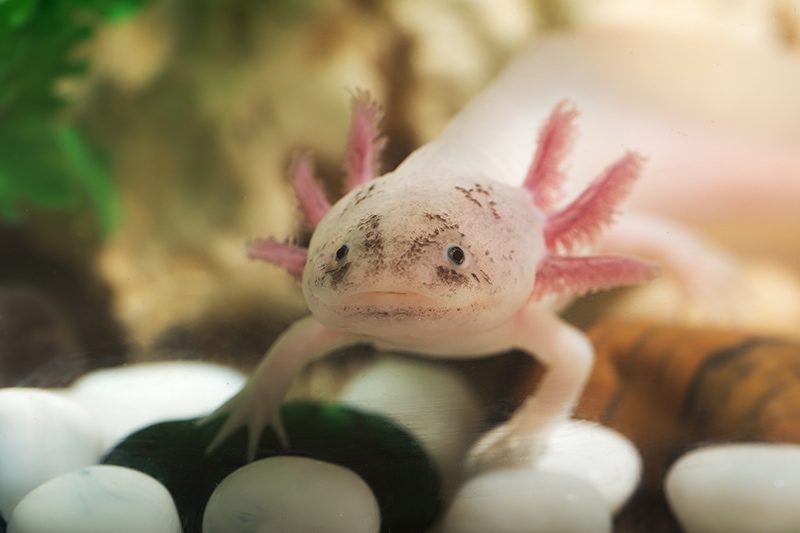
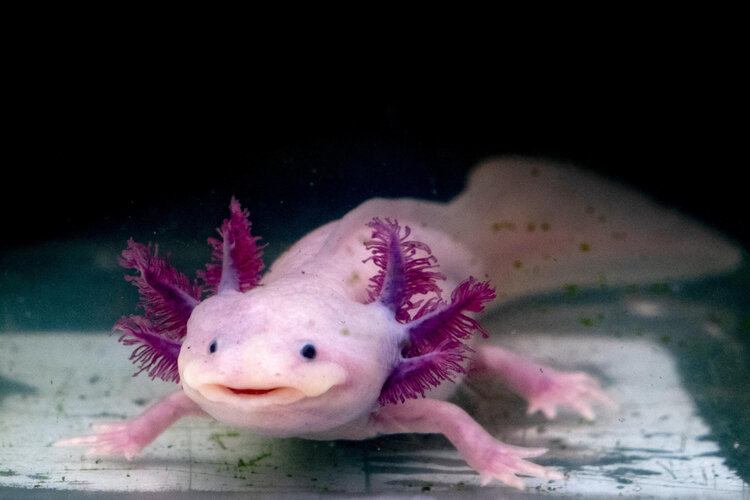
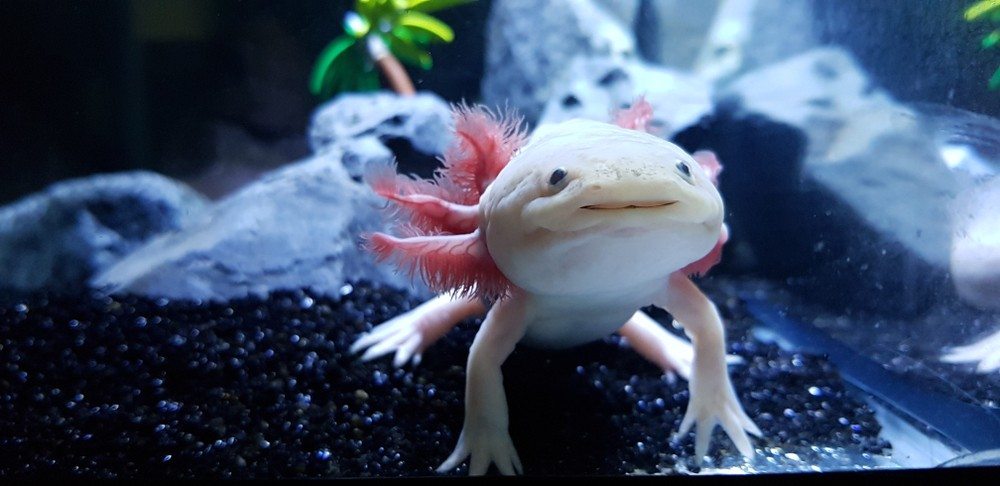
Axolotls have some impressive gills on either side of their head. These help them breathe underwater, though they also have lungs that enable them to breathe air. A lengthy dorsal fin keeps them steady while underwater.
Axolotls are impressive—they're truly one-of-a-kind creatures. Sadly, these endangered water dwellers can only be encountered in one spot on this planet. Lake Xochimilco, along with its network of canals in Mexico, are the exclusive stomping grounds for these cheery-faced salamanders.
However, these gill-sporting critters are suited for their distinct environment, thanks to their neotenic nature—basically, they keep their baby-like features as they grow. This trait helps them survive inside the lake, which is situated in an area that is high in elevation with consistently mild water temps (about 68°F) throughout the year. Although axolotls love the lake, their natural habitat is not working out so well for them anymore.

Axolotls: From Mythical Creatures to Pets
The Aztecs revered axolotls, linking them to their deity Xolotl, a lightning-and-fire god who ushered the dead to the afterlife. They believed axolotls shared Xolotl's shape-shifting powers, giving these critters major importance in their culture.
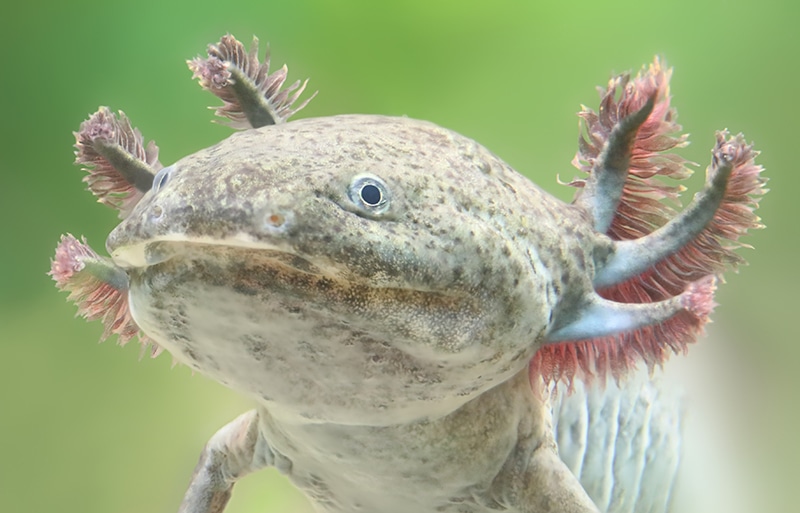
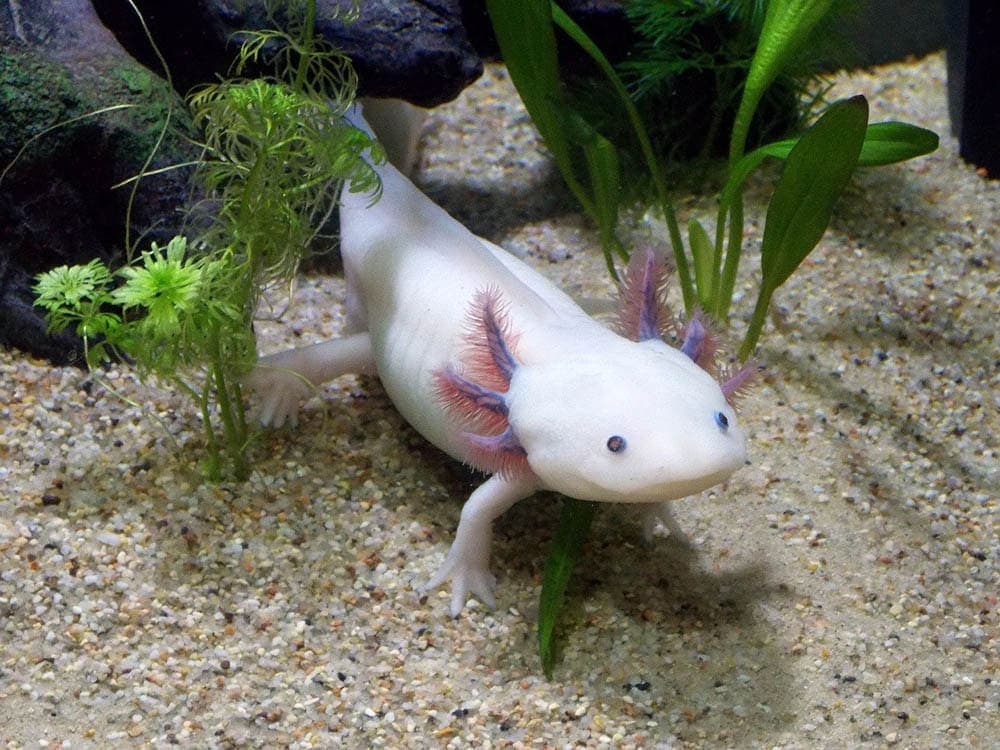
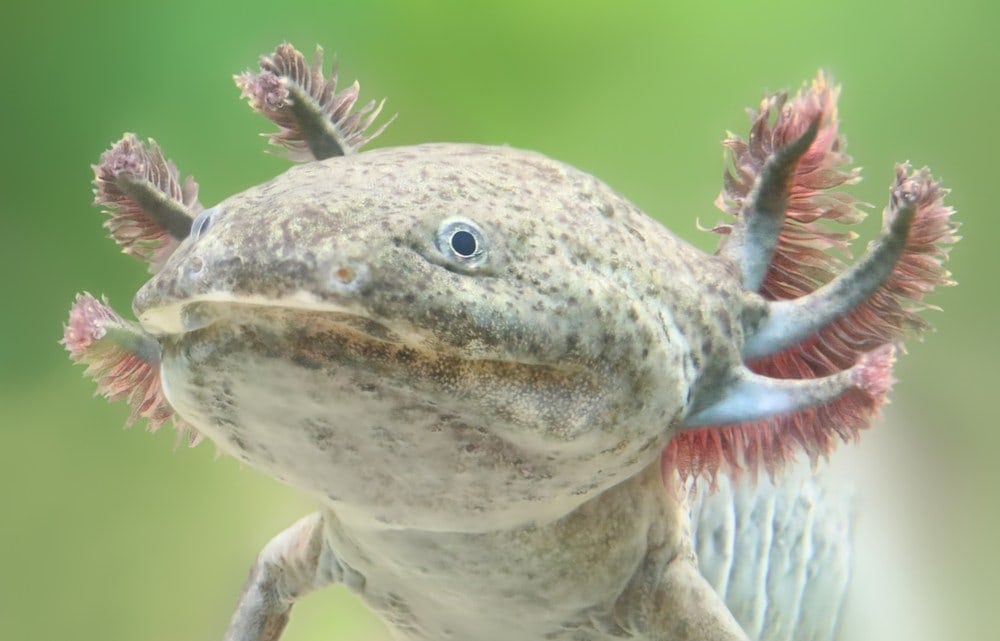
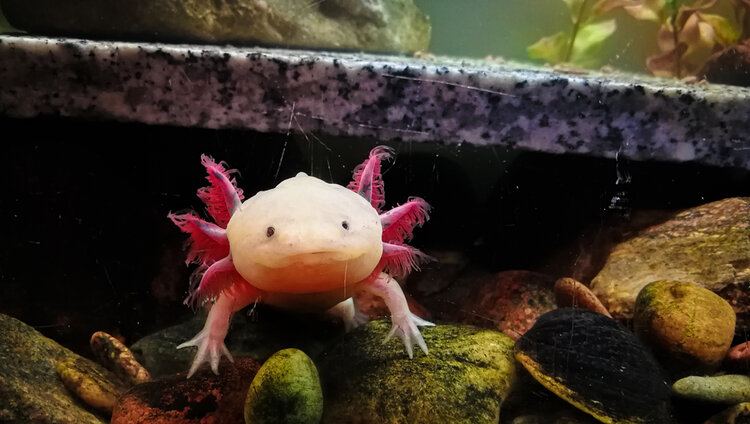
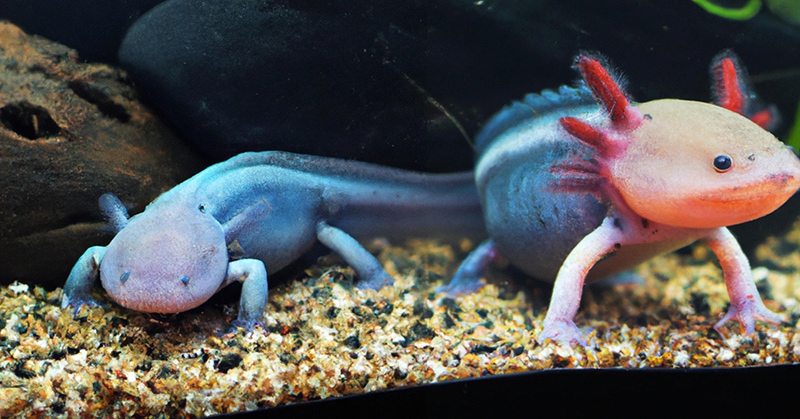
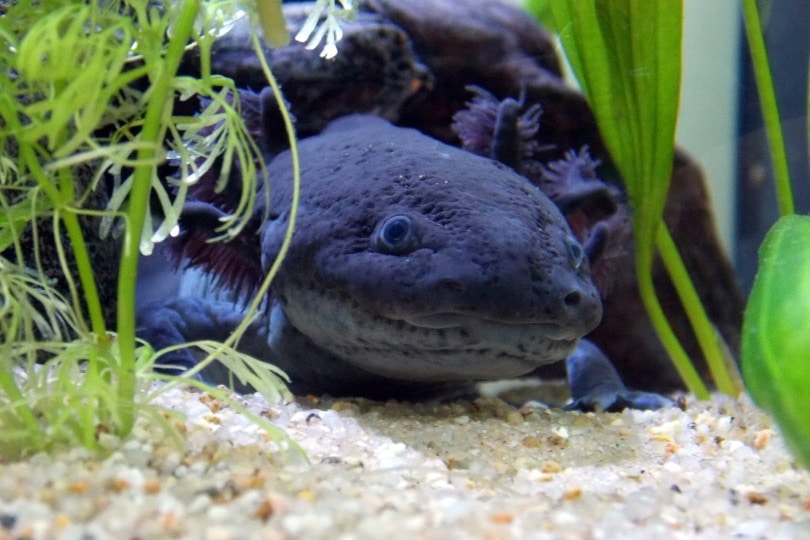
Westerners got curious about axolotls more than a century ago when live animals were brought from Mexico to Paris by travelers. These specimens included the pale pink-skinned variety. People started breeding them, and before long, axolotls became popular in the European pet scene. Pet axolotls typically have a pink-white, nearly see-through skin, and vibrant pink gills. In the wild, though, axolotls usually sport a gray-brown, mottled look. They are still the same creature, but several color varieties look incredibly different
Pet Axolotls in the US
Some states are intensely resistant to keeping axolotls as pets for several reasons. The main concern is that the salamanders might get loose or be released and breed with local amphibians like the Tiger Salamander. Poaching worries and a decreasing population of wild axolotls also play a part. Axolotl pets are a no-go in California, the District of Columbia, Maine, and New Jersey, and you'll need a permit in Hawaii and New Mexico. So, they haven’t had a chance to establish themselves as a native species outside of Lake Xochimilco—and that’s by design.
How Does a Pet Axolotl Differ from Its Wild Cousins?
Wild axolotls find themselves in a tight spot—they're critically endangered, with only 50 to 1,000 of them still inhabiting the wild. These creatures have to hunt for food, dodge predators, and find a mate to keep their species alive, and they're super well-adapted to their environment.
And they can look radically different too. For instance, wild axolotls have a khaki and gray camouflage look, while the pink pastel-colored ones kept as pets and used in labs are pretty rare in nature. It’s not just their looks—it’s also their immune systems.
Research shows that captive axolotls have changed due to their sheer numbers and breeding in captivity,1 making them unique from wild individuals in key ways. This might be because of inbreeding among lab specimens or the intro of Tiger Salamanders into captive populations in 1962, which led to hybrid babies. On the downside, captive axolotls aren’t as disease-resistant as wild ones, making it tricky to reintroduce them to their natural habitat. They struggle to survive when they go from tank to lake.
Why Are Axolotls Dying Out in the Wild?
Wild axolotls are on the brink of extinction, earning them a spot on the red list—a conservation index tracking which animals are thriving and which are in trouble. In 1988, biologist researchers surveyed Xochimilco Lake,2 counting several thousand axolotls in each square kilometer they investigated; now, there are only 35. That is a significant—and worrying—drop-off in numbers.
What's Behind the Drop in Axolotl Populations?
Some things are going very wrong for our wild, beady-eyed amphibian friends. Here's why wild axolotl numbers have dipped so drastically:
Habitat Loss
Axolotls originally called two lakes home, but now only Xochimilco Lake remains. Chalco Lake has been filled in to prevent flooding, leaving Xochimilco Lake as the last holdout. Unfortunately, it's partially being drained to make way for Mexico City's expansion.
Water Pollution
As if losing part of their lake wasn't enough, Xochimilco Lake's remaining waters are getting polluted. Contamination by Mexico City, particularly treated water loaded with heavy metals, is making the surrounding area uninhabitable for many aquatic species, including axolotls.
Overfishing
Currently, axolotls are seen on the menus of some illegal restaurants in Mexico City. Any wild animal that is consumed by humans faces population pressures. You’re not likely to be offered wild axolotls anywhere outside of Mexico, but if you choose to eat any wild-caught animal—make sure it is sustainably caught.
Biodiversity & Competition
The presence of invasive species in Mexico’s lakes, rivers, and streams has thrown ecosystems out of whack—axolotls once were at the top—but new, dominant species have created competition for food. Introduced species like perch and tilapia do more than gobble up all the available food—they also snack on baby Axolotls, further reducing the species’ chances of survival.
How Are Axolotls Scientifically Valuable?
Axolotls are some of the best-studied riverine critters on Earth, as they provide us with valuable information about the regeneration of tissues and limbs, as well as morphogenesis. These creatures can regrow severed limbs and lost organs (including their hearts, eyes, and spinal cords) or accept surgically grafted transplant limbs in place of their own. Studying axolotls could potentially help us improve human transplant outcomes and contribute to other fascinating research. That's why researchers are going all-in to safeguard the few axolotls that remain in their natural environment.
What's Being Done to Save Axolotls in Their Native Habitat?
Given the axolotl's scientific value, researchers are stepping up to help preserve their natural populations. For example, some canals in Mexico City have been designated as safe havens for wild axolotls. Scientists are also working on reintroducing captive-bred axolotls into the lake to boost wild numbers. A recent study on these efforts shows promise, but there's still a long way to go to address the root of the problem.
Final Thoughts
Axolotls are amazing creatures with incredible significance for science and the planet in general. Biologically, they are interesting to study and pretty tough—and although they make great aquarium dwellers, life isn’t so straightforward in their native habitats. Wild axolotl populations are almost wiped out, so we need to create safeguards to make sure they bounce back and increase their numbers—otherwise, we might wipe out their wild population for good.
Sources
Featured Image Credit: Maslov Dmitry, Shutterstock
Get Hepper In Your Inbox


Pet care tips from our vets and experts, straight to your inbox.
You may opt-out at any time. View our Privacy Policy for more information.
Nicole is a lover of animals of all sizes but is especially fascinated with the feline variety. She’s the proud mom of Baby, a Burmese, and works every day so he can relax in the sunshine or by the fire. She’s always had a cat in her home and has spent countless days with others, observing behaviors and softening up even the grouchiest of the lot. Nicole wants to share her kitty expertise with you so you and your cat can live happy, healthy, and care-free.
Join the conversation
Ask a question, share your story, or send private feedback.