Hepper is reader-supported. When you buy via links on our site, we may earn an affiliate commission at no cost to you. Learn more.
Is Baby Powder Safe for My Dog? Vet-Reviewed Facts & Tips


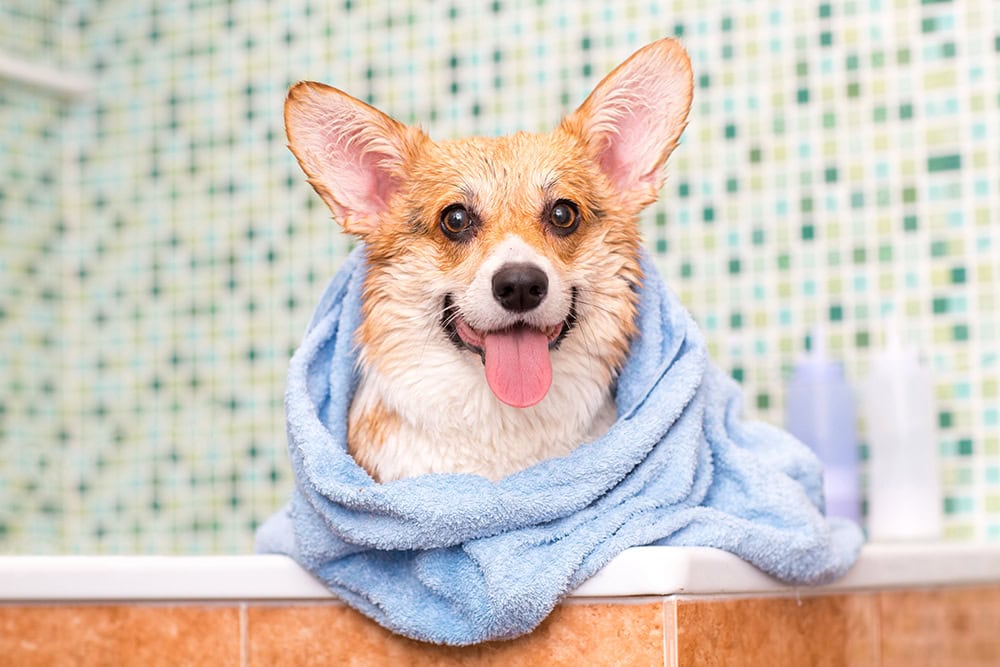
You want your dog to smell divinely good, but you have neither the desire nor courage to wash them thoroughly with their favorite shampoo. All of a sudden, the baby powder that you sometimes use to remove excess oil from your hair comes to mind. Can this product restore freshness and cleanliness to the grimy fur of your four-legged friend?
Not so fast! While baby powder has a multitude of uses, don't sprinkle a cloud of it on your beloved dog's coat! Indeed, this scented powder is not as harmless as it looks.
Read on as we dig deeper and explain in detail why baby powder isn’t ideal to use on our canine companions.

What Is Baby Powder Made Of?
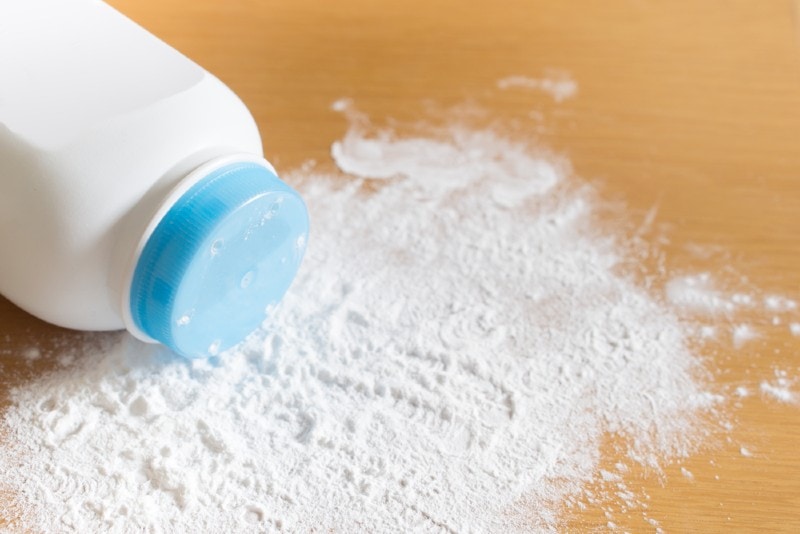
Baby powder is typically made of talc, a mineral substance that contains three main ingredients: magnesium, silicon, and oxygen. The problem is that talc can be naturally contaminated with asbestos, a substance known to cause deadly cancer (mesothelioma)1 in humans. This powder also appears to have adverse effects on the respiratory tract when inhaled. The talc can then build up in the lungs and cause breathing problems.
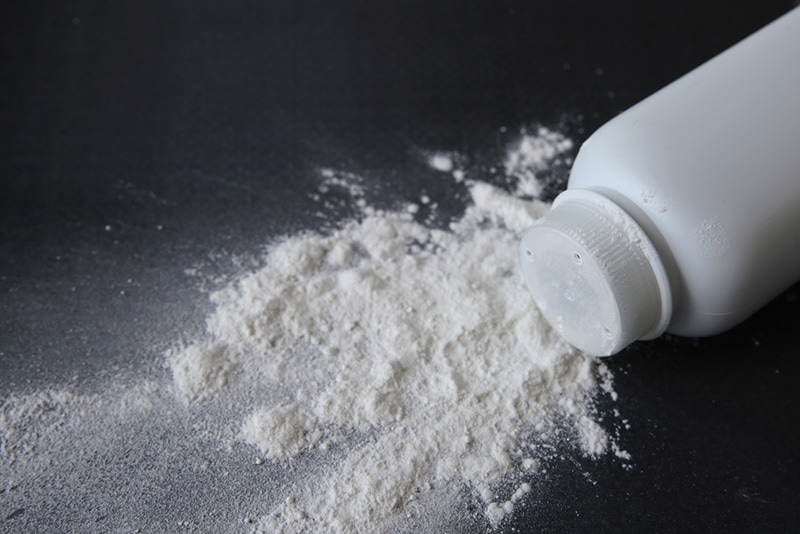
To address these concerns, many manufacturers have started producing talc-free baby powders that use cornstarch instead. Indeed, according to Time, the famous company Johnson & Johnson “stopped selling baby powder containing talc in North America in 2020” and announced its intention to stop the global use of this mineral in its products.2
Cornstarch is generally considered safe and is less likely to cause respiratory issues.
Potential Uses for Baby Powder on Dogs
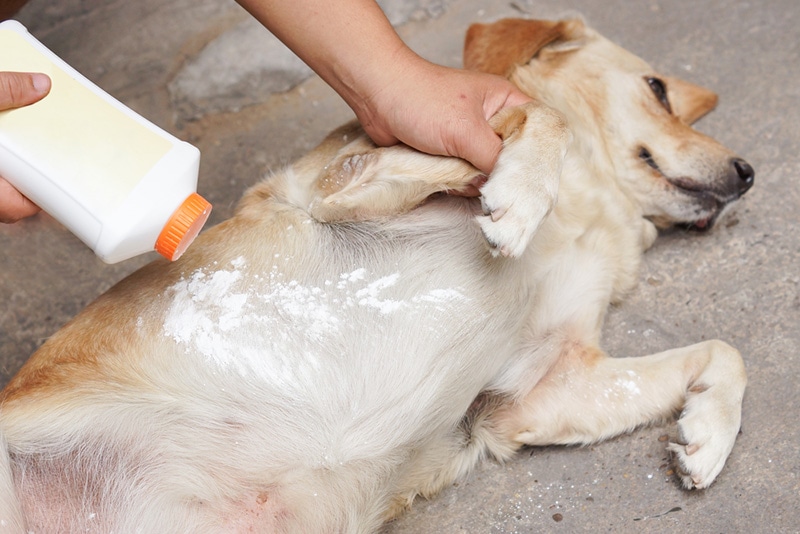
Some dog owners may consider using baby powder to refresh their pet's coat between baths. It is believed that baby powder can absorb excess oils and odors, leaving the coat smelling great.
In hot and humid weather, dogs can sometimes develop moisture-related skin problems. Baby powder could potentially help absorb excess moisture and prevent skin irritation caused by humidity.
Good to Know: According to PetMD, smelly dogs might benefit from unscented baby powder applied to their fur, as it helps clean the hair while neutralizing the odor.3 That said, baby powder should be avoided in case of skin allergies, as this condition requires treatment with products specifically recommended and approved by veterinarians.
Baby Powder Safety Considerations
Even if you use unscented baby powder on your dog, there are a few things that you should consider in order to keep your furry friend safe:
- Ingestion risk: Dogs have a habit of licking themselves, and applying baby powder to their coat increases the likelihood of ingestion. If the powder contains talc, it could pose a potential health risk to your dog. Even cornstarch-based powders can be problematic if ingested in large amounts, as they can cause gastrointestinal issues.
- Allergies and sensitivities: Just like us, our four-legged friends can have allergies and sensitivities to various substances. Some sensitive puppies may develop allergic reactions or skin irritations when exposed to baby powder. This is why it is essential to monitor your dog closely after applying this product to check for any adverse effects.
Alternatives to Baby Powder
Instead of baby powder, there are safer alternatives that you can use to tackle your pup’s smelly problem:
- Dog-specific grooming products: Opt for grooming products specially formulated for dogs. These are specifically designed to meet the specific needs of your pet's coat and skin.
- Regular bathing: Frequent bathing with a mild dog shampoo helps maintain cleanliness and reduces the need for powders or other odor-absorbing substances.
- Consulting your vet: If your dog has persistent skin issues or excessive moisture problems, it’s best to seek advice from your veterinary team.
Frequently Asked Questions (FAQ)
Is Baby Powder Safe for All Dogs?
Baby powder may not be safe for all dogs, as individual sensitivities and allergies can vary. It is important to monitor your dog closely for any signs of adverse reactions or discomfort when using baby powder or any other grooming products.
Can Baby Powder Cause Respiratory Issues in Dogs?
Yes, there is a risk of respiratory issues if dogs inhale baby powder, particularly if it contains talcum powder. Inhaling large amounts of baby powder, even if it is cornstarch based, can potentially lead to respiratory irritation. Care should be taken to avoid applying powder near the dog's face or nose.
How Can I Determine If My Dog Is Allergic to Baby Powder?
Every dog is unique and allergies can vary. If you suspect that your dog may be allergic to baby powder, closely observe their skin and behavior after applying the powder. Look for signs of redness, itchiness, swelling, or any other unusual reactions. If you notice any concerning signs, discontinue use, and consult your veterinarian.
Can Baby Powder Be Used on Specific Areas of a Dog's Body?
It is generally recommended to avoid using baby powder on a dog's face or areas near the mouth and nose to minimize the risk of inhalation. If you choose to use baby powder on specific areas of your dog's body, exercise caution and ensure that they cannot lick or ingest the powder.
Should I Consult My Veterinarian Before Using Baby Powder on My Dog?
Yes, the well-being and safety of your best furry friend must always be a top priority. When in doubt, consult a veterinarian or professional groomer, as they can guide you in selecting the most suitable grooming practices and products for your dear dog.
Final Thoughts
When it comes to using baby powder on dogs, caution is essential. Although some dog owners may find baby powder useful for certain purposes, they should know the potential risks involved. Inhalation, ingestion, allergies, and skin sensitivities are factors to consider when using any powdered product on your dog, whether scented or unscented.
As always, if you have any concerns or questions, consult your veterinarian for advice based on your pet's needs. Your dog's health and safety should always be the top priority in any grooming routine.
Featured Image Credit to MIA Studio, Shutterstock
Get Hepper In Your Inbox


Pet care tips from our vets and experts, straight to your inbox.
You may opt-out at any time. View our Privacy Policy for more information.
Genevieve, a biologist and science writer, who harbors a profound affection for capuchin monkeys, pumas, and kangaroos. This passion has led her to travel extensively, volunteering and working at wildlife rehabilitation centers in Bolivia, Guatemala, Canada, and Australia. Now residing in Argentina as a Canadian expat, Genevieve enjoys the view of horses and cows greeting her from the vast plains outside her home office window. She proudly cares for three rescued dogs—Lemmy, Nala, and Pochi—and a playful kitten named Furiosa. Sharing her extensive knowledge and love for animals brings her immense joy and fulfillment.
Join the conversation
Ask a question, share your story, or send private feedback.