Hepper is reader-supported. When you buy via links on our site, we may earn an affiliate commission at no cost to you. Learn more.
How to Crate Train a Cat: 5 Proven Tips & Tricks
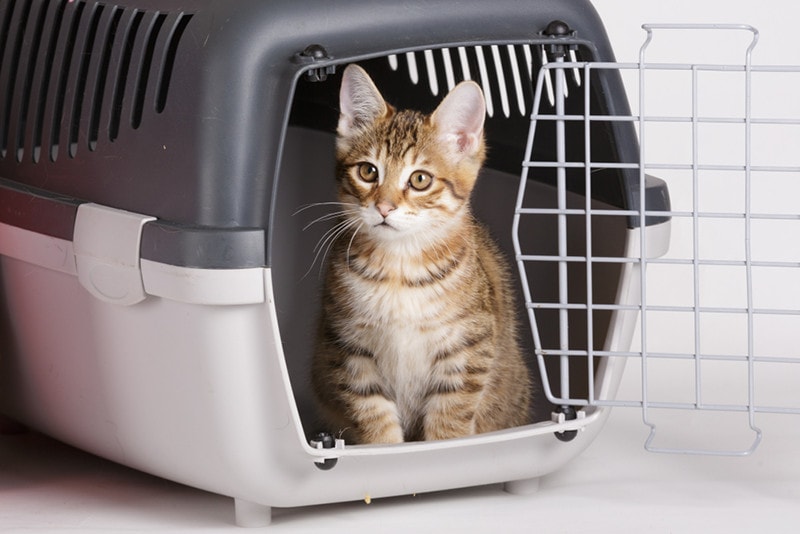
Crate training dogs is a common practice, but many people don’t know that you can crate train a cat as well. The training process differs from how you’d train a dog and may require more patience, but it’s doable for most felines out there.
Crate training has numerous benefits, but how to go about it is easier said than done. For your convenience, we’ve compiled some of the most useful cat crate training tips you can start using today to crate train your beloved kitty.

The 5 Tips & Tricks for Crate Training a Cat
1. Learn & Understand the Benefits
Most cats have been in a crate or travel carrier to go to the vet, and they typically don’t like it very much. So, it may come as surprising to hear that crate training can have some key benefits for you and your cat if done properly and with plenty of patience. Let’s take a brief look at those benefits below so you can have some motivation to keep you going through this slow process.
Benefits of Crate Training Cats:
2. Choose the Right Crate for Your Cat
Small and large crates each have their merits. Small crates are sturdier when traveling and keep your cat safer, but large crates are more spacious and comfortable. Ideally, your cat’s crate should have enough room for them to lie down comfortably as well as space for a litter box. Depending on how long your cat will be staying in there, you may want space for a water and food bowl as well. For instance, if you’re working long hours or taking a day trip your cat can’t join you on.
You must also choose the right type of crate for your cat. For kittens, you can purchase a crate with a divider so it can grow with your cat. Too much space can actually be detrimental during the training phase, but it depends on your cat’s needs. You may choose a single crate for your cat’s den and as a travel carrier, or have a smaller, cozier one to go to the vet and their larger crate at home.
Finally, some cats will never be okay with confinement in a crate. This is especially the case for older rescues or strays who spent a lot of time in the wild, but some cats simply don’t tolerate crates for any reason. Using a baby gate or cat-proofed room might be necessary when you need to confine your cat, but many of the same tips here apply to that approach too.
3. Start Gradually
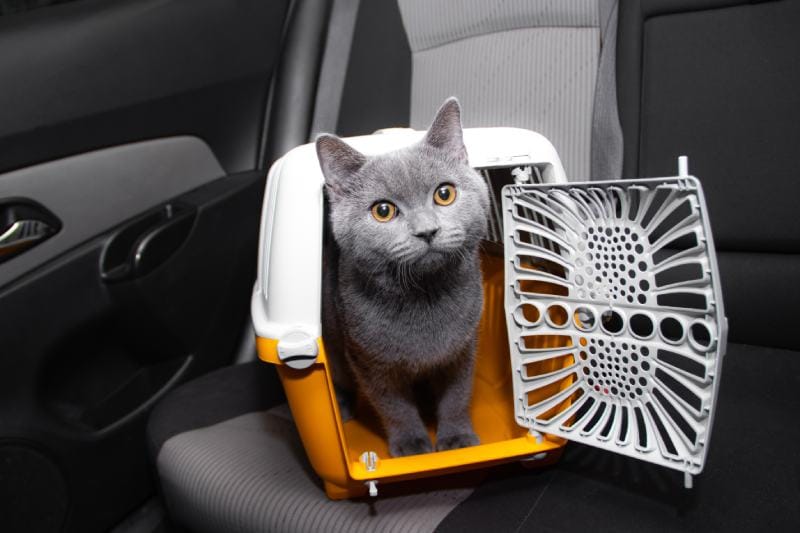
Cats aren’t trainable in the sense that dogs are, and they won’t be crate trained overnight. In fact, the first thing you want to do is take the door off, if possible. If not, just leave it open. We know that seems counterproductive, but confinement can initially be scary for cats who aren’t used to the idea.
Try introducing the crate to your cat by putting it in a familiar space with the door off or open. They’ll have the option to check it out, but we know that cats are usually sketchy about new objects in their habitat. Just plop the crate somewhere for a week or two and observe how your cat reacts to it. More indifferent kitties might ignore it altogether, but that’s where our next step comes in.
4. Make the Crate a Positive Space
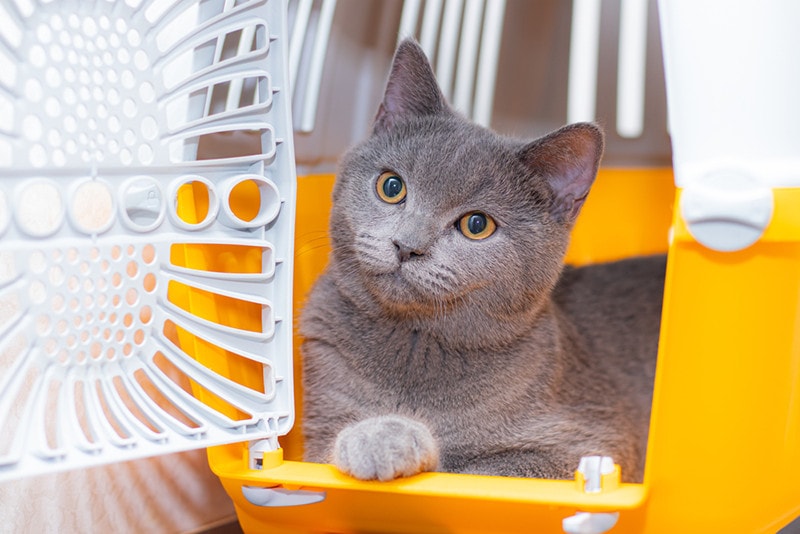
Instead of feeding your cat meals as usual, put the food in their crate. Next, add some favorite bedding and toys that your cat’s already attached to. Your goal is to make the crate a happy, chill place that your cat wants to go in on their own. If they do go in on their own, that’s a good sign you’re making solid progress. However, don’t get discouraged if your cat is more resistant and takes longer to acclimate.
You may wish to sit on the ground near the crate when your cat is in there to help create more positive associations, and periodically giving them a treat won’t hurt either. That can help soothe more skittish kitties having a harder time with the crate.
A very important note is to never, ever use the crate as a punishment for bad behavior. Raising your voice or putting your cat in their crate unexpectedly can make them anxious or scared, and closing the door before they’re ready can set back all your hard work.
5. Closing the Door
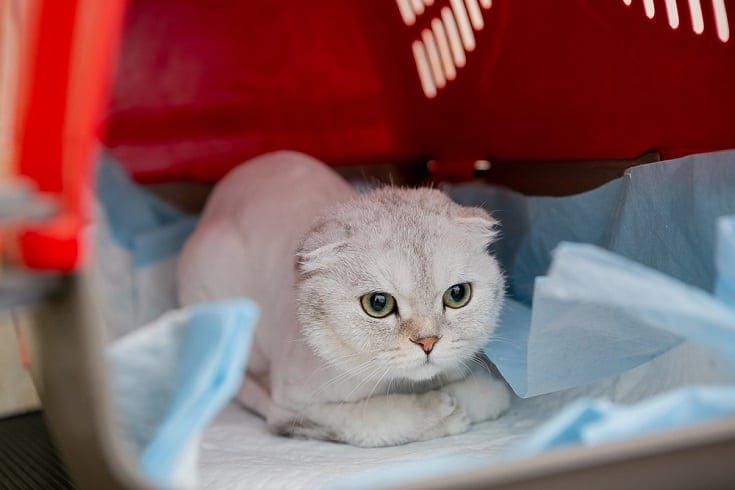
Closing the crate door can be very scary for kittens and some adult cats, so you should start by only closing it for a few minutes at a time. If they become distressed, you can let them out or try talking to them in a soothing voice to calm them down. If that works, a treat can help reinforce behavior in the crate. Every few minutes they behave quietly in the crate, fork over a treat.
Starting with 5 minutes or so during your first foray into closing the door is a good idea, and you can slowly increase that to 10, then 15 minutes, and even longer. Going slowly is the key because stressing your cat out can set back a lot of progress. If they’re suddenly not tolerating the crate for seemingly no reason, step back and slow down.
All in all, it’s a marathon and not a sprint. If your cat doesn’t need to be in the crate for a specific reason, take it at their pace. The goal is to help them, after all, and make your life easier. If crating isn’t working at this stage, you may wish to take the earlier advice and set up a cat-proofed room when you need to confine your kitty for periods of time.
Final Thoughts
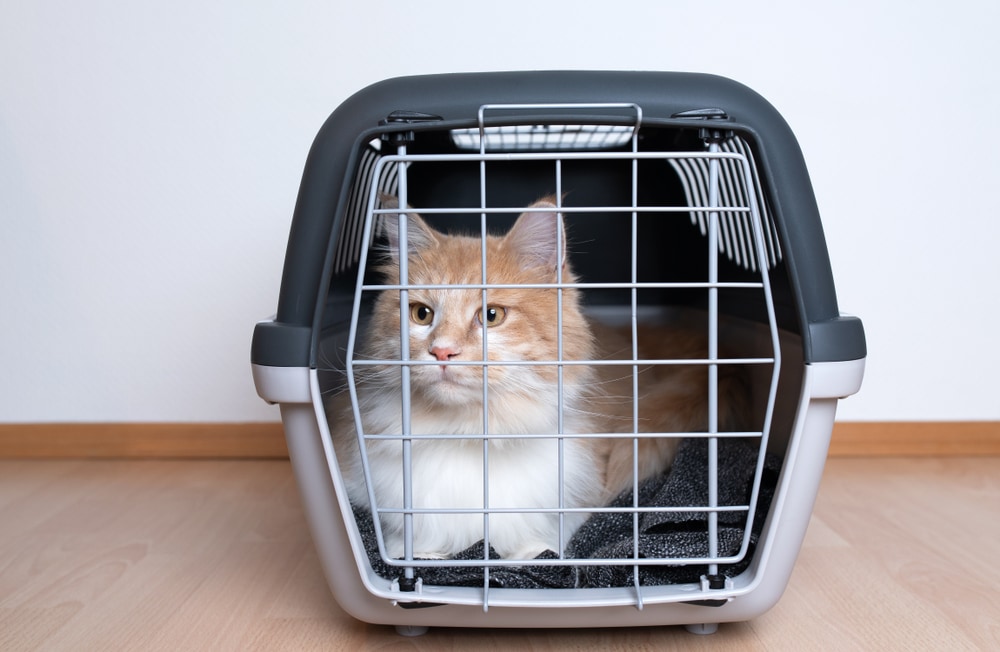
Cats don’t take to crate training with the same ease as dogs, but it can usually be done with patience, treats, and time. All in all, you must take care to not rush the process and respect your cat’s boundaries if they 100% despise the crate after your best efforts.
Featured Image Credit: Natalia Fedosova, Shutterstock
Get Hepper In Your Inbox


Pet care tips from our vets and experts, straight to your inbox.
You may opt-out at any time. View our Privacy Policy for more information.

Join the conversation
Ask a question, share your story, or send private feedback.