Hepper is reader-supported. When you buy via links on our site, we may earn an affiliate commission at no cost to you. Learn more.
My Dog Ate a Chicken Bone: Our Vet Explains What to Do
In this article
Dogs love bones—this is a universal truth. We shape their name tags like them. We cover their sweaters in them. They sleep upon dog beds adorned with bones. If you’re animating a dreaming dog, they’re going to be chasing cats, peeing on a fire hydrant, or counting bones instead of sheep.
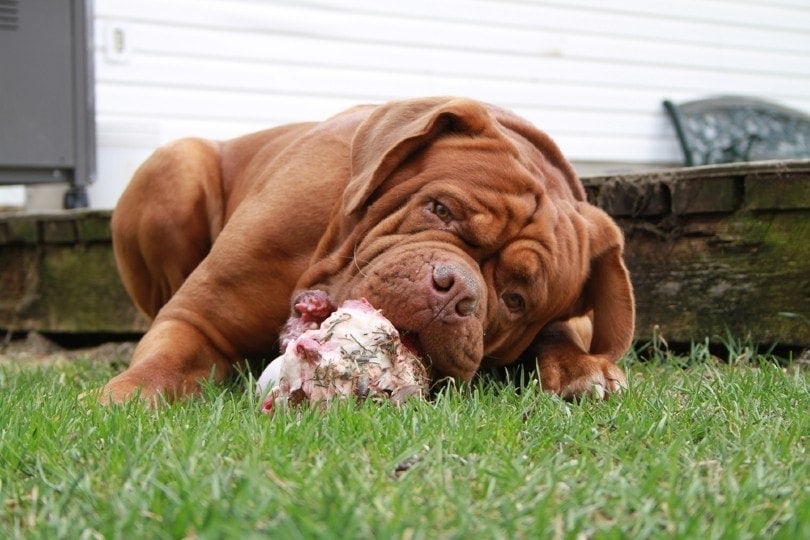
Why are we here asking what to do if a dog eats a chicken bone? The answer is that there’s a huge, important difference in safety between a raw bone and a cooked one.
If your dog grabs a raw chicken bone before you get a chance to do anything with it, the worst you’ll typically need to worry about is making sure they don’t spread Salmonella around your house. If you’ve seasoned it or if it’s been cooked, you should call or go see your vet. Let's have a look at specific situations.

Your Dog Ate a Chicken Bone; What’s the Problem and What Do You Do?
We’re going to outline four relevant chicken bone scenarios so you can know the risks depending on what exactly your dog has managed to grab.
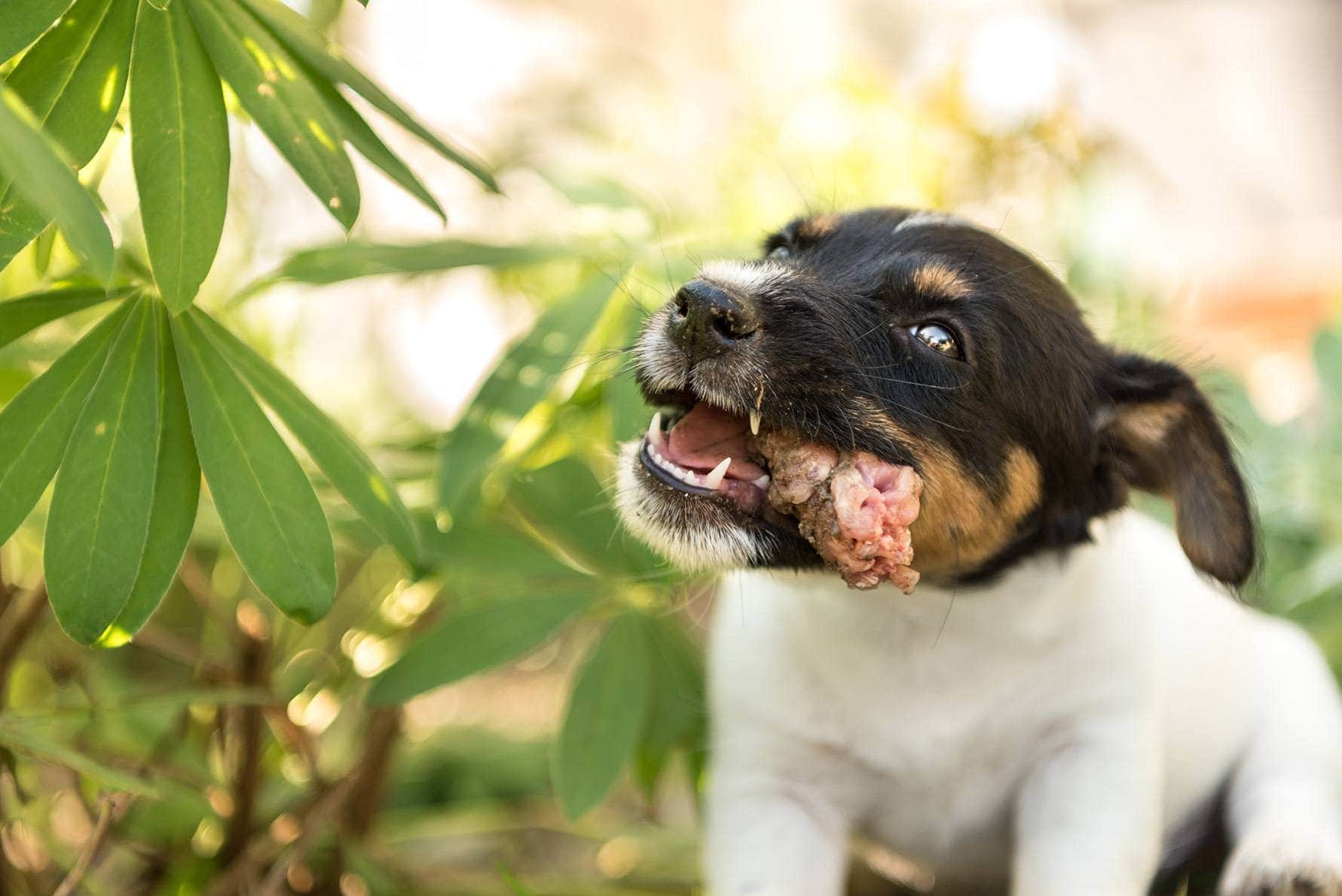
1. Your dog has grabbed an unseasoned piece of boned chicken or uncooked plain bone.
For most dogs, this isn’t a problem. Their teeth and digestive tract are designed to handle meat and bones in this form.
Dogs with sensitive tummies or a chicken allergy may experience some mild vomiting, diarrhea, or lethargy that might include skipping their next meal. Unless the dog is very small, the bone should pass without a problem, though in small dogs, there is a risk of choking or obstruction in their intestines if they swallow it whole.
Raw meat presents a biohazard in the home, especially raw chicken, and you can treat your dog and everything they touch as the equivalent of a space you placed raw chicken without disinfecting afterward. You’ll want to clean up the area, give them a good toothbrush, and skip out on any kisses for the day.
2. You’ve oiled or seasoned some raw, boned chicken, and your dog gets it before you have a chance to cook it.
In this scenario, everything above applies, but you also need to screen the seasonings for any toxicity risk. Garlic and onion are almost always seasonings used on chicken and they’re toxic to dogs.
How important this is depends on the weight of the dog and how much they ate. Unless it’s a large dog and something small like a single chicken wing, it’s best to contact the Pet Poison Helpline so they can screen the danger for your dog and let you know if you need to intervene.
Since eating oils and seasonings can cause an upset tummy, signs such as vomiting, diarrhea, or loss of appetite are a bit more likely in this scenario, but if this is a large dog and they didn’t get much, everything may be just fine.
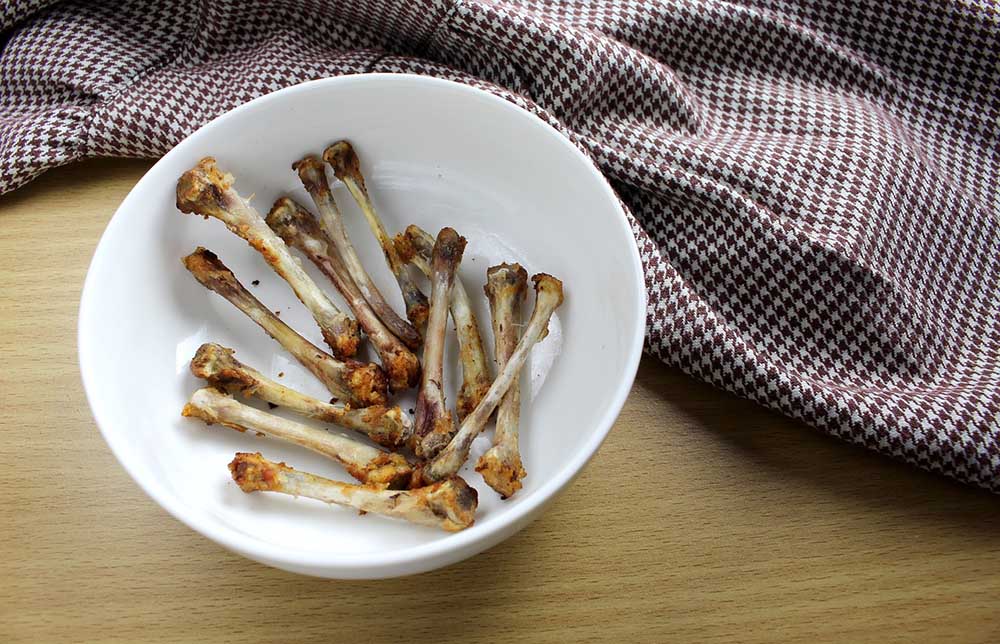
3. Your dog gets some unseasoned or seasoned (with non-toxic ingredients) cooked chicken bones.
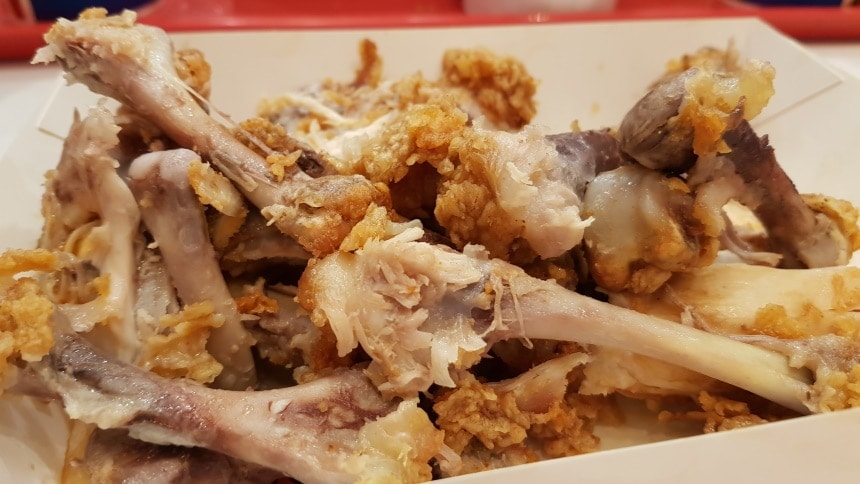
We have a new problem. When bitten, cooked chicken fractures. It usually has sharp, jagged edges to the pieces and can get stuck into a dog’s gums, the roof of their mouth, embedded in their GI tract such as in the esophagus, stomach, or intestines, and poses a higher risk of GI obstruction or even bowel perforation. Bowel perforation is when the walls of the intestine are opened, in this case, possibly because a shard of bone punctured through.
Large breed dogs are more likely to still pass chewed, cooked bones, or eat them without chewing in the first place, but these are a risk to any dog of any size. You do not want to make a dog vomit to bring the bones back up, especially not at home. They are a choking hazard, and those sharp shards can cut the esophagus just like they can the intestines.
Your dog should see a vet in this scenario for further instruction. They may elect to risk bringing the bone up, providing supportive care to help the dog pass the bone the normal way, or even perform a procedure to reach into the stomach with a camera and a grabber tool to snag the bones safely.
4. Your dog eats cooked chicken bones that have been seasoned.
This is the most common scenario. Just like above, we’re dealing with both the risks of the bones and that of the seasonings.
It’s extra important to contact a vet if this happens so they can help handle the multiple risk factors at play and find the best path forward for you and your pup.

Steps to Follow If Your Dog Ate a Chicken Bone
What Not to Do When Your Dog Eats a Chicken Bone

How to Care for My Dog That Has Eaten Chicken Bones?
If you’re giving your dog a chance to pass the bones on their own, you’ll need to feed frequent, small meals that are friendly to their tummies. It may help to switch to bland chicken, rice, and pumpkin or even pick up some prescription GI diets from your veterinary clinic so you don’t upset their stomach.
Be sure to watch their stools carefully for when they pass the bones, and if you’re worried they haven’t after a day or so, a veterinary clinic can take X-rays to see if they’re still inside or not.
For a dog that needs to have the bones removed because they’re too risky or they’re causing an obstruction, they’ll likely spend at least one day at a veterinary hospital healing up. At home, dogs that have had surgery will need to wear an e-collar for 2 weeks or until their stitches or staples are removed, and need to be monitored closely for regular healthy poops so you know everything healed up okay.

Signs a Chicken Bone May Be Stuck in Your Dog
If you’re hoping your dog will pass any chicken bones they ate, here is what to watch out for to know you have a problem.
If you think your dog is choking, follow these instructions for Heimlich maneuver for dogs.
Frequently Asked Questions
How long will it take a dog to pass a chicken bone?
Most of the time, a chicken bone will pass within a day, no more than two to three unless something is wrong.
Can dogs digest cooked bones?
They will not digest these bones well, and the sharp edges of the bones will risk hurting the intestines as they move through the dog’s GI tract.
How do you remove a bone from a dog’s stomach?
Rather than risking perforation or obstruction by letting a bone pass, the bone can also be removed from the stomach if treated quickly enough via endoscopy. Endoscopy involves anesthetizing the dog, then feeding a camera with a grabbing tool down the dog’s esophagus as far as the stomach to grab the bone pieces.
They can be enclosed to protect the dog from the sharp edges and pulled back out of their mouth. This means no incisions, no healing time, and the dog is usually back to normal once they recover from the anesthesia and get some supportive care for their irritated tummies.
Conclusion
Even though your family members may have been sneaking chicken bones to your dog for years, this does present a health risk and should be avoided as best you can. While it’s often okay to monitor a dog that eats a chicken bone, it’s still best to check in with a vet each time in case they advise treatment and to check if the chicken was seasoned with anything dangerous like garlic or onion.
A bland diet, lots of water, mild exercise, and some invasive poop inspection will usually do the trick for monitoring at home as needed.
See also:
Featured Image Credit: David Tadevosian, Shutterstock
Get Hepper In Your Inbox


Pet care tips from our vets and experts, straight to your inbox.
You may opt-out at any time. View our Privacy Policy for more information.
Dr. Zayas has a passion for sharing her extensive knowledge base with everyone she can. She lives in Colorado with her dogs, cat, and fish and has traveled all over the world with them. Her various life and work experiences have allowed her to focus on not only clinical practice, but also providing informative, accurate answers to almost any question her clients and readers can ask of her.
Education
Dr. Zayas received her Bachelor’s degree from Bryn Mawr College and her Doctor of Veterinary Medicine degree from Ross University School of Veterinary Medicine.
Experience
Dr. Zayas owns a house call small animal and exotics veterinary practice. She has special interests in allergies, pain management, end of life/hospice care, and finding unique solutions tailored to her patients’ and families’ individual needs. She has worked in shelter medicine, home health, and everything in between.
Join the conversation
Ask a question, share your story, or send private feedback.