Hepper is reader-supported. When you buy via links on our site, we may earn an affiliate commission at no cost to you. Learn more.
How Long Does It Take a Dog to Digest a Bone? What Science Says
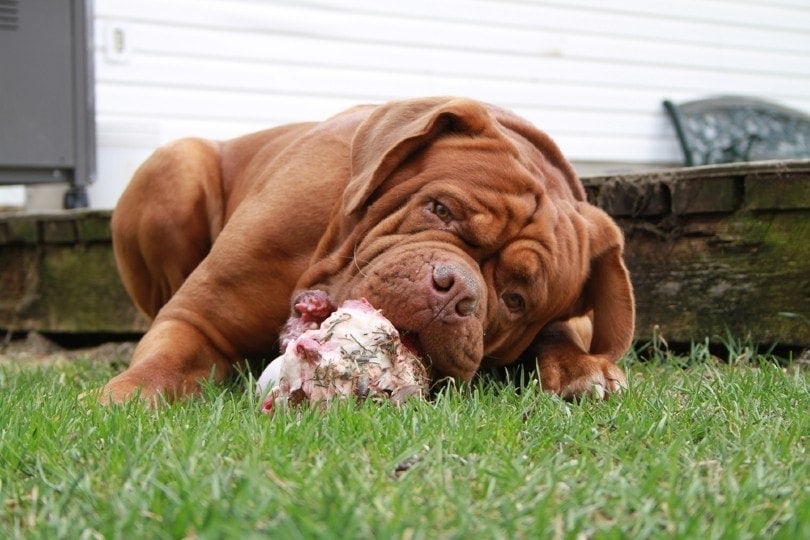
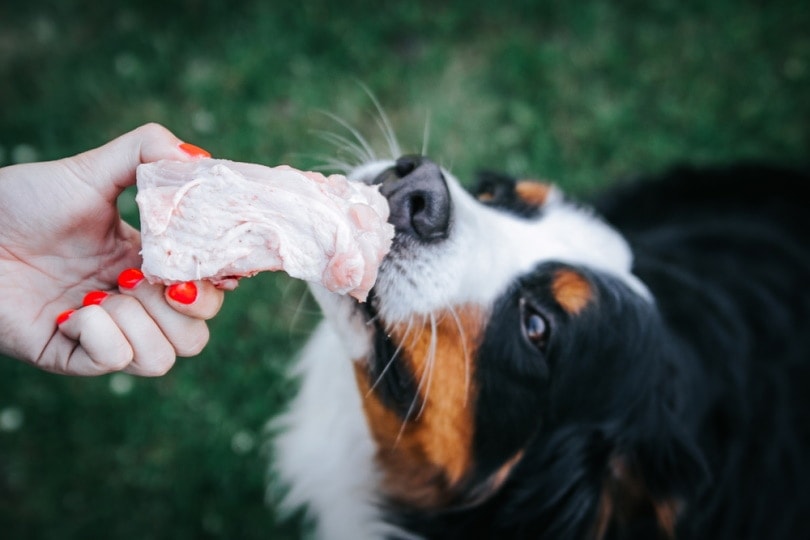
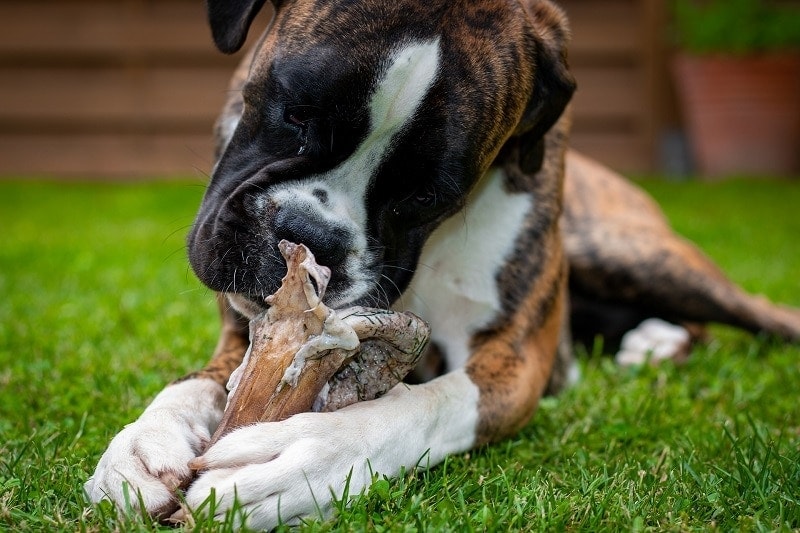
It seems like a natural thing. After all, you only have to watch a dog gnawing away at a bone to realize that your pet is really enjoying it. However, we’ve all heard the horror stories about someone’s aunt’s friend’s sister’s pup that swallowed a bone and ended in surgery. It can and does happen, unfortunately. However, there’s more to the story than sad cases like that one.
It involves going back to the dog’s ancestor and picking up the thread from there. We’ll discuss why canines probably started eating bones. We’ll cover how evolution and domestication moved the goalposts. Finally, we’ll break it down to just how long it takes for a dog to digest that bone.

Can Dogs Digest Bones? The Evolution of Dogs
Dogs and wolves are closely related species, so much so that for a long time, scientists thought that the former evolved from the latter. New evidence suggests a different scenario. Instead of wolves giving rise to dogs, the two species shared a common ancestor. It’s worth noting because it could explain why your pet enjoys eating bones so much.
It’s essential to consider the time in which the early wolves and dogs lived. It was indeed survival of the fittest in literally a dog-eat-dog world. Remember that early humans were competitors to these predators. That explains why animals like the Sabre-toothed Tiger didn’t survive the Ice Age. That meant that canines had to hunt successfully and get the most nutrition possible from their prey.
Domestic adult dogs require 18% protein in their diet. Some evidence suggests that they are really carnivores instead of omnivores, as many have believed. It’s logical to assume early canines would crack open the bones of their prey to get to the marrow inside them. After all, it’s loaded with fat, which could help keep an animal warm and filled with the energy to hunt again.
Of course, dogs and wolves are limited by the tools that nature gave them, namely their teeth. Smaller bones like ribs would pose few challenges versus the large ball on the end of a moose’s femur. Even today’s wolves leave the indigestible bits behind after they take their fill. It makes sense from an evolutionary perspective that canines eat bones for the superior nutritional value they offer.

Can Dogs Digest Bones: The Domestication of Dogs
Researchers estimate that dogs and wolves diverged from their common ancestor between 9,000 and 34,000 years ago. The length of time is worth noting on several scores. First, that means dogs have had a long time to evolve and adapt. Second, domestication by humans—or the other way around—had profound influences on their diet and, thus, canine biology.
Finally, living alongside people would affect their hunting lifestyle and survival. However, dogs and wolves share some common traits that clearly point out that your pet is still in touch with its wild side. You can see that every time you observe your pup when a rabbit darts by in front of you. Dogs often hide their food by digging to cover up the remains.
Think about that bone that disappeared in the backyard. You’ll likely find it in a freshly dug hole.
It’s feasible to assume that your pooch can still digest bones. It’s hardwired in its DNA. It’s evident in its carnassial teeth that specialize in ripping apart flesh and cracking up bones for the marrow inside of them.
Cats are obligate carnivores. That means they must have meat to survive. Dogs aren’t too different from them in several respects. Both have similarly sized intestines. They aren’t as well-adapted to get nutrients from what they eat, a trait that is quantified by the coefficient of fermentation. Put simply, it means both animals need a long time to digest their food.
That can help explain why your dog can do just fine on a feast-or-famine lifestyle. It’s something they share with cats, wolves, and many other predators. The fact remains that even the best hunters have a low success rate. Therefore, it isn’t necessarily a disadvantage if your pup takes a long time to digest that bone.

How Long Does It Take a Dog to Digest a Bone
Several factors influence how quickly your dog metabolizes the food you give it. It depends on things, such as your pet’s activity level, water intake, body condition, and even the type of food you give it. It’ll digest wet food much quicker than dry because of its form and water content. Then, there is the composition of what it eats.
You can compare it with your own digestion. Humans only need a couple of hours to process vegetable matter. Meat takes considerably longer. That’s because it’s more nutrient-dense. Proteins are large molecules that will take your body a long time to break down into usable forms. The same thing applies to that bone you gave your pet.
Using beef neck bones as an example, this food contains nearly 30% protein and almost 20% fat. The latter also takes extra time to digest because it’s more chemically complex than carbohydrates. Right out of the gate, we can see that your dog has a lot to chew on to get those bones metabolized.

How Digestion Occurs
The main players of digestion are a host of specialized enzymes that can break down certain foods or molecules. There’s also the gastric acid that does the heavy lifting. The bulk occurs in the stomach. Its structure aids the process by churning the food through the action of the muscles in the wall of the organ. Once food leaves it, the primary activity is the absorption of the nutrients it contains.
Digestion occurs more slowly in dogs than in people. Your pet will have digested that bone, and it will have continued its journey within 12 hours of eating it.

Problems with Bones as a Treat
We mentioned earlier that dogs diverged from wolves several thousand years ago. It’s a critical point when you consider how canine digestion has evolved in that time. While early dogs could probably handle bones more easily, it might not be the case with domesticated canines. Evolution doesn’t stand still. As the dog’s diet changed, so did its body adapt to new foods.
It makes sense that if a pup isn’t hunting and crunching on bones anymore, it may lose the ability to digest them. It’s the biological version of use-it-or-lose-it. Then, there’s the type of bone and its preparation to consider. Cooking them can make them brittle. Also, some, such as chicken bones, are more likely to splinter. Both factors are a problem.
Signs of Choking
A choking dog will show evident signs of distress. It may hack and rub its muzzle. You can try to remove it yourself if it’s visible. Remember that your pet is scared and upset, meaning it’ll probably bite. If you notice its gums turning pale or blue, it’s imperative to take swift action. You can help dislodge it by performing the canine version of the Heimlich Maneuver.
It works best if you start with your pup on its side. Instead of grabbing your dog from behind, apply short bursts of pressure by pushing down and forward on its abdomen, just und, even if it coughs up the bone on its own.

Symptoms of an Obstruction
A bowel obstruction is a potentially life-threatening emergency that occurs if something blocks a part of the digestion system. There’s also the risk of punctures in the case of swallowed bones. Some pets may not show symptoms right away, but there are several telltale signs. They include:
Surgery is often required to remove the bone or other material. It also involves several days of aftercare to help your pup recover.
Tips on Feeding Your Dog Bones
The best way to prevent issues with bones is to offer your pup only safe things to eat. You can give your pet other treats that can satisfy its carnivore instincts but pose less of an obstruction risk. We also recommend supervising your dog when letting it out in the yard. Many pets will eat anything they can find, no matter if it’s good for them or not.

Final Thoughts
Dogs evolved with the ability to eat and digest bones. After all, it was a matter of survival in the wild. While your pet can metabolize, the risks of obstruction or choking are too great to take a chance. Even though your pup acts like its ancestors, it is a domesticated animal that no longer needs to fend for itself. It’s much safer and healthier to offer your pooch treats that are better for it.
Related Reads:
Featured Image Credit: Karen Laventure, Shutterstock
Get Hepper In Your Inbox


Pet care tips from our vets and experts, straight to your inbox.
You may opt-out at any time. View our Privacy Policy for more information.

Nicole is a lover of animals of all sizes but is especially fascinated with the feline variety. She’s the proud mom of Baby, a Burmese, and works every day so he can relax in the sunshine or by the fire. She’s always had a cat in her home and has spent countless days with others, observing behaviors and softening up even the grouchiest of the lot. Nicole wants to share her kitty expertise with you so you and your cat can live happy, healthy, and care-free.
Join the conversation
Ask a question, share your story, or send private feedback.