Hepper is reader-supported. When you buy via links on our site, we may earn an affiliate commission at no cost to you. Learn more.
My Dog Ate Insulation: Our Vet Explains What to Do

In this article
Have you ever wondered which dog is the fastest? You might think of the Greyhound, Saluki, or even the tenacious Jack Russell Terrier, but no—the fastest dog in the world is one that has just been asked, “What’s that in your mouth?”
And if you’re doing a bit of home renovating, you might need to know what to do if that thing in their mouth happens to be insulation. If your dog has managed to ingest a bit of insulation, here’s what to do: Try to ascertain what type of insulation has been eaten, then call your vet immediately.

My Dog Ate Insulation — What Do I Do?
- Ensure they are not choking. It is a good idea to train your dog from a young age to allow you to open and explore their mouth. To do so with a dog who is not accustomed to it can be dangerous. Try to check if there is any material left/stuck in the mouth and remove any you can see, but only if you can do so safely.
- Separate your dog from the insulation. You don’t want them eating more while you’re on the phone.
- Phone your vet. They will want to know what sort of insulation they have eaten, how much, and how long ago. Depending on the answers to those questions, they may make the following recommendations:
- Observe your dog closely over the next 24 hours and bring them in if they show any vomiting, lethargy, abdominal pain, or other signs that your dog is in distress.
- Bring them in to be given something to make them vomit the insulation up. With material like fiberglass, this may not be recommended, as the fibers may cause more damage on the way up.
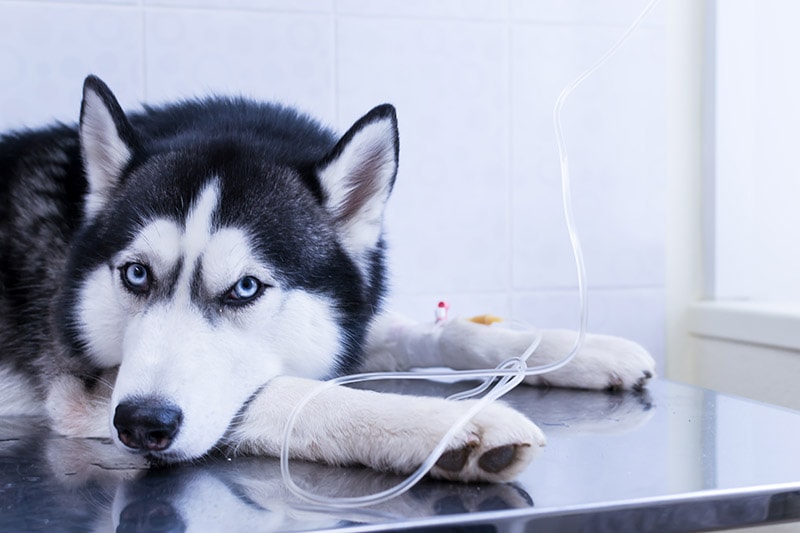
- Admit your dog for intravenous fluid therapy and medications to reduce the risks of damage and obstruction. Your dog may need X-rays if your vet is worried that they have a blockage, or even surgery if it is unlikely to pass naturally.
Each case and each situation will be a little bit different, so always contact your vet if your dog eats anything they shouldn’t. Never try to make your dog vomit at home without speaking to your vet, as it may not be the recommended course of action and could even make things worse.
Potential Risks of Dogs Eating Insulation
Although most materials used for insulation are unlikely to be toxic, they have the potential to cause choking, blockages, and even internal bleeding.
If only a small amount has been eaten, it is likely that your dog will be okay, but in all cases, your vet should examine them and make a plan for treatment. That plan may be just to wait and watch, but that plan should be made with the vet. If you wait for your dog to show signs of illness, there may be serious internal damage.
The main issue with all types of insulation is the potential to cause a blockage in the digestive tract. The materials can accumulate and get lodged in the esophagus, stomach, or intestines, and because some of them will also absorb moisture, the problem can get significantly worse with dehydration. If the insulation material passes through most of the digestive tract, it could also cause constipation.
Many insulation products are also coated with chemicals to make them more resistant to fire, moisture, and mold. In small amounts, these chemicals are unlikely to cause major side effects but could certainly make your dog feel unwell.
Let’s learn a little more about what eating insulation could mean for your dog.
Types of Insulation
There are five commonly used forms of insulation, none of which sound particularly appetizing.
Fiberglass (Batts)
This is the cheapest and most common type of insulation used in homes. It has a cotton wool-like consistency but is made up of tiny fiberglass fibers—those spiky little shards that get stuck in your hair and make your skin feel itchy.
The tiny shards have the potential to cause damage to the lining of the esophagus, stomach, and intestines, resulting in painful inflammation, vomiting, and diarrhea. Being both sticky and absorbent, this type of insulation poses one of the highest risks for causing damage.
Dogs can also suffer damage to their airways if they inhale fiberglass particles, as well as irritation and inflammation of skin if it comes into contact with this type of insulation.
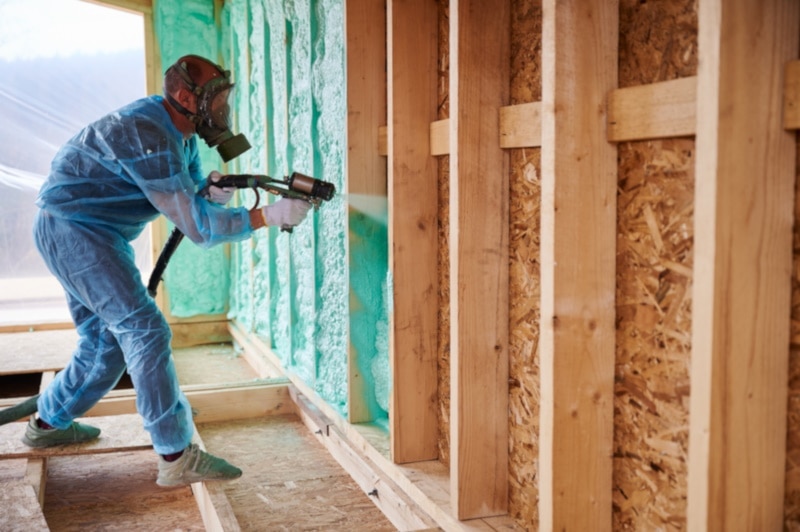
Polyurethane (Spray Foam)
This expanding foam is at its highest risk shortly after it has been applied. If your dog were to ingest any of this foam while it is still wet, you must contact your vet as a matter of urgency. The foam can expand and cause a serious blockage or even a rupture.
In the more likely scenario that your dog has chomped on polyurethane foam insulation which has already hardened, the risks are significantly lower. It may cause some mild to moderate gastrointestinal upset, such as vomiting, diarrhea, and discomfort but no serious toxic effects.
Being a plastic material, the digestive system cannot break it down, so it also can result in a blockage. But once set, it does not absorb fluid as readily as some other types.
Polystyrene (Foam Boards)
This type of insulation is similar in form to the Styrofoam used for boxes, packaging, and even in bean bags. It does not pose a risk of toxicity and will not take on moisture, but it can accumulate in the gastrointestinal tract and form an obstruction.
The lightweight nature of this material also poses a choking hazard if small fragments are inhaled.
Cellulose (Blown-In)
This is an eco-friendly insulation option that is most commonly applied by being blown into the area as loose, fluffy particles. Made from organic materials like recycled paper, the primary risk from eating this material is a possible blockage or choking on inhaled particles.
Mineral Wool/Rockwool
Similar in appearance to fiberglass but without the harmful fibers, Rockwool is actually made from tiny particles of lava rock spun down into sheets or batts and, given its origin, is particularly fire resistant. It carries similar risks of obstruction to fiberglass, without the additional worry of lung, skin, and organ damage from the fibers.

What If I’m Not Sure They Ate Any?
If you’re not certain your dog ate any insulation or are just worried that they might have, you should still contact your vet. That way, they can give you advice specific to your situation and are prepared in case you need to bring your dog in.
You are likely going to need to monitor your dog for signs of obstruction, dehydration, and constipation.

Signs That Your Dog May Have an Obstruction:
Signs of Dehydration:
Signs of Constipation:

Conclusion
Although not appetizing to us, dogs will eat all sorts of strange things, and that can even include insulation. Although the materials used in insulation are unlikely to have any significant toxic consequences, they have the potential to cause serious complications.
The materials used in insulation are often designed specifically to fill gaps and crevices, so it’s not hard to imagine them blocking up a dog’s digestive tract. The irritating fibers found in fiberglass insulation also pose a risk of causing painful inflammation of the skin and serious damage to the airways.
It is vital that you contact your vet right away if you suspect your dog has eaten insulation. They will probably be okay, but the chances of a good outcome are much higher if you take action early rather than waiting for signs to appear.
Related read: My Dog Ate a Wasp
Featured Image Credit: David Papazian, Shutterstock
Get Hepper In Your Inbox


Pet care tips from our vets and experts, straight to your inbox.
You may opt-out at any time. View our Privacy Policy for more information.
Karyn has lived in the UK for the past 10 years after moving from Queensland, Australia. In 2010, she graduated from The University of Queensland School of Veterinary Science, and also holds a Bachelor’s degree in Zoology. Karyn is passionate about using evidence, experience, and owner collaboration to provide the best solutions for pets, and believes in making reliable information about animal health accessible to all. She shares her home with 5 cats, 4 dogs, and 1 husband, and when she is not practising as a veterinary surgeon, she spends her time writing, gardening, and cleaning up pet hair!
Karyn comes from Queensland, Australia, but has lived in the UK for the past 10 years. She is passionate about using evidence, experience, and owner collaboration to provide the best solutions for pets, and believes in making reliable information about animal health accessible to all.
She shares her home with 5 cats, 4 dogs and 1 husband, and when she is not practising as a veterinary surgeon, she spends her time writing, gardening, and cleaning up pet hair!
Education
In 2010, Karyn graduated from The University of Queensland School of Veterinary Science and also holds a Bachelor’s degree in Zoology.
Experience
Dr. Kanowski has worked in small animal practice, both in Australia and the UK, and she will be very happy if she never has to see another post-Brexit Animal Export Certificate again! Karyn has special interests in acupuncture and canine behavior and loves challenging surgical cases.
Join the conversation
Ask a question, share your story, or send private feedback.