Hepper is reader-supported. When you buy via links on our site, we may earn an affiliate commission at no cost to you. Learn more.
My Dog Ate Drywall: Here's What to Do (Vet Answer)

In this article
Dogs often chew their way through some strange items, including doors or walls if they are upset and distressed. How dangerous is it if your dog has chewed up the drywall in your house?
In most cases, drywall is not toxic to dogs, however, there are a few circumstances where it could do some harm, so if your dog has eaten drywall, the best thing to do is to contact your vet immediately and have them take a look at your dog. It is better to be safe than sorry after all.

What Is Drywall?
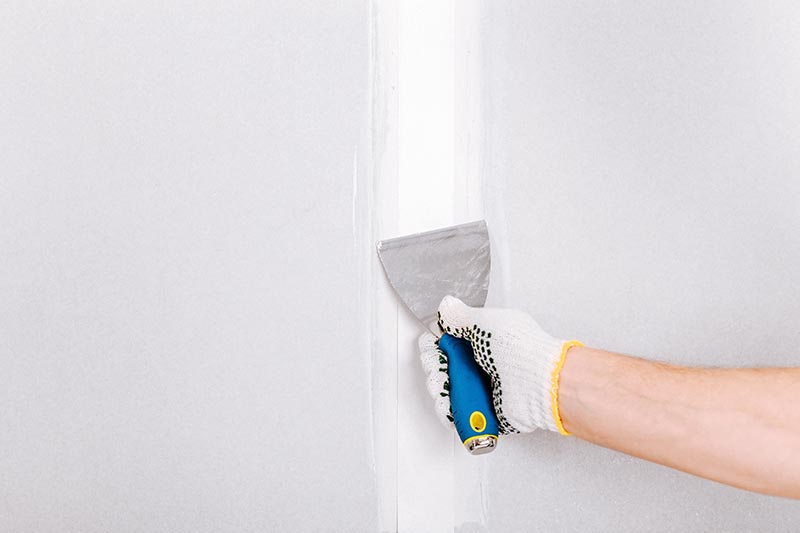
Drywall, also known as plasterboard, is a construction material used to make walls and ceilings. It is usually composed of a flat whiteboard made by mixing gypsum with water. This is then sandwiched between two large sheets of thick paper. Drywall is found in almost every room in the modern home. It can also be used to make other structures in homes, and it is popular as it is easy to use and inexpensive.
Gypsum is a non-toxic mineral that is naturally occurring. It contains high amounts of calcium and in the dried form, it has tiny fine crystals that form a hard solid structure when mixed with water. There are different types of drywall available including flexible, moisture-resistant, fire-resistant, soundproof, and cement board to name a few.
Is Drywall Dangerous for Dogs?
If your dog has eaten a small amount of drywall, it should pass through their digestive tract without any issues. A lot of dogs will chew the drywall but not swallow it, so often not that much has actually been ingested, despite the mess on the floor!
Most of the types of drywall are not toxic to dogs, but the problem is if the drywall has been made in China. In the period from 2001 to 2009, it is believed that drywall made in China is potentially toxic as it was made with different ingredients. This drywall was used in over 100,000 homes so if your house was built during this time, it could contain some of this drywall, and extra care must be taken. The concern is that the Chinese drywall contains a mineral called pyrite, which is toxic to dogs. If your dog chews and swallows any amount of pyrite, they can have clinical signs such as vomiting, diarrhea, and a painful swollen abdomen.
Another potential issue is if your dog eats a large amount of drywall. If a large amount is ingested, it can easily cause a blockage in the gastrointestinal tract. The gypsum in the drywall can become clumped together when it comes into contact with the dog's saliva and form a large sticky mass. If compacted, chewed-up components of drywall can cause an obstruction, and this is a medical emergency. If the blockage is left it can cause the gut to perforate, and this is a life-threatening situation.
The dust released while the dog is ripping up the drywall may also cause irritation if inhaled.
My Dog Ate Drywall, What Do I Do Now?
1. Remove the Drywall
Ensure your dog does not have access to any more of the drywall they have been chewing. If it is safe to do so, (and your dog will let you without trying to bite you), remove any pieces of drywall from their mouth. Remove your dog from the room or away from the area they have been chewing. Stay with your dog and keep them under close supervision. Clean up any debris and don't leave any loose bits lying about.
2. Call Your Vet
While your dog is still with you and being watched, get on the phone with your vet. Most drywall is non-toxic, however, some types can be poisonous to dogs if eaten and even if the drywall isn't poisonous, it can still cause problems for your dog if it causes an obstruction in their gut. Be prepared to answer some questions from your vet so that they can gain a full clinical history.
Questions to expect include:
3. Follow Your Vet's Instructions
Do not delay bringing your dog down to the vet if that's what you have been told to do. Bring any samples of the drywall with you if your vet requests you to.

4. Do Not Attempt to Treat Your Dog at Home
Some owners prefer to just monitor their dogs after they have eaten something like drywall, while some owners will attempt to make their dogs sick at home—this is not recommended.
It is important that your vet examines your dog to rule out any health issues and give them the most appropriate treatment.
5. Monitor Your Dog Closely
Do not let your dog out of your sight. Depending on what type of drywall they have ingested, they may start to show clinical signs at any time. If they do, they will need your help. Keep them with you and make sure they cannot escape or run off as this will delay them getting to the vet.

Clinical Signs
Depending on how much drywall was eaten and where it has become lodged, the clinical signs will vary greatly.
Clinical signs witnessed can include:
What Will Your Vet Do?
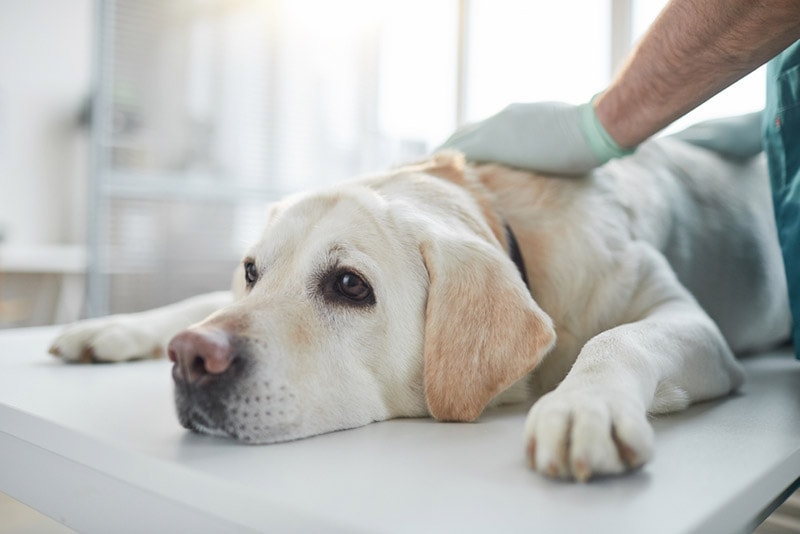
Your vet will ask you to bring your dog in to have them checked out. Once they have examined them, they will decide if your dog is high or low risk. If your dog is low risk, your vet may advise you to monitor them closely at home. No treatment will be required unless your dog's condition deteriorates.
Higher-risk dogs will need to be admitted and further tests are required. Your vet may want to take X-rays or carry out an ultrasound scan to assess if there is a blockage present. Your vet may use endoscopy to pass a camera into your dog's stomach to search for blockages. It may be possible to retrieve the drywall using the endoscopy tools. Some dogs will require surgery under general anesthetic to remove parts of the drywall. Your vet will be able to assess if there is any further damage to the gastrointestinal tract while they are operating too.
Your dog may be required to be hospitalized for further treatment depending on how severe the situation is.
Why is My Dog Eating Drywall?
Lots of dogs have a tendency to chew and destroy things if they are left on their own at home. They may suffer from separation anxiety, they may be bored, or they may be frustrated as they are not receiving enough mental stimulation throughout the day.
It is important to try and identify the underlying cause and get to the bottom of why your dog is doing this. Then you will be able to help them. Make sure your dog is getting walked enough and has enough toys and other environmental enrichment to keep them occupied and mentally stimulated throughout the day.
Some dogs start destructive chewing behavior if they are frightened and are trying to hide. If this is the case, allow them to have a safe place to retreat to and try to eliminate any loud or unpredictable noises they might be exposed to. If your dog has severe behavioral issues, you may want to seek help from a canine behaviorist who can assess them and help you both.
Conclusion
Drywall is a commonly used construction material. Some dogs show destructive behavior and chew walls or other structures containing drywall. The majority of dogs that chew or consume drywall will be absolutely fine and show little or no clinical signs. Most types of drywall are non-toxic so small amounts ingested are unlikely to cause an issue. If your house was built between 2001 and 2009 it may contain Chinese drywall which can be harmful to dogs. Your dog will need immediate veterinary attention if this is the case. If your dog has eaten a large amount of drywall, there is a greater risk that this will cause a blockage in their gastrointestinal tract.
As it can be difficult to quantify, it is advised to seek veterinary advice.
Sources
Featured Image Credit: amedeoemaja, Shutterstock
Get Hepper In Your Inbox


Pet care tips from our vets and experts, straight to your inbox.
You may opt-out at any time. View our Privacy Policy for more information.
Dr. Emma is an experienced vet who is always happy to share her knowledge and expertise with our readers. Her passion is surgery but she will happily talk about anything animal related. Dr. Chandley graduated from The Royal Vet College and since then she has worked in general practice in the UK. She has completed a postgraduate certificate in Small Animal Surgery and has also gained Advanced Practitioner status in the same discipline. She enjoys developing her skills in clinical pathology, animal behavior and nutrition as well.
Emma is an experienced veterinarian who is always happy to share her knowledge and expertise with our readers. She is passionate about surgery but will happily talk about anything animal related.
Experience
Since graduating, Dr. Emma has worked in general practice in the UK. She has completed a postgraduate certificate in Small Animal Surgery and has also gained Advanced Practitioner status in the same discipline. She also has expert knowledge in small animal medicine with a special interest in Endocrinology, although surgery is her passion. She enjoys developing her skills in clinical pathology, animal behavior, and nutrition as well.
Education
Emma received her degree from the Royal Vet College, University of London. She obtained her postgraduate certificate from the British Small Animal Veterinary Association and Nottingham Trent University.
She was granted Advanced Practitioner status by The Royal College of Veterinary Surgeons.
Join the conversation
Ask a question, share your story, or send private feedback.