Hepper is reader-supported. When you buy via links on our site, we may earn an affiliate commission at no cost to you. Learn more.
My Dog Ate Paint! What Should I Do Now? (Vet Answer)


In this article
Dogs are notorious for being eaters of almost anything—food, rocks, toys—anything that fits in their mouths is generally fair game! However, not all things are meant to be eaten, and that is doubly true for substances that can lead to immediate or long-term toxicities. Paint is one such substance that fits both bills, depending on the type of paint that is consumed.
Dogs may also ingest paint if it gets onto their feet or haircoat, and then attempt to lick it off. See, not all dogs are indiscriminate eaters!
Lead paints immediately come to mind as the most concerning paints that can lead to potentially severe toxicities. However, even newer paints can cause trouble for the best pups. So, knowing a bit more about what to do is important.
The key rule here: if your dog has eaten paint, contact your vet immediately, and if possible, have information from the paint’s label to give to your vet, to help them determine how much of a concern the pain ingestion will be. Another option is to call a pet poison hotline, which can help to guide you through the next steps.

Lead-based Paints
These are the traditional paints that were typically found in older buildings. Many countries have outlawed or removed the use of these paints from modern building practices, however, that does not mean that in older homes, a dog could not potentially be exposed to the toxins this can present.
This type of paint is most likely to lead to a condition called lead poisoning, or plumbism. Generally, this takes repeated exposure over longer periods of time. This also generally involves dried paint or paint flakes, since the paint has existed in the building for many, many years. Dogs can be exposed by licking walls, eating chipping paint, or licking paint flakes off the floor.
Lead poisoning can cause serious health issues that become worse the more paint and lead that a dog has eaten, the longer they go without treatment, and the time period over which the ingestion occurred. Health issues can include problems with red blood cell production, GI issues, and other serious concerns. If you have any suspicion that your dog may have been exposed to lead-based paints and/or eaten them, contact your vet immediately to find out what the next steps are.
Other Types of Paint
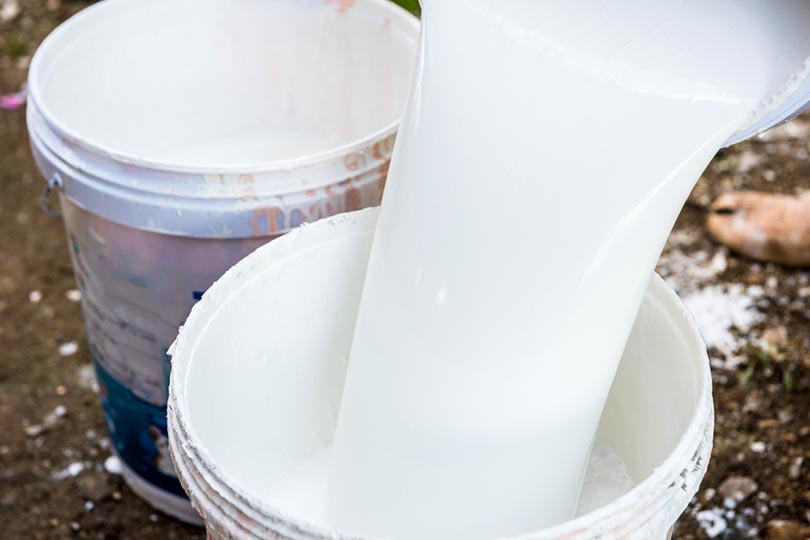
Lead-based paints have fallen out of favor due to their toxicity, so newer paints involve other bases. One type of newer paint is acrylic-based paint. Generally, these cause less life-threatening concerns than lead paints, but they can lead to GI upset or other concerns. If you are selecting paint, be sure to read the label, and if you have concerns about whether it is pet-safe, contact your vet before purchasing.
Another new style of painting involves a latex base. Some latex paints can contain anti-freeze (ethylene glycol), which if ingested by pets, can cause vomiting and GI upset—but more concerningly, kidney failure. If you think your dog has been exposed to latex paint, this is an immediate concern, and your vet, an emergency clinic, or a pet poison hotline should be contacted as soon as possible.
What Do I Do if My Dog Walks Through Paint?
Dogs can get into all sorts of trouble, and chances are, if you leave out some wet paint, they will find it! Here are some tips to help you if your dog gets wet paint on them:
- Wear gloves and wash your hands during and after helping to remove the paint from your pup.
- Stop them from licking their feet or coat while you are trying to remove as much paint as possible. If this means you distract them with a tasty treat, so be it! Alternately, put an E collar on them to prevent licking during the decontamination process,
- The time to remove the paint is when you first see it! Don’t wait to do it, as time can be critical, both for your pet’s safety and in making it easier to remove the paint before it dries.
- If you can, have someone start removing the paint, while another person contacts a veterinary professional for additional advice about the next steps. This will save time, which will be important if there are any concerns about toxicity.
What Do I Do if My Dog Eats Paint?
- Remove the paint, as stated above.
- Call your vet; if they are not immediately available, speak with a poison hotline for pets, or call a local emergency clinic to get their opinion.
- Be prepared to take your dog to the clinic for an exam. Bring the paint can if possible, or any information that you may have on the paint, such as the MSDS. Also, know the quantity eaten, the time it happened, and what your dog may have eaten since.
- Be certain that, if you have multiple pets, none of the other pets also got into the paint! If uncertain, plan to consider bringing the other pets to your vet as well.

What Are Signs My Dog May Have Eaten Paint?

Conclusion
Unfortunately, dogs will invariably find a way to challenge our patience, and they always seem to have the ability to sniff out trouble! Wet paint, and paint in general, is no exception. Be prepared that your curious pup is out to learn, and unaware of the hazards.
As such, prevention is the best option when it comes to paint. Not letting your dog have access to areas where they may encounter toxic paint is probably the best option overall. If your dog does eat paint, have as much information as possible about the paint, and call your vet immediately.
See Also:
Get Hepper In Your Inbox


Pet care tips from our vets and experts, straight to your inbox.
You may opt-out at any time. View our Privacy Policy for more information.
As a veterinarian, Lauren is happy to share her experience in emergency medicine and cats, with everyone. She enjoys sharing insightful, real life tips for having cats as part of your life, and what to do in critical situations with your pets.
Lauren is a vet with over a decade of experience in cats and dogs, along with infectious diseases. She loves teaching, and lectures for students, owners, and clinicians, on various topics.
Lauren received her degrees from Murdoch University, in Perth.
Experience
Education
Join the conversation
Ask a question, share your story, or send private feedback.