Hepper blog

Search our database of over 9,984 posts with up-to-date information from our experts and veterinarians.

Hepper is reader-supported. When you buy via links on our site, we may earn an affiliate commission at no cost to you. Learn more.

My Dog Smells After Anesthesia: Vet-Reviewed Reasons & FAQ

By Kristin Hitchcock · Reviewed & fact-checked by Dr. Lauren DemosVet Approved
Dr. Lauren Demos
Reviewed & Fact-Checked byDr. Lauren DemosVeterinarian
As a veterinarian, Lauren is happy to share her experience in emergency medicine and cats, with everyone. She enjoys sharing insightful, real life tips for having cats as part of your life, and what to do in critical situations with your pets.View authorThe information is current and up-to-date in accordance with the latest veterinarian research. Read about our vets
Share
Ask us a question in the comments
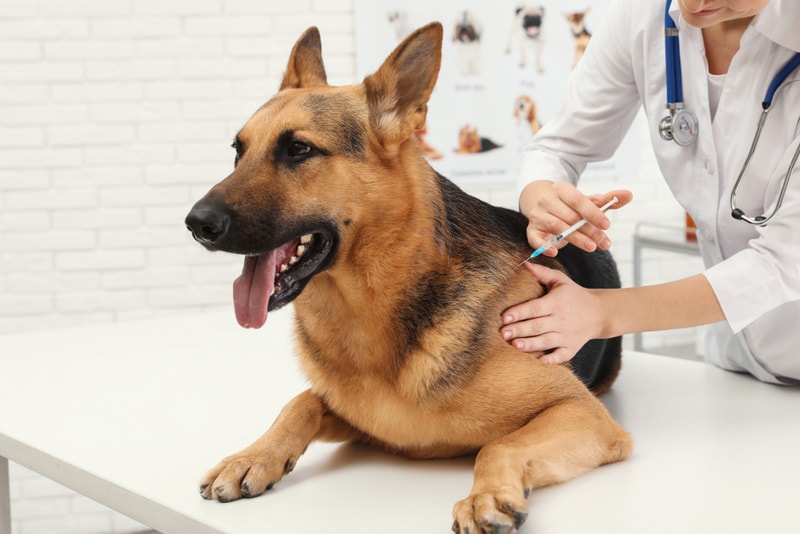
german shepherd having vaccine

Anesthesia can cause many side effects, though most are minor and go away by themselves. One of these potential side effects is bad breath, which may make your dog smell bad for some time after anesthesia. You can brush your dog’s teeth (if it is okay with their vet) to reduce this foul smell.

However, there are several other reasons your dog may be smelling bad—not all of these are normal. For instance, infections can emit a smell and may occur after surgeries. Infections usually require antibiotics, so contacting your vet if you suspect your dog has an infection is vital.

There are many different reasons your dog may be smelly. When in doubt, we recommend contacting your vet. In the meantime, let’s look at why your dog may be smelly after anesthesia.

Why Dogs May Smell After Anesthesia

Below are some of the most common reasons dogs smell after anesthesia. Some of these are rather serious, while others aren’t.

  • Anticholinergic drugs: These drugs help decrease saliva production and prevent aspiration during surgery. They’re widely used for both dogs and humans under anesthesia. However, reducing saliva can cause bacteria in your dog’s mouth to increase, causing bad smells. Oral hygiene and time can help reduce this bad smell.
  • Sterilizing products: Your vet likely used some sterilizing products on your dog and equipment used in the surgery to prevent infection. Some of these products have a strange smell that you may be able to pick up on after surgery.
  • Chemical odors: Anesthesia medications have an odor, which can cling to your dog sometime after surgery. You may be able to smell some lingering remnants inside your dog’s mouth and bad smells on their fur.
  • Urine or fecal matter: Dogs may have accidents when waking up from anesthesia. Your vet will probably attempt to clean these up as much as possible. However, the smell may linger for some time.
  • Bodily fluids: Other bodily fluids like blood may make your dog smell bad after surgery. While your dog shouldn’t be actively bleeding, they likely contacted some blood during the surgery, and the smell may linger.

It isn’t necessarily a problem that your dog smells after surgery. However, if the smell is strong or doesn’t disappear, you should contact your vet. There may be an underlying issue that needs to be dealt with.

dog getting a vaccine
Image Credit to Syda Productions, Shutterstock

What Should I Do If My Dog Smells After Anesthesia?

If the smell isn’t terrible, it’s best to leave it alone. Right after surgery, your dog needs to rest. Most options to reduce the smell will cause at least some stress, and that’s the last thing your pet needs right after surgery.

You don’t necessarily have to handle the smell, as it should go away after a few days. With that said, there are several things you can do to reduce the smell:

  • If the smell is due to bad breath, quickly brushing your dog’s teeth can reduce the smell. You may want to increase the number of times you brush your dog’s teeth after surgery, as excess bacteria can build up in their mouth.
  • If your dog is visibly dirty, you can do some spot cleaning if it’s okay with your vet. Wipes are handy as you don’t want to give your dog a full bath or grooming session right after surgery. It is often okay to clean away any accidents your dog has using wet wipes.
  • Most odors will dissipate independently if there isn’t an underlying problem. Therefore, the best option is often to give your dog time.

You should never bathe your dog right after surgery unless directed otherwise. Most dogs are disoriented right after surgery, which can put them at risk for injury. Plus, most surgical areas also need to stay dry to prevent infections.

Before trying the above methods, you should wait until your dog is fully alert. Your dog may snap or bite, even if they normally wouldn’t. Right after surgery is not the time to stick a toothbrush in your dog’s mouth.

Avoid products with a strong fragrance or possible irritants. While these may reduce the smell, they can cause problems for your dog—and that’s the last thing you want right after surgery.

brushing teeth of labrador dog
Image By: Pixel-Shot, Shutterstock

When Should I Be Concerned?

Sometimes, bad smells can be a sign of an underlying problem. Some odors are normal, but some situations may call for veterinary attention. Here’s when you should be worried and contact your vet:

  • Persistent or worsening odor: Any odor caused by anesthesia shouldn’t worsen after bringing your pet home. It could be due to an infection or other underlying cause if it does.
  • Other symptoms: if you notice other symptoms along with the bad smell, it can indicate an infection. These include swelling, redness, discharge, difficulty breathing, vomiting, and diarrhea. Contact your vet if your dog has any other symptoms besides the bad smell.
  • Allergic reactions: Dogs can develop allergic reactions to medications for some time after surgery in some cases. Any medication you give your dog for pain or other purposes can also cause allergic reactions. Contact your vet immediately if you notice any swelling, hives, itching, or difficulty breathing.

When in doubt, contacting your vet is the best option. An odor isn’t always a sign you should be worried about, but you do want to contact your vet if you notice any other strange symptoms or behaviors. Most abnormal odors should go away within a few hours. If your dog is still smelly past that, contacting your vet is probably in order.

Summary

Dogs can smell after anesthesia for many benign reasons. The chemicals and medications used during surgery often have a smell that can linger afterward. Your dog may also get bad breath from saliva-reducing medications often used during anesthesia. These can cause bacteria to grow faster without saliva to keep them in check.

However, some reasons your dog may be smelly aren’t so benign. Infections can produce a smell and require veterinary treatment as quickly as possible. Therefore, if you notice any signs of infection, you should contact your vet immediately.

Related Reads:

Sources

Featured Image Credit to New Africa, Shutterstock

Get Hepper In Your Inbox

Pet care tips from our vets and experts, straight to your inbox.

List

Select all that apply.

You may opt-out at any time. View our Privacy Policy for more information.

Kristin Hitchcock
Authored by

Kristin Hitchcock

Join the conversation

Ask a question, share your story, or send private feedback.
Rate this post
Required to post. Only our editors see your rating.
Who should see this?

A human reviews every comment before it appears. Your email is never published.

Picked to go with this article

How To Get Rid of Fishy Smell From a Dog: 7 Vet-Approved Expert Tips

How To Get Rid of Fishy Smell From a Dog: 7 Vet-Approved Expert Tips

We love our dogs, but sometimes they absolutely stink! Of course, occasional bad smells are part of pet ownership, but the distinctive fishy aroma that sometim…

Beth Crane
By Beth Crane ·
Why Do Dogs Smell Bad When Wet? 10 Vet-Reviewed Reasons & What to Do

Why Do Dogs Smell Bad When Wet? 10 Vet-Reviewed Reasons & What to Do

It's no secret that dogs can have a distinct smell, especially when they're wet. You may have noticed this smell after giving your dog a bath, taking them for…

Nicole Cosgrove
By Nicole Cosgrove ·
My Dog Smells Bad All of a Sudden: Vet-Verified Signs, Causes & Remedies

My Dog Smells Bad All of a Sudden: Vet-Verified Signs, Causes & Remedies

While it's normal for dogs to have a distinctive scent, if your dog's regular fragrance suddenly becomes intense, you may wonder if you should be concerned and…

Lorre Luther
By Lorre Luther ·
Why Does My Dog's Pee Stink? 5 Vet-Reviewed Reasons

Why Does My Dog's Pee Stink? 5 Vet-Reviewed Reasons

As dog owners, we often accompany our dogs while they do their business outside. It is not the best part of pet ownership, but it is a part of the job. Plus, i…

Cassidy Sutton
By Cassidy Sutton ·

Keep reading

More stories you might like

Stinky Dog Face: Vet Reviewed Signs, Causes & How to Help

When a dog licks your face, that’s the ultimate sign of affection. It’s like a gentle kiss from the fur baby! However, no matter how much you love receiving th…

Nicole Cosgrove
By Nicole Cosgrove ·
Stinky Dog Face: Vet Reviewed Signs, Causes & How to Help

Puppy Breath: Vet-Approved Causes & Concerns Explained

In the same way that newborn babies have a new baby smell, so do puppies; in particular, their breath. Puppy breath has a distinctly soft and sweet odor that s…

Annaliese Morgan
By Annaliese Morgan ·
Puppy Breath: Vet-Approved Causes & Concerns Explained

How Much Do Goldendoodles Smell? Causes, Tips, Characteristics & FAQ

Goldendoodles are stunning, lively dogs that come in various sizes and colors. These canines are intelligent, loving, and affectionate, which is why they make…

Visnja Radosavljevic
By Visnja Radosavljevic ·
How Much Do Goldendoodles Smell? Causes, Tips, Characteristics & FAQ

Do Dachshunds Smell More Than Other Dogs? Vet-Verified Facts & Possible Causes

Dachshunds, or “weiner dogs,” are a familiar and popular dog breed. With their bold personalities, sense of humor, and a plethora of coat colors, these dogs ca…

Elizabeth Gray
By Elizabeth Gray ·
Do Dachshunds Smell More Than Other Dogs? Vet-Verified Facts & Possible Causes

Why Does My Poodle Smell So Bad? 6 Vet-Reviewed Reasons

The purpose of this article is to provide general information only, it is not designed to replace veterinary advice tailored to your pet. Dog owners should con…

Rachel Giordano
By Rachel Giordano ·
Why Does My Poodle Smell So Bad? 6 Vet-Reviewed Reasons

What Causes Wet Dog Smell & Can It Be Prevented? Useful Facts & Cleaning Tips

Wet dog smell is one of those universal odors that anyone can identify, even if they don’t have a dog. It is odd to think that your house or car can smell like…

Cassidy Sutton
By Cassidy Sutton ·
What Causes Wet Dog Smell & Can It Be Prevented? Useful Facts & Cleaning Tips

How to Make Your Dog Smell Good Naturally: 7 Vet Approved Ways

Nobody wants a pungent pup, but keeping your dog smelling fresh can seem tricky. While there are plenty of shampoos, doggy deodorants, and other products on th…

Nicole Cosgrove
By Nicole Cosgrove ·
How to Make Your Dog Smell Good Naturally: 7 Vet Approved Ways

Do German Shepherds Smell? Breed Facts

German Shepherds are magnificent animals with their stately stance and seemingly effortless gait. They certainly get your attention. We don’t often associate t…

Nicole Cosgrove
By Nicole Cosgrove ·
Do German Shepherds Smell? Breed Facts