Hepper is reader-supported. When you buy via links on our site, we may earn an affiliate commission at no cost to you. Learn more.
Pancreatitis In Cats: Our Vet Explains Signs, Causes & Life Expectancy

In this article
Pancreatitis means inflammation of the pancreas. This may not mean a whole lot without understanding what the pancreas does. The pancreas is a small organ sandwiched between the stomach and intestinal tract. The organ is so small that even the best veterinarian would be unable to palpate it on exam.
The pancreas is involved in multiple functions of the body. However, for the purpose of understanding pancreatitis, remember this—the pancreas releases enzymes, which aid in digestion. The enzymes break down fats, carbohydrates, and proteins. When there is abnormal release of these enzymes, the pancreas can become inflamed and irritated.

Signs of Pancreatitis in Cats
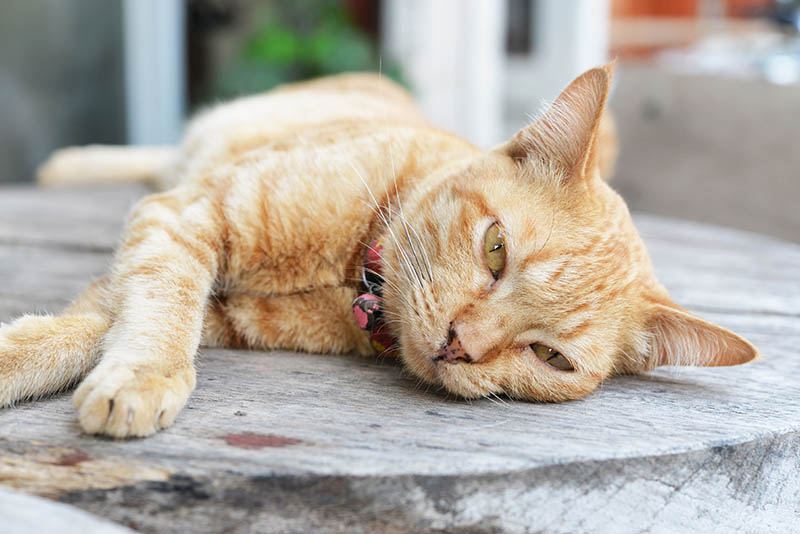
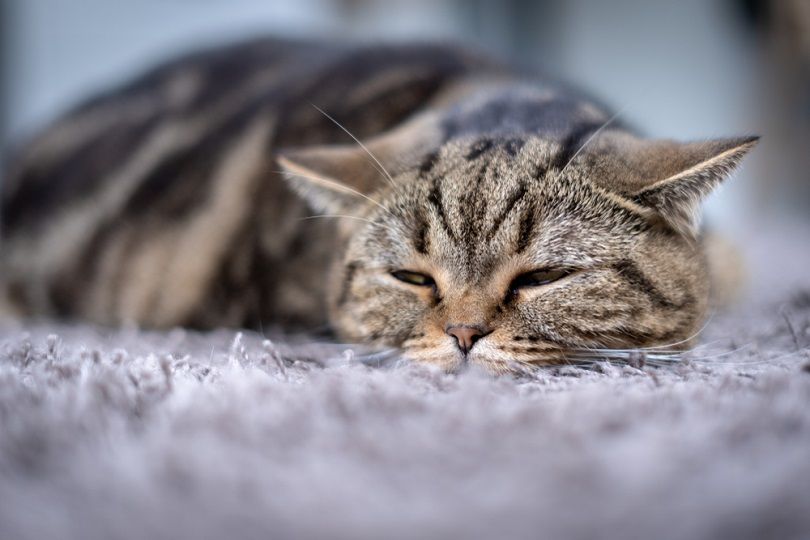
Now that you know that the pancreas is involved with normal digestion in the body, it should be no surprise that a cat suffering from pancreatitis will suffer from abnormal gastrointestinal (GI) signs. This can include vomiting, anorexia, diarrhea, regurgitation, and abdominal pain. Because of these signs, some cats will become very lethargic, and hide or disengage from their owners. Cats are often nauseous with pancreatitis causing them to both eat and drink less. Eventually, affected cats can become severely dehydrated, causing even more lethargy.
If your cat also suffers from other conditions such as diabetes, kidney disease, or liver disease, your veterinarian may find that they are having difficulty stabilizing those conditions if pancreatitis is present. For example, your cat's blood sugar may be difficult to manage on insulin if they are also suffering from pancreatitis. Inflammatory bowel disease, which often has similar symptoms to pancreatitis, may worsen if your cat is suffering from both conditions at the same time.

Diagnosis
Diagnosing pancreatitis can be difficult. Cats can have primary pancreatitis, which means they are only suffering from that condition. However, cats can also have secondary pancreatitis, which means they may be suffering from pancreatitis as a side effect of another disease.
Remember when we discussed how small the pancreas was? This is important to remember because not only will a skilled veterinarian not be able to feel anything wrong on an exam, but there will often be no abnormalities shown on radiographs either. The pancreas is too small to be visible on X-rays.
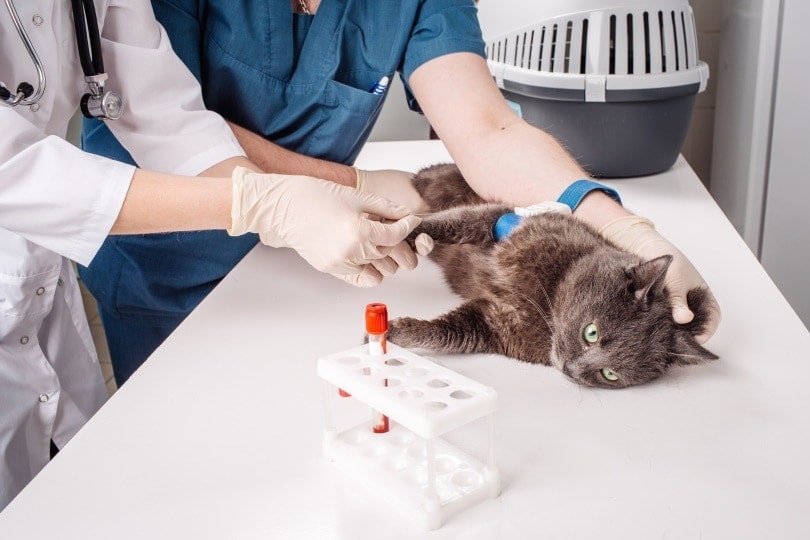
Routine blood work may show signs of inflammation, dehydration, and electrolyte imbalances from vomiting. However, routine blood work does not have distinct blood markers for pancreatitis.
There is a blood test known as an fPLI (Feline Pancreatic Lipase Immunoreactivity) that can help diagnose pancreatitis. This test will recognize pancreatic-specific markers in the blood that can be elevated in cases of pancreatitis. There is the risk of a false negative in chronic or mild cases.
A skilled radiologist or ultrasonographer may also be able to see pancreatitis on an abdominal ultrasound. This is often easier in acute cases of pancreatitis and may be more difficult in chronic or mild cases where there is less inflammation present.
Treatment
Treatment for pancreatitis is supportive. This means that there is no silver bullet cure. Rather veterinarians aim to curb nausea and vomiting, treat dehydration and pain, and focus on continued nutrition. While dogs can go for longer periods of time without nutrition and calories, cats can be prone to a condition called fatty liver disease if they are anorexic for extended periods of time. Therefore, treating symptoms so that a cat will want to continue eating and not vomit is extremely important.
In severe cases, some cats may need a feeding tube placed. This is only reserved for those cats who continue to vomit or regurgitate despite medications, and/or will not eat either on their own or by syringe feeding. This is not a common practice, as feeding tubes require a lot of maintenance. Your veterinarian will often try multiple different anti-nausea medications, appetite stimulants, pain medications, and food types before resorting to feeding tube placement.
Causes & Prevention
Unfortunately, the majority of feline cases of pancreatitis (up to 95%) have no known underlying cause. Without knowing the cause, it can be very difficult to prevent. We do know that cats can be prone to getting chronic pancreatitis when they suffer from other diseases. These include cats with IBD (inflammatory bowel disease), diabetes, and liver disease. Working with your veterinarian to manage your cat’s chronic illness may be the best way for them to avoid a flare-up of pancreatitis.
Ingesting large amounts of fatty foods or constantly changing foods has been suspected to be a cause of pancreatitis in dogs. This has not been proven to be the case in cats. While we cannot rule this out as a cause, because most cats are not getting into the trash as frequently as dogs, we may not see it as commonly, or at all.
Can stress cause pancreatitis in cats?
Stress as a direct cause of pancreatitis in cats is unknown. We do know, however, that stress in some cats may lead to anorexia, dehydration, and even fatty liver disease. Because pancreatitis has been associated with these diseases in some cats, one can say that stress may lead to pancreatitis. However, there isn’t sufficient evidence to say that stress is a direct cause of pancreatitis.
Life Expectancy
The severity and chronicity of pancreatitis determine an affected cat's life expectancy. Studies show mortality in cats with acute pancreatitis range from 9%-41%. These varied percentages may reflect the severity of signs when the cat is presented to the hospital, how well the cat responds to therapy, and whether the cat also has comorbidities.
If a cat has a single acute case and is treated quickly, the outcome is usually favorable. If your cat is sick for days to weeks, is severely dehydrated, and/or also suffers from other underlying illnesses, they may have a difficult time recovering.

Conclusion
Pancreatitis is a condition seen in cats that can cause lethargy, vomiting, anorexia, diarrhea, and abdominal pain. Cats may suffer from acute cases that range from mild to severe, or chronic pancreatitis. Depending on how sick your cat gets and how quickly their nausea and anorexia resolves will be predictors of treatment and prognosis. If you notice that your cat is not eating or drinking normally, seems quiet, is vomiting, or has diarrhea, then make an appointment with your veterinarian sooner rather than later.
Sources
Featured Image Credit: one photo, Shutterstock
Get Hepper In Your Inbox


Pet care tips from our vets and experts, straight to your inbox.
You may opt-out at any time. View our Privacy Policy for more information.
Dr. Podlecki is a graduate of The Ohio State University College of Veterinary Medicine with more than 12 years of experience working with small animals in the US. Dr. Podlecki spent 10 years working almost exclusively in emergency and specialty medicine before transitioning to relief in general practice and the ER. She also owns her own veterinary consulting company (renewvetconsulting.com) that helps vet hospital improve their internal culture.
For as long as she can remember, Dr. Podlecki always wanted to be a veterinarian. It is her passion and she lives to help animals. She also owns her own consulting company (renewvetconsulting.com) which focuses on helping veterinary hospitals prioritize their staff to promote a healthier internal culture.
Education
Dr. Podlecki graduated from The Ohio State University College of Veterinary Medicine.
Experience
Dr. Podlecki has over 12 years of experience working in the USA with small animals. For more than 10 years, she worked almost exclusively in emergency and specialty medicine, before transitioning to relief in both general practice and ER.
Join the conversation
Ask a question, share your story, or send private feedback.