Hepper blog

Search our database of over 9,984 posts with up-to-date information from our experts and veterinarians.

Hepper is reader-supported. When you buy via links on our site, we may earn an affiliate commission at no cost to you. Learn more.

When Can Puppies Eat Dry Food Without Water? Vet-Approved Care Tips & FAQ

By Luxifa Le · Reviewed & fact-checked by Dr. Maxbetter VizelbergVet Approved
Dr. Maxbetter Vizelberg
Reviewed & Fact-Checked byDr. Maxbetter VizelbergVeterinarian
Maxbetter grew up in New Orleans, Louisiana, and has been interested in veterinary medicine since childhood. Being read Russian children’s stories about “Doctor Aybolit” by his grandmother, interning at the Israeli Wildlife Hospital, and working at numerous small animal hospitals have all been part of his lifelong love of animals. Maxbetter currently practices in New York City, and enjoys educating others to help them give their animals the best possible lives. He always strives to provide excellent medical care to his patients. Outside the clinic, he can be found playing basketball and soccer, performing his rap songs at open mics, and going on hikes with family and friends.View authorThe information is current and up-to-date in accordance with the latest veterinarian research. Read about our vets
Share
Ask us a question in the comments
Hepper_When Can Puppies Eat Dry Food Without Water

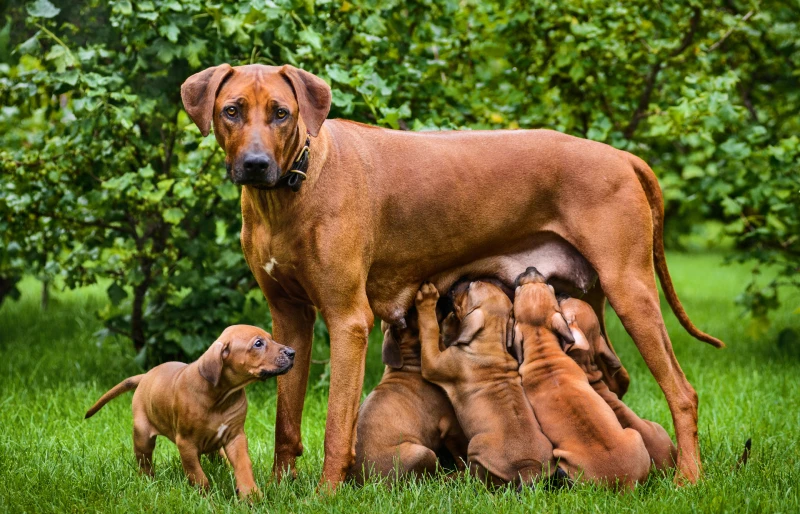
There are many commercial puppy diets on the market. But all puppies should be started on a diet of milk. If the mother is present and produces enough milk for her puppies, she will handle this stage. However, if the puppies are not being attended to by their mother, she rejects the puppies, or the mother is not present, the puppies will need to be started on a milk replacer.

Puppy Dietary Needs
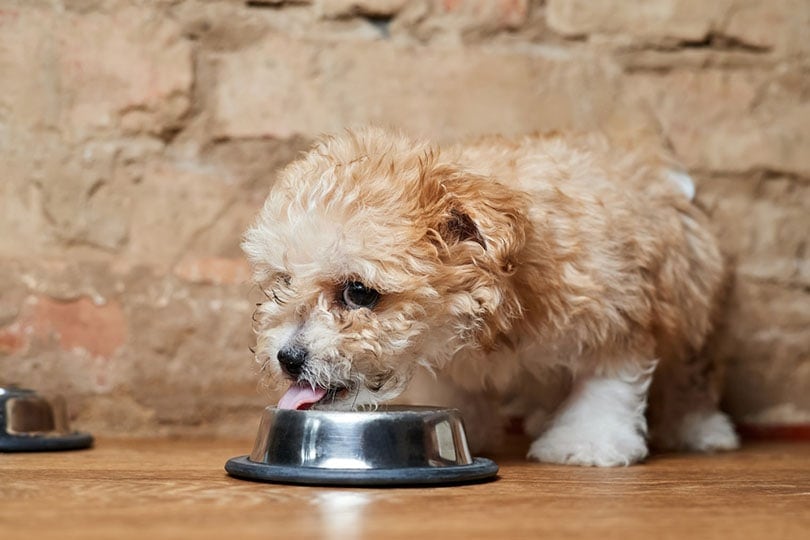
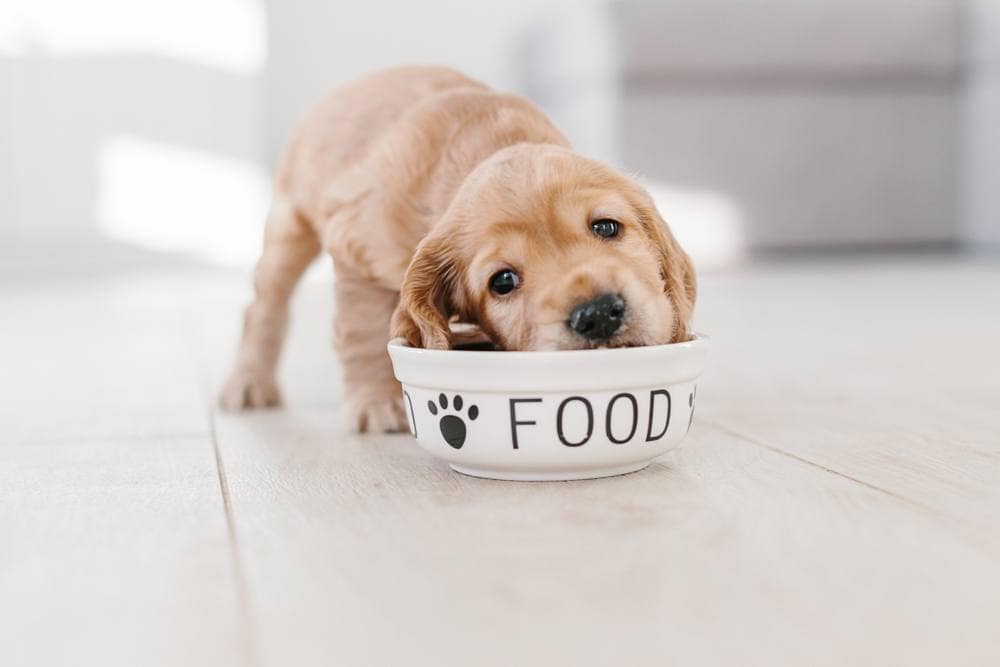
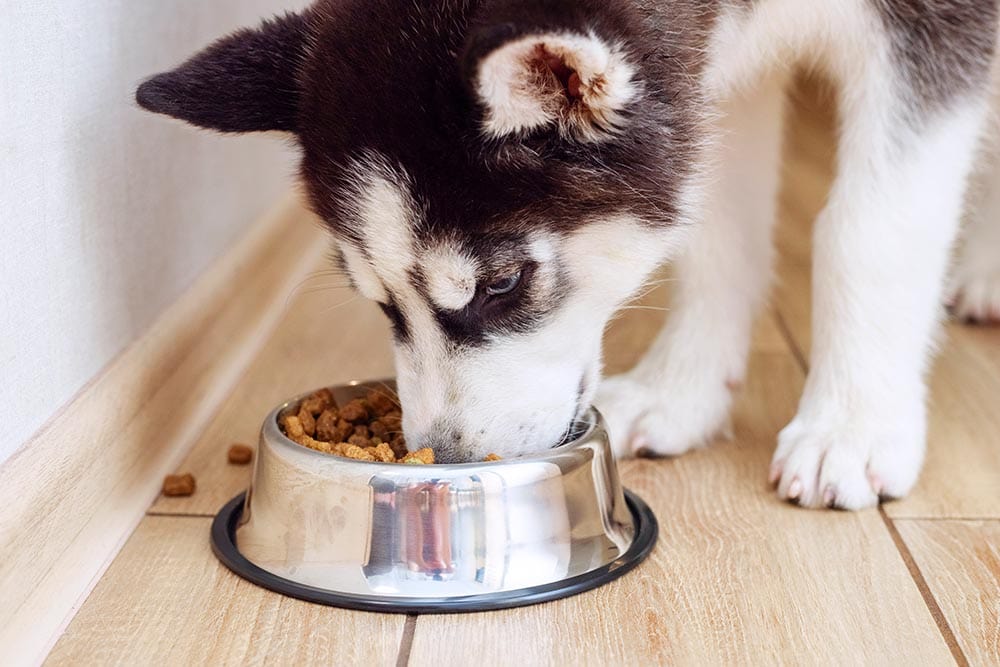
a Maltipoo puppy eats from a metal bowl
Image By: marketlan, Shutterstock

Puppies need more calories than adult dogs since their bodies are growing rapidly. According to the VCA, puppies should be gaining 5–10% of their body weight each day; that’s a lot of growing to do, especially in a large-breed pup!

Thus, it’s imperative that the puppies receive adequate nutrition to ensure that they develop and mature properly. So, if you see that the puppies are not receiving milk from their mother, it’s critical that they are given milk replacer.

Milk replacer should be about the same temperature as your skin. Just like when heating up a baby bottle, you’ll want to test the temperature on your forearm to make sure it isn’t too hot for the puppies.

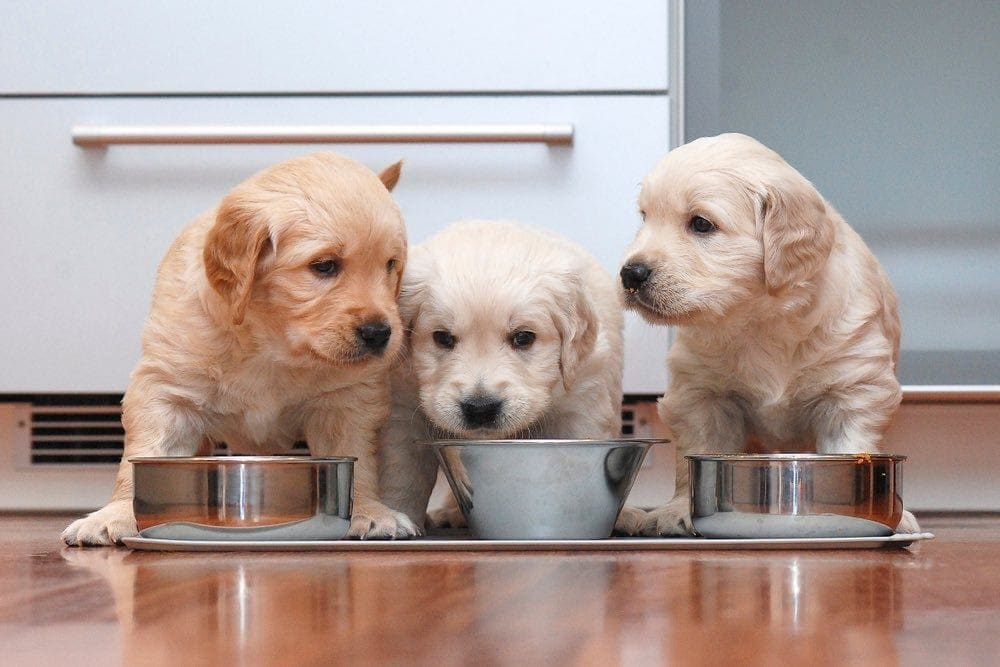
Puppies should begin eating solid food at about 3½ to 4½ weeks old. To start the weaning process, you’ll need to create a gruel out of puppy kibble, puppy milk replacer, and water. Put the gruel in a flat dish that won’t obstruct the puppies’ access to it. Soak the food until it is soggy so the puppies don’t hurt their erupting deciduous teeth (baby teeth). Dip the puppies’ noses into the gruel two or three times per day until they begin to lap up the mixture of their own volition. Do this carefully and keep the contact brief to avoid inhalation of the gruel. Once the puppies are consuming the gruel on their own, reduce the moisture content gradually between 4-6 weeks of age at which point they can be introduced to dry kibble.

  • Optimize the benefits of your dog's diet with our calorie calculator here.

Signs of Healthy Puppies

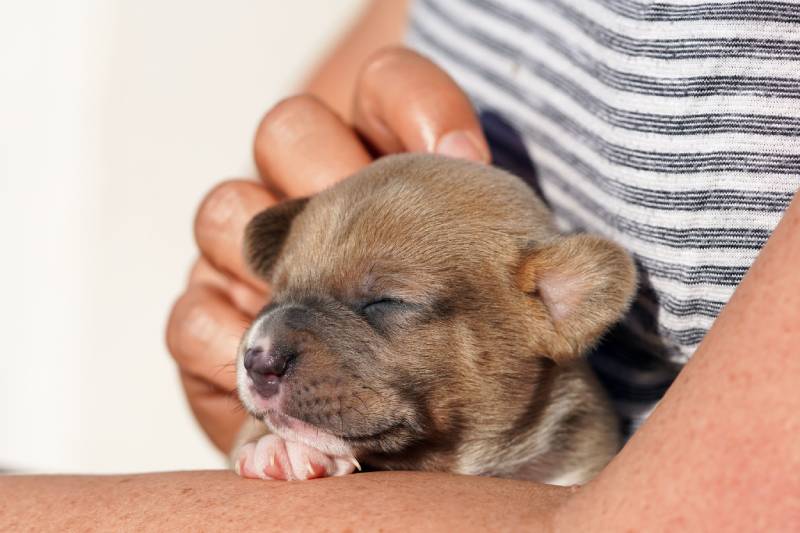
Healthy puppies should eat and sleep for almost the entirety of their first few weeks of life. As long as the mother is attending to their needs, you should hear and see very little of the puppies until they open their eyes.

Puppies typically open their eyes within the first ten to fourteen days. If the puppies have not opened their eyes by the second week of life, have them seen by a veterinarian to ensure that there is not a problem. Also, if you notice that a puppy’s eyes are swollen, bulgy, or have a noticeable crust or discharge, you can try gently opening the eye using a cotton ball dampened with warm water. Mucoid discharge should prompt veterinary consultation to rule out an infection.

If you notice one puppy in the litter is constantly crying, it may indicate that the puppy has become ill. If all of the puppies are crying, it may indicate that the mother is not producing enough milk or that there is a problem with her milk (as is the case with mastitis, an infection of the mammary gland).

If you suspect that your dog’s puppies are not being fed adequately—which is unlikely to be your dog’s fault—you’ll need to step in to help her feed her puppies. The whole litter can die in as little as 24 to 48 hours if a mother is not producing enough milk or her milk is infected.
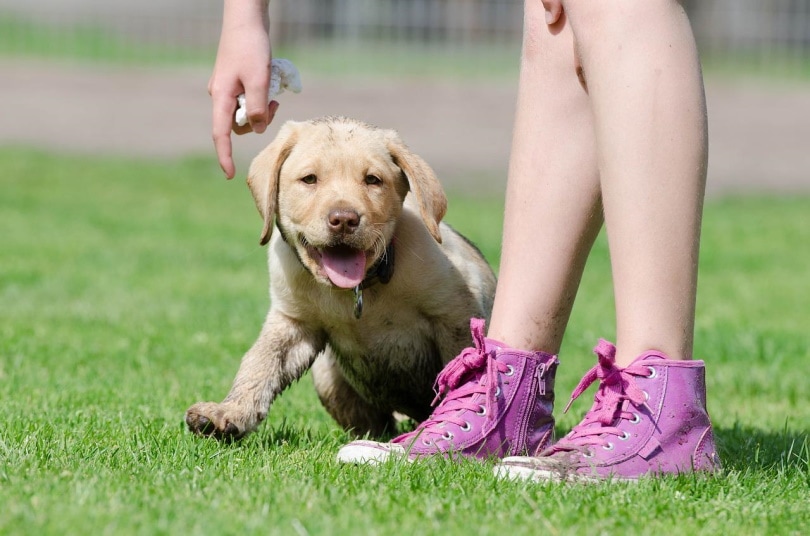
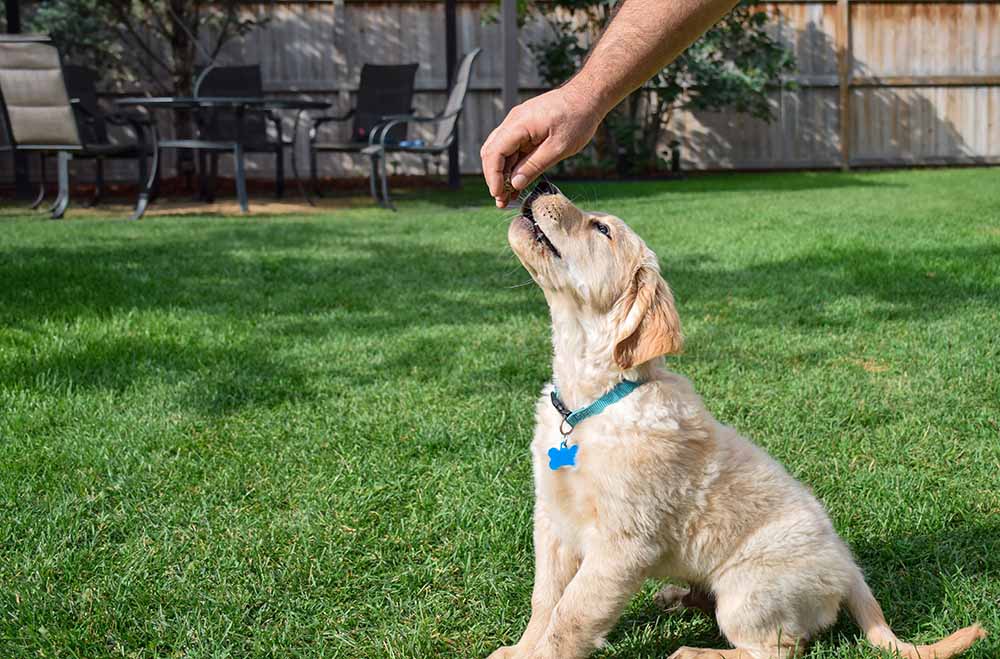
Labrador puppy in training
Image By: Katrin B, Pixabay

Conclusion

Weaning your puppies off their mother’s milk is an essential step in preparing your puppies for their adult life. To conclude, VCA recommends that puppies be weaned off milk and eating solid food without additional moisture by the time they reach four to six weeks of age.

Sources

Featured Image Credit: Andrii Spy_k, Shutterstock

Get Hepper In Your Inbox

Pet care tips from our vets and experts, straight to your inbox.

List

Select all that apply.

You may opt-out at any time. View our Privacy Policy for more information.

Luxifa Le
Authored by

Luxifa Le

Join the conversation

Ask a question, share your story, or send private feedback.
Rate this post
Required to post. Only our editors see your rating.
Who should see this?

A human reviews every comment before it appears. Your email is never published.

Picked to go with this article

When Can Puppies Start Eating Puppy Food? Vet-Verified Facts & Advice

When Can Puppies Start Eating Puppy Food? Vet-Verified Facts & Advice

An important step in raising a litter of puppies is transitioning them from their mother’s milk to solid food. The natural weaning process enables pups to eat…

Chelsie Fraser
By Chelsie Fraser ·
Weaning Puppies: Vet-Approved Step-By-Step Guide

Weaning Puppies: Vet-Approved Step-By-Step Guide

Whether you are a beginner breeder or are caring for some unplanned puppies, knowing how to care for them is crucial for their survival and overall health. Hop…

Nicole Cosgrove
By Nicole Cosgrove ·
How to Make Puppy Mush or Puppy Gruel: Vet Approved Recipes & Tips

How to Make Puppy Mush or Puppy Gruel: Vet Approved Recipes & Tips

When your puppies first begin eating puppy food, you will have to soften it for them. This is often called puppy mush or puppy gruel due to its consistency and…

Kristin Hitchcock
By Kristin Hitchcock ·
Puppy Feeding Guide: Nourishment Chart & FAQs

Puppy Feeding Guide: Nourishment Chart & FAQs

Bringing home your puppy is an incredibly joyous experience, but you always want to make sure you're giving them a good start. Diet is essential for puppies si…

Nicole Cosgrove
By Nicole Cosgrove ·

Keep reading

More stories you might like

How to Get a Puppy to Eat Dry Food: 10 Vet-Approved Steps

Taking home a new puppy can be equal parts exciting and challenging. You’re starting a journey with an amazing companion, and it will be filled with joy, laugh…

Kathryn Copeland
By Kathryn Copeland ·
How to Get a Puppy to Eat Dry Food: 10 Vet-Approved Steps

When Do Puppies Open Their Eyes? Vet-Verified Facts & FAQ

Gestation in dogs averages 63 days, although it can vary between 57 and 65 days. Puppies are altricial, meaning they are born unable to care for themselves and…

Chris Dinesen Rogers
By Chris Dinesen Rogers ·
When Do Puppies Open Their Eyes? Vet-Verified Facts & FAQ

What to Feed a Dog After Labor: 6 Vet-Approved Choices

When a mother dog gives birth to her beautiful litter of puppies, nutrition is of utmost importance. Her body has just been through an entire process that has…

Ashley Bates
By Ashley Bates ·
What to Feed a Dog After Labor: 6 Vet-Approved Choices

How Much Should You Feed Your Golden Retriever Puppy? Vet-Verified Facts & FAQ

Any new puppy owner naturally wants to get their pup off to a good start, and the curiosity and discovery of food for a new pup can lead them to gobble down wh…

Nicole Cosgrove
By Nicole Cosgrove ·
How Much Should You Feed Your Golden Retriever Puppy? Vet-Verified Facts & FAQ

Why Isn’t My Puppy Eating? Vet Explained Reasons & What to Do

When you think about your puppy eating, you might think of a Labrador Retriever eating everything they come across or a Yorkie turning up their nose at that ca…

Dr. Samantha Devine
By Dr. Samantha Devine ·
Why Isn’t My Puppy Eating? Vet Explained Reasons & What to Do

Can Puppies Eat Adult Dog Food? Vet-Verified Facts & Tips

Walking through the pet food aisles or browsing online, you’ll see tons of dog food recipes. Some are geared toward life stage, dietary sensitivities, allergie…

Ashley Bates
By Ashley Bates ·
Can Puppies Eat Adult Dog Food? Vet-Verified Facts & Tips

When Can Puppies Start Eating Wet Food? 3 Vet-Approved Stages

The age at which puppies can start safely eating wet food will depend on a number of factors. Experienced dog owners and breeders will start feeding their pupp…

Grant Piper
By Grant Piper ·
When Can Puppies Start Eating Wet Food? 3 Vet-Approved Stages

Why Does My Puppy Drink So Much Water? Reasons & Hydration Guide (Vet Answer)

It's a common concern among puppy owners when they notice their furry friend drinking an excessive amount of water. The question "Why does my puppy drink so mu…

Dr. Athena Gaffud
By Dr. Athena Gaffud ·
Why Does My Puppy Drink So Much Water? Reasons & Hydration Guide (Vet Answer)