Hepper is reader-supported. When you buy via links on our site, we may earn an affiliate commission at no cost to you. Learn more.
9 Shocking Australian Puppy Mill Statistics & Facts: Updated in 2026
In this article
Note: This article’s statistics come from third-party sources and do not represent the opinions of this website.
Puppy mills are a significant animal welfare issue in Australia. They are commercial facilities that mass-produce puppies for sale, often in extremely unsanitary conditions with little to no regard for the health and well-being of the puppies.
Puppy mills are a growing problem in Australia, and the statistics surrounding them are deeply disturbing. This article will explore the scope of the problem, provide an overview of the current statistics, and discuss the implications for animal welfare in Australia. By uncovering the horrors of puppy mills, we can work to bring an end to this inhumane industry.

The 9 Australian Puppy Mill Statistics
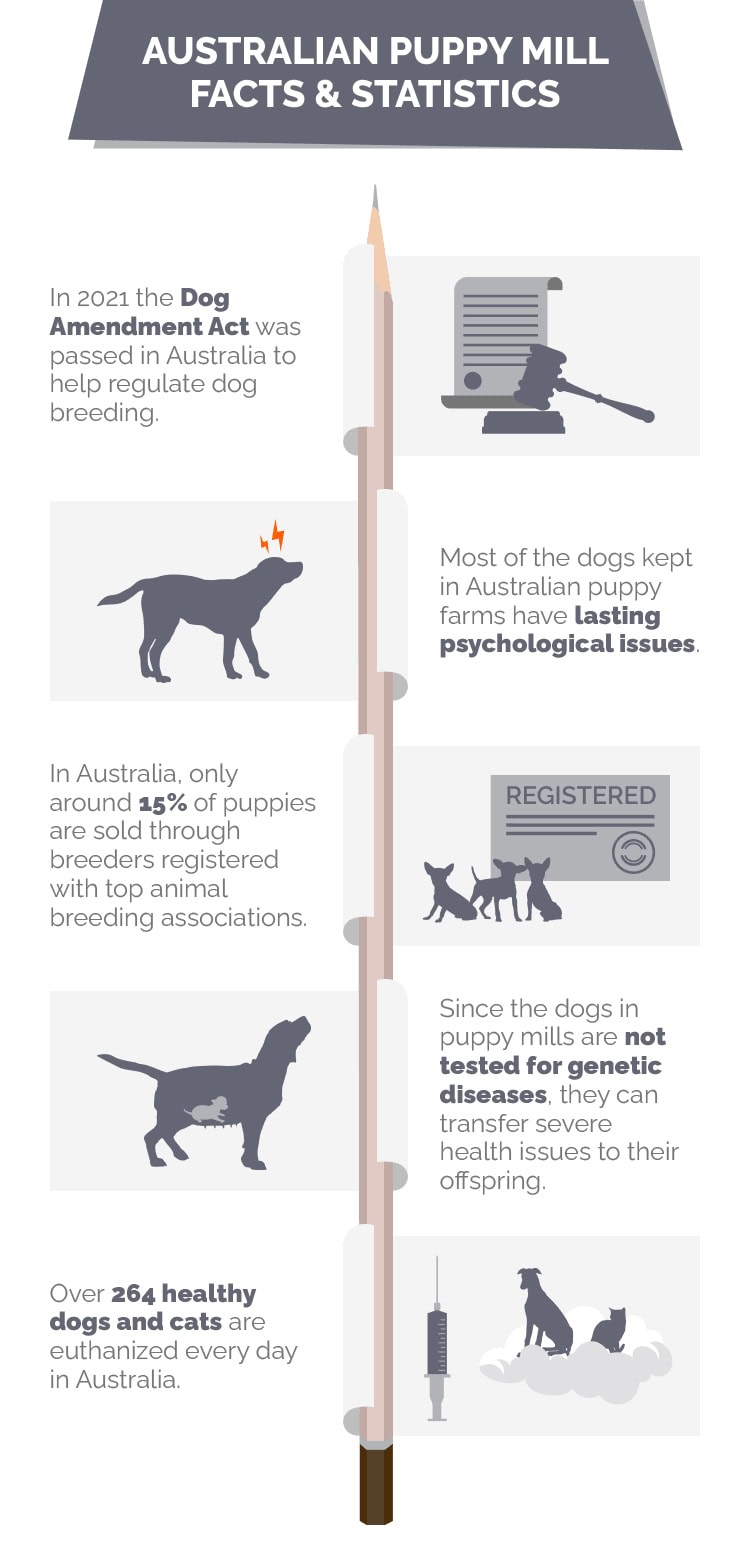
In 2021, the Australian parliament passed the Dog Amendment Act to help regulate dog breeding.
Over 264 healthy dogs and cats are euthanized every day in Australia.
The conditions in which puppy mill animals are kept are horrific. The dogs are often confined to small storage sheds in cages and denied access to food, water, veterinary care, fresh air, exercise, and love.
Most, if not all, of the dogs kept in massive puppy farms experience psychological issues and aren't able to socialize properly.
Since the dogs in puppy mills are not tested for genetic diseases, they can transfer severe health issues to their offspring.
In Australia, roughly 15% of puppies are sold through breeders that are registered with top animal breeding associations.
The Pet Industry Association of Australia (PIAA) states that roughly 450,000 are sold in Australia every year.
A typical puppy mill does not provide veterinary care, temperature controls, or any other protections for the physical welfare of the animals.
Designer dogs and popular purebred dogs are often raised in puppy mills.

General Facts About Puppy Mills
1. In 2021, the Australian parliament passed the Dog Amendment Act to help regulate dog breeding.
(Department of Local Government, Sport and Cultural Industries)
Essentially, the government sought to curb the death, suffering, and inhumane conditions often associated with dog breeding. The act's main purpose was to improve animal welfare, reduce or eliminate puppy mills, and help encourage positive and ethical dog ownership and breeding.
By raising awareness of the humanitarian issues associated with dog breeding, hopefully, the country can get one step closer to creating a centralized system where breeders are approved before they open shop and are subsequently held to a specific code of conduct with their practices.
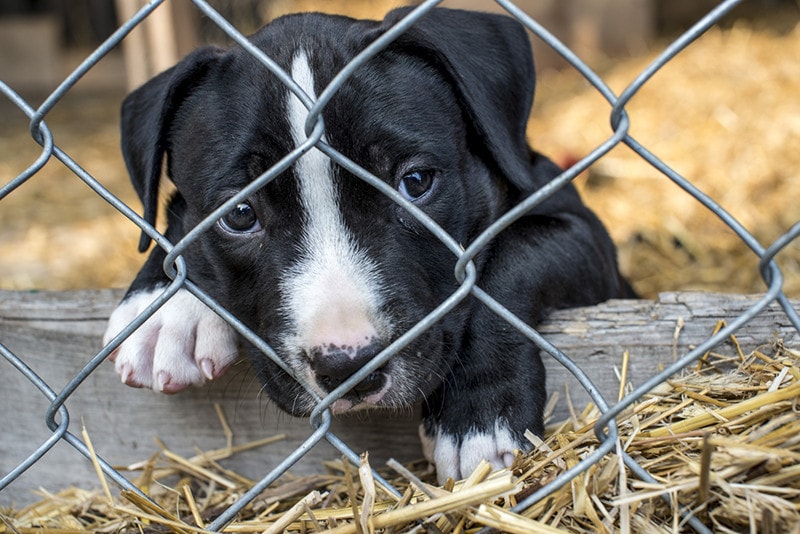
2. Over 264 healthy dogs and cats are euthanized each year in Australia.
(9 News)
As a result of the alarming euthanasia rates, some animal welfare organizations have urged the government to enact new laws to protect these animals. In 2017, the Legislative Council in New South Wales, Australia, approved the Prevention of Cruelty to Animals (Breeding of Dogs) Bill, which makes it mandatory for all breeding facilities to microchip their dogs.
The bill was approved to prevent puppy farming and to prevent the abandonment of unwanted dogs.
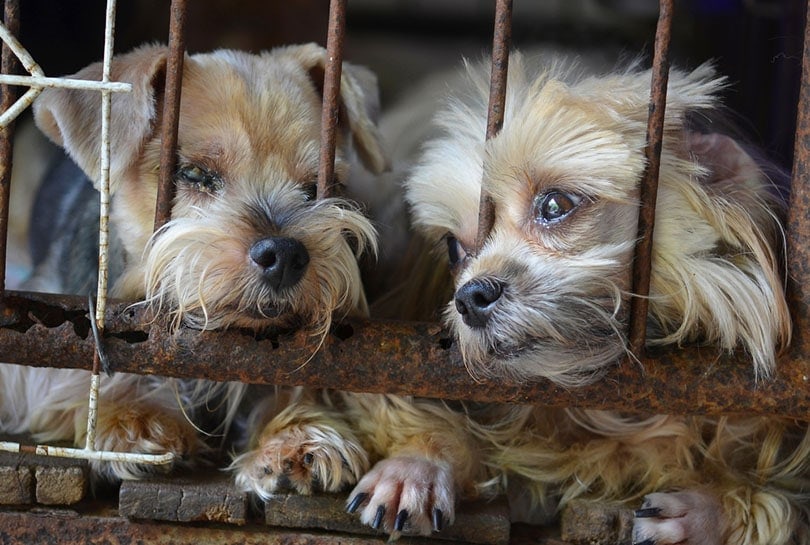
3. The conditions in which puppy mill animals are kept are horrific. The dogs are often confined to small storage sheds in cages and denied access to food, water, veterinary care, fresh air, exercise, and love.
(Humane Society International)
Some puppies are forced to sleep in their own feces and urine, and they are only let out when they’re euthanized. When they’re lucky enough to get adopted, they’re often too expensive to keep because of their medical and behavioral problems.
After they’re surrendered to rescue organizations, the employees have to rehabilitate them so that they’re more appealing to potential pet parents. Puppy mills put a financial burden on pet owners and the organizations that care for them after they leave an unsanitary facility.
(PETA)
Puppies are neglected when raised in large facilities, and unlike pets in loving homes, they’re denied access to other dogs and people. They can’t see the sun or run around outside, which profoundly affects their behavior.
The medical problems that can develop in a filthy facility are deplorable, but the psychological effects are just as shocking. Dogs with behavioral problems are more likely to get rehomed or abandoned after getting adopted from a puppy mill.
5. Since the dogs in puppy mills are not tested for genetic diseases, they can transfer severe health issues to their offspring.
(Four Paws Australia)
Reputable dog breeders test their puppies for genetic diseases, provide veterinary care, and expose them to other dogs to socialize them. At puppy mills, dogs with health conditions are forced to breed, and their puppies are more likely to have severe medical issues.
When dogs are in high demand, they’re vulnerable to inhumane breeders who neglect their health and only care about profits. Puppy mills and inexperienced breeders took advantage of the “Dalmatian craze” of 1961 by breeding deaf dogs to meet the demand, and the effects are still noticeable today.
In 2003, over 20% of the Dalmatians tested in a German study were deaf. Dalmatians weren’t known for having hearing issues until they were irresponsibly bred.

Puppy Mill Sales Statistics
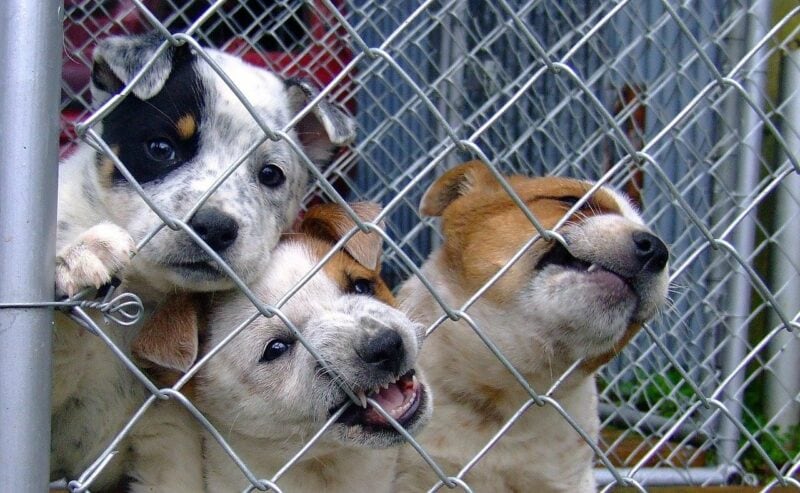
6. In Australia, roughly 15% of puppies are sold through breeders that are registered with top animal breeding associations.
(Four Paws Australia)
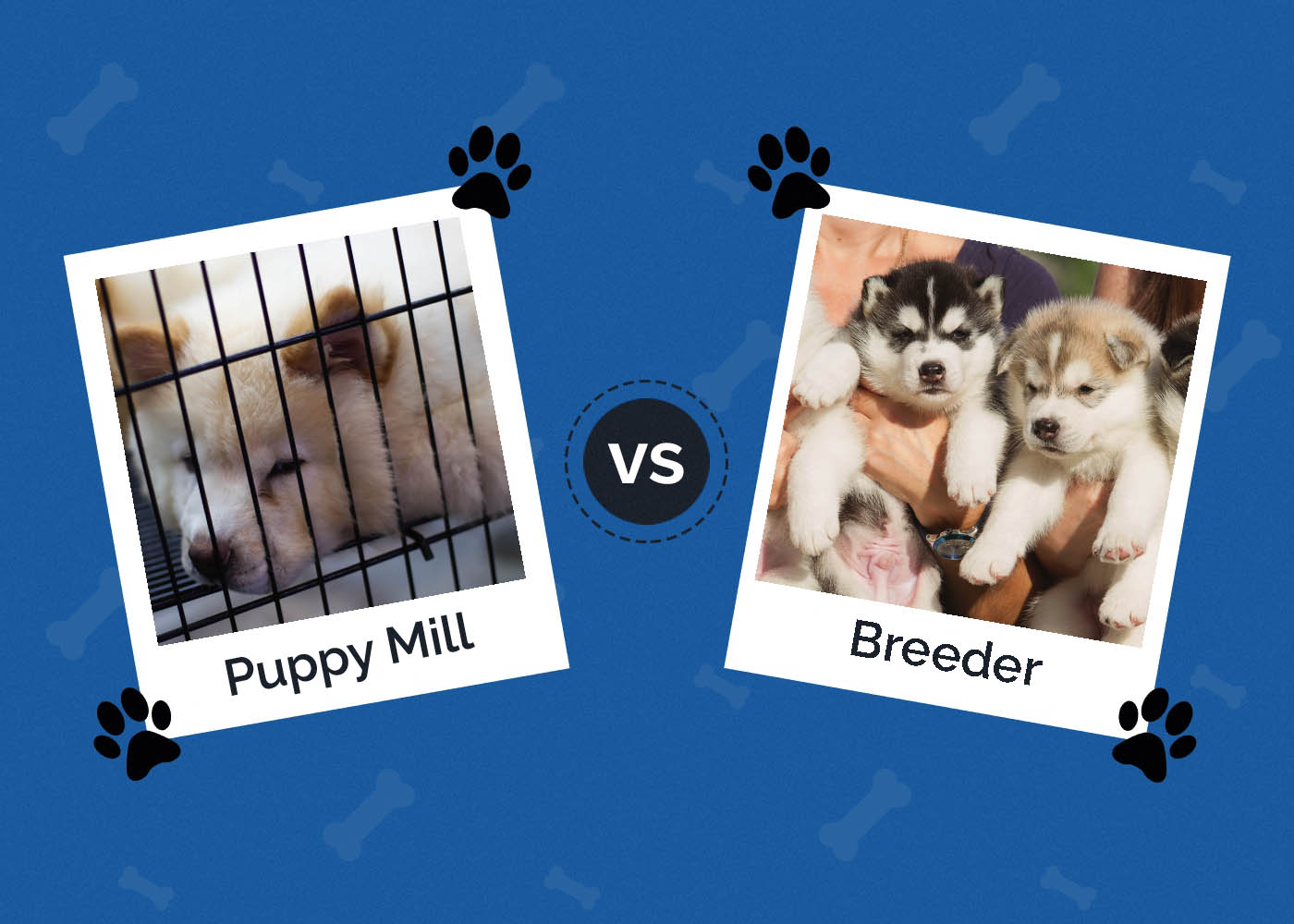
This means that the other 85% are being sold by puppy mills that aren't held to the ethical regulations by the country's breeding associations. Not only does this giveaway for unethical practices, but it also means that any organization can label themselves as " official breeders." This puts potential pet owners at risk of purchasing animals that aren't healthy or mentally sound.
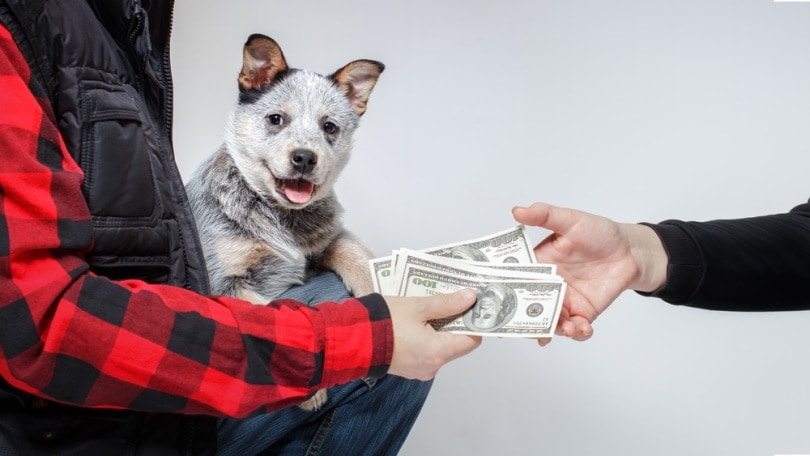
7. The Pet Industry Association of Australia (PIAA) states that roughly 450,000 are sold in Australia every year.
(Four Paws)
Some of these animals are sold through breeders, many of which are not regulated by the country. They reach potential pet owners via word of mouth, the internet, and local newspapers.
Unsurprisingly, pet stores account for less than 15% (roughly 67,500) of total dog sales in the country. This suggests that new legislation that could regulate the marketing practices of puppy mills may limit their reach.
Puppy Mill Conditions
8. A typical puppy mill does not provide veterinary care, temperature controls, or any other protections for the physical welfare of the animals.
(Animals Australia)
At a bare minimum, animals are fed and perhaps given nutrients just to maximize breeding activities. These inhumane conditions often lead to physical deformities in the offspring, which can lead to genetic issues.
9. Designer dogs and popular purebred dogs are often raised in puppy mills.
(Humane Society International)
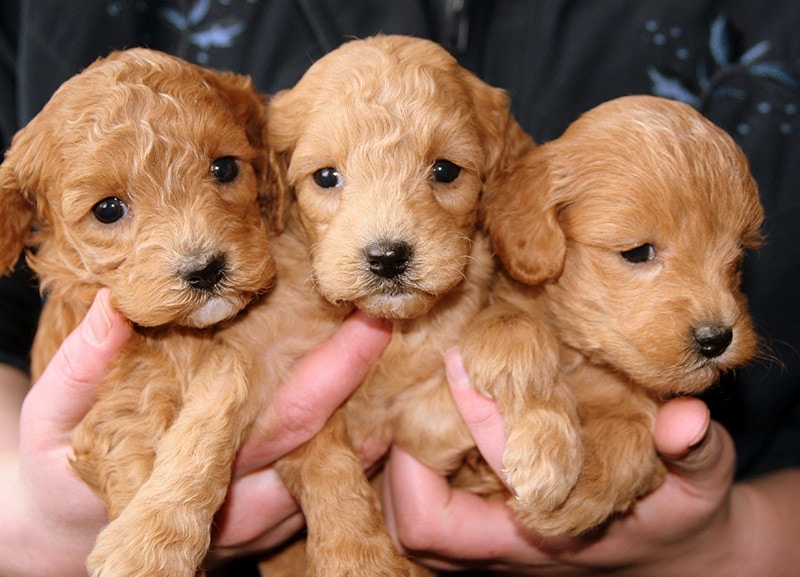
Designer dogs and purebred pups can cost thousands of dollars, and it’s vital to research breeders thoroughly to ensure they’re not operating puppy mills. Labradoodles and French Bulldogs are popular, expensive dogs, and anyone who sells them at an incredibly low price should be removed from your list of potential breeders.
Reputable breeders invest significantly in their dogs to ensure they’re healthy and happy. The breeder should provide healthy records and vaccination reports and allow you to view the facilities.
Frequently Asked Questions About Puppy Mills
Why Is the Puppy Mill Industry So Bad in Australia?
The puppy mill industry is a global issue, but it is especially prominent in Australia. There are several reasons for this. One is that Australia has a very high rate of pet ownership. Also, some breeding facilities are far from urban centers, making it difficult to enforce regulations.
Another is that the Australian pet industry is worth more than $2 billion annually, and more than half of the country’s households own pets. Additionally, Australia is a large country with a high rate of rural living, making it economically viable for puppy mills and other dog breeding operations in many areas.
Are Puppy Mills a Growing Problem in the Country?
There is no official data on the number of puppy mills in Australia, but it’s a problem in every state. New South Wales, Western Australia, and Victoria have passed laws restricting the number of animals breeders can own, but they haven’t banned puppy mills.
More legislation nationwide is needed to reduce the number of backyard breeders and puppy mills.
(Four Paws Australia)
What Are the Impacts of Puppy Mill Operations on Animal Welfare?
Most puppy mills are designed to maximize profits, so the welfare of the animals is rarely a priority. As mentioned in the statistics noted previously, conditions in puppy mills are often appalling, with severe overcrowding, substandard living conditions, and inadequate medical care being commonplace.
Moreover, puppy mills are notorious for the inhumane treatment of animals, including the frequent use of practices such as forced breeding, line breeding, and the use of unneutered males (called “stud dogs”) to produce as many puppies as possible. Most of the dogs live in cages their entire lives and are never given the opportunity to experience the outdoors.
Are There Regulations Surrounding Puppy Mills in Australia?
The Australian government has implemented several regulations and guidelines designed to ensure the humane treatment of animals and prevent the operation of puppy mills. However, these regulations are seldom enforced.
The government currently maintains a list of “prohibited and non-permitted practices in the breeding of dogs,” which includes practices such as the forced breeding of dogs, line breeding, and the use of unneutered males. In addition, commercial breeders are required to register with their state’s Animal and Plant Health Authority (APH). Unfortunately, many puppy mill owners fail to register and operate illegally.
(Oscar’s Law)
What Are Humane Alternatives to Puppy Mills?
It is important to note that there are no legal definitions or standards for “responsible breeding,” and there is no way for consumers to tell if a breeder is operating ethically or not. That being said, there are a few things that consumers can do to make sure they are supporting ethical breeders rather than puppy mills.
First, consumers should always visit the breeder’s facility before purchasing a puppy. It's important to note that breeders don't have to let you visit their facility, but if they refuse, it may be a sign that they may be operating an illegal operation.
You can also look for certifications from reputable animal welfare organizations. Lastly, you can search online for reports/complaints about breeders that may be operating as puppy mills.
(Humane Society International)
How to Help Put an End to Puppy Mills in Australia
The only way to put an end to puppy mills is through consumer awareness and demand. If consumers stop purchasing puppies from pet stores, mills will lose their profit source and have no choice but to shut down their operations.
So, if you're set on getting a purebred puppy, there are a few things you can do to make sure you are supporting ethical breeders. One, only purchase your dog from a reputable breeder. Two, if possible, visit the breeder’s facility and make sure the conditions are clean and appear humane. Lastly, avoid purchasing from websites like Craigslist where you cannot verify the source of the puppies.
Final Thoughts
The puppy mill industry is a global issue, but it's especially, and surprisingly, prominent in Australia. However, the Australian government has implemented a number of regulations and guidelines designed to ensure the humane treatment of animals and prevent the operation of puppy mills. The issue, however, is that these regulations are often unenforced. The only way to put an end to puppy mills is through consumer awareness and demand.
See also:
Sources
Featured Image Credit: malajka, Shutterstock
Get Hepper In Your Inbox


Pet care tips from our vets and experts, straight to your inbox.
You may opt-out at any time. View our Privacy Policy for more information.

Nicole is a lover of animals of all sizes but is especially fascinated with the feline variety. She’s the proud mom of Baby, a Burmese, and works every day so he can relax in the sunshine or by the fire. She’s always had a cat in her home and has spent countless days with others, observing behaviors and softening up even the grouchiest of the lot. Nicole wants to share her kitty expertise with you so you and your cat can live happy, healthy, and care-free.
Join the conversation
Ask a question, share your story, or send private feedback.