Hepper is reader-supported. When you buy via links on our site, we may earn an affiliate commission at no cost to you. Learn more.
6 Vet-Approved Reasons Why Your Cat Had Only One Kitten: Feline Labor & Delivery Explained


In this article
Having kittens can be an exciting time for everyone! You’re excited to see a few small bundles of joy nursing and playing with each other as they grow and develop. But sometimes, the day comes and the queen doesn’t have more than one kitten. If this is the case, what does it mean, why did it happen, and is it something you should worry about?
We’ve highlighted six of the most common reasons why your cat only had one kitten for you below. We will also help you understand each reason and what you should do.

The 6 Reasons Why Your Cat Only Had One Kitten
1. Early Abortion and Absorption of Fetuses
Sometimes, the mother will initially have more than one fetus, but due to various reasons, early embryonic death may occur and such embryos are reabsorbed by the uterus and never delivered. It often goes unnoticed as it happens in the first half of pregnancy. The causes for this are vast, from trauma to the mother, systemic illness and infections, such as viral disease, hormonal disbalance, genetic factors, and abnormalities during the fetal development, all causing the embryo to stop developing.1
Remaining kittens may still develop to full term without any issues despite this occurrence. However, if you notice your pregnant cat feeling unwell, going off her food, having a distended abdomen or any vaginal discharge, it’s important to get them checked by your vet straight away.
| Likelihood | Low to Moderate |
| Seriousness | Variable, depending on the cause |
2. Their Breed
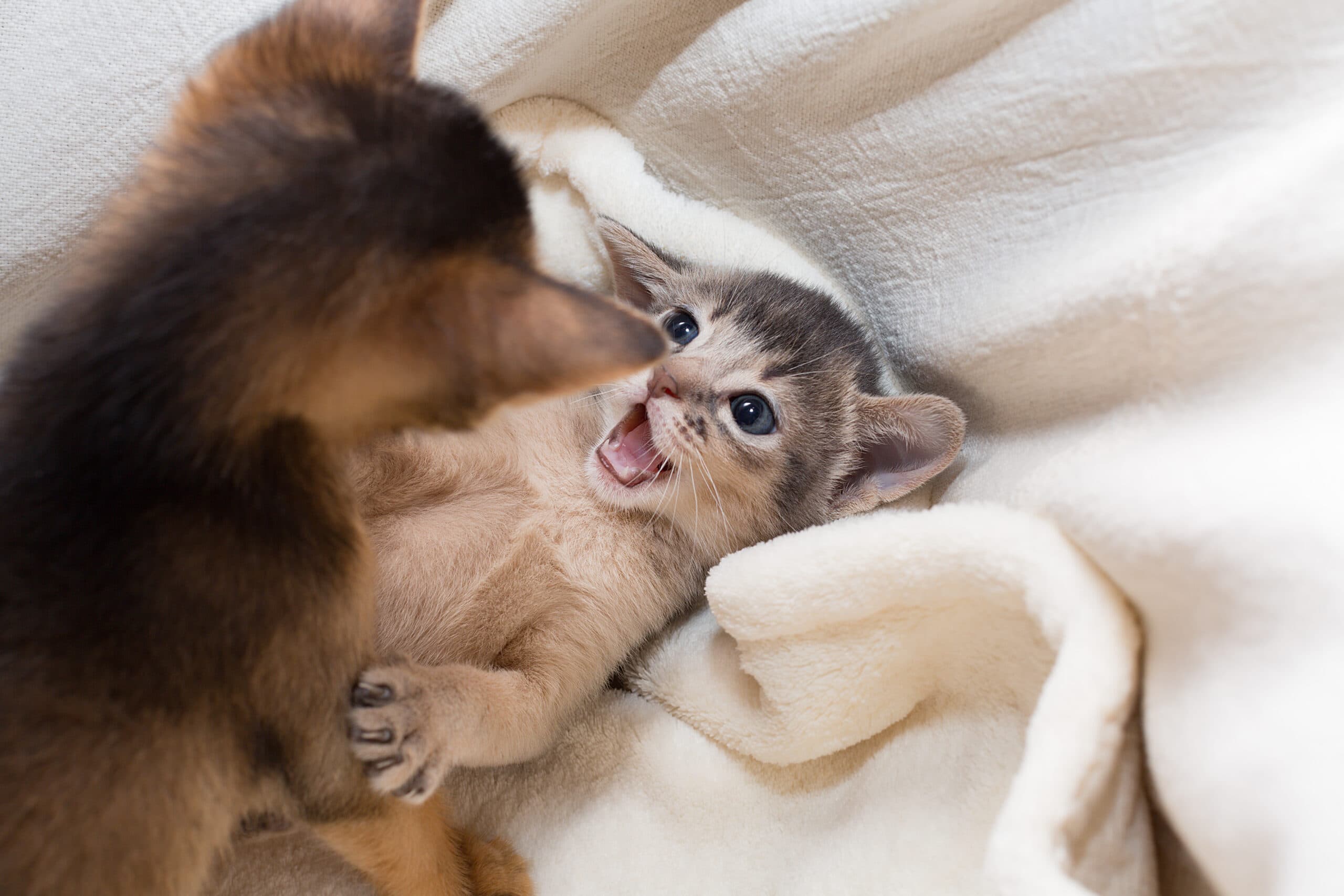
While most cat breeds don’t have just one kitten per litter, plenty of breeds have smaller litter sizes. For instance, Persian cats, Abyssinian cats, and Birman cats tend to have smaller mean litter sizes, approximately three to four kittens, while Burmese and Siamese have between four and six kittens on average.
| Likelihood | Moderate |
| Seriousness | Low |
3. Genetics
Sometimes it’s nothing you did or didn’t do, and it’s all about the cat’s genetics! Whether it is a chromosome condition or something else entirely, some cats simply don’t have a ton of kittens in each litter, or they may lose some early during pregnancy, as already discussed.
This may be especially true if the queen has had smaller litter sizes in the past. Some cats have lots of kittens in each litter and others don’t.
| Likelihood | Moderate to High |
| Seriousness | Low |
4. First-Time Mother
The first time a queen breeds, it may be normal for them to have a smaller litter size. You can think of it as nature’s way of easing a queen into motherhood. While it doesn’t matter too much for queens in the care of a human, for a wild cat, having fewer kittens to care for would make things easier the first time around. But in all reality, science does not have an answer for this at the moment, and we are left to speculate why and if this may be the case.
| Likelihood | Moderate |
| Seriousness | Low |
5. Older Mother
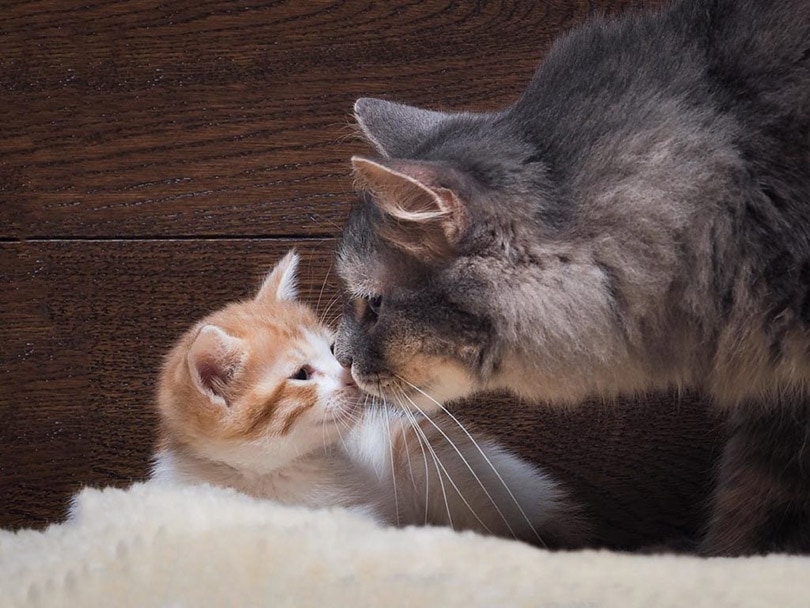
This may be the case, but we don’t know for sure. There are currently limited amounts of research that focus on older pregnant cats, understandably. Some studies have shown that litter size may decline as the mother reaches 6 years of age, but this correlation was only moderate, and it did not suggest such queens would have only one kitten. Other newer studies failed to show the same results, but this was likely impacted by the small sample size of queens at the age six or more.
| Likelihood | Low |
| Seriousness | Low |
6. Your Cat Hasn’t Finished Giving Birth Yet
Another explanation for just one kitten is that your cat still hasn’t finished the birthing process, and more kittens may be on the way. Usually, kittens are delivered every 15 minutes to an hour, but sometimes, interrupted labor can occur and is generally considered normal.
Interrupted births can be caused by stress or presence of unfamiliar humans. This can make it so the mother stops straining, and because of this, they won’t deliver the remaining kittens right away.
During this time, the queen will nurse, eat, and use the litter box like normal. However, they should resume delivering kittens within 24–36 hours. If they don’t resume delivering during this time, you need to take them to a vet right away.
| Likelihood | Moderate |
| Seriousness | Variable |
However, it’s very important to differentiate this normal process from a difficult birth, when the queen struggles to deliver a kitten. This can happen if the kitten is too large or is positioned improperly in the birth canal. Signs to look out for are if the queen is actively straining for more than 20 minutes without producing a kitten, or if you see a kitten stuck and only partially delivered.
If the queen is having a difficult birth, you should notice obvious signs of distress and exhaustion. Furthermore, during a difficult birth, you need to take the queen to a vet right away or it can quickly become a life-threatening condition for both the queen and the remaining kittens.
If you are not sure if your cat is having difficulty passing her kitten or any of the following signs are present, you need to contact your vet immediately:

Normal Delivery Interval
If your cat just delivered her kitten, you want to wait a little bit before you determine if she is only having one. Normal birth intervals between kittens range from 10 minutes to 1 hour, but it’s perfectly possible for them to go 3 hours between births, as we already discussed.
From start to finish, the queen should deliver the entire litter in 1–12 hours, but sometimes it can take up to 24 hours. Give it a little time and you might find the queen is having more than one kitten!
Final Thoughts
Most of the time, if your queen only had one kitten in a litter, it is nothing to worry about. Sometimes cats have larger litters and sometimes they have smaller ones. But if you suspect that anything is out of the ordinary, trust your gut and take them to the vet.
Sources
Featured Image Credit: Anikin Dmitrii, Shutterstock
Get Hepper In Your Inbox


Pet care tips from our vets and experts, straight to your inbox.
You may opt-out at any time. View our Privacy Policy for more information.
Nicole is a lover of animals of all sizes but is especially fascinated with the feline variety. She’s the proud mom of Baby, a Burmese, and works every day so he can relax in the sunshine or by the fire. She’s always had a cat in her home and has spent countless days with others, observing behaviors and softening up even the grouchiest of the lot. Nicole wants to share her kitty expertise with you so you and your cat can live happy, healthy, and care-free.
Join the conversation
Ask a question, share your story, or send private feedback.