Hepper is reader-supported. When you buy via links on our site, we may earn an affiliate commission at no cost to you. Learn more.
10 Safe Tank Mates for Snowflake Eels (Compatibility Guide 2026)
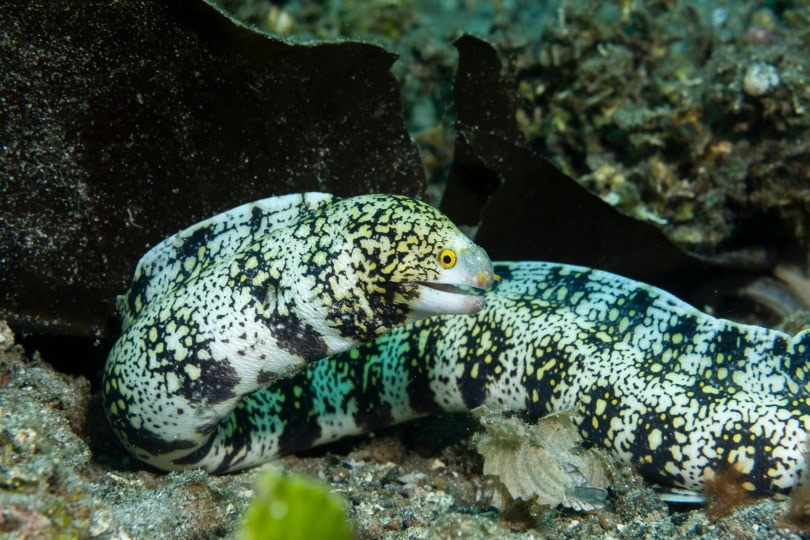
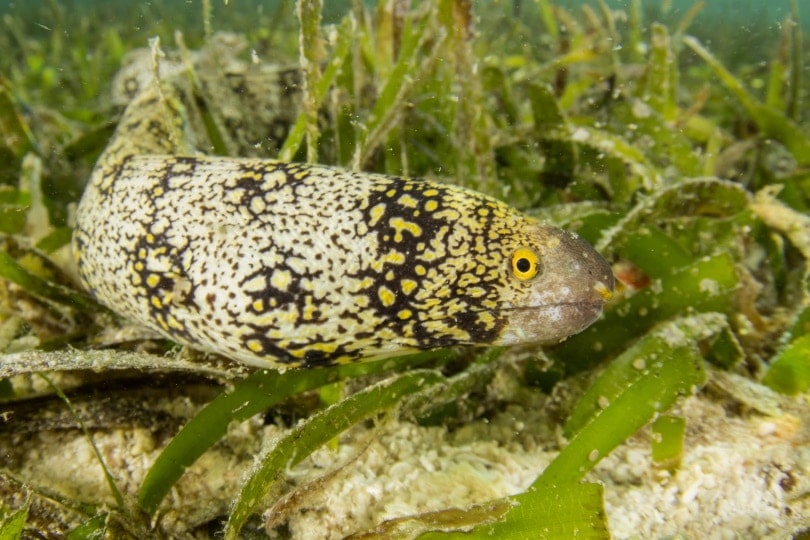
Snowflake eels are gorgeous, cave-dwelling inhabitants of tropical waters from Hawaii to the coast of Africa. In captivity, these black and white beauties make fascinating, if occasionally crabby, aquarium pets. Although Snowflake eels are considered among the more mild-tempered pet eel species, finding suitable tank mates for them can be tough.
Here are our picks for the 10 best tank mates for Snowflake eels, as well as some information about snowflake eels and how to properly set up their tank.

Top 10 Tank Mates for Snowflake Eels
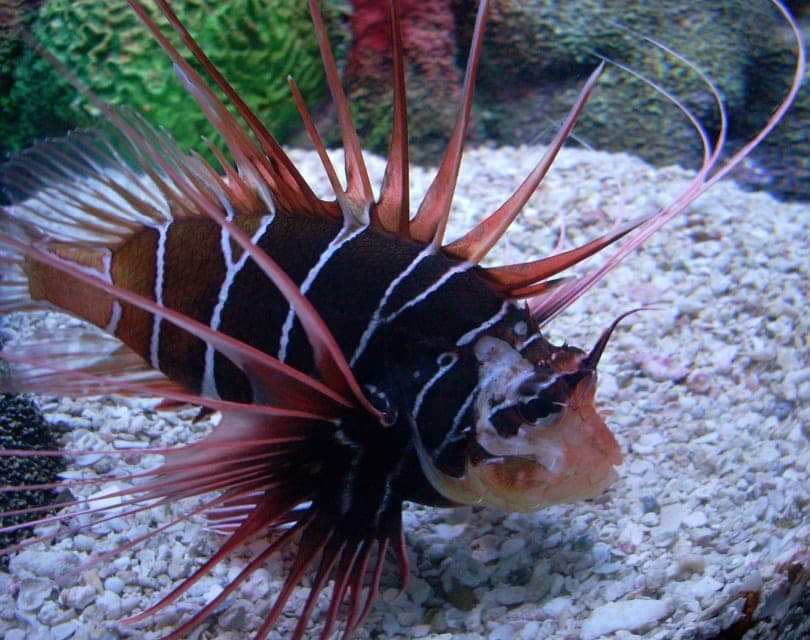
1. Lionfish (Pterois sp.)
| Size | 12–15 inches |
| Diet | Carnivore |
| Minimum tank size | 120 gallons (454 liters) |
| Care Level | Easy-Medium |
| Temperament | Semi-aggressive |
The Lionfish species are unforgettable in appearance, with their poisonous spines and bright colors. These semi-aggressive, dominant fish need tank mates that are big enough not to serve as dinner or feel the need to harass them. They are compatible with the larger Snowflake eels based on their attitude and the fact that they live on a different level of the aquarium than the bottom-dwelling eels.
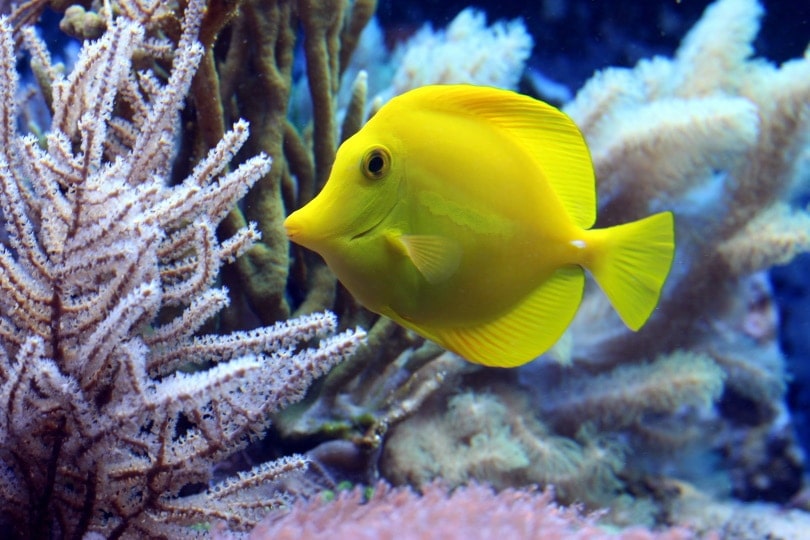
2. Yellow Tang (Z. flavescens)
| Size | Up to 8 inches |
| Diet | Herbivore |
| Minimum tank size | 55 gallons (208 liters) |
| Care Level | Easy to medium |
| Temperament | Aggressive |
Yellow tangs are gorgeous fish that add lots of color to your tank. Snowflake eels are interesting-looking fish, but they spend much of their time hiding and prefer to come out at night. Including colorful, compatible tank mates like the yellow tang can make your aquarium much more intriguing to look at.
Snowflake eels need fish tank mates that are too big to be swallowed whole and aggressive enough to fight back if the eels do try to bother them. Hot-tempered and bright-colored Yellow tangs fit the bill.
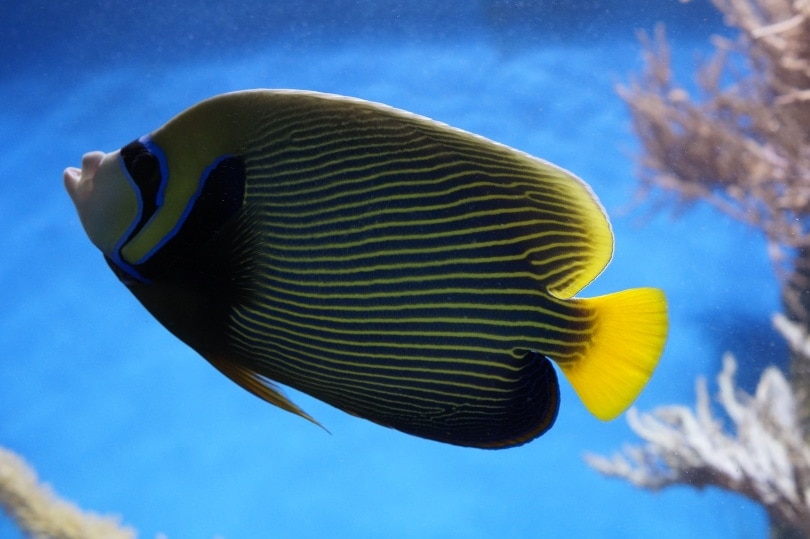
3. Emperor Angelfish (P. imperator)
| Size | Up to 12 inches |
| Diet | Omnivore |
| Minimum tank size | 175 gallons (662 liters) |
| Care Level | Medium to hard |
| Temperament | Semi-aggressive |
Emperor angelfish are not the easiest species to keep in your saltwater tank, but their size and stunning color are hard to beat. Like Snowflake eels, they feed on invertebrates, so make sure your tank is large enough for the eels and angelfish to each have their own space when eating.
Emperor angelfish also like to shelter in caves similar to the eels, so it’s important to provide enough hiding spaces for all if they’re kept together. Emperor angelfish require a higher level of care than snowflake eels and are best for more experienced aquarium keepers.
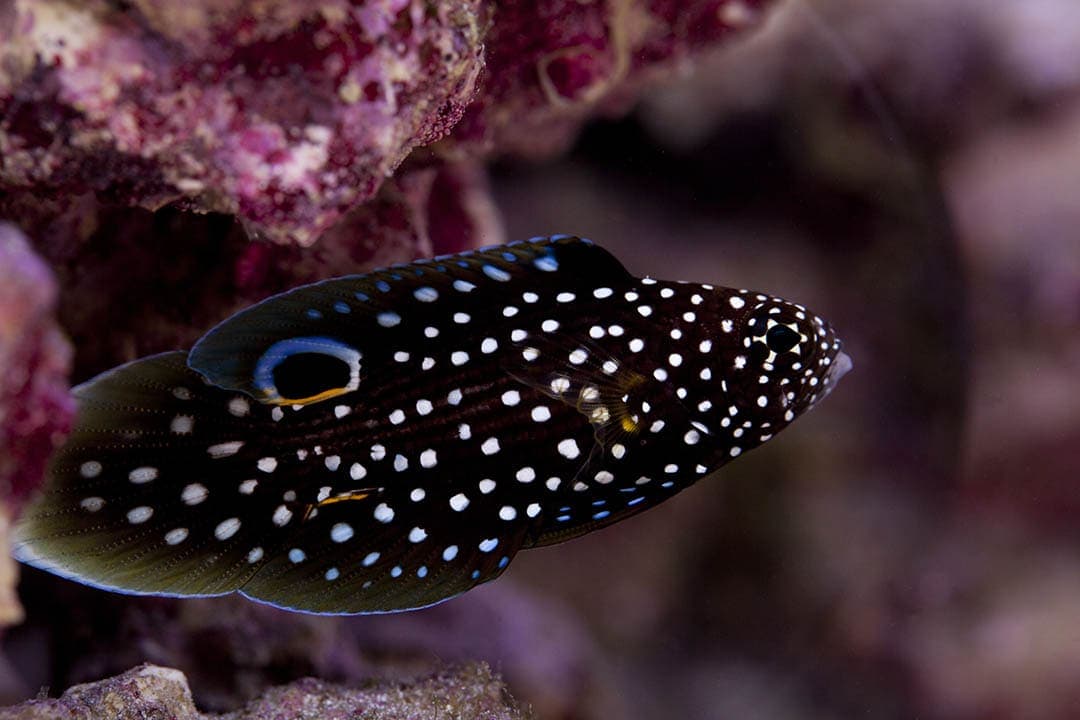
4. Marine Betta (C. altivelis)
| Size | Up to 8 inches |
| Diet | Carnivore |
| Minimum tank size | 55 gallons (208 liters) |
| Care Level | Easy |
| Temperament | Peaceful, predatory |
Although these fish aren’t as aggressive as snowflake eels, they can be kept in the same tank because of their size and the fact that they have similar behavioral habits. Marine bettas are shy fish who prefer to spend time hiding in caves and snatching food that floats near them rather than actively hunting.
As long as your tank is big enough and your aquascape is full of plenty of caves for hiding, marine bettas are easy to care for and add a nice pop of color to your aquarium.
5. Porcupine Pufferfish (D. holocanthus)
| Size | 20 inches |
| Diet | Carnivore |
| Minimum tank size | 200 gallons (757 liters) |
| Care Level | Hard |
| Temperament | Peaceful |
Porcupine pufferfish are strange-looking fish with surprisingly adorable personalities. They can learn to recognize and even interact with their owners. Porcupine puffers are hard to keep with most tankmates because they are big, messy, and will either try to eat smaller fish or be stressed out by larger, more aggressive fish.
Snowflake eels work because the two species essentially stay out of each other's way. They both eat hard-shelled invertebrates, and you’ll need to take a little more care during feeding time to avoid any conflict.
6. Picasso Triggerfish (R. aculeatus)
| Size | up to 10 inches |
| Diet | Carnivore |
| Minimum tank size | 75 gallons (284 liters) |
| Care Level | Easy to medium |
| Temperament | Aggressive |
With a mouthful of teeth and the coloring of a famous work of art, Picasso triggerfish are aggressive, territorial fish who can live with snowflake eels given a large enough tank. Triggerfish, as their name implies, have a temper and are big enough to do damage to smaller tank mates. Like snowflake eels, they need aquascaping complete with caves and hiding spaces.
Picassos are prone to banging into and knocking over aquarium decorations, so make sure yours are sturdy enough to withstand the onslaught.
7. Yellow Longnose Butterfly Fish (F. flavissimus)
| Size | 8.7 inches |
| Diet | Carnivore |
| Minimum tank size | 75 gallons (284 liters) |
| Care Level | Moderate |
| Temperament | Usually peaceful, sometimes semi-aggressive |
Yellow Longnose butterflyfish share similar reef habitats with snowflake eels in the wild. With a large enough tank and some planning, they can share a captive habitat with them as well. Yellow longnose butterflyfish are shy fish who prefer to stick close to hiding holes in the reef rather than venture into open water. They need their own caves in other levels of the aquarium than the bottom-dwelling snowflake eels.
Butterflyfish are usually more even-tempered than Snowflake eels, but their size and body shape make them compatible tank mates with proper precautions.
8. Panther Grouper (C. altivelis)
| Size | 27 inches |
| Diet | Carnivore |
| Minimum tank size | 300 gallons (1,136 liters) |
| Care Level | Moderate |
| Temperament | Aggressive |
If you have a large aquarium and a hefty fish food budget, consider the Panther grouper as a tank mate for your Snowflake eel. The black and white spotted panther grouper can grow to over 2 feet long and needs plenty of space for swimming and hunting. Their size and aggressive nature make them compatible aquarium neighbors for the snowflake eel.
The groupers prefer to swim at the middle and higher levels of the tank but will explore all over. Make sure both species have plenty of rocks to hide in and explore.
9. Serpent Sea Star (Ophiuroidea sp.)
| Size | 12 inches |
| Diet | Carnivore/Omnivore |
| Minimum tank size | 20 gallons (80 liters) |
| Care Level | Easy to moderate |
| Temperament | Mostly peaceful |
For a completely different addition to your marine aquarium, try a sea star such as the Serpent sea star. While invertebrates like shrimp and crabs aren’t safe to keep with Snowflake eels, other common reef inhabitants, like sea stars, are. The two species will generally ignore each other, and serpent sea stars are fascinating to watch.
As a bonus, they will help keep your tank tidy by cleaning up uneaten food and other debris.
10. Blue Tuxedo Urchin (M. globulus)
| Size | 3 inches |
| Diet | Omnivore |
| Minimum tank size | 20-40 gallons (76-151 liters) |
| Care Level | Easy |
| Temperament | Peaceful |
For keeping your aquarium clean, sea urchins like the Blue Tuxedo can’t be beaten! Snowflake eels generally co-exist happily with these common reef inhabitants. Blue Tuxedo urchins are easy to care for and will eagerly munch on any algae that builds up in your tank.
Some fish that are compatible with the snowflake eel might tear up and eat the sea urchins, so keep that in mind before adding blue tuxedos to your community tank.
Related Read: Can You Keep Sea Urchins in Your Reef Tank?

What Makes a Good Tank Mate for Snowflake Eel?
Snowflake eels primarily eat crustacean invertebrates like shrimp and crabs. In captivity, they rarely eat fish, especially if they’re well-fed. Problems arise during feeding time because snowflake eels have terrible vision and might attack or eat smaller fish in their eagerness to eat.
Large, semi-aggressive fish with big bodies are the best fit as Snowflake eel tank mates. Avoid any fish that are smaller than the eel’s head, as they can easily become dinner. Shrimp and crabs should never be kept with Snowflake eels, but other invertebrates like sea stars or anemones are usually safe.
Where Do Snowflake Eels Prefer to Live in the Aquarium?
Snowflake eels are bottom-dwelling fish, usually nocturnal. They need lots of cover and caves to hide in throughout their preferred aquarium level. They are aggressive during feeding but keep to themselves much of the day, hiding in their caves.
One thing to note is that though they are primarily bottom-dwelling, Snowflake eels are also notoriously talented at escaping tanks. They will take advantage of any unblocked opening or poorly-fitted aquarium cover to make their exit, usually with disastrous results for themselves.
Water Parameters
Snowflake eels are widespread throughout the Pacific Ocean from Hawaii to Australia and the Indian Ocean to the coast of Africa. They need a warm, saltwater tank with slightly hard water. The recommended water parameters for Snowflake eels are:
Size
Snowflake eels can grow up to 24 inches in length. Young Snowflake eels are generally sold when they’re around 8–12 inches, but they can grow very quickly, especially if kept in warmer water and fed properly. Reaching full size in as little as 6 months isn’t out of the question.
Keep this in mind as you decide which size tank you will use for your snowflake eel. If you try to start small, such as a 20-gallon tank, your snowflake eel may quickly outgrow it!
Aggressive Behaviors
Snowflake eels are most aggressive at feeding time or when they’re not fed properly. They have bad eyesight but an amazing sense of smell. When they smell food, they go after it full tilt, and their poor vision can lead them to mistakenly injure or consume their tank mates.
Well-fed Snowflake eels generally don’t feel the need to hunt or eat the fish in their tanks. Hungry snowflake eels may not be as picky, and any fish tank mates, especially slow or sick ones, could be in danger.
Top 2 Benefits of Having Tank Mates for Snowflake Eel
1. They make the tank more colorful and interesting.
Snowflake eels are certainly striking in appearance with their black-and-white markings and yellow eyes. However, because they spend a lot of time hiding and are often most active at night, a tank populated by Snowflakes may not be the most exciting or colorful. Adding tank mates with vivid colors like tangs or interactive personalities like porcupine puffers makes your aquarium community much more appealing.
2. They help keep the tank clean.
Snowflake eels and many of their more compatible tank mates are not the cleanest of eaters. Any tank can start developing algae, especially if the water quality starts to suffer. Some tank mates, like sea stars and sea urchins, enjoy feasting on algae, uneaten food, and other tank waste.
Conclusion
Creating a successful community tank, especially with temperamental fish like the Snowflake eel, can be challenging. Before you decide to embark on building your aquatic paradise, make sure you learn all you can about the fish and other creatures you’re planning to fill it with. Many of the best tank mates for snowflake eels are complicated to care for and not suitable for beginning fish keepers.
Take the time to understand what you’re getting into for your sake and the sake of your future pets. Responsible owners should be prepared to care for their animals—finned, furred, or feathered—for their full lifespan before they commit to bringing them home.
See Also:
Featured Image Credit: kaschibo, Shutterstock
Get Hepper In Your Inbox


Pet care tips from our vets and experts, straight to your inbox.
You may opt-out at any time. View our Privacy Policy for more information.

A lifelong lover of all creatures great and small, Elizabeth got her first cat at 5 years old and at 14, she started working for her local veterinarian. After spending more than 20 years working as a veterinary nurse, Elizabeth decided to step away to become a stay-at-home parent to her daughter. Now, she is excited to share her knowledge with our pet parents. Elizabeth lives in Iowa with her family, including her two fur kids, Linnard, a husky mix and Algernon, the worldʻs most patient cat. When not writing, she enjoys reading, watching soccer, and spending time outdoors with her family.
Join the conversation
Ask a question, share your story, or send private feedback.