Hepper is reader-supported. When you buy via links on our site, we may earn an affiliate commission at no cost to you. Learn more.
Why Do Bearded Dragons Bob Their Head? 5 Vet-Reviewed Reasons For This Behavior


In this article
Bearded Dragons are exotic pets, and figuring out what they need is not always intuitive. Like other animals, they communicate using body language, and as an owner of a Bearded Dragon, it's important to learn and understand their behavior to keep them healthy and happy.
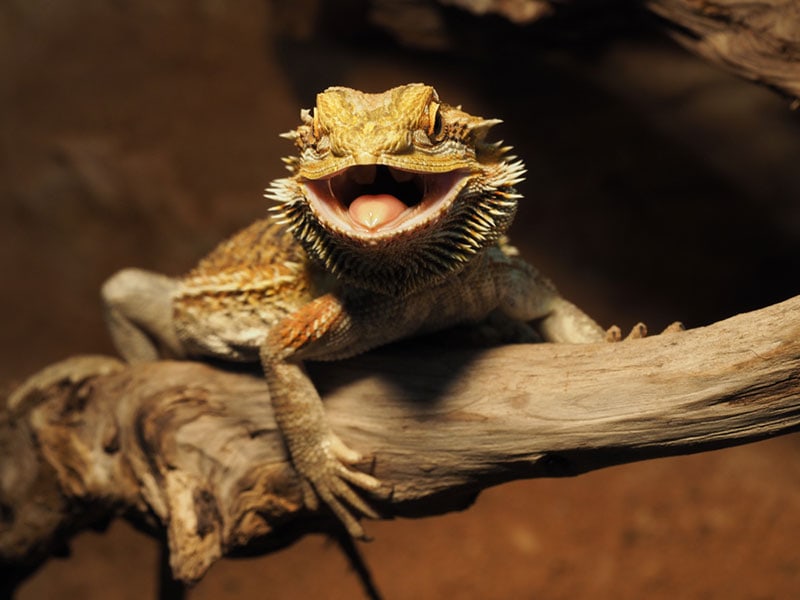
Bearded dragons display a variety of curious behaviors, and head bobbing is one of them. It is common for a beardie, and there are a few reasons why they may do it. In this article, we’ll discuss the reasons behind your Bearded Dragon's curious head bobs and when it may be a cause for concern.

The 5 Possible Reasons Why Bearded Dragons Bob Their Heads
1. Mating Display
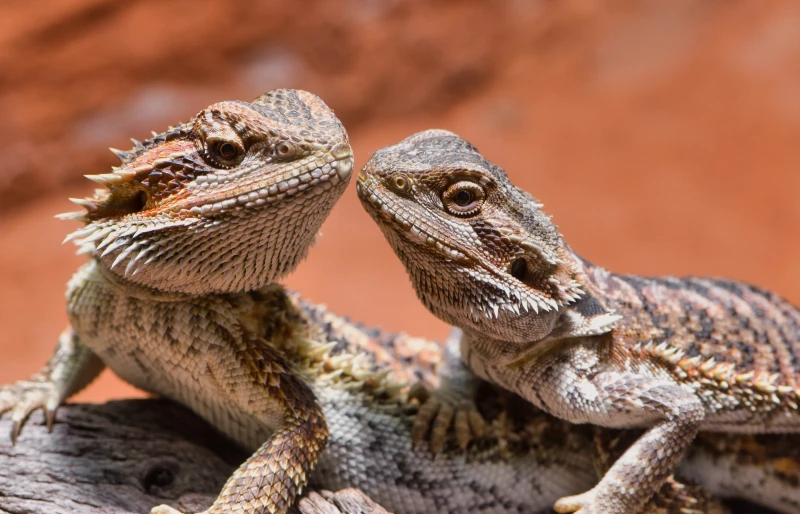
During mating season, Bearded Dragons will bob their head to attract the attention of the opposite sex. When humans attempt to attract the opposite sex, we often try to look and show off our best traits to get attention, and many other species do the same by putting on a display to win the female's attention.
Your male Bearded Dragon will bob its head faster and in a more dominant manner to signal that it’s ready to mate and to look attractive to a potential mate. If your Bearded Dragon is a female, she will exhibit similar behavior, but hers will be more subtle and slower and often accompanied by arm waving, which displays her willingness, submission and desire to a male’s attempt.
2. Territorial Behavior
A Bearded Dragon may bob its head if it is territorial and trying to establish dominance over its space. While male and female Bearded Dragons exhibit this behavior, it is more common in males.
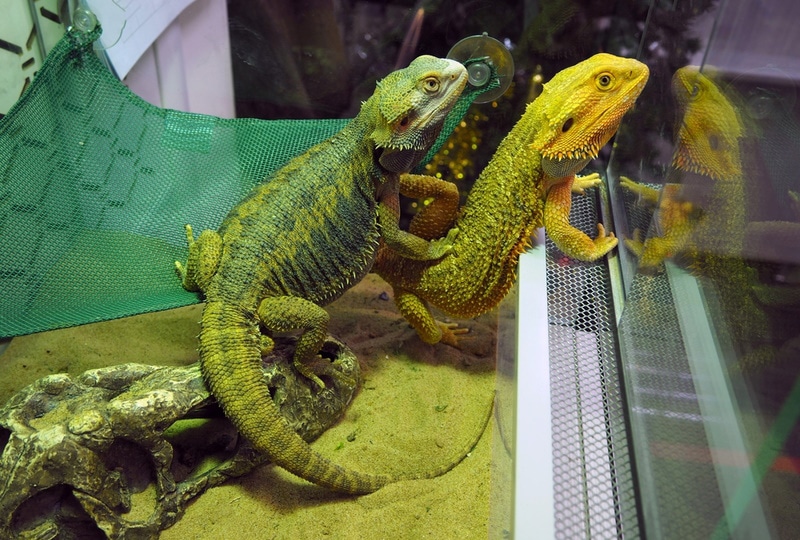
While this is typical behavior for Bearded Dragons out in the Australian outback, a second Bearded Dragon added to your current pet’s habitat will likely provoke such behavior. It may also puff out its spikes to look more intimidating, which is a sure sign that it is unhappy with the new stranger.
3. Submission Signal
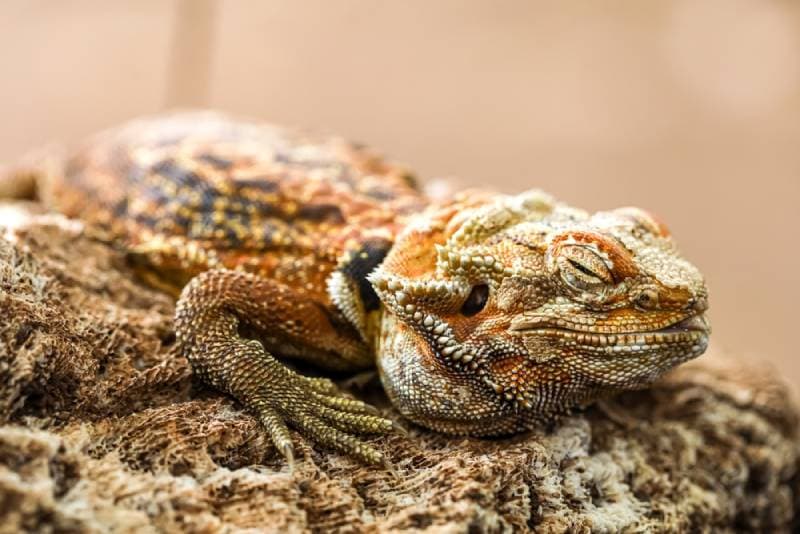
Head bobbing can also be a sign of submission if there are two Bearded Dragons. As we mentioned above, it may bob its head to assert dominance, and if the second dragon feels intimidated, it may display its submission with slow and noticeable head bobs and an arm-waving motion.
While the sight of two Bearded Dragons bobbing their heads together may look like a party, it is a dance of dominance and submission that can quickly get out of hand.
4. Acknowledging Another Animal
A head bob can be non-aggressive and simply a gesture of acknowledgment for another animal. However, there may be some debate about whether this subtle head bobbing is a gesture of greeting or a way to communicate to another animal that “I’m watching you.”
Either way, we do know that Bearded Dragons are more solitary and prefer other animals to be at a distance.
5. Depth Perception
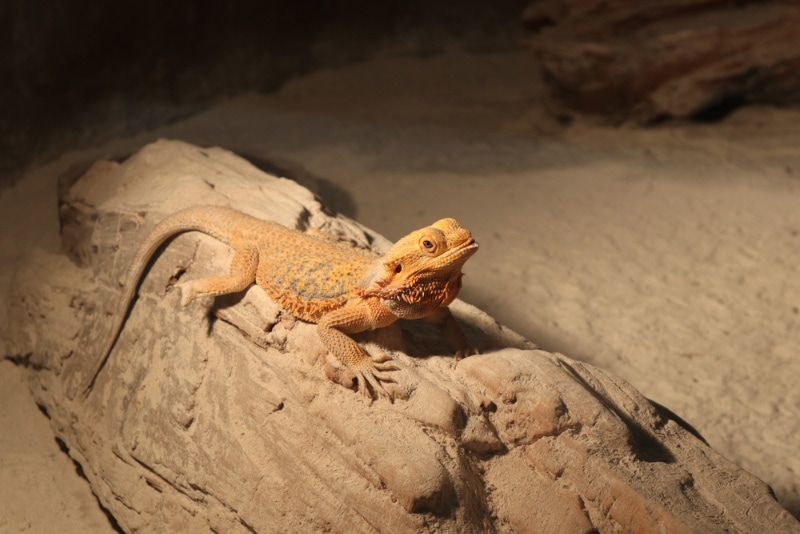
A Bearded Dragon’s eyes are set far apart on its head, so bobbing its head may be a way of determining how far away something is. Head bobbing and other movements may help it gauge the distance of objects in its environment, using motion cues to understand what is near or far.
Why Do Bearded Dragons Bob Their Heads at Humans?
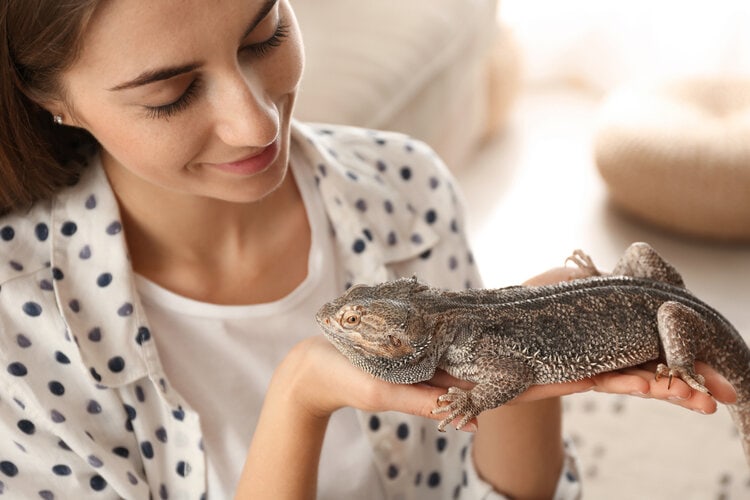
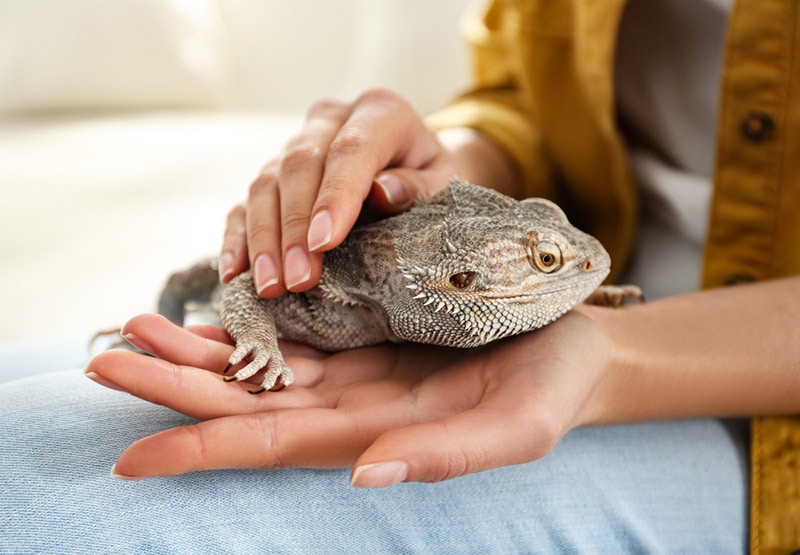
If you have noticed your bearded bobbing its head at you when you walk into the room, there could be a reason for it. It could mean that it sees you as a threat and is being cautious or on the other hand, trying to assert dominance.
This usually occurs in the early stages when your pet is still getting to know you. As it learns to trust you, the behavior will become less and eventually disappear.
Why Is My Bearded Dragon Bobbing Its Head While It's Sleeping?
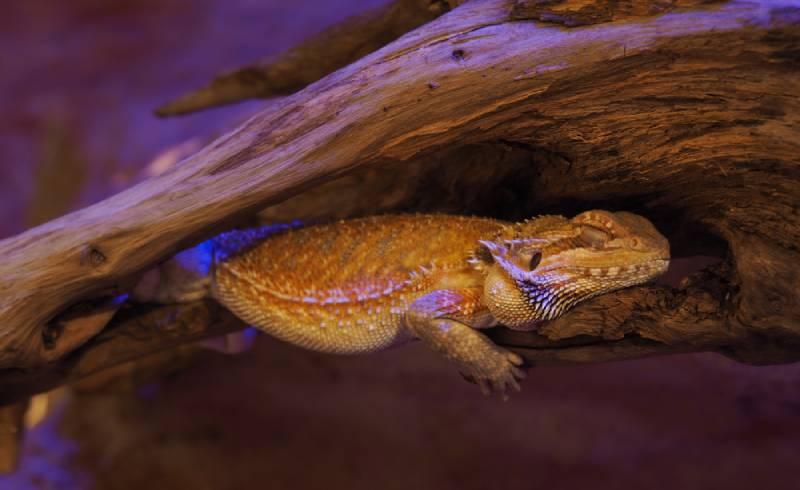
Head bobbing will most often occur when your beardie is awake as it is a means of communication, but there are times when it may bob its head while it is sleeping too, mostly reflecting the stage of their sleep! Bearded dragons enjoy a dark and comfortable sleeping environment. There may be a bright light or something that may be disturbing its sleep and causing it to feel frustrated. So, the head bobbing you are witnessing could be classified as a frustrated head bob.
It could also be a reflex or jerk as your beardie falls in and out of sleep. If this occurs throughout the night, it may interrupt its sleep cycle, and your beardie won’t get enough sleep. This may lead to your pet being lethargic during the day and refusing to eat, which can be a more serious problem. Be sure to check that there is no light interrupting its sleep, the tank is warm, and there are no noises or other causes of sleep interruption.
Is Frequent Head Bobbing Something to Be Worried About?
Bearded dragons bob their heads. It is just something they do, so there is no reason for you to feel concerned. It is one of the best ways it knows how to communicate, much like a cat using its tail. It will generally be to communicate one of the reasons we listed above, and the more you get to know your beardie, the better you will understand it.
Conclusion
Head bobbing is a normal and common behavior for Bearded Dragons. It is a natural response to many things and a way to communicate its dominance, submission, acknowledgment, and readiness to mate. If you are a new owner, it is easy to misunderstand and grow concerned about it, but there is no real reason to feel concerned. However, it is helpful to understand the reasons for your reptile’s head bobs so that you can determine what it may need and give it the best care possible.
Sources
Featured Image Credit: Kurit afshen, Shutterstock
Get Hepper In Your Inbox


Pet care tips from our vets and experts, straight to your inbox.
You may opt-out at any time. View our Privacy Policy for more information.
Nicole is a lover of animals of all sizes but is especially fascinated with the feline variety. She’s the proud mom of Baby, a Burmese, and works every day so he can relax in the sunshine or by the fire. She’s always had a cat in her home and has spent countless days with others, observing behaviors and softening up even the grouchiest of the lot. Nicole wants to share her kitty expertise with you so you and your cat can live happy, healthy, and care-free.
Join the conversation
Ask a question, share your story, or send private feedback.