Hepper is reader-supported. When you buy via links on our site, we may earn an affiliate commission at no cost to you. Learn more.
Why Do Cats Hold Their Mouth Open? Interesting Feline Facts

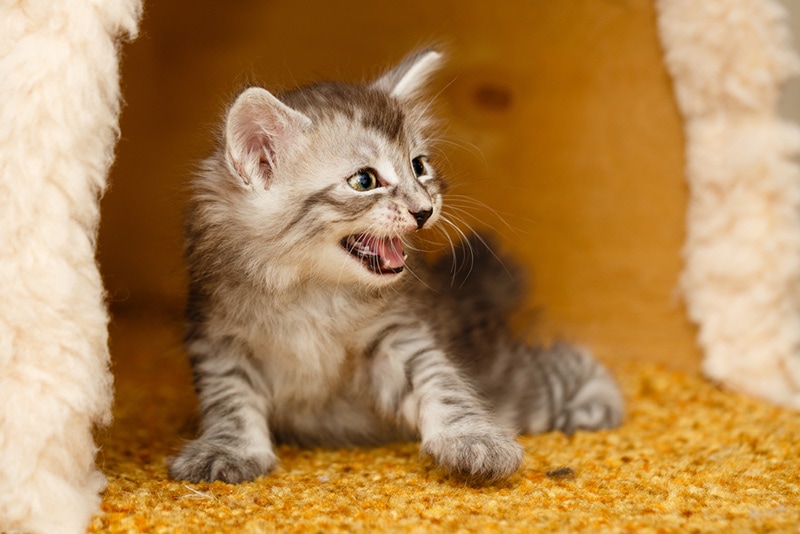
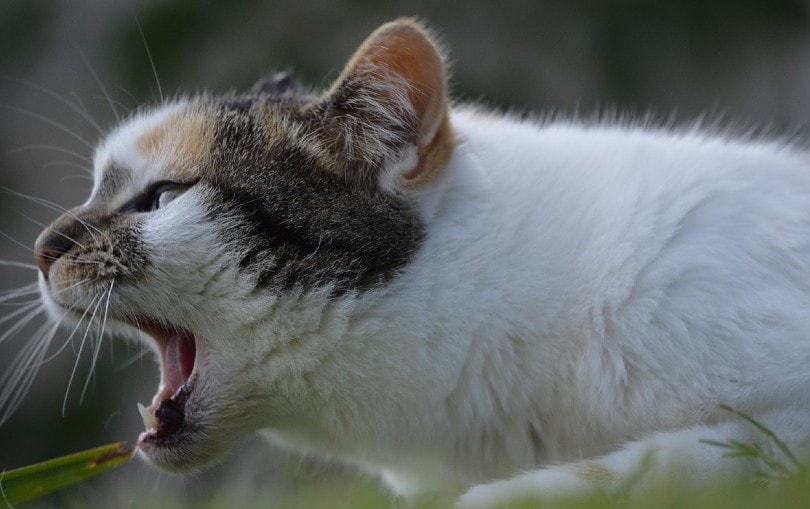
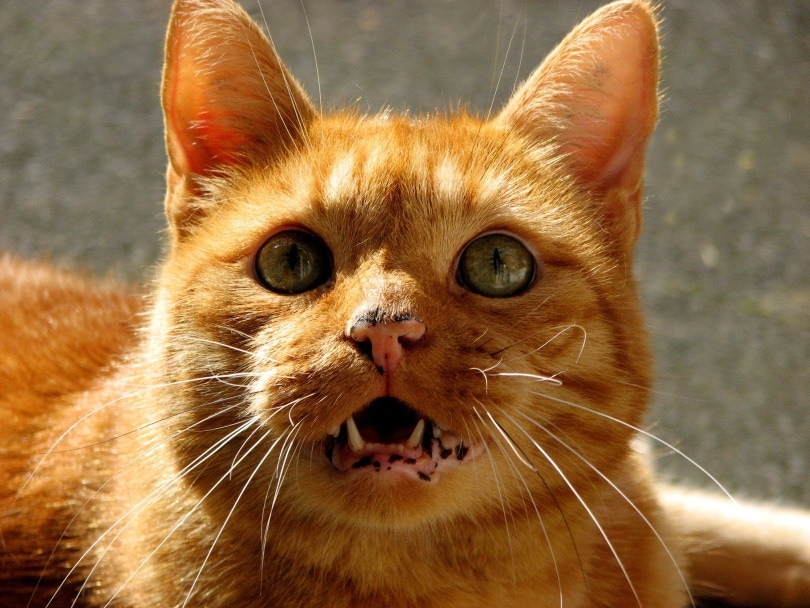
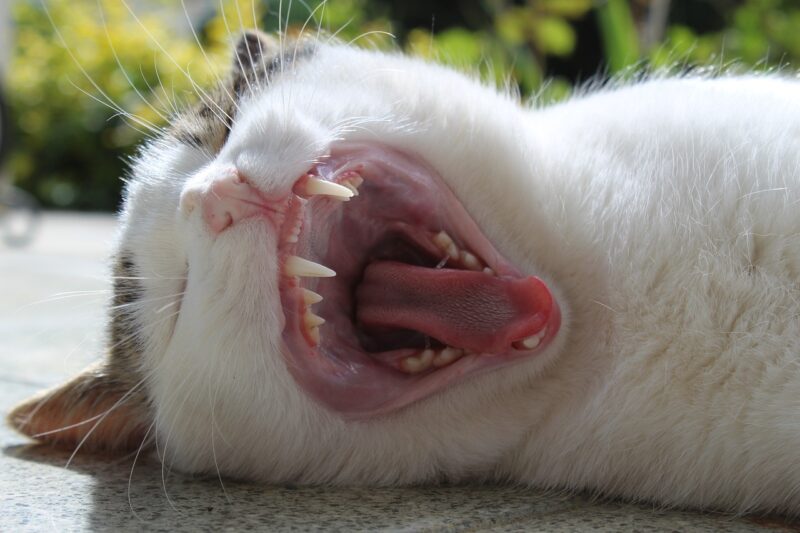
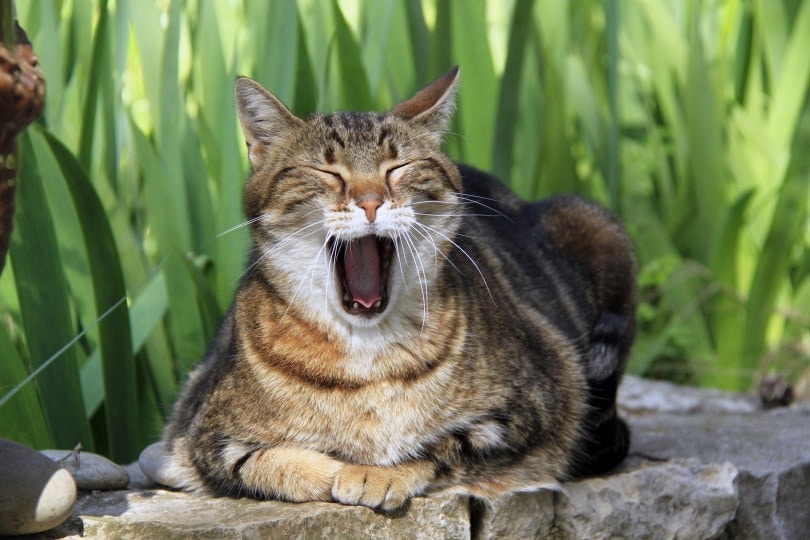
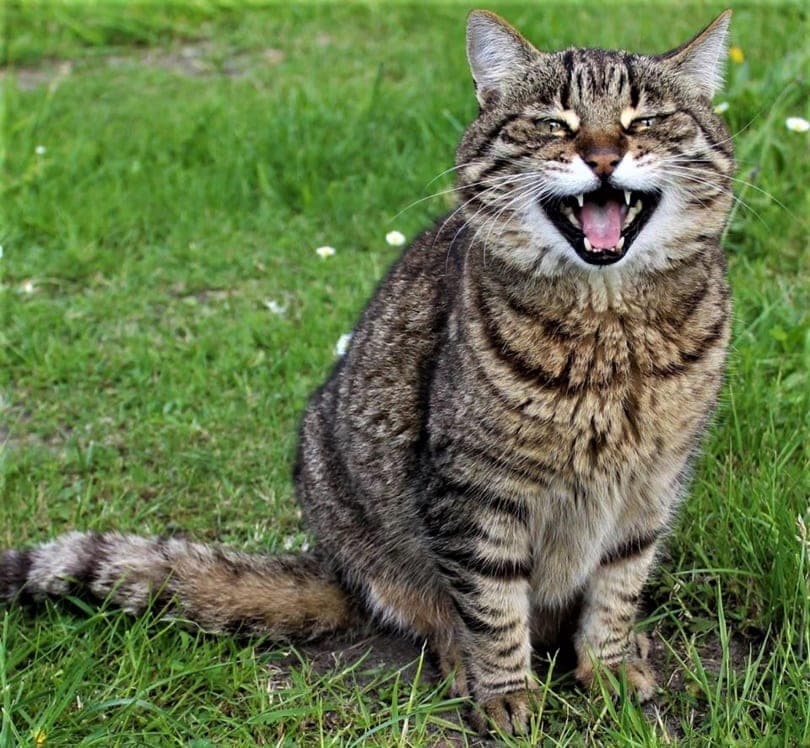
Let’s face it—our felines make some freakish faces sometimes that might be hard for us lesser humans to understand. When you see a cat holding their mouth open, they might look upset, exasperated, or disgusted.
But unlike similar human expressions, our kitties have a whole other reason for this. We all know how our cats have impressive five senses that trump ours, and this is yet another way they navigate their surroundings. Here’s how!

There’s a Name for This!
The term coined to describe this phenomenon is the Flehmen Response. Now, you can feel fancy when you have your friends over. Your cat’s mouth is drooping open, and you confidently spout off to your confidante, "No worries, that's the Flehmen Response.”
It might look insignificant, but in reality, it allows your cat to get a total understanding of their surroundings. If they're fishing for more information than a closed mouth is getting, it's time to unite the senses of smell and taste.
Though it might not look like it, they are actually pulling their upper lip back. Even in the wild, you can spot big cats doing this as well. It is a more common action of males, but both sexes use this response to their advantage as needed.
Utilizing the Jacobson Organ
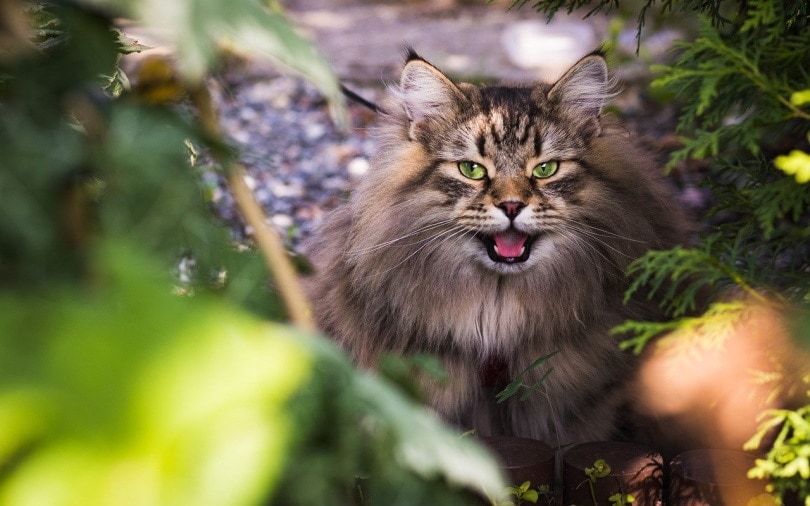
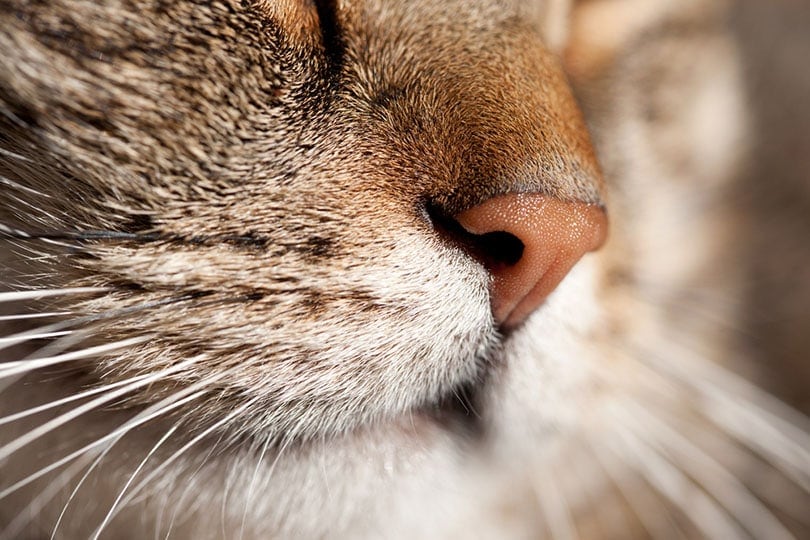
If a cat is trying to place a scent, they suck in air from their mouth, going to the Jacobsen organ. The Jacobson organ, or vomeronasal sac, is an accessory olfactory organ that has extra sensory cells that detect moisture-borne odors rather than airborne.
These cells detect chemical messages and pheromones and send other signals to the brain. So, if your cat wants to know more about the environment than its ordinary nasal olfactory senses provide, they will utilize their Jacobson's organ.
Heat Pheromones
Both males and females are capable of spraying. This lets other cats know they are looking for a mate. So, many use their Flehmen to locate potential suitors better.
Surprisingly, just by the signals pheromones emit, other cats can tell all the details about another just by spray alone. It tells them things like their sex, age, and location.
If a female isn’t in heat, her urine will no longer excrete hormones that attract males. However, if any cat meets a urine spot, they can still gather information about it.
Male cats can even smell other male cats, letting them know the natural order and who is in charge. Lesser males tend to veer away without a challenge if a male is dominant.

Mother/Kitten
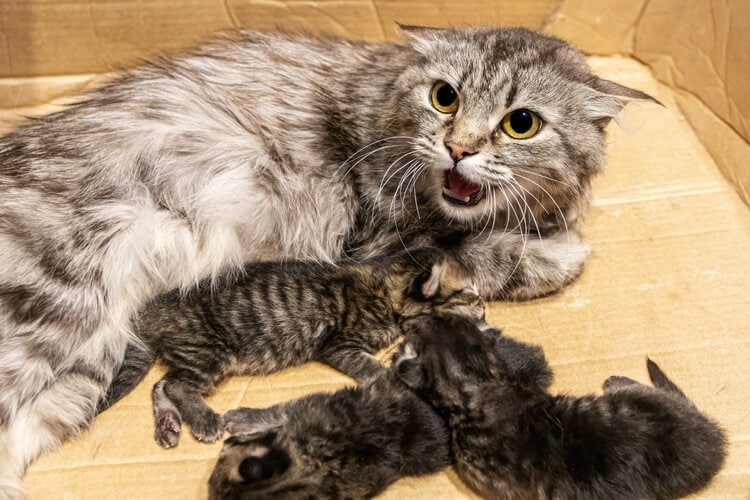
Since a mother cat still has to take care of herself after she births her litter, it’s important to have a tracking system to identify where her kittens are at all times. Also, her pheromones travel through the milk to the kittens, giving them an inborn mapping system.
It really is remarkable how connected mothers and kittens are. If a mother and kittens get separated, they can find their way back to each other using this method. They even bunt, which means rub, to mark each other with their scents.
Food
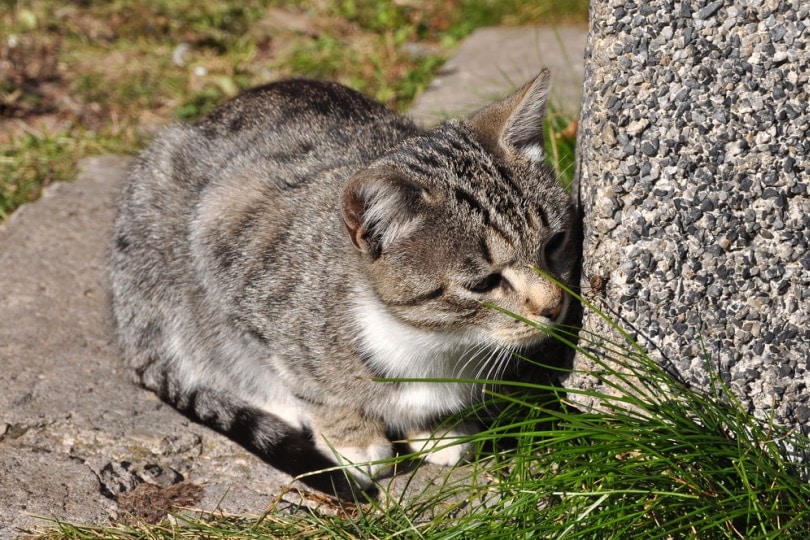
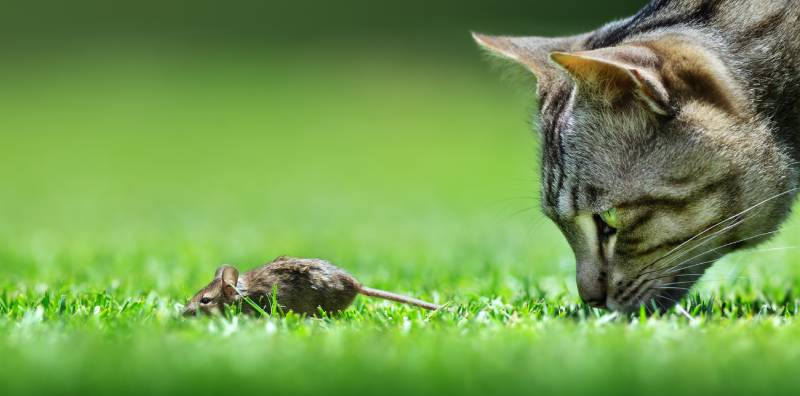
Even though cats can detect food using their nasal olfactory senses, they can pick up more details about potential prey or nearby meals when using their Flehmen.
The extra sensory activity helps determine what is and is not safe to eat. It also helps them track and hunt prey. A cat’s sense of smell is already 14 times stronger than a human’s. This boost in sensory sensitivity is evolutionarily geared toward tracking live animals.
Cats are highly efficient predators, using their intelligence, agility, skill, and resilience to charge prey quietly and swiftly. Since they are naturally carnivorous, their very design relies on the heightened sense of smell combined with taste, even more so than other mammals.
In addition to hunting themselves, they often become the hunted. An extra keen sense of smell is crucial to keep themselves out of danger. They only have nine lives, you know.
In Rare Cases…
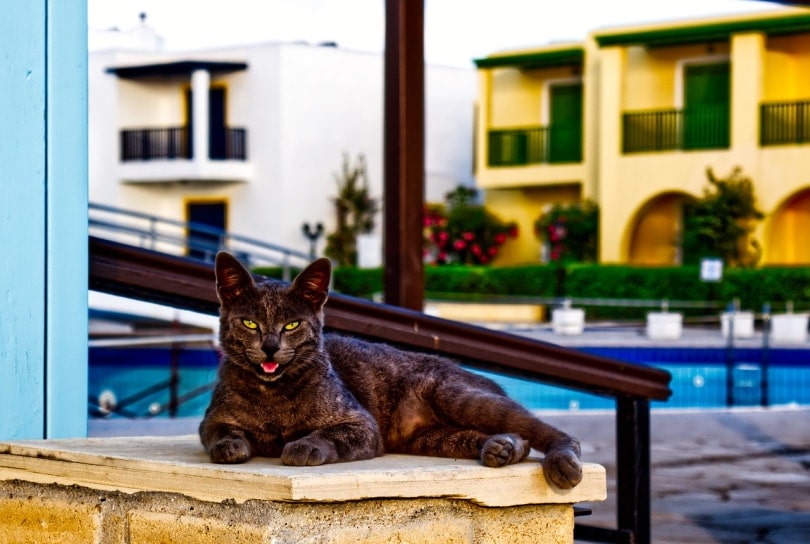
In some instances, this might not be Flehmen. It could be a shortlist of other reasons, including:
- Tooth pain. If your cat has any sort of dental issue causing pain or discomfort, this could cause them to droop their jaw for relief. Also, if your cat is missing teeth, it could cause the mouth to hang open or the tongue to hang out.
- Stomatitis. Stomatitis is another mouth condition that causes chronic inflammation in the mouth's soft tissues.
- Breathing issues. Cats can have breathing trouble related to asthma, fluid in the lungs, and other respiratory problems. You would probably notice accompanying signs like wheezing, struggling to breathe, and possibly discharge from the eyes or nose.
- Verbalization. Some cats are naturally more vocal than others, constantly expressing themselves with chattering, meowing, purring, hissing, and other noises. While this is usually no big deal, it might develop into a behavioral problem.
- Aggression. Sometimes when a cat is being aggressive, they leave the mouth open, often when they are hissing or pausing in a tense stance. This is definitely not a case of casual Flehmen.
Conclusion
So, yet another mystery has been unraveled when it comes to your elusive cats. They need those moments to get additional information about what's going on around them. It's not so complicated after all.
If it accompanies panting or any other negative sign, you can get them into your veterinarian for further evaluation.
Interesting Reads:
Featured Image Credit: Vagengeim, Shutterstock
Get Hepper In Your Inbox


Pet care tips from our vets and experts, straight to your inbox.
You may opt-out at any time. View our Privacy Policy for more information.
Ashley Bates, a freelance writer with a passion for pets, is currently studying animal therapy. She is a mother to four children and 23 pets, both furry and feathery. Ashley actively volunteers at local shelters, advocates for animal welfare, and rescues animals in distress. Her mission is to promote awareness, education, and entertainment about pets to help prevent animal homelessness. She specializes in the care and well-being of dogs and cats.
Join the conversation
Ask a question, share your story, or send private feedback.