Hepper is reader-supported. When you buy via links on our site, we may earn an affiliate commission at no cost to you. Learn more.
Why Is My Dog Drooling Excessively? 6 Reasons & When to Worry
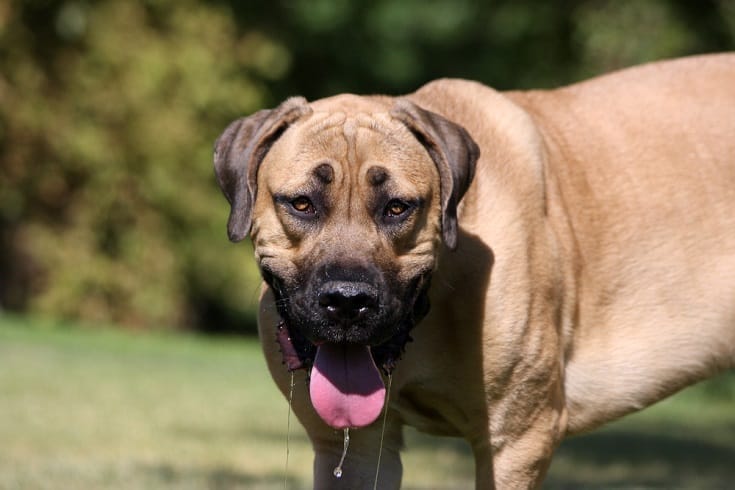
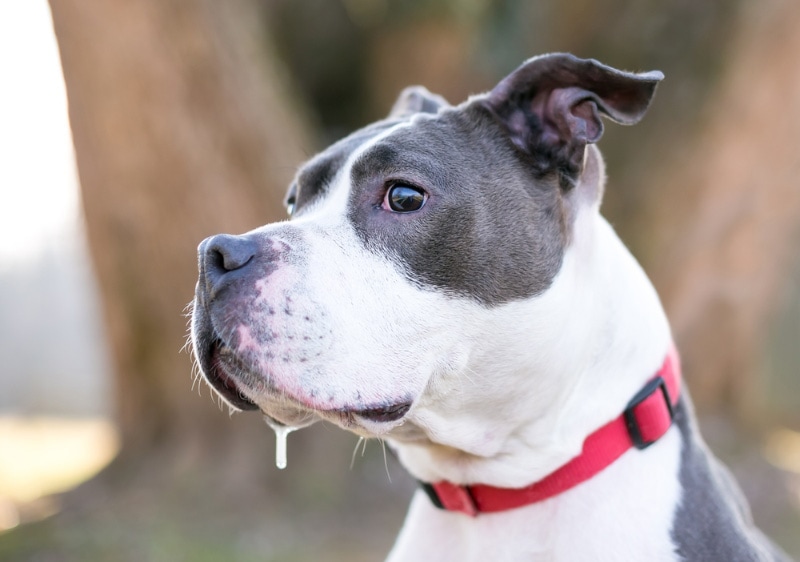
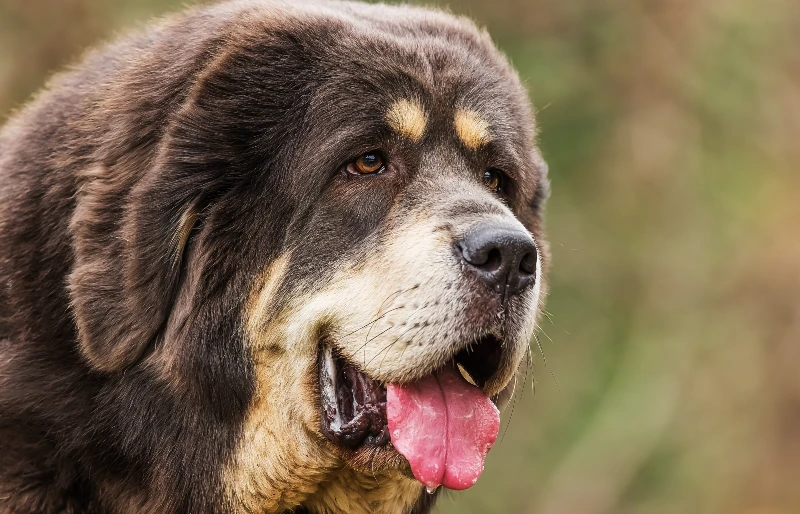
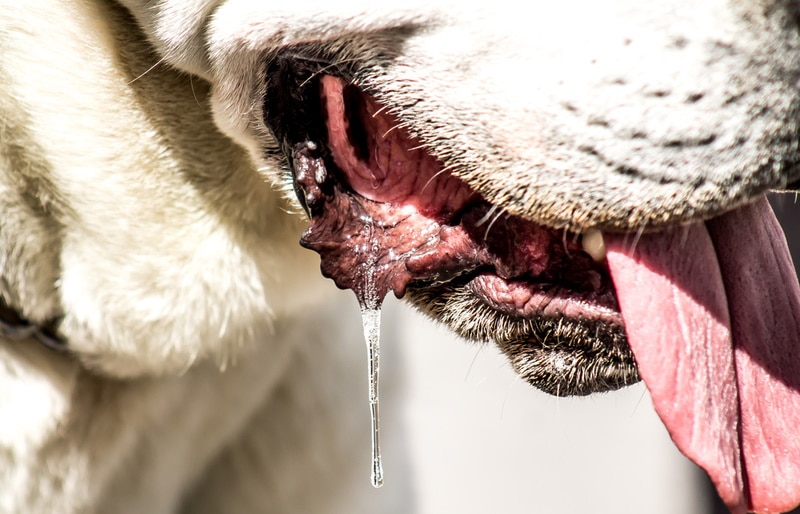
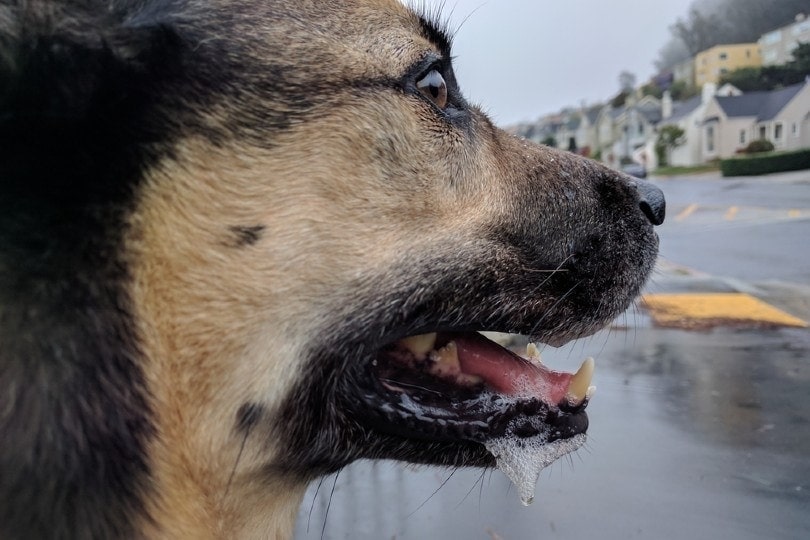
With certain dog breeds, drooling is par for the course. Bloodhounds, Mastiffs, and Bulldogs, to name but a few, are infamous for the long lines of drool that they leave in their wake, and all breeds drool occasionally. However, excessive drooling can also be an indication of a more serious underlying issue.
Drool is produced by your dog’s salivary glands, of which there are four major different glands: parotid, mandibular, sublingual, and zygomatic. Each of these glands produces a slightly different type of saliva with a unique purpose. Saliva is used for many different functions, including pre-digestion of food, keeping your dog’s mouth cool and moist, carrying away and dissolving bad bacteria, and protecting their teeth and mouths. So, occasional drooling is an important function of any breed.
There are times when drooling becomes excessive, though, and there may be an underlying issue in your pooch that needs attention. We put together this list of six possible reasons that your dog could be drooling excessively, when to be worried, and what you can do about it. Here's why your dog drooling too much can be a real concern:

The 6 Reasons Your Dog is Drooling Too Much:
1. Nausea
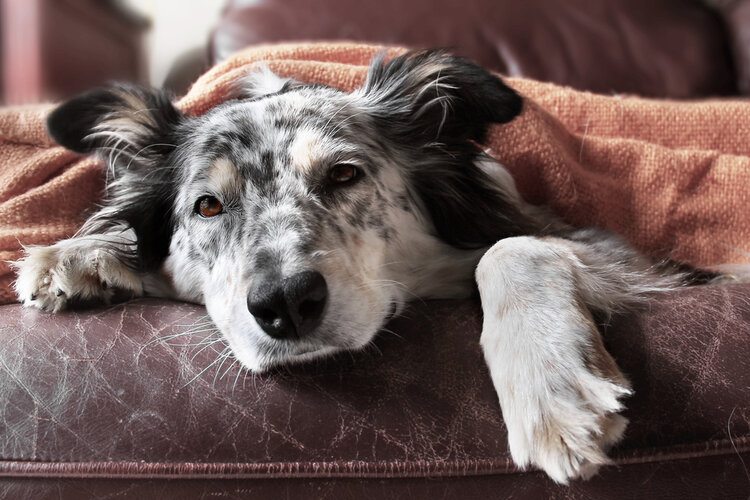
Dogs, like humans, experience nausea at times. Some dogs get carsickness, and the constant motion of a car may cause nausea and thus, excessive drooling. This usually ends when the car trip is over, so it is fairly simple to diagnose motion sickness as the root cause. Most dogs will get used to car trips after a few times, but some may not ever get accustomed to the feeling.
A simple remedy is to let your dog ride shotgun: There is more motion in the back of the car than the front, and the addition of looking through the windshield as opposed to the side windows will reduce the appearance of movement. Another option is a travel crate that will limit their view and help reduce the feeling of motion sickness. Lastly, if your dog never fully gets over car sickness, you can ask your vet about mild sedatives that may help provide relief.
2. Heat Stroke
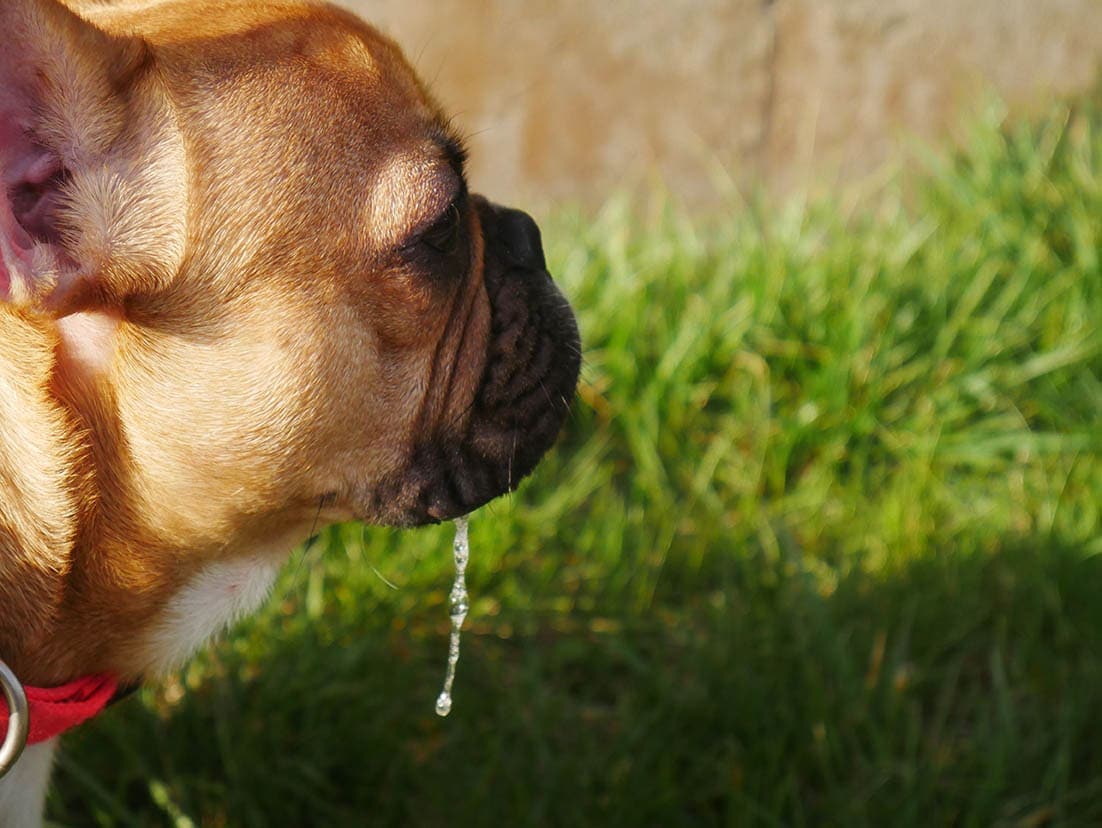
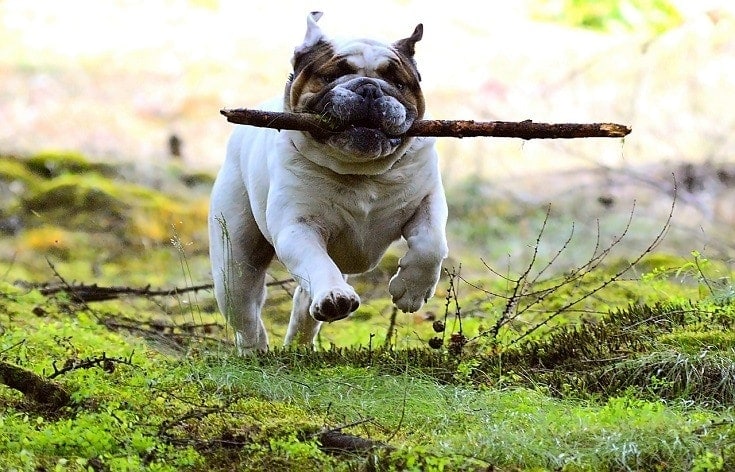
Brachycephalic breeds with narrow, flat faces like Pugs and Bulldogs are particularly sensitive to heat and may drool and have trouble breathing when overheated, as will dogs with thick coats. This is usually accompanied by excessive panting and even vomiting at times. Heatstroke can occur on a car ride without ventilation or even from a run in the park on a hot day. If your dog has been overexerting in hot temperatures and is drooling excessively, heatstroke or overheating is likely the cause, especially if the drooling is accompanied by panting.
The quickest way to help is to move your dog into the shade as soon as possible and make sure they have access to cool, clean water. Cooling them with a damp towel may help too. If the heatstroke is serious, your veterinarian may need to give your dog fluid therapy to replace lost fluids and minerals.
3. Mouth or Throat Injury
Cooked bones that splinter, small sticks, and a host of other objects that your pooch may decide to chew on can cause an injury or get lodged in their mouth or throat. This pain and discomfort will likely cause your dog to drool because they may have a hard time swallowing, causing saliva to build up in their mouth. This can be a potentially serious problem and may require a check-up from the vet.
Most vets and dog experts alike recommend to never give your dog cooked bones. Cooked bones can splinter easily while chewing and cause a laceration or potentially cause a splinter of bone to get lodged. Raw bones or specially made chew toys are great options to give your dog their chewing fix.
4. Dental Issues
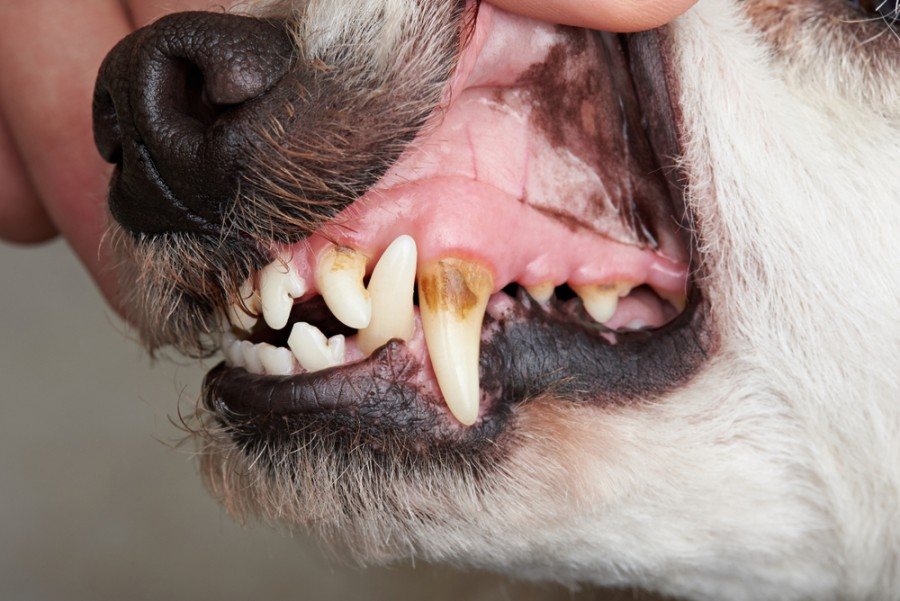
Just like humans, dogs can break their teeth, get cavities, get infected or swollen gums, and suffer from abscesses, all of which could be the root cause of their drooling. These are usually accompanied by other symptoms like bad breath, loss of appetite, and swelling, but this is not always the case. Even small dental problems can lead to cascading health issues like infection and loss of teeth, so any should be dealt with as soon as possible. Keep an eye out for yellowing or brown teeth, red or swelling gums, and any signs of blood.
While you cannot prevent your dogs from breaking their teeth, you can take precautionary measures through good oral hygiene. Simple solutions to start with are a healthy diet free from sugar, regular teeth brushing, not chewing on hard bones or rocks, and of course, regular dental checkups with your vet.
5. Illness
Nose, throat, or sinus infections could be the cause of your dog’s drooling, as these conditions may make it uncomfortable for your dog to swallow and may cause excess saliva. Certain neuromuscular disorders may also be the cause, and in this case, the drooling will be accompanied by other symptoms, including muscle weakness and loss of appetite. More serious diseases, like liver and kidney disease and gastric torsion, also have drooling as a symptom, and of course, the biggest fear of dog owners: rabies.
Most of these diseases will have other accompanying symptoms that will point toward something more serious than just drooling, and if you notice any loss of appetite, vomiting, difficulty standing, weakness, lethargy, or drastic changes in behavior alongside the drooling, you should get your pooch to the vet immediately.
Toxic substances that your dog may have ingested may also cause drooling, such as poisonous plants, cleaning chemicals, or even human foods like chocolate or grapes. You need to be aware of what your dog may have gotten access to, and you must be vigilant about where you leave these products or foods.
6. Nerves and Anxiety
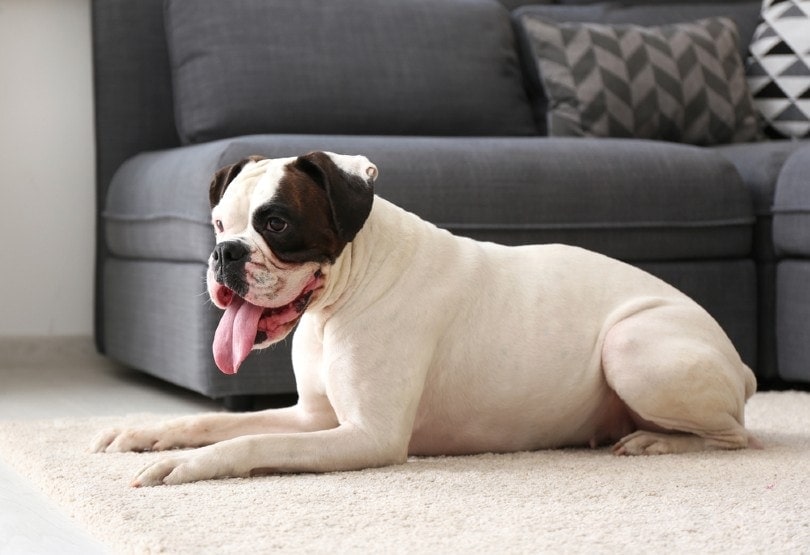
Whining, barking, and shaking are all common signs of an anxious or nervous dog, but some dogs will also drool when they are suffering from fear, nerves, or separation anxiety. This is common in some dogs that are anxious about car rides, new faces, or being left alone at home.
When trying to calm an anxious dog, be sure to stay away from harsh reprimanding or shouting, as this will likely only make the situation worse. Avoid dramatic behaviors when leaving your home or getting your pooch in the car — you need to be an example of calm and collected so they can follow your lead. Another helpful tip is to train your dog using a single word when you leave that lets them know that you’ll be back soon and that will help them learn to calm down. Be sure to only use this command in specific circumstances for it to be effective.

Final Thoughts
Most of the time, a drooling and slobbering dog is normal, and there is usually nothing to worry about. Excessive drooling may point to some deeper issues, though, and further investigation is necessary. If your dog is drooling only at a specific time, like when you leave home or when they ride in the car, the drooling is likely the symptom of anxiety or motion sickness, which is fairly easy to fix.
If the drooling is almost constant or out of the blue and happens alongside other symptoms, like vomiting, lack of appetite, or extreme behavioral changes, there may be a good reason to worry. In these cases, the best plan of action is to take your pooch to the vet as soon as possible for an in-depth checkup to rule out illness, injury, or lodged bones.
You might also be interested in:
Featured Image Credit By: GoDog Photo, Shutterstock
Get Hepper In Your Inbox


Pet care tips from our vets and experts, straight to your inbox.
You may opt-out at any time. View our Privacy Policy for more information.

Nicole is a lover of animals of all sizes but is especially fascinated with the feline variety. She’s the proud mom of Baby, a Burmese, and works every day so he can relax in the sunshine or by the fire. She’s always had a cat in her home and has spent countless days with others, observing behaviors and softening up even the grouchiest of the lot. Nicole wants to share her kitty expertise with you so you and your cat can live happy, healthy, and care-free.
Join the conversation
Ask a question, share your story, or send private feedback.