Hepper is reader-supported. When you buy via links on our site, we may earn an affiliate commission at no cost to you. Learn more.
Why Is My Dog's Paw Swollen? 7 Vet-Reviewed Reasons


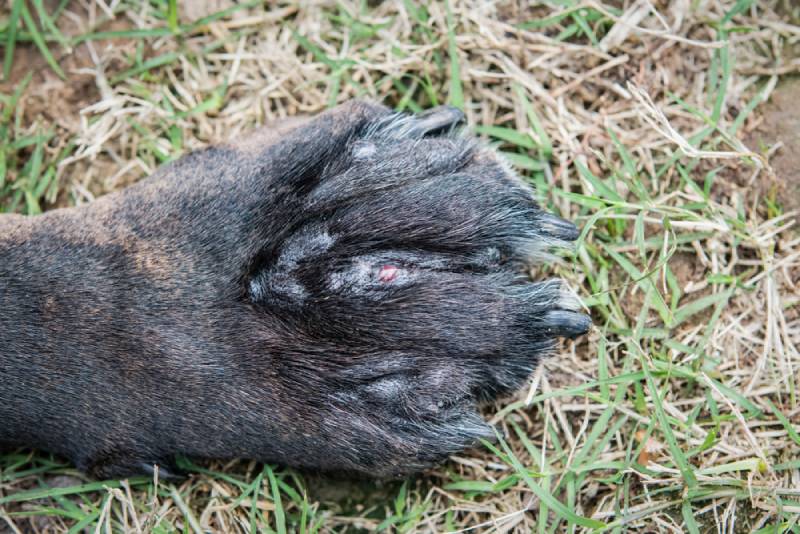
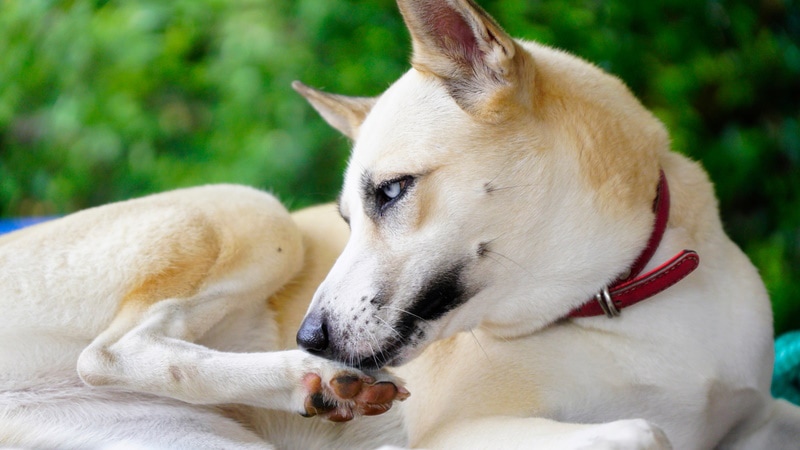
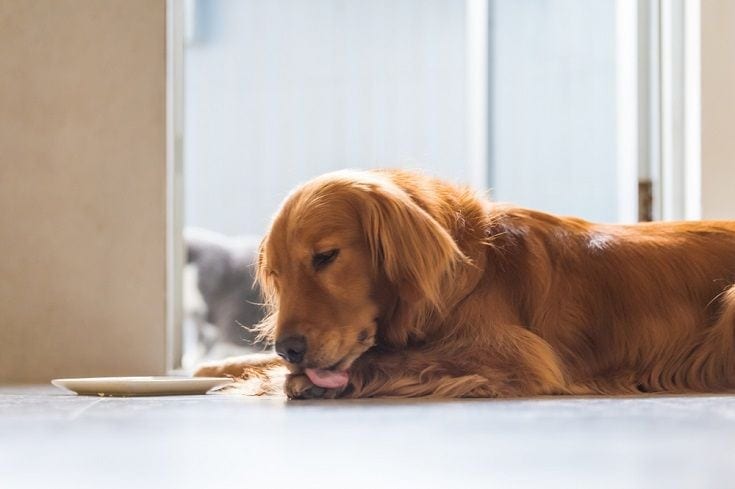
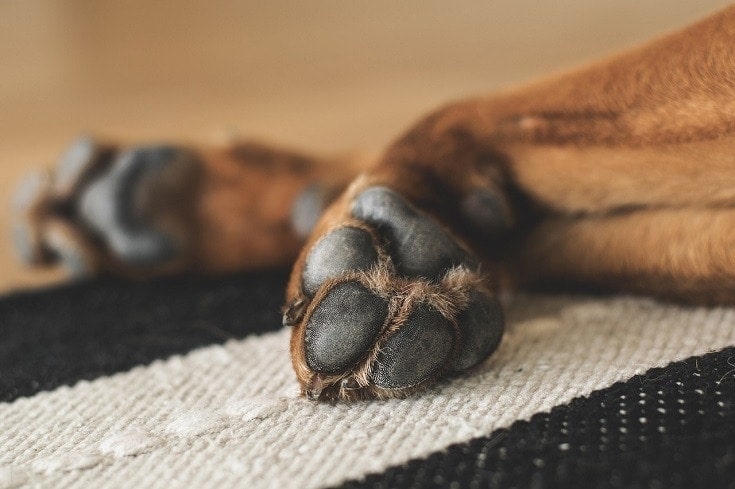
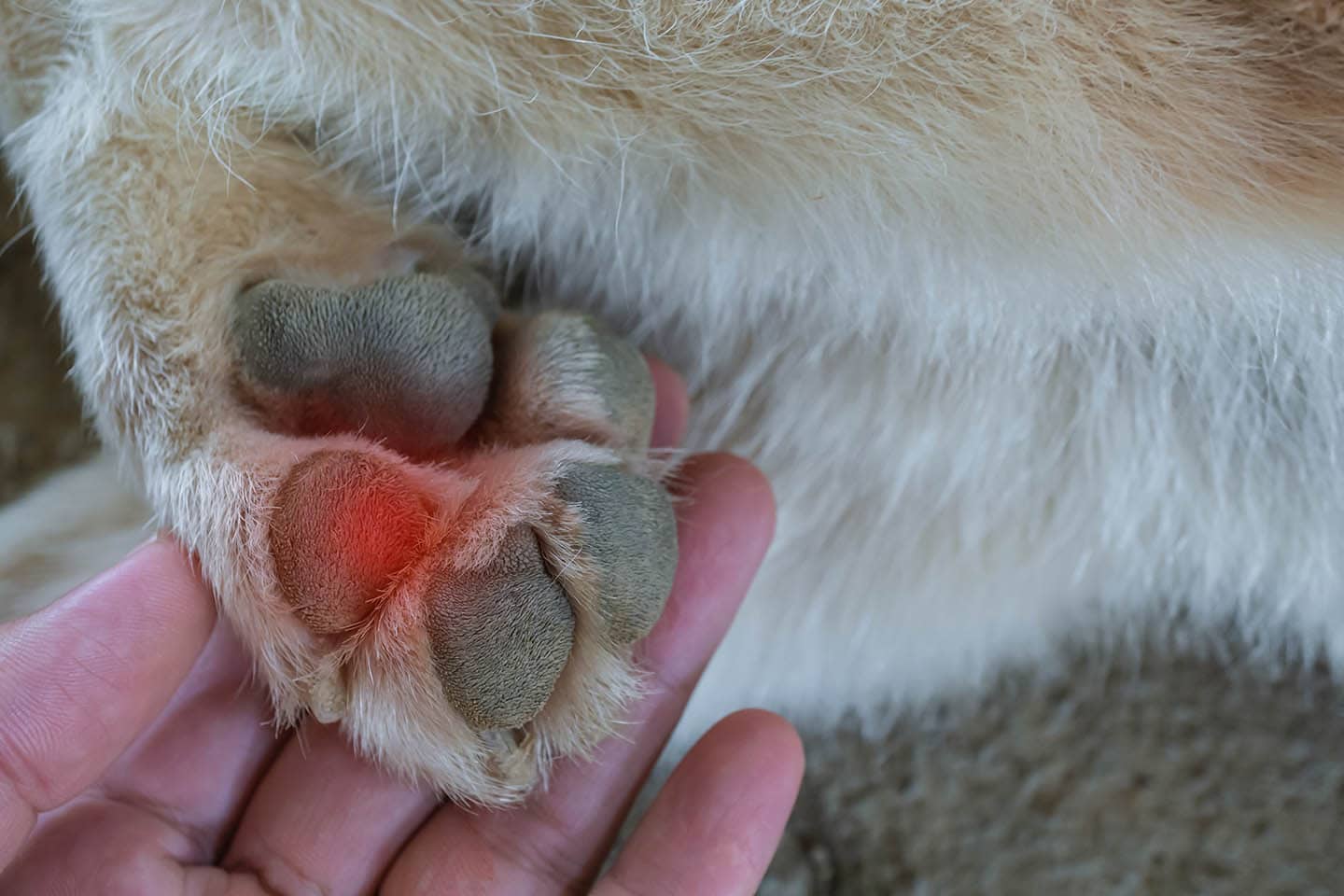
Your dog’s paws are a fascinating part of their body—they are durable and weatherproof. However, they’re not indestructible, and their paw pads are sensitive to heat. It’s important to regularly check their paws for aches, cuts, and stings that can cause swelling, pain, and discomfort. Thankfully, it’s usually easy to pick up on paw problems because your pup will likely limp when they walk, lick the swollen paw excessively, and guard it to prevent further pain.
Although it’s alarming when your dog isn’t their usual self and is struggling with their paw, the sooner you find the underlying cause for the swelling the sooner it can be treated.
A swollen paw is a painful condition that often needs veterinary attention to treat. With a bit of care, your dog should make a full recovery in a short amount of time. Let’s discuss these common reasons for a swollen paw further.

The 7 Reasons Why Your Dogs Paw is Swollen
1. Trapped Foreign Objects
If your dog spends time outside or often goes for walks and runs with you, they are at risk of getting a foreign body trapped between their toes and paw pads. These are commonly thorns, grass seeds, splinters or bits of glass. Sometimes these are visibly obvious on the surface of the skin and can be easily removed. However, if they are not removed quickly, they can work their way under the skin and form a swelling. Your vet may then need to do surgery to explore and flush the swelling to remove the foreign body.
Always check your dog’s paws, including between the toes, carefully after walks. This is especially important in grass seed season. It is much easier to remove trapped foreign bodies before they become embedded in the skin, saving a lot of discomfort for your dog.

2. Insect Bites & Stings
Another common cause for swelling is insect bites or stings. Just as you’ve probably stepped on a bee and been stung at some point in your life, the same can happen to your dog. Spiders are another culprit for causing bites that can lead to swelling.
Most of the time, an insect bite or bee sting will cause mild irritation, but sometimes the venom can cause more serious problems, especially if your dog is allergic to it.
You’ll usually know if the swelling is from a bee sting because the stinger will often be left behind. Be sure to remove it if possible and bathe the area in water. You can also hold an ice pack to the area to reduce swelling. However, if your dog has severe swelling or shows any other symptoms after they’ve been bitten or stung, take them to the vet immediately.
3. Cuts
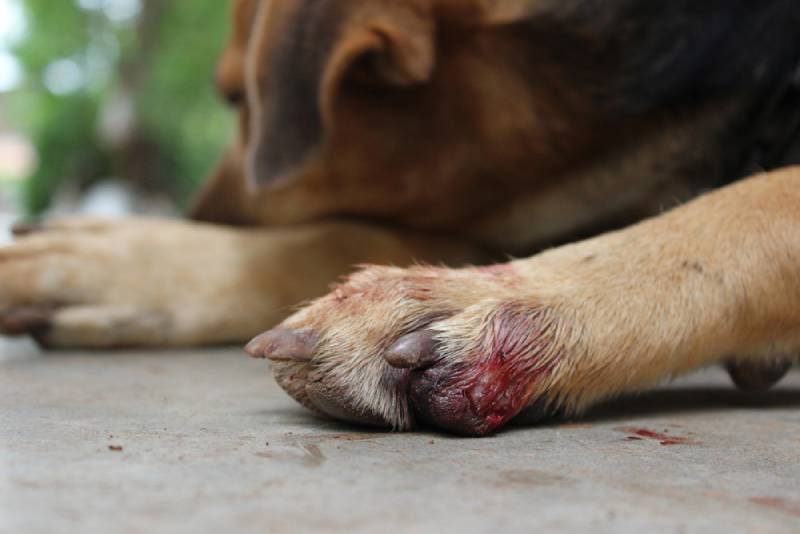
Cuts can occur through play and exercise, and they can happen as easily as your dog stepping onto a sharp stone, twig, or piece of glass. Cuts can be so small and shallow that your dog won’t even notice them, but sometimes they can be deep enough to cause bleeding, pain, and swelling.
The pad can bleed a lot even with small cuts, if your dog allows you, try and clean the paw and apply pressure with a clean cloth to try and stem the bleeding. Unless the wound is very small and not bothering your dog, it is best to take your dog to the vet for assessment, as they may need stitches. Either way you’ll need to limit your dog’s activity and prevent them from licking the cut.
4. Broken Toes
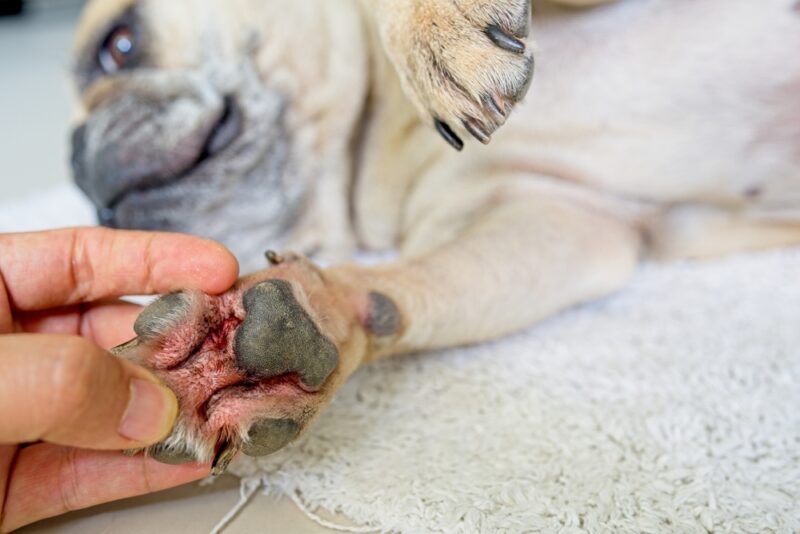
A more serious reason for swelling in a dog’s paw could be due to one or more broken toes. It will cause serious pain in the dog, and they won’t be able to put any weight on their swollen paw. A dog could end up with broken toes if someone stepped on their paw, if they jumped or slipped off a high surface if their toe got stuck and they tried to pull themself free, if they got hit by a car, or if they were in a fight.
A broken toe cannot be treated at home because the dog will need various types of medication from the vet as well as a supportive bandage. Sometimes a broken toe will require surgery, which the vet will only be able to determine through an X-ray.
5. Ripped Off Nail
If your dog has an injury to their claw and it’s been ripped off, you’ll usually see swelling and drops of blood where they walk, and they’ll be fussing over their paw by licking it and limping. Your dog’s claws can catch on things, or it could be the result of a bad landing. A nail that has been ripped off is very painful because it causes damage to the tissue and exposes your dog’s nerves and blood vessels.
Sometimes the toe will be broken, but even if it’s not, you need to take your dog to the vet because of the pain they’ll be experiencing as well as to prevent infection. Most dogs won’t want their paw to be touched, but if yours is comfortable with it, clean the area of all the blood and keep your dog from licking it.

6. Allergies
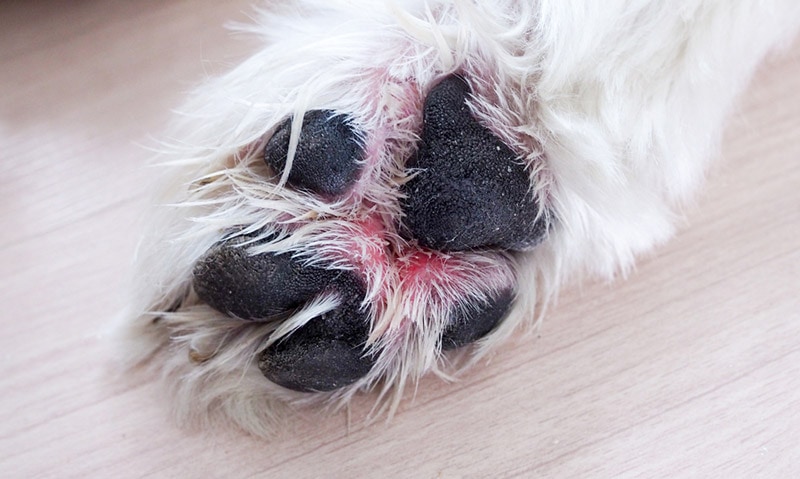
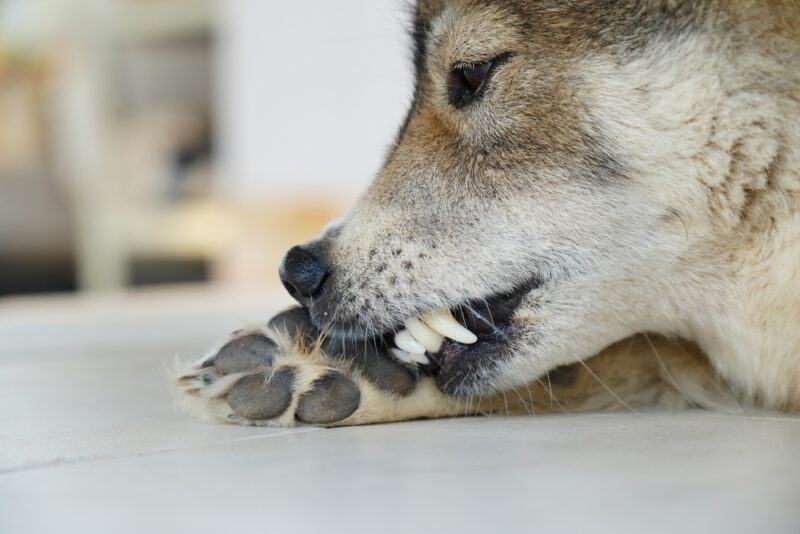
If your dog is chewing and licking their paws, don’t just assume that they’re feeling anxious or stressed—it can be because of itchy skin caused by allergies. Allergies are common, and there are various types that your dog may struggle with, such as fleas, environmental, and food allergies. A dog with allergies will often lick and chew their paws which will cause them to become sore and swollen. They may also have red skin, experience recurrent skin and ear infections, and may have gastrointestinal upset in the case of food allergies.
Your vet will be able to investigate the underlying cause and advise on appropriate treatments to help relieve the itch.
7. Burns
Although your dog’s paw pads are weatherproof, they’re not heat resistant and can become blistered and burned if they walk on hot asphalt on a sunny day. Blistered or burned paw pads can become swollen and are sensitive to walk on, so you need to be careful when walking your dog when it’s hot outside. Don’t expect your dog to walk on hot pavement that you wouldn’t walk barefoot on.
If your dog’s paws are severely burned, they’ll need to be treated by a vet to prevent infection and reduce the pain. The vet may also bandage the burned paws to prevent them from becoming dirty and to help them heal quickly. Hot surfaces aren’t the only danger to your dog’s paw pads, as extreme cold can cause frostbite, which can cause plenty of damage too.
Conclusion
Although swelling should always be taken seriously, a swollen paw isn’t usually a sign of something life-threatening. It’s commonly caused by a trapped foreign body, an insect bite, bee sting, cut, broken toe, ripped off nail, allergies, or burns. Unless the cause of the swollen paw is obvious and easily resolved, take your dog to the vet for an examination, as they may require treatment.
Sources
Featured Image Credit: JNix, Shutterstock
Get Hepper In Your Inbox


Pet care tips from our vets and experts, straight to your inbox.
You may opt-out at any time. View our Privacy Policy for more information.
Keri-Beth is from South Africa and is a freelance writer who specializes in the pet niche. She has grown up with a range of pets, volunteered at countless pet shelters, and is highly passionate about pet care. Currently, Keri-Beth is raising two dogs - Benji, the Golden Cocker Spaniel, and Gracie, the Boerboel. With so much information out there, Keri-Beth has made it her mission to make pet care as easy and straightforward as possible.
In her spare time, Keri-Beth enjoys camping, photography, and spending time with her husband, who is a professional drummer. She not only has a heart for pets but people too.
Join the conversation
Ask a question, share your story, or send private feedback.