Hepper is reader-supported. When you buy via links on our site, we may earn an affiliate commission at no cost to you. Learn more.
Why Is My Dog Excessively Licking His Paws? 5 Vet-Approved Reasons

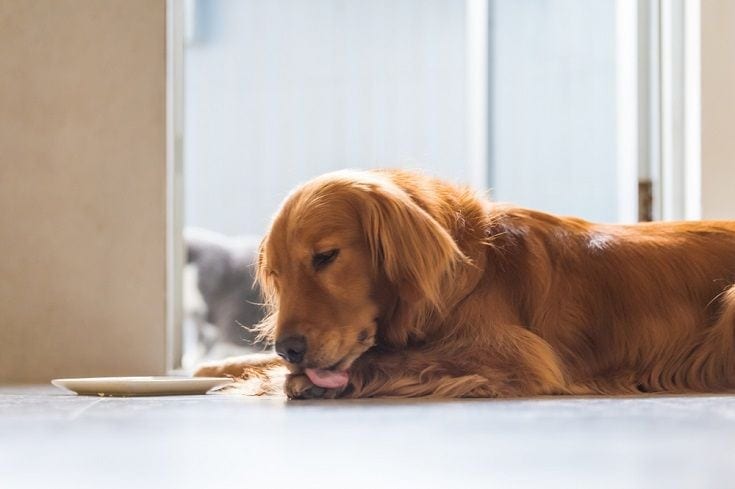
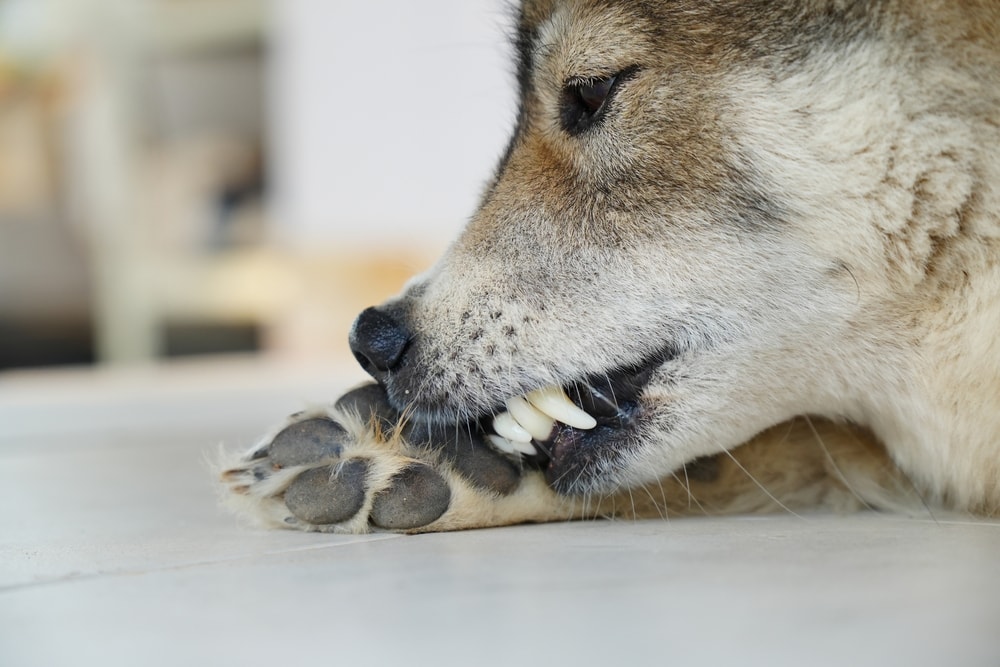
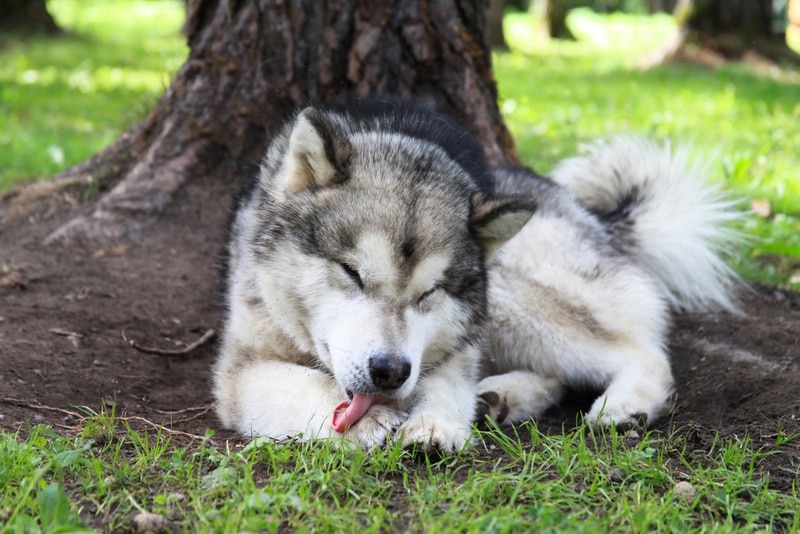
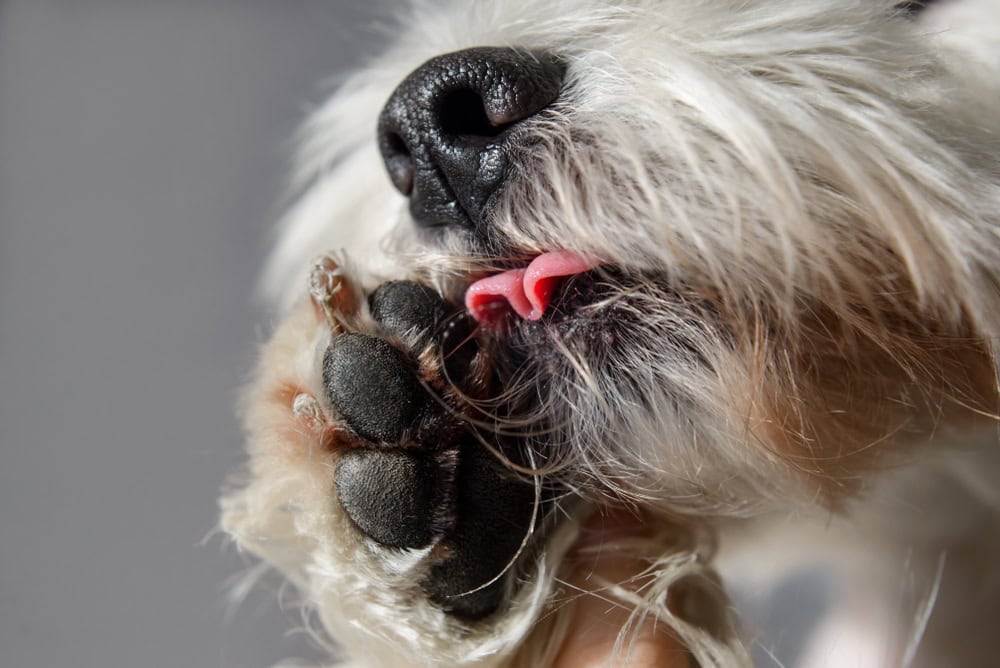
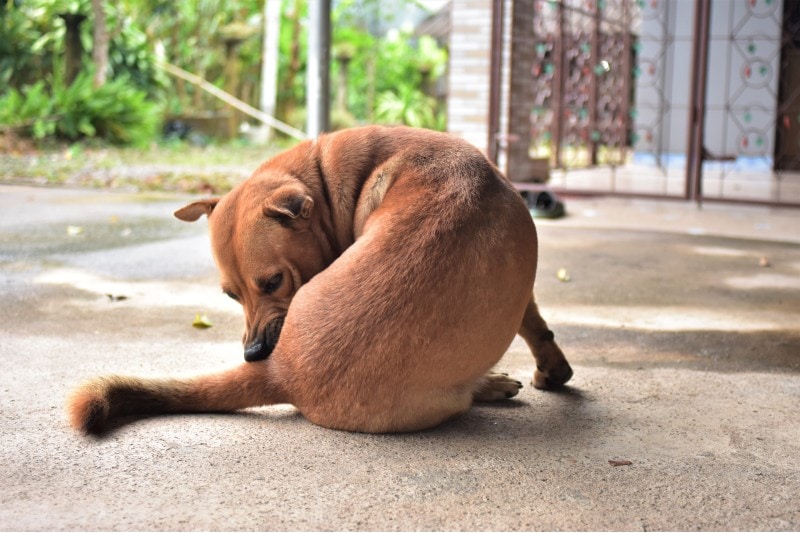
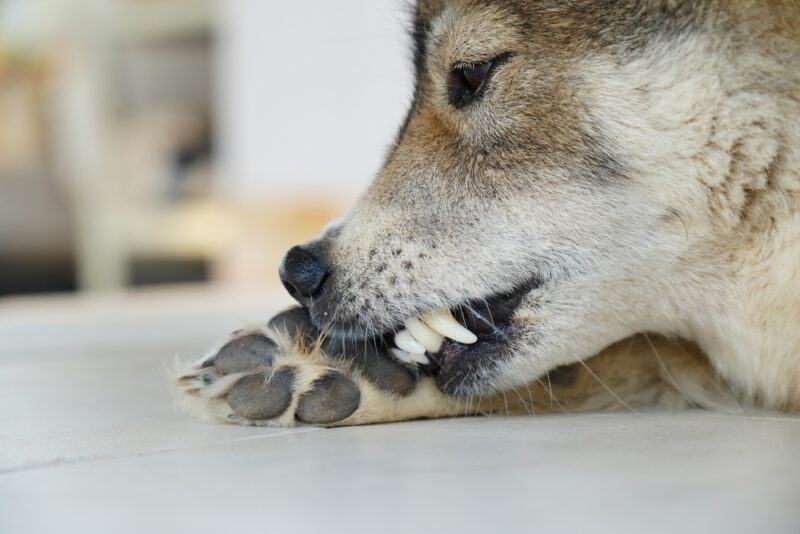
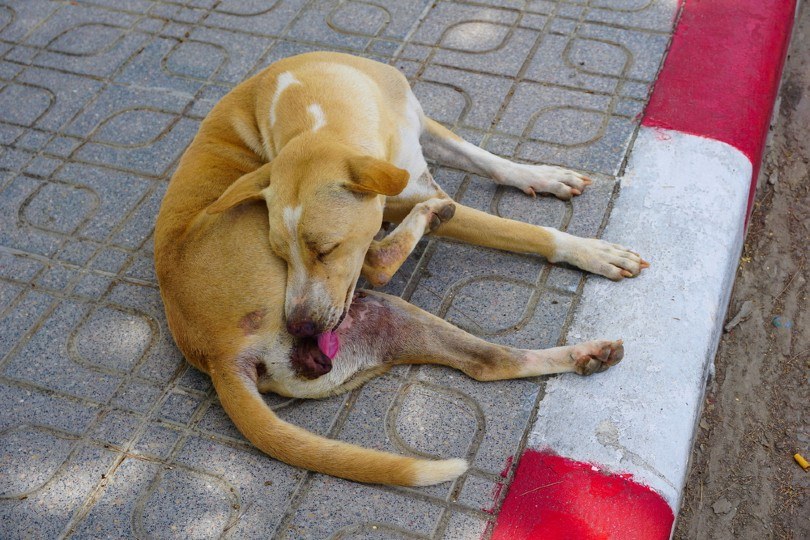
Paw licking is part of normal canine self-care and self-grooming, but when licking or nibbling at their paws becomes more frequent or excessive, it is most likely indicating an underlying condition. Summer and fall appear to be particularly key seasons for these troublesome times.
If your dog is excessively or aggressively licking their tootsies, a visit to your veterinarian is warranted. There are numerous causes as to why they might be exhibiting this behavior, and your vet will either be able to rule them out or discover the real cause of their licking and begin a treatment plan.

The 5 Reasons Why Dogs Lick Their Paws
1. Allergies
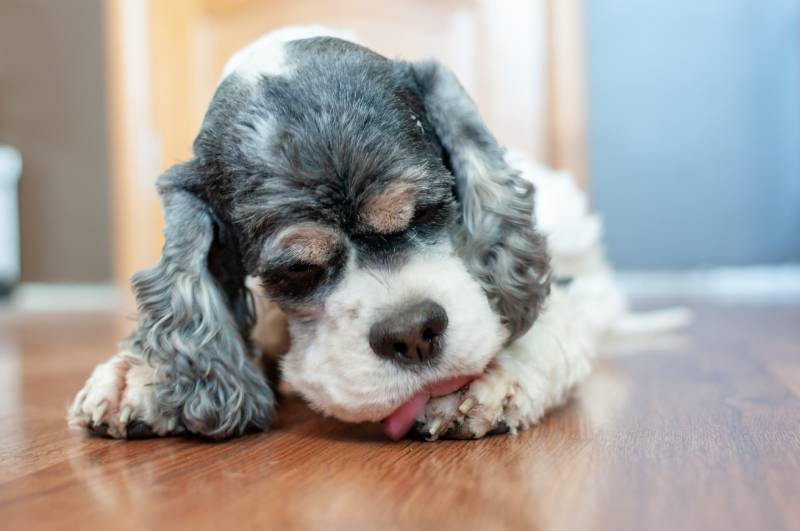
Allergies are perhaps one of the most common reasons for dogs licking their paws, and it's a complex topic! There are a plethora of allergies and subsequent combinations of them, but allergies generally fall into one of three categories. Your veterinarian can perform tests to gain a compressive breakdown of the individual allergens causing the issue, after which a plan and any alterations required to their lifestyle can be actioned.
Environmental Allergies
Environmental allergies are particularly common, producing a variety of signs including:
You may find too that your dog's acting uncomfortable or licking their paws more after walks, potty breaks, or being around the offending irritant.
Pollen, grasses, trees, spores, and dust can all react and cause dogs numerous problems due to the allergens. Environmental allergies are especially known to cause paw licking.
Parasite Allergies
Parasites, such as fleas, don’t cause a dog to lick its paws but are frequently the reason for making a dog generally itchy all over. Dogs, therefore, can often lick their paws in response to this to distract themselves from the uncomfortable and generalized itchiness and irritation, as fleas don’t live on the paw areas.
Fleas can also cause a condition known as Flea Allergic Dermatitis (FAD). It is not the flea they are allergic to, per se, but the saliva of the flea and it’s a condition that does require treatment. Paw licking, itching, thinning hair, and hotspots are all signs associated with FAD.
Other mites such as Sarcoptes and Demodex also cause itchy skin, and it is noted that, in cases where parasites are the cause of paw licking and itching, licking is performed more aggressively.
Food Allergies
Allergies to foods like beef, chicken, and dairy are another reason to instigate paw licking, although food allergies are less common than environmental ones. They occur due to the dog’s immune system going into overdrive in response to certain foods, and it can be difficult to pinpoint exactly which foods are the cause. Testing to help decipher the culprits is available via your vet which can prove helpful.
2. Injury or pain
Injuries, foreign bodies, and/or pain due to conditions such as arthritis or strains will all cause a dog to lick excessively at their paws to help give themselves relief, much in the same way we would rub an achy muscle. Oddly, the pain or injury might not be on the paw but elsewhere on the body where they can’t reach it. Taking notice if they are licking one or both paws is also important. Licking only one paw gives a strong indication of injury or a foreign body; for example, a thorn or piece of glass they have stepped on.
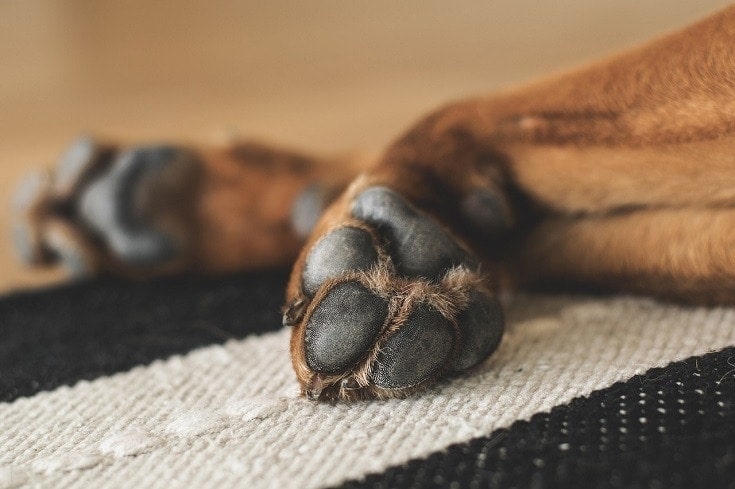
Don’t forget to examine their paws for excessive fur in between the pads causing irritation or discomfort due to knots or excess growth. Nail length should also be checked. Nails that are too long or are growing into their pads are uncomfortable and will make a dog obsessed with its paws by licking and nibbling.
3. Dermatitis

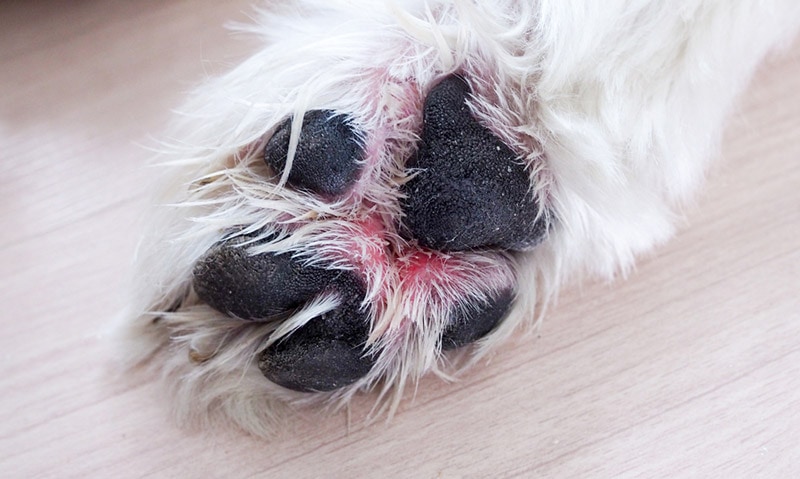
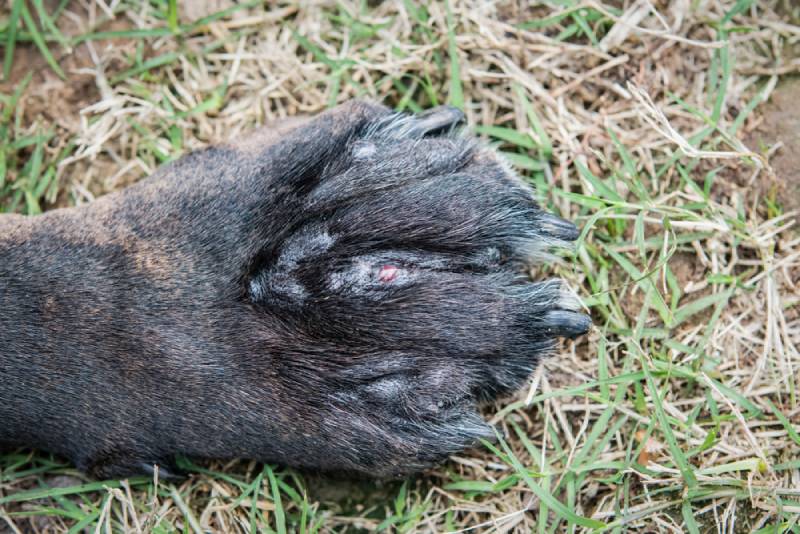
Dermatitis (inflammation of the skin) will initiate a licking response. The original cause of dermatitis can range from bacterial infections to allergies and sensitivities to contact with irritants, such as cleaning products or salt on the roads.
4. Boredom
Dogs, especially those with high energy, can easily become bored, and a bored dog will find something to do! Usually, it’s an unfavorable activity like chewing, scratching, or licking at their paws. Finding ways to alleviate their mental and physical energy is key in this scenario. You may wish to increase their walk time, offer interactive toys, or enlist the extra help of dog walkers or doggy daycare. There are many ways to help with this situation, and your vet will be more than happy to assist you in finding the right solution if you are struggling to break your dog’s habit.
5. Behavioral Issues
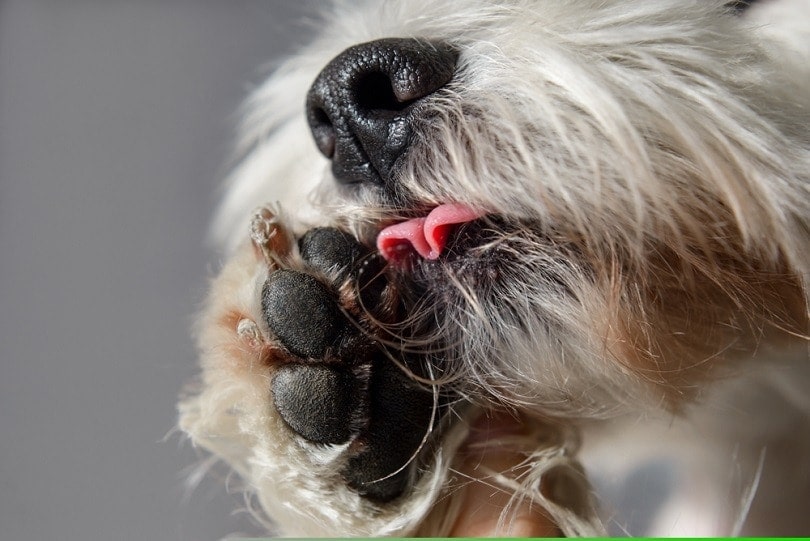
Before considering behavioral or psychological issues being the reason for your dog’s paw licking, your vet will want to rule out all medical causes. Once all health-related issues have been eliminated, behavioral problems can be considered.
Dogs suffering from behavioral conditions will try to self-soothe, and finding relief by paw-licking is one way of doing so. If changes in the environment have occurred, these can all trigger stress and the subsequent licking response.
Anxious conditions like separation anxiety and compulsion disorders can produce similar signs, and although behavioral problems may be difficult to solve, it is not impossible by any means. To help, your vet may suggest redirection techniques and exercise or a reputable dog behaviorist or trainer.

Conclusion
An odd or random lick at their paws isn’t anything to be concerned about and is normal behavior for a dog. However, if this turns into excessive or aggressive licking, or if you notice other signs along with it, then it’s time to visit your veterinarian in order to find out the true cause.
It is important this is done and not ignored, as secondary infections from excessive licking and saliva often occur. This happens due to the warm and moist environment created by your dog licking in the first place and will require antibiotics and treatment.
You Might Also Be Interested In:
Sources
Featured Image Credit: Chendongshan, Shutterstock
Get Hepper In Your Inbox


Pet care tips from our vets and experts, straight to your inbox.
You may opt-out at any time. View our Privacy Policy for more information.
Annaliese began her career as a veterinary nurse in Edinburgh, later advancing her qualifications with a diploma in advanced veterinary nursing in surgery from London. Her work in small and mixed veterinary practices led her to become a head nurse, where she trained other veterinary nurses, managed the nursing department, conducted nurse clinics, and developed new patient care protocols.
Throughout her career, Annaliese has cared for thousands of patients and their owners, setting higher standards in nursing regimes with a focus on surgery and anesthesia. She co-authored multiple veterinary nursing textbooks and contributed to various mainstream publications in the UK and USA. After more than twenty years in the veterinary and pet care professions, she retired from clinical practice to pursue full-time writing. Having cared for thousands of patients and owners, Annaliese specialized in surgery and anesthesia. She was asked to co-author several veterinary nursing textbooks and contributed to a number of other publications in the UK and USA. After more than two decades in the veterinary and pet care industries, she retired her scrub suit and now works as a full-time writer.
Annaliese Morgan has been a dedicated veterinary nurse for over two decades, having completed a diploma in advanced veterinary nursing in surgery from London and qualifying from Edinburgh. Her professional experience includes managing a nursing department, training other veterinary nurses, providing patient care, and running nurse clinics in both small and mixed veterinary practices.
As an expert in surgery and anesthesia, Annaliese has treated thousands of patients and owners. In addition to being asked to co-author multiple veterinary nursing textbooks, she has written for a variety of publications in the UK and USA. After a long and successful career in the veterinary and pet care professions, Annaliese now dedicates her time to writing full-time. You can find out more about her work at www.annaliesemorgan.com.
Join the conversation
Ask a question, share your story, or send private feedback.