Hepper is reader-supported. When you buy via links on our site, we may earn an affiliate commission at no cost to you. Learn more.
Why Is My Spayed Female Cat Yowling? 6 Vet-Reviewed Reasons


Cats communicate in various ways. They can use visible, vocal, tactile, and olfactory signs to interact with others and express their internal states. Visible signs include changing their body posture, raising the hair in certain areas (piloerection), repositioning their tail, ears, and whiskers, scratching, and rolling, among other behaviors. Their vocal repertoire is broad, and up to 21 different vocalizations have been recorded. Tactile and olfactory communications are also used extensively. It is worth noting that all these signs can overlap on many occasions.
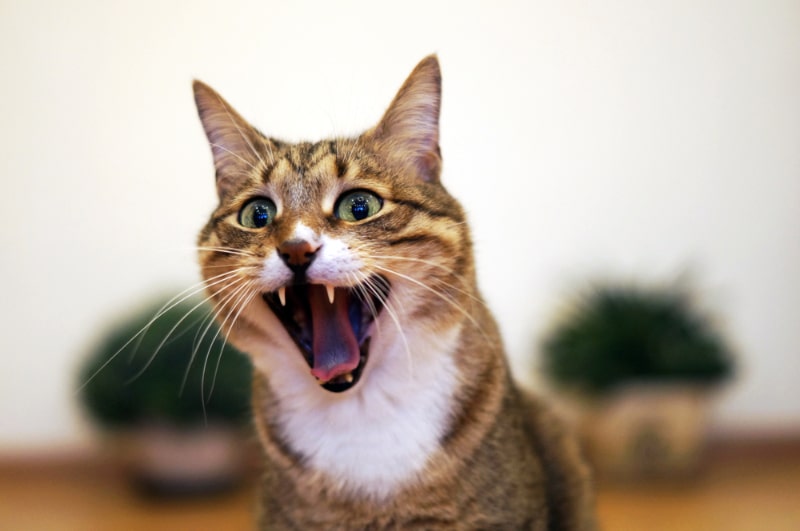
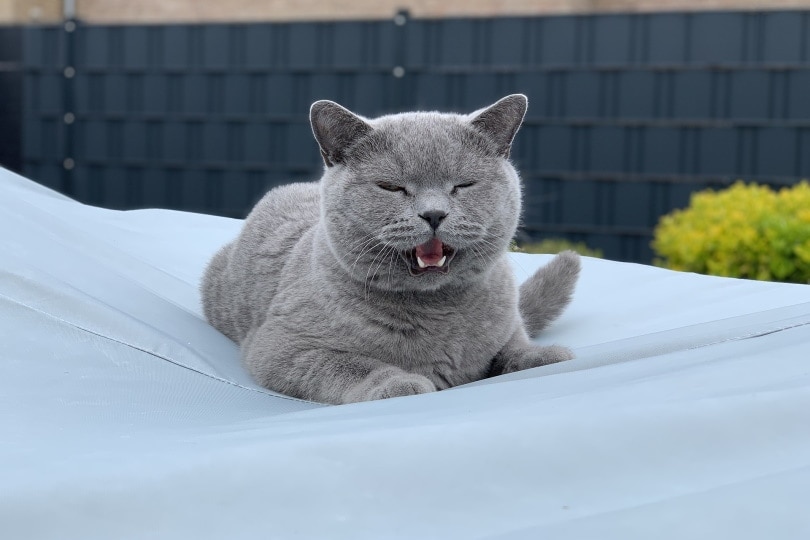
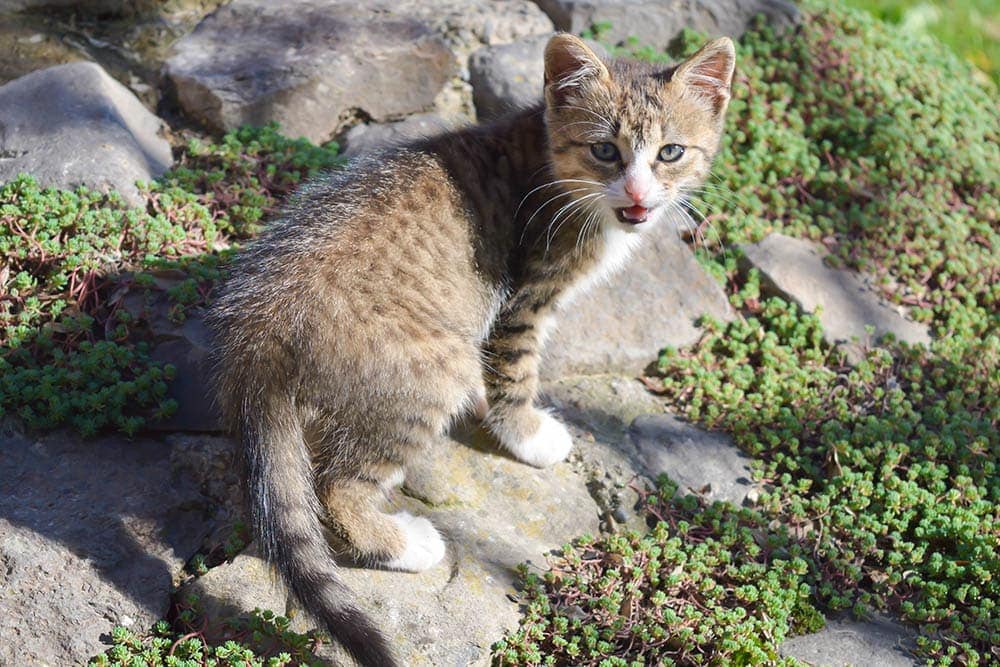
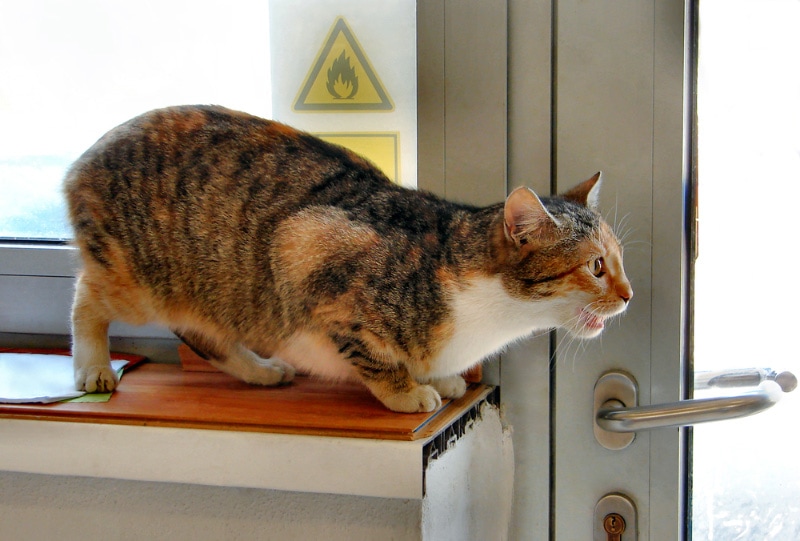
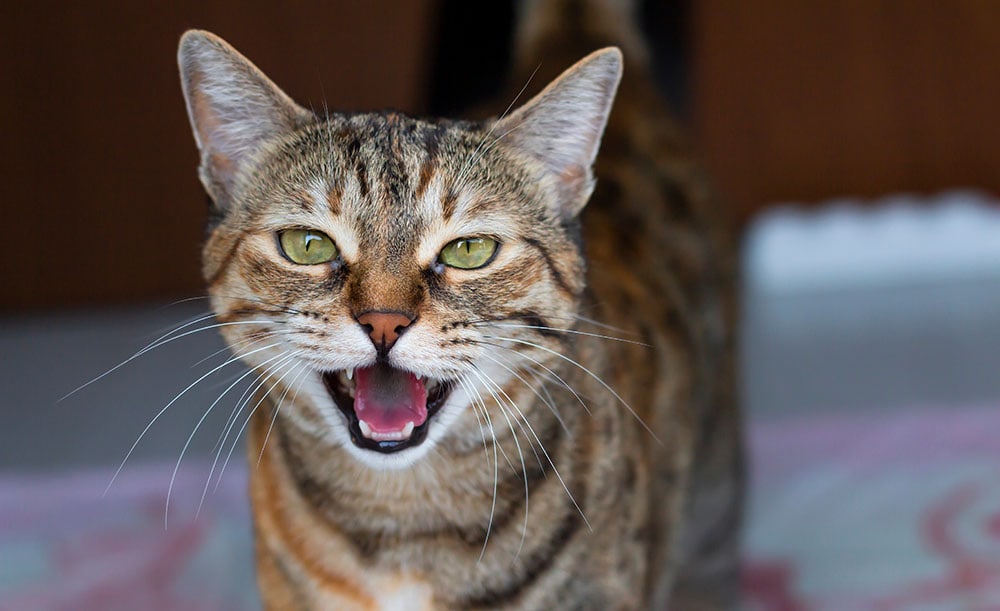
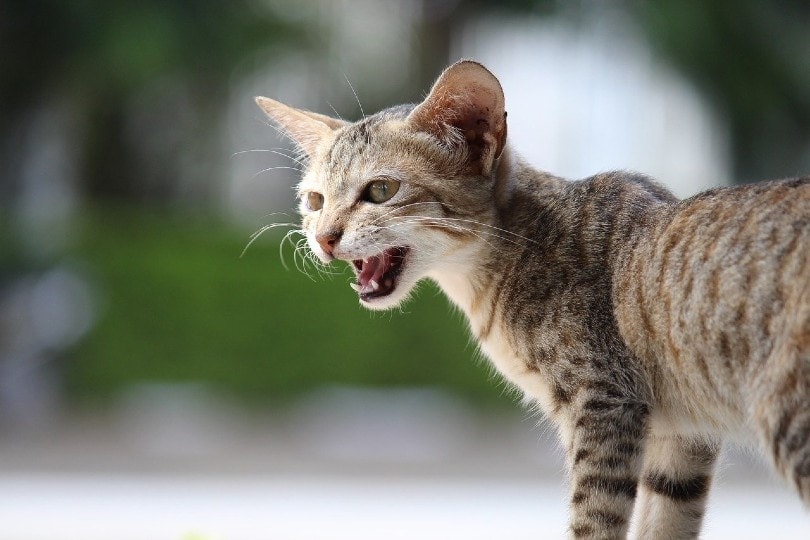
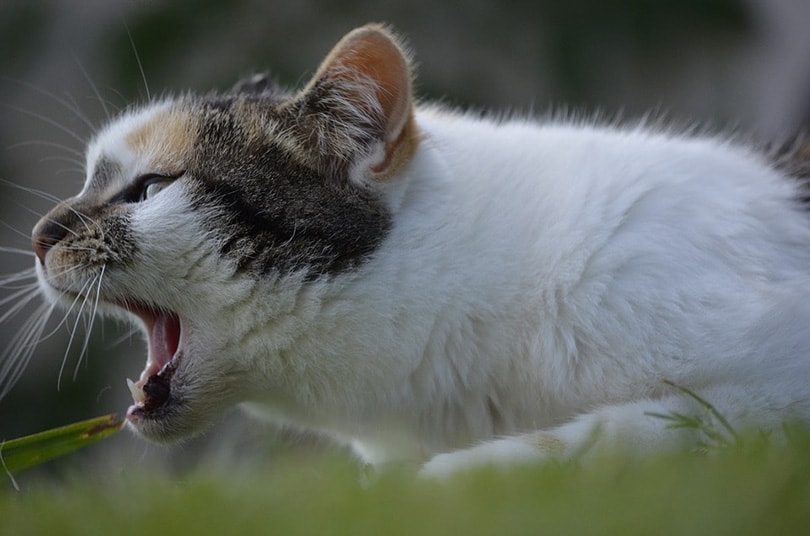
Vocalizations can be classified into three main categories depending on how the cat holds their mouth: closed, open, or open-closing movement. A yowl is produced with an open mouth that gradually closes, and it is produced during threatening or reproductive situations, as well as to express food or attention seeking, illness, stress, loneliness, or aging. Nighttime yowling in older cats in particular has been widely described.
An interesting fact is that feral cats are quieter than house cats. Studies have found that the more feral cats are cared for and interact with humans, the more they vocalize in their presence. This is most likely due to the cats being reinforced for this behavior.
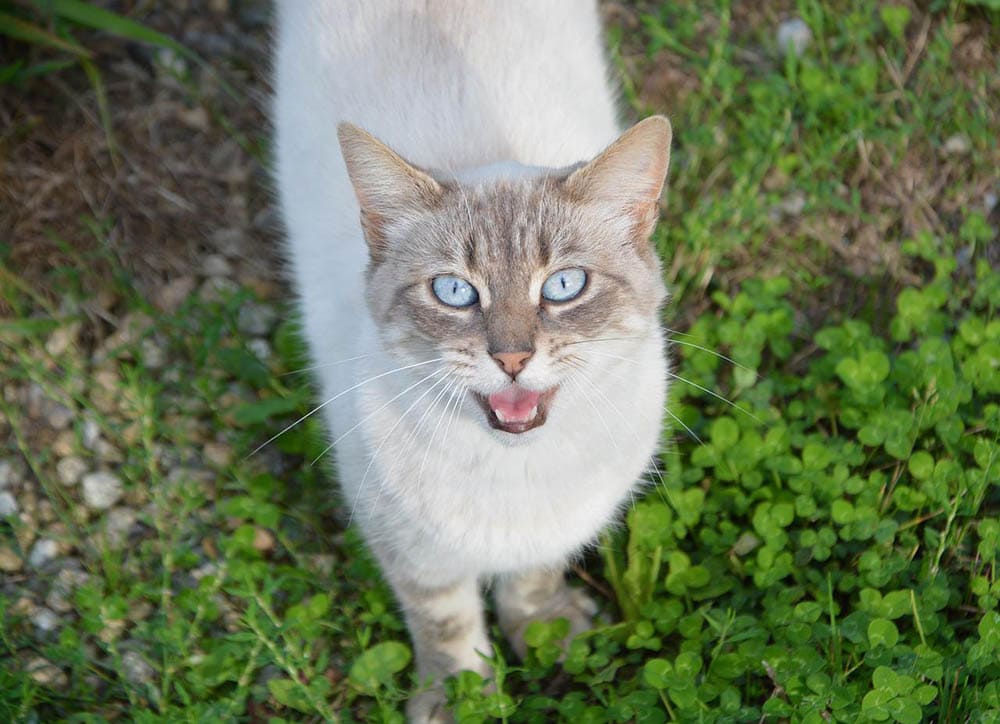
Cats' vocalizations include meows, howls, moans, hisses, and gurgles. When cats yowl, they let out a long, loud, and harsh wailing sound that is unlike a regular meow. This sound might surprise you and could be alarming if you haven’t heard it before.
Unspayed female cats are known for yowling during their heat cycles.1 They do this to try to attract a male cat for mating. When a cat is in heat, the yowling can last for several days at a time around the clock. It’s enough to drive some cat owners crazy.
Spaying your cat should cause the yowling to cease because it stops their heat cycles. However, they may still yowl on occasion. Let’s look at why some female cats yowl even after they’ve been spayed.

Your Cat Was Spayed Recently
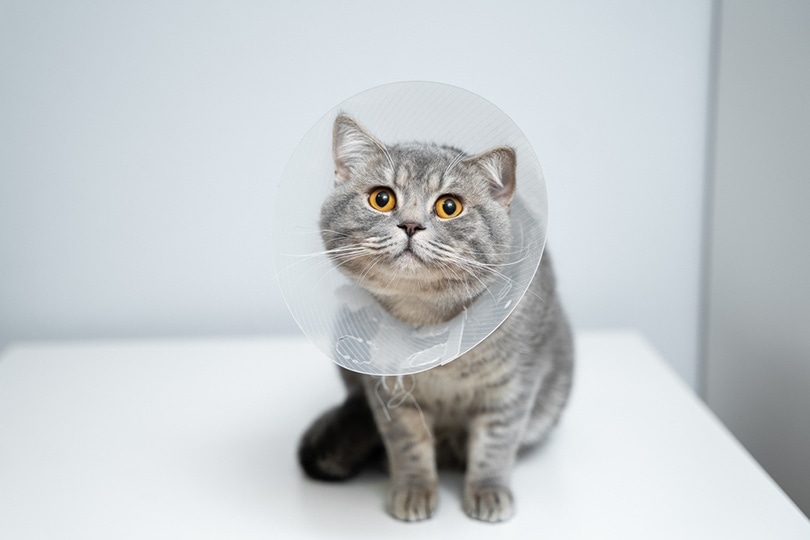
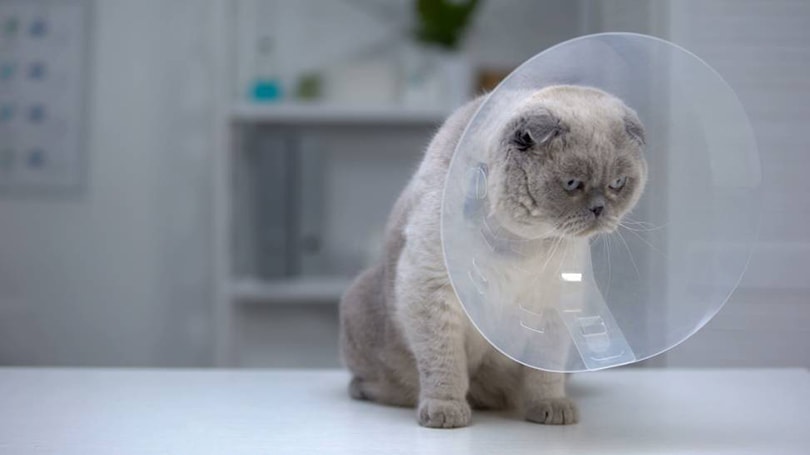
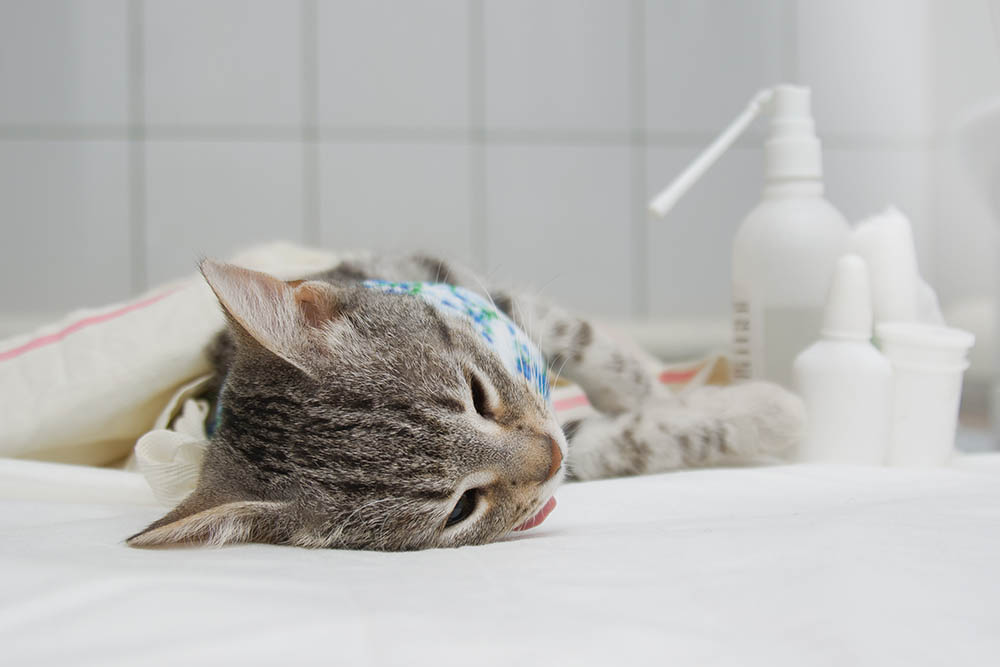
Immediately after your cat is spayed, she may be groggy and confused. If she’s still under the effects of anesthesia, she may yowl without even realizing she’s doing it. She also may be sore and uncomfortable. Yowling is a way to voice her displeasure with the situation. If she’s scared and disoriented, she may yowl until she starts to feel comfortable again.
After a spay surgery, it can take 6–8 weeks for your cat’s hormones to balance.2 Even though she doesn’t physically have heat cycles anymore, lingering hormones can make her feel like she does. Yowling can still occur until these hormones have settled.
After the Spay
If it’s been a few months after your cat’s spay surgery and you notice she is still showing signs of being in heat, she could have a condition called Ovarian Remnant Syndrome. This occurs when ovarian tissue is not thoroughly removed during the procedure. This tissue then produces estrogen, which is responsible for your cat’s heat cycles. It can trigger your cat to go into heat. If left untreated, this condition is dangerous for your cat.
In addition to yowling, some other signs that your cat is in heat are restlessness, trying to get outside and escape the home in search of a mate, and being more affectionate. If you notice these signs in your spayed cat, your vet will perform diagnostics tests to determine if Ovarian Remnant Syndrome is the cause of them. The treatment for this is another surgery to remove the remaining tissue.
This surgery is necessary because if it’s not performed, your cat will still be at risk for health complications that come from not being spayed. These include mammary gland tumors, ovarian tumors, cysts, and uterine stump infections.

The 6 Reasons Your Spayed Female Cat Is Yowling
1. Seeking Attention
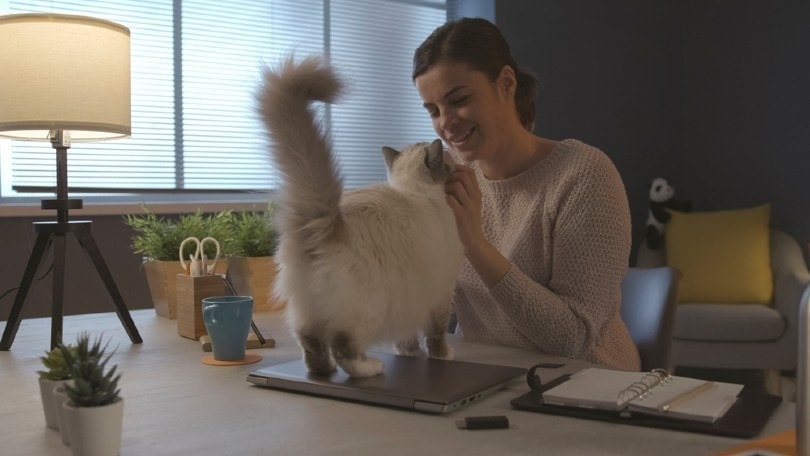
Another reason spayed cats yowl is to seek attention. If you notice your kitty howling and using other vocalizations around you, consider what she may need at that moment. She could just want you to look at and pay attention to her. She could want affection. Maybe she’s hungry and using her yowling to get you to fill her food bowl.
Even though cats have reputations for being independent, they can still get lonely. If you’ve been gone for most of the day and arrive back home to your cat yowling, she could just be saying she missed you.
Sometimes, cats yowl because they are bored and want to play. Try interacting with your cat using toys, catnip, treats, or cuddling. She could have some energy she needs to burn and is yowling to let you know that.
2. Stress & Fear
Has there been a recent change in your household? Did you move or get a new pet? Big changes can stress your cat. Cats are sensitive to thunderstorms and fireworks. Any loud noises can scare them. Some cats seem to be unaffected by them, but many cats are terrified and can't easily calm down. If your cat is very scared, yowling is a way to communicate this feeling.
Car rides and other travel can stress cats, too. It’s common for cats to vocalize while they’re in their carriers on the way to the vet. Aside from the fact that they don’t know what’s happening, car rides can trigger motion sickness in your cat. On top of being stressed, they’re not feeling well physically, either.
If your cat is yowling due to stress and fear, do what you can to limit the stressors. If there's a commotion outside, try to put your cat in a quiet room or area of the house where they can hide if they want to and feel safe. Close the curtains and turn on the TV or radio to help drown out some of the noise. Stay with your cat to comfort her.
Talk softly to your cat and stay calm. She will pick up on your energy, so if you’re upset, this will upset her more. You may not be able to stop her from yowling in the car but knowing you’re there will reassure her that everything is alright.
Concerns about your cat’s well-being during car rides can be discussed with your vet. They may prescribe medication or find alternate ways to help your kitty overcome motion sickness—for example, doing vet visits at home instead.
3. Being Territorial
Female cats can be territorial just like males. If you have recently added another family member or pet to your household, your spayed cat may be yowling because they’re jealous. If your cat is yowling followed by physically trying to put herself between you and another person or animal, that is a clear sign that she is claiming you as her property.
There are steps you can take to minimize territorial aggression when introducing a new cat or puppy to your cat. For tips and tricks on introductions with other animals, you can seek advice from your veterinarian or animal behavior specialists.

4. Cognitive Issues
Older cats may experience cognitive dysfunction or cat dementia. Increased vocalization may occur, usually at night, in cats showing signs of this condition. The yowling may often be accompanied by other signs, such as disorientation, decreased activity, restlessness, irritability, lack of grooming, or changes in sleep cycles.
There is no cure for this, but the condition can be managed. Have your cat checked by a veterinarian if you notice any of these signs. Together, you can make a plan to improve your cat’s life quality.
5. Pain
If you can’t pinpoint a reason why your spayed female cat is yowling, a trip to the vet is necessary to rule out any underlying causes of pain. She could be experiencing a health issue without showing any other signs except yowling. Any time your cat is exhibiting new or strange behavior, they could be trying to tell you something. This is especially true if the yowling is persistent and doesn’t stop after you’ve tended to her needs.
6. Thyroid or Blood Pressure Problems
These two issues can cause nighttime yowling. With hyperthyroid issues, your cat will also manifest signs of hyperactivity and increased appetite, thirst, and vocalizations.
If your cat suffers from high blood pressure, you may notice changes in their eyes, lethargy, breathlessness, and increased thirst or urination.
Conclusion
Cats may continue to yowl for several reasons even after they’ve been spayed. While unspayed cats typically yowl when they’re in heat to try to attract a male cat, spayed cats yowl to communicate different things.
If your cat was spayed recently, it can take up to 8 weeks for her hormones to balance. If the yowling persists longer than that, speak to your vet about the possibility of her having a condition called Ovarian Remnant Syndrome.
Other reasons your cat may yowl after she’s been spayed are to get your attention, to express their fear or stress, or to claim their territory. Older cats can yowl due to cognitive disorders. However, if your cat is yowling incessantly, have her examined by a vet to rule out any underlying health concerns.
Featured Image Credit: prabuaut07, Pixabay
Get Hepper In Your Inbox


Pet care tips from our vets and experts, straight to your inbox.
You may opt-out at any time. View our Privacy Policy for more information.
Nicole is a lover of animals of all sizes but is especially fascinated with the feline variety. She’s the proud mom of Baby, a Burmese, and works every day so he can relax in the sunshine or by the fire. She’s always had a cat in her home and has spent countless days with others, observing behaviors and softening up even the grouchiest of the lot. Nicole wants to share her kitty expertise with you so you and your cat can live happy, healthy, and care-free.
Join the conversation
Ask a question, share your story, or send private feedback.