Hepper is reader-supported. When you buy via links on our site, we may earn an affiliate commission at no cost to you. Learn more.
Why Would a Dog Poop Blood? 8 Vet-Reviewed Reasons



In this article
As a dog parent, it can be frightening to see blood in your dog’s stool. Not all reasons are life-threatening, but you will need to determine the cause as soon as possible, especially if there is a significant amount present. There are two types of blood that can be present, hematochezia and melena. Hematochezia is bright red blood, and melena is dark and tarry, and both are caused by a variety of illnesses.
In this article, we will list the possible reasons why your dog may poop blood and the two different types of blood to watch for. If you see blood in your dog’s stool, you definitely want to contact your veterinarian to determine the cause.

Hematochezia & Melena: Understanding Bright Blood vs. Dark Blood
As we have mentioned, hematochezia means your dog shows signs of bright red blood in the stool. Hematochezia means the blood is coming from the lower digestive tract, meaning the colon or rectum. The reason for its bright color is the blood hasn’t run through the entire digestive process, giving the blood the bright red color.
Diarrhea usually accompanies hematochezia, and the causes could be toxins, parasites, trauma, colitis, inflammatory bowel disease, anal infections or impactions, ingesting non-digestible material, or even allergies.
Melena means your dog has dark, tarry blood in the stool, and it is a little harder to notice. Your dog will have a darker stool if melena is present. Melena has dozens of causes, including ulcers, infections, liver and kidney disease, tumors, and pancreatitis, to name a few.
Melena means your pooch may be bleeding high up in the intestines rather than the lower digestive tract. In other words, your dog is passing old blood rather than fresh. This could be caused by tumors, blood clotting disorders, or even licking blood from a wound.

The 8 Reasons Your Dog May Poop Blood
1. Infections
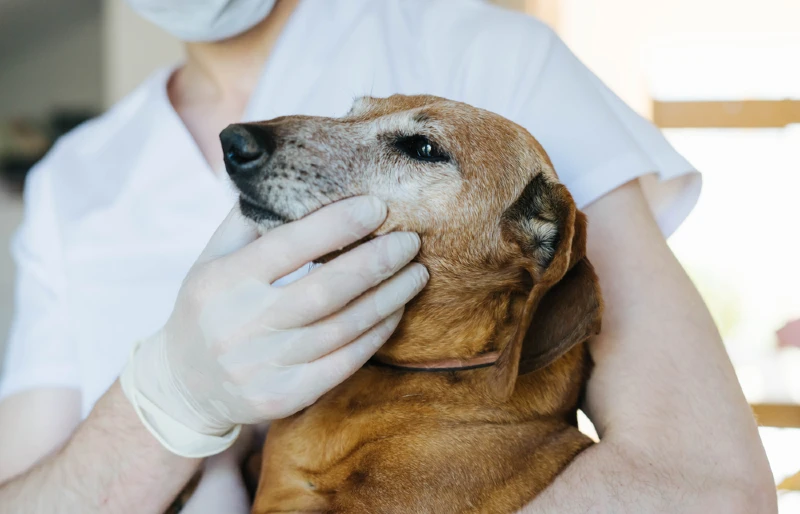
Your dog could have a bacterial infection. Dogs can often fight off bacterial infections, but if they have a weakened immune system, the bacteria can replicate and cause sickness. Your dog can pick up bacterial infections through drinking contaminated water or eating spoiled food, which can cause E. Coli or salmonella.
A viral infection can also cause blood in the stool. Parvovirus is a serious illness that usually causes bloody diarrhea. This virus is spread through the stool of infected dogs and usually affects unvaccinated puppies under one year of age. Your veterinarian can do an in-clinic test to check for parvo. Sepsis can occur in dogs with parvo, which ultimately leads to death.
2. Parasites
Parasites are certainly a nuisance and can wreak havoc on a dog’s digestive system. Some common parasites are hookworms, roundworms, giardia, and coccidia. All of these conditions are treatable, and your dog can return to its healthy self after treatment.
3. Inflammatory Bowel Disease (IBD)
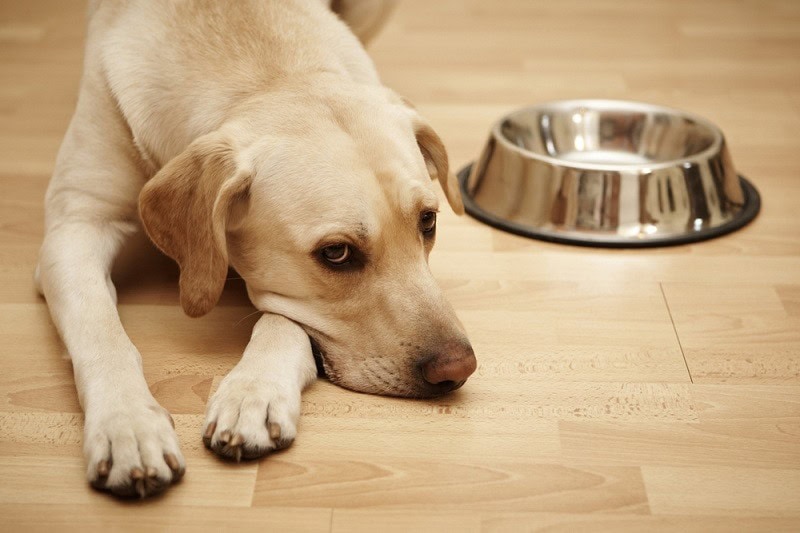
This condition causes inflammation in the intestinal tract, and the cause is not quite understood. IBD is a chronic condition that prohibits a dog from digesting food properly, and they end up losing nutrients as a result.
4. Enlarged Anal Glands
Dogs have anal glands located at the 10 o’clock and 2 o’clock positions outside of the anus. Normally, when a dog has a bowel movement, fluid from the anal glands is released. These glands give off a scent (that’s not pleasant to humans) that lets other dogs know they have been there. However, sometimes the glands do not release fluid, and the glands can become impacted or infected. If this happens, it can cause hematochezia in the stool.
5. Foreign Bodies
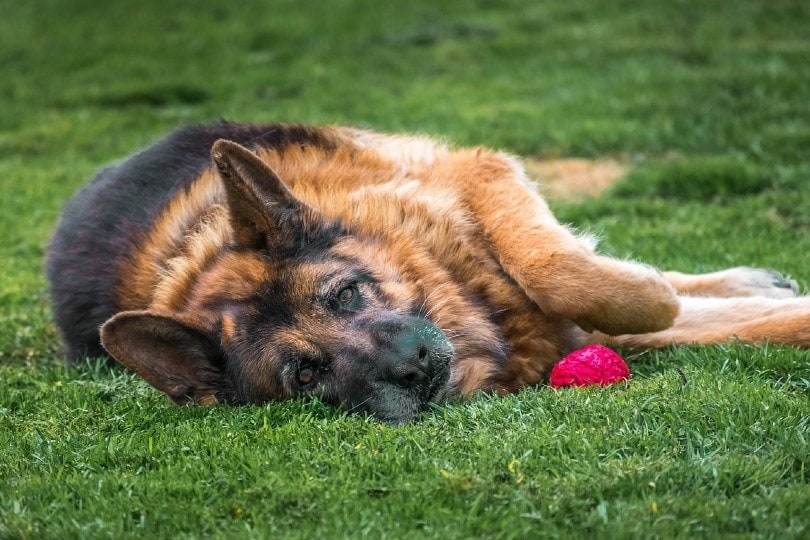
All dog owners know that dogs will put just about anything in their mouths, and that includes objects that are not food. If a dog likes to eat sticks, the sticks can cause a disruption to the anus on the way out, causing hematochezia. Sticks can also tear places in the intestines.
Bones are another culprit that can cause blood in the stool, so you should avoid giving bones of any kind to your dog. It’s also wise to keep your garbage can lid closed so your dog cannot gain access to what’s in the trash.
Toys can sometimes be swallowed and cause a problem that can tear the anus on the way out. It’s good to be sure the toys you give your dog are not small enough to swallow, and it’s wise to clip off any tags on the toys that could be a hazard.
6. Diseases
Many diseases can cause bloody poop, and if you suspect your dog has a disease, take them to your vet immediately. Here is a rundown of possible diseases that can cause melena.
- Liver Disease — Liver disease can be genetic, or it can occur in senior dogs. In some instances, it can be caused by an injury or medications.
- Kidney Disease — Kidney disease can cause black or dark-red blood in the stool. This disease can be acute or chronic. It usually occurs in older dogs, and dental disease can also cause the disease due to your dog constantly swallowing bacteria that have built up on the teeth.
- Toxins — Toxins, such as rat poison or eating a toxic plant, can cause bright red blood (hematochezia) in your dog’s poop. If you must use poison of any kind, it’s vital to keep it away from your dog. It’s also vital to keep poisonous plants away from your dogs, such as poinsettias or oleander.
- Bleeding Disorders — A slew of bleeding disorders can cause blood in the stool. It’s detrimental to have your dog examined if you suspect any kind of blood clot or deficiency factor.
7. Cancer
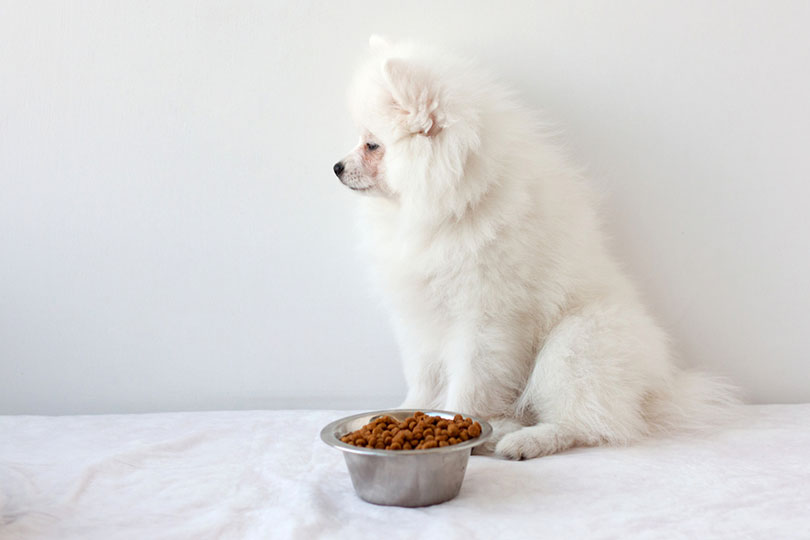
No one wants to hear the “C” word, and that applies to our canine babies, too. Intestinal cancer or rectal cancer are common causes for blood in the stool. Other symptoms include weight loss and loss of appetite.
8. Hemorrhagic Gastroenteritis
Many causes tie into this condition, but the exact cause is usually idiopathic. In addition to the reasons we’ve listed above, other factors include stress, anxiety, and hyperactivity. Prompt treatment is a must.

Conclusion
Blood in your dog’s poop can be alarming, and a trip to your vet is recommended in such situations. Whatever the cause, you’ll want to nip it in the bud to ensure there’s nothing serious going on.
If you do see blood in your dog’s poop, take a breath and call your vet. Remember that blood in the poop is not a definite fatal issue, but it'll need to be addressed as soon as possible. It is good to check your dog’s poop because it can tell you a great deal about their health.
See also:
Featured Image Credit: F Grao, Shutterstock
Get Hepper In Your Inbox


Pet care tips from our vets and experts, straight to your inbox.
You may opt-out at any time. View our Privacy Policy for more information.
Rachel Giordano is a writer and musician out of Pensacola, Florida, living there with her partner and their two dogs, Aero, a Border Collie/Sheltie mix, and Sophie, a Boston Terrier. Rachel has a Bachelor of Arts degree in communication and enjoys writing about all types of animals. When Rachel’s not dedicating her time to writing about animals, she enjoys writing thriller/suspense novels. A writer by day and a musician by night, she's passionate about educating the public about the requirements and needs of all types of animals.
Join the conversation
Ask a question, share your story, or send private feedback.