Hepper is reader-supported. When you buy via links on our site, we may earn an affiliate commission at no cost to you. Learn more.
Anisocoria in Cats: Symptoms, Causes, and Care (Vet Answer)

In this article
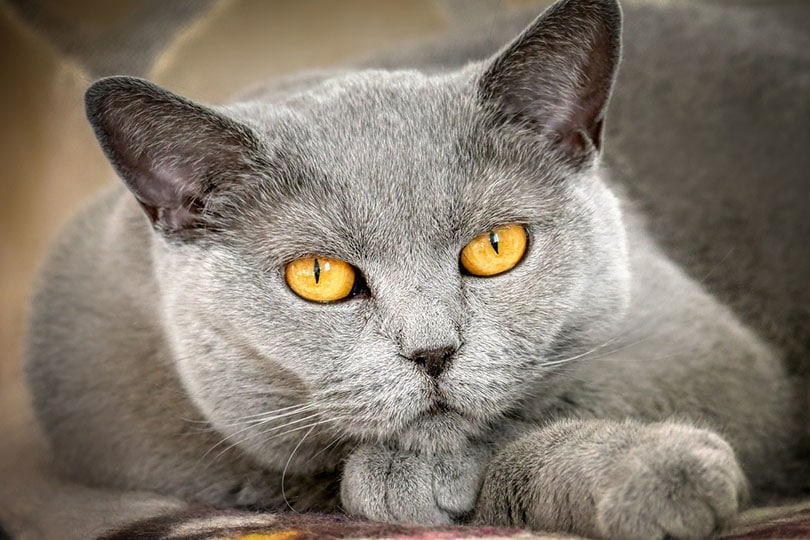
Cats have some of the animal kingdom's most beautiful and distinctive eyes. One characteristic that makes their eyes particularly unique is the shape of their pupils. A cat’s pupils change from vertical slits to completely round, depending on their mood and the ambient lighting.
The pupil is the opening within the iris (the colored part of the eye) that allows light to pass through the eye to the retina. Based on the body’s needs, the iris controls the pupil's size by dilating or enlarging to increase the amount of light that enters the eye or by constricting or narrowing to allow less light in.

What Is Anisocoria?
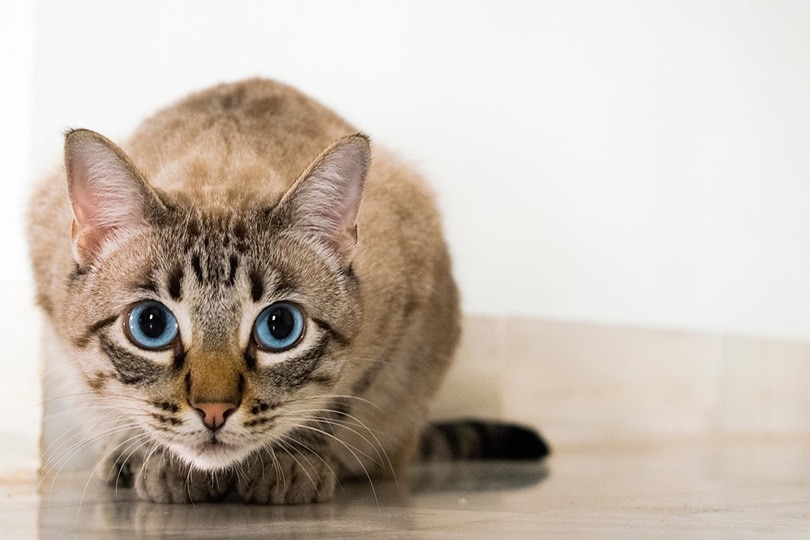
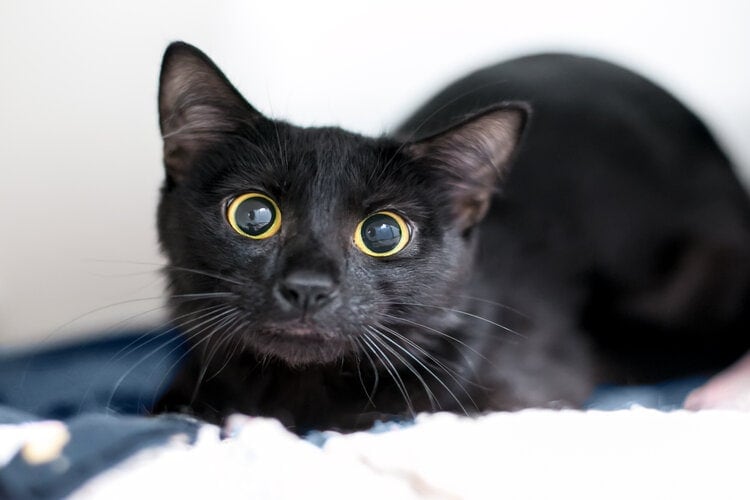
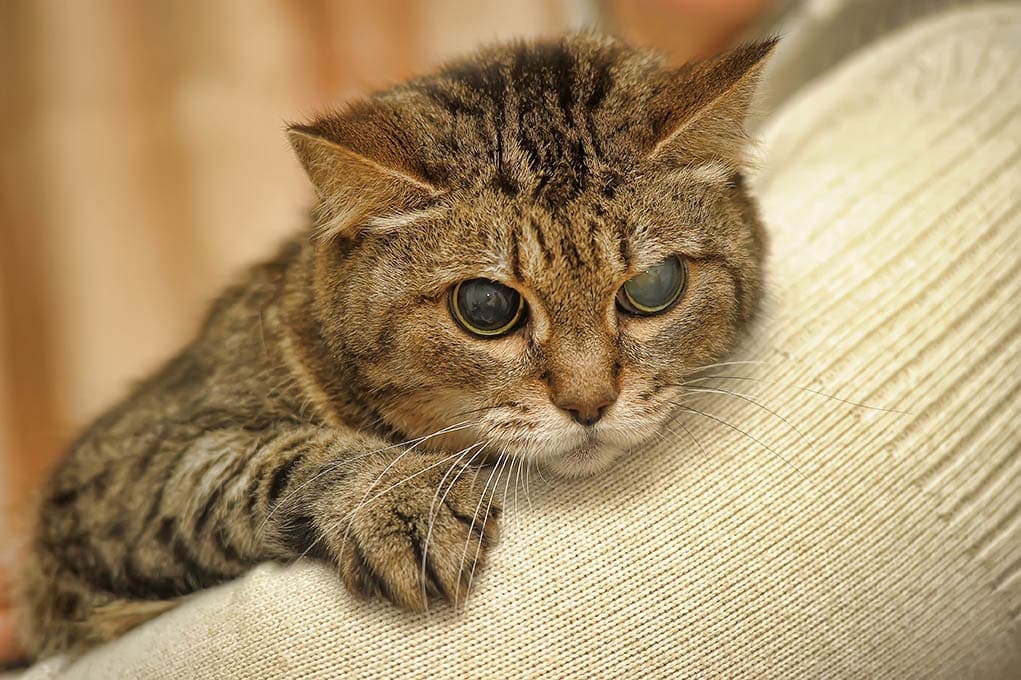
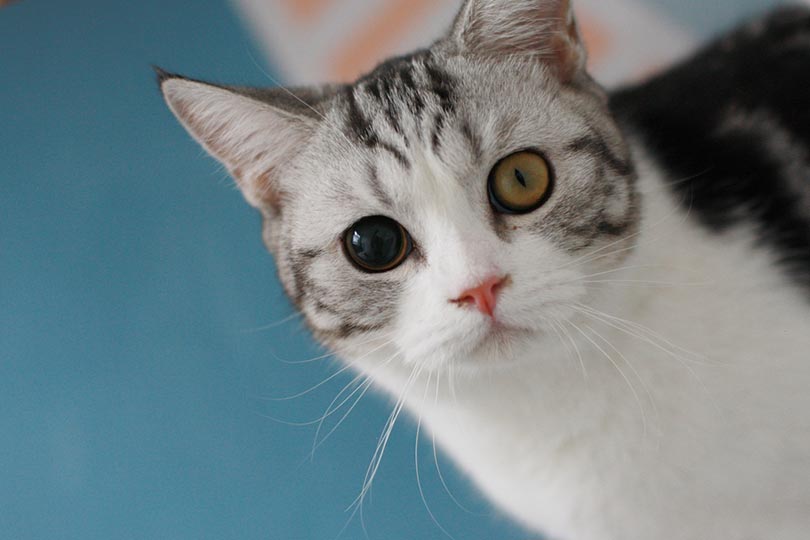
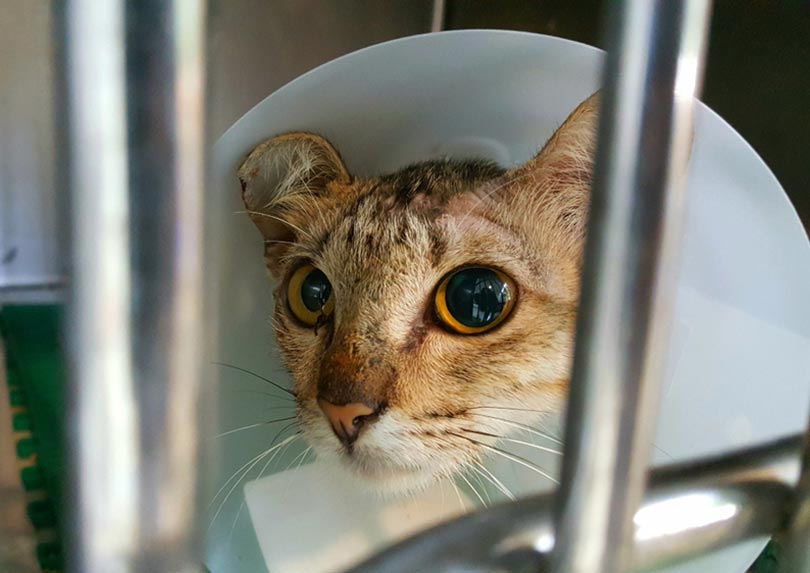
Normal pupils work in unison—when one constricts or dilates, so should the other. Therefore, normal pupils are the same size. Anisocoria is a condition where the pupils of a cat’s eyes are different sizes. In some cases, the larger pupil is the abnormal one, while in other cases, the smaller pupil is abnormal.
What Are the Symptoms of Anisocoria?
Cats with anisocoria have pupils that are two different sizes. Depending on the underlying cause of anisocoria, affected cats can show other symptoms, too. If anisocoria is caused by an ocular (eye) disease, other signs may be present, such as redness of the eye, a cloudy cornea (the clear part of the eye), eye discharge, or blinking and squinting from pain.
If the cause of anisocoria is neurological, other signs, such as a head tilt, abnormal behavior, altered consciousness, drooping of the upper eyelid, and a protruding third eyelid may be seen.
What Are the Causes of Anisocoria?
Anisocoria can be the result of either an ocular or a neurological disease.
Common underlying conditions that may cause a cat to develop anisocoria include the following:
How Do I Care for a Cat with Anisocoria?
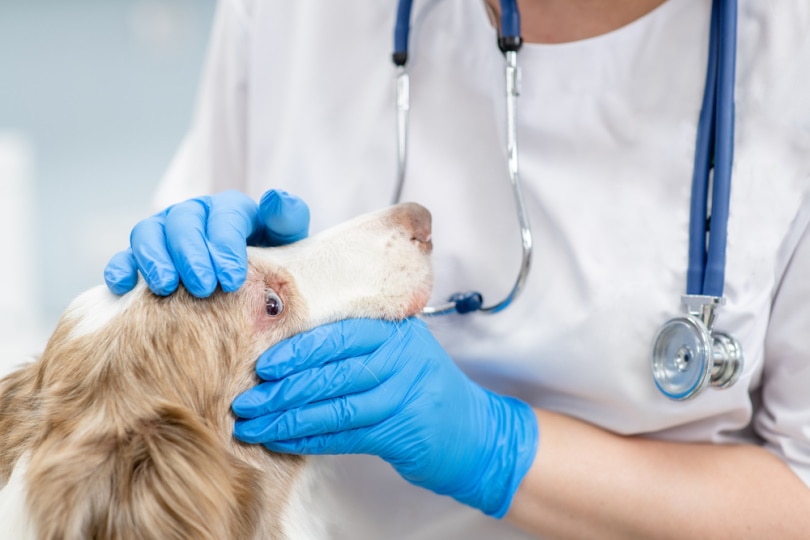
If your cat develops anisocoria, it’s vital that you seek veterinary care as soon as possible. It’s best not to wait and see if the condition improves on its own, as some diseases causing anisocoria are extremely painful and can result in permanent blindness if left untreated. Other conditions can be life-threatening without appropriate veterinary care.
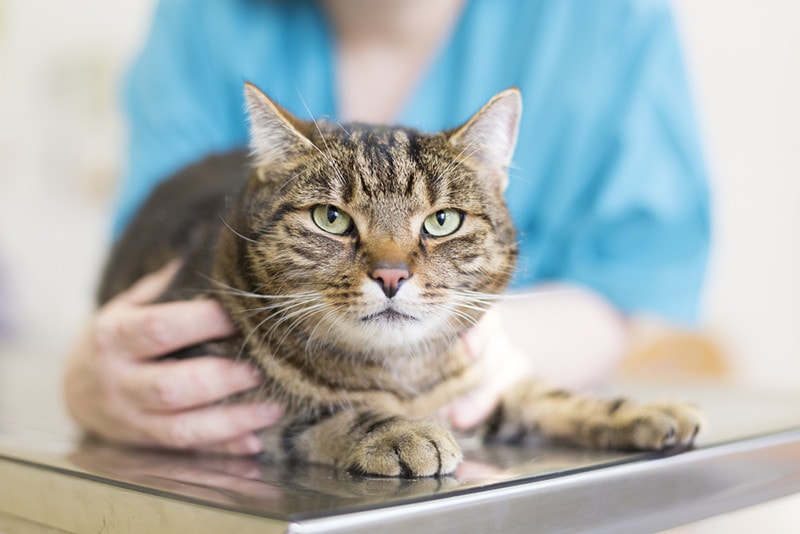
At the clinic, your veterinarian will perform a physical examination on your cat, including an eye and neurological exam, to determine the underlying cause of anisocoria. It may also be necessary to do blood tests to check for underlying systemic diseases that can be responsible, such as Feline Leukemia Virus (FeLV) and Feline Immunodeficiency Virus (FIV).
In some cases, referring your cat to a veterinary ophthalmologist may be necessary for further testing. Once your veterinarian has made a diagnosis, they'll discuss a treatment plan with you. The treatment depends on the underlying cause of the anisocoria.
Some causes of anisocoria, such as iris atrophy and iris hypoplasia, don’t require treatments, while other conditions require eye drops, pain medication, or antibiotics.
To ensure the best outcome for your cat, follow the treatment plan closely. Administer the prescribed medication at the correct times and take your cat for regular follow-ups as advised by your veterinarian.
Frequently Asked Questions (FAQs)
Can Anisocoria Cause Blindness?
Some conditions causing anisocoria, such as glaucoma, corneal ulcers, and uveitis, may result in blindness if left untreated.
Is Anisocoria Painful?
Anisocoria itself is not painful. However, some diseases causing anisocoria, such as trauma, uveitis, glaucoma, and corneal ulcers, can be painful.
What Is the Prognosis for Cats with Anisocoria?
The prognosis depends on the underlying cause of anisocoria. Some diseases are treatable, with affected cats fully recovering, while others require lifelong management. Unfortunately, some conditions causing anisocoria are life-threatening and carry a poor prognosis.

Final Thoughts
Anisocoria may be caused by several underlying conditions, ranging from minor to life-threatening. Without knowing the underlying cause of anisocoria, it’s impossible to know whether it’s an emergency or not.
For that reason, it’s best to err on the side of caution and seek urgent veterinary care if you notice that your cat’s pupils are different sizes.
Sources
https://www.dvm360.com/view/diagnosing-and-treating-hypertension-proceedings
Englar, R. E. (2019). Common Clinical Presentations in Dogs and Cats. (1st Edition). Wiley-Blackwell.
Available: https://www.amazon.com/Common-Clinical-Presentations-Dogs-Cats/dp/111941458Xhttps://www.amazon.com/Common-Clinical-Presentations-Dogs-Cats/dp/111941458X
Peiffer, R. L., Petersen-Jones, S. M. (2008). Small Animal Ophthalmology: A Problem-Oriented Approach. (4th Edition). Saunders Ltd.
Available: https://www.amazon.com/Small-Animal-Ophthalmology-Problem-Oriented-Approach/dp/0702028614
https://vcahospitals.com/know-your-pet/horners-syndrome-in-cats
https://www.vetlexicon.com/treat/felis/diseases/eye-iris-atrophy
Featured Image Credit: HNP, Shutterstock
Get Hepper In Your Inbox


Pet care tips from our vets and experts, straight to your inbox.
You may opt-out at any time. View our Privacy Policy for more information.
Lindsay is a veterinarian who lives in the beautiful city of Cape Town, South Africa with her husband and their rescue cat and dog, Harrison and Blizzard. Lindsay obtained her bachelor's degree in veterinary science from the University of Pretoria and currently works in small animal practice. When she’s not at work, you can find her out in nature, hiking with Blizzard, or following some kind of creative pursuit, such as writing, playing the piano or sewing.
Lindsay is a veterinarian living in Cape Town, South Africa with her husband and their rescue animals, Harrison and Blizzard. You can find her hiking with Blizzard, enjoying time in nature, or writing when she’s not working.
Education
Lindsay graduated from the University of Pretoria, receiving her bachelor's degree in veterinary science.
Experience
Lindsay currently works in small animal practice.
Join the conversation
Ask a question, share your story, or send private feedback.