Hepper is reader-supported. When you buy via links on our site, we may earn an affiliate commission at no cost to you. Learn more.
5 Best Aquarium Plants For Plecos in 2026 - Reviews & Top Picks
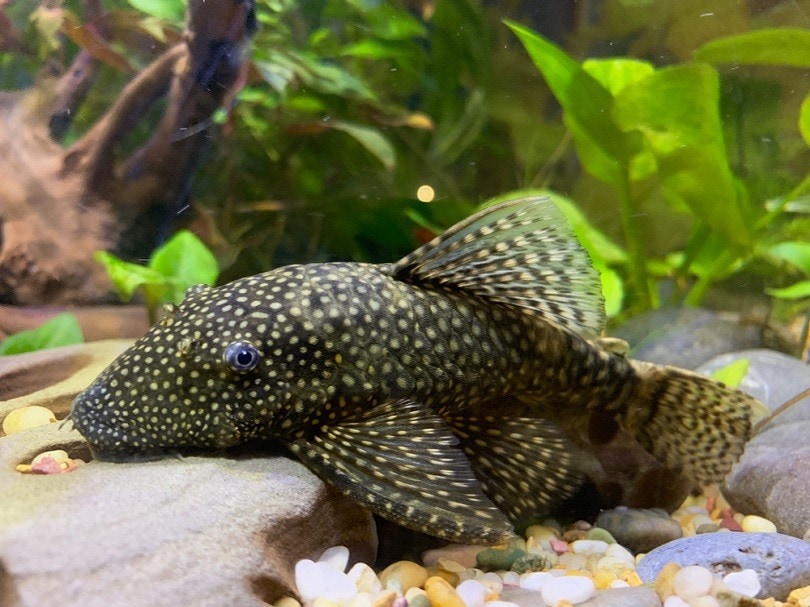
Plecos are cool and peaceful fish that won’t cause much trouble in a community tank. However, to create a suitable environment for plecos, there are some steps you need to take.
One of these steps is to ensure that your pleco tank has plenty of vegetation because they like to hide a lot and enjoy nibbling on plants, too. To ensure you select safe species for your tank, we'll discuss the best aquarium plants for your Plecos below.
In this article

A Quick Glance at Our Winners of 2026
| Rating | Image | Product | Details | |
|---|---|---|---|---|
Best Overall
 |
|
Amazon Sword |
|
Check Price |
 |
|
Anubias |
|
Check Price |
 |
|
Java Fern |
|
Check Price |
|
Jungle Vallisneria |
|
Check Price | |
|
Java Moss |
|
Check Price |
The 5 Best Aquarium Plants For Plecos
1. Amazon sword
| Care Level: | Easy |
| Light: | Medium |
| Substrate: | Sand or gravel |
| Goldfish Proof Score: | 90% |
| Water Purifying Score: | 60% |
Benefits
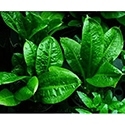
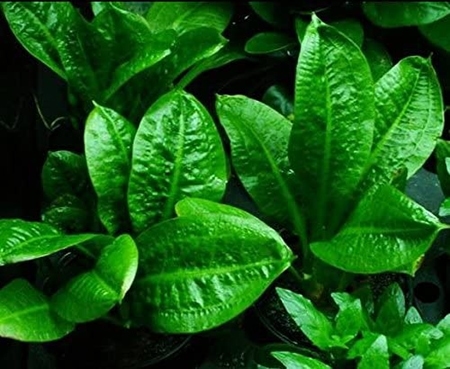
The Amazon sword plant is an excellent plant for your plecos. It is ideal for plecos because it has a moderate growth rate and features large, sword-like leaves. Plecos love to rest on leaves to sleep. They like to hide under leaves during the day, and they even like to nibble on Amazon sword plants. Due to its moderate growth rate, if you only have a couple of plecos, chances are they won’t be able to eat it faster than it grows.
The leaves of the Amazon sword plant can grow up to 16 inches high, making the leaves perfect hiding spots and sleeping grounds for the plecos. Amazon sword plants are relatively easy to care for, which is another bonus.
These plants must be planted in simple gravel substrate so their roots can take hold and properly develop. In terms of lighting needs, mild to moderate is fine, or in other words, a normal aquarium light should be adequate to sustain growth.
The water temperature for the Amazon sword plant needs to be between 60 and 84 degrees Fahrenheit, with a pH level between 6.5 and 7.5 and a water hardness level between 8 and 15 dGH. Regarding the best plants for plecos, the Amazon sword is definitely at the top of the list.
2. Anubias
| Care Level: | Easy |
| Light: | Medium |
| Substrate: | Sand or fine gravel |
| Goldfish Proof Score: | 90% |
| Water Purifying Score: | 70% |
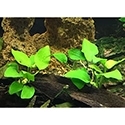
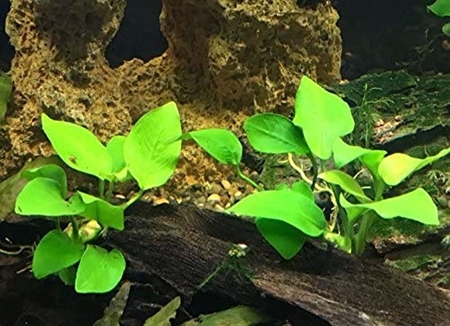
Anubias is another aquarium plant that is ideal in a Pleco tank. One of the reasons is that it can be planted in gravel substrate and attached to a rock or driftwood. As you should know, Plecos like driftwood, whether for hiding in or nibbling on, so having Anubias growing directly on driftwood is helpful.
Anubias do not grow very fast, nor do they get very large, but they have really broad leaves, which are ideal for Plecos to sleep on and to hide under.
Because of its slow growth, it is easy to care for in terms of trimming and maintenance. The Anubias will grow to around 7.5 inches tall, making it ideal for smaller aquariums.
At the same time, while you might be worried about your Pleco eating Anubias, they don’t seem to enjoy eating it. When it comes to caring for Anubias plants, they are simple to maintain, as they only need low to moderate lighting, and they do just fine without added CO2 injections.
Anubias plants require the water temperature to be between 72 and 82 degrees Fahrenheit, with a pH level between 6 and 7.5 and a water hardness level between 3 and 8 dGH.
3. Java fern
| Care Level: | Easy |
| Light: | Low to medium |
| Substrate: | Sand, gravel, & quartz |
| Goldfish Proof Score: | 90% |
| Water Purifying Score: | 60% |
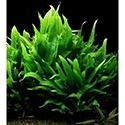
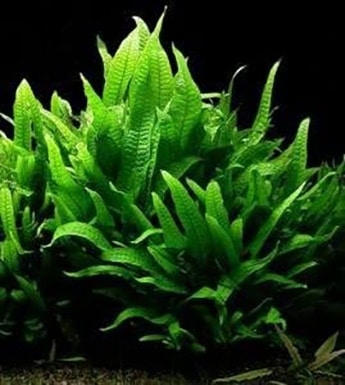
The Java fern is a rhizome divider, which means that it usually does best when tied to driftwood or a to rock, which is perfect for a Pleco tank because they like driftwood.
The Java fern features fairly long and slender green leaves, and it forms quite a thick bush, with the leaves growing to nearly 14 inches tall. The growth rate of this plant is moderate. Ferns provide your Plecos with great hiding spots and larger leaves to rest on. Thanks to its moderate growth rate, it is not the end of the world if your Plecos nibble on it.
The Java fern requires low to moderate lighting, which you can achieve with the most basic aquarium lights. Also, it thrives without CO2 injections. The water temperature for the Java fern must be between 68 and 82 degrees Fahrenheit, with a pH level between 6 and 7.5 and a water hardness level between 3 and 8 dGH.
4. Jungle Vallisneria
| Care Level: | Easy |
| Light: | Medium |
| Substrate: | Sand or fine gravel |
| Goldfish Proof Score: | 60% |
| Water Purifying Score: | 90% |
Benefits
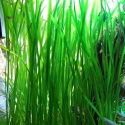
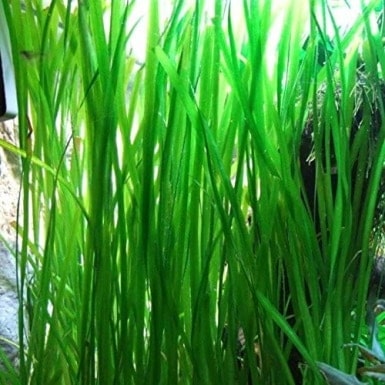
The main reason why Jungle Vallisneria is suitable for Plecos is that it has a pretty fast growth rate. It can grow over 6 feet tall, and it creates a thick forest of thin, long, and green leaves. It more or less resembles very tall and dense grass with fairly thick blades.
The advantage for Plecos is that it provides them with plenty of privacy and hiding spaces within the grass. It also grows fast and tall, and it is an ideal plant to nibble on without fear of the whole plant being eaten.
This plant grows fast, so it is recommended for larger tanks, or if you have a smaller tank, you will need to trim the Jungle Vallisneria properly.
In terms of care, Jungle Vallisneria is very hardy, resilient, and easy to care for. It thrives in bright light but can survive in lower light conditions. However, it doesn't grow quite as fast.
Moreover, you don’t need to inject CO2 into the water either. When it comes to water temperature, anywhere between 64 and 82 degrees Fahrenheit will do just fine, with a pH level anywhere between 6.0 and 9.0
5. Java Moss
| Care Level: | Easy |
| Light: | Medium |
| Substrate: | Not required (floating) |
| Goldfish Proof Score: | 90% |
| Water Purifying Score: | 50% |
Benefits
Plecos like soft surfaces for sleeping and thick vegetation to hide under, and they also like to nibble on many live aquarium plants.
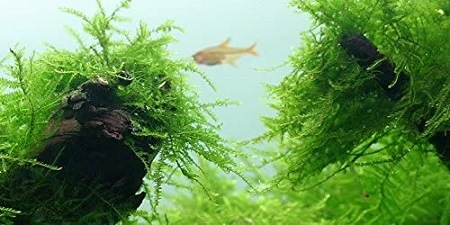
That makes Java moss perfect for the Pleco. Java moss does not grow very tall, a few inches at the most, but it quickly forms a wide carpet of tiny stems and what looks like miniature ferns.
Java moss likes to be attached to driftwood, other pieces of wood, and rocks. As long as the rhizomes can grab hold, they will grow pretty much everywhere and provide a good hiding and resting spot for your fish.
Java moss grows quickly, so if your pleco wants to eat it, it won’t even be able to eat the plant faster than it can grow back. It is also very easy to look after.
The water temperature must be between 59 and 86 degrees Fahrenheit, with a pH level between 5.0 and 8.0, and moderate lighting. Java moss tends to be one of the favorite plant-based snacks of the Pleco.

Buyer's Guide: Picking the Best Aquarium Plant For Plecos
Can Plecos Live With Live Plants?
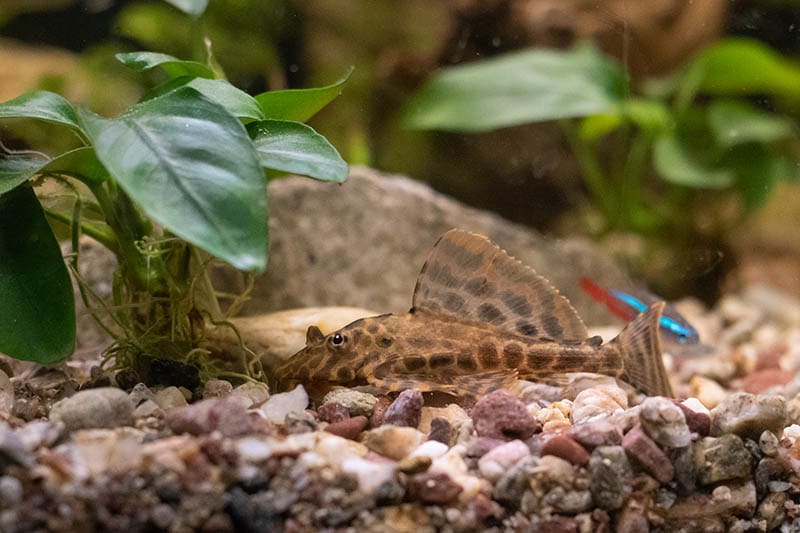
Plecos come from heavily vegetated waters, and they like the same in their home aquariums.
Plecos thrive in heavily planted aquariums. They are shy and enjoy their privacy, and with several plants, they'll have plenty of hiding spots.
They also like to rest on larger leaves to sleep, kind of like a bed. Furthermore, Plecos love to nibble on all sorts of plants and enjoy eating vegetation quite a bit. So, adding plants to your tank that the little guys can nibble and eat is also a great idea.
Why Driftwood Is Also Very Important For Plecos
Something else you also want to remember to add to your pleco tank is a couple of pieces of driftwood, preferably large driftwood with holes in it. Plecos like their privacy, which makes hollow driftwood an ideal choice for any Pleco tank. Moreover, they are known to nibble on driftwood.
Yes, eventually, you may need to replace old driftwood because it has been nibbled down to the point of barely existing, but that is not unusual for tanks with Pleco fish.
Our Aquarium Plant For Plecos Selection Process
When it comes to selecting products, Hepper has a committed team of writers and editors who work closely with licensed veterinarians to find the very best in today’s market. Together, they consider customer feedback, brand reputation, veterinary expertise, and whenever possible, hands-on testing. We aim to select and review the highest-quality products to help you make informed choices that meet both your and your pet’s needs.
Why Trust Hepper?
Since 2007, Hepper has been a trusted and growing online brand and resource with the edge of creating and retailing our own line of cat furniture, toys, and gear, and pet consumables, giving us valuable insights into how to choose aquarium plants. Our driven team of pet-loving writers, editors, and veterinarians is dedicated to empowering our readers to make the best decisions for their animal companions. Our priority lies in providing top-notch information and recommendations. Our team is genuinely invested in the health and well-being of all pets worldwide, believing that expert knowledge is crucial for achieving this goal.
Conclusion
Although you can add several aquatic plants to an aquarium, the species we discussed are ideal for Plecos. However, you may find other safe plants that provide cover and sustenance for your fish. Some plants need to be trimmed to prevent overcrowding, but the species you add that are eaten by Plecos do not require pruning. When you shop for aquarium plants, don’t forget the driftwood!
Featured Image Credit By: TTONN, Shutterstock
Get Hepper In Your Inbox


Pet care tips from our vets and experts, straight to your inbox.
You may opt-out at any time. View our Privacy Policy for more information.

Lindsey discovered her passion for fish keeping after a junior high school field trip to the Shedd Aquarium in Chicago. Prior to becoming Editor-in-Chief of It's a Fish Thing, Lindsey studied marine biology at the University of California-Santa Cruz. She loves goldfish, tetras, and mystery snails, and recently began experimenting with a saltwater aquarium.
Join the conversation
Ask a question, share your story, or send private feedback.