Hepper is reader-supported. When you buy via links on our site, we may earn an affiliate commission at no cost to you. Learn more.
Bernese Mountain Dog vs. Great Pyrenees: Differences Explained (With Pictures)
In this article
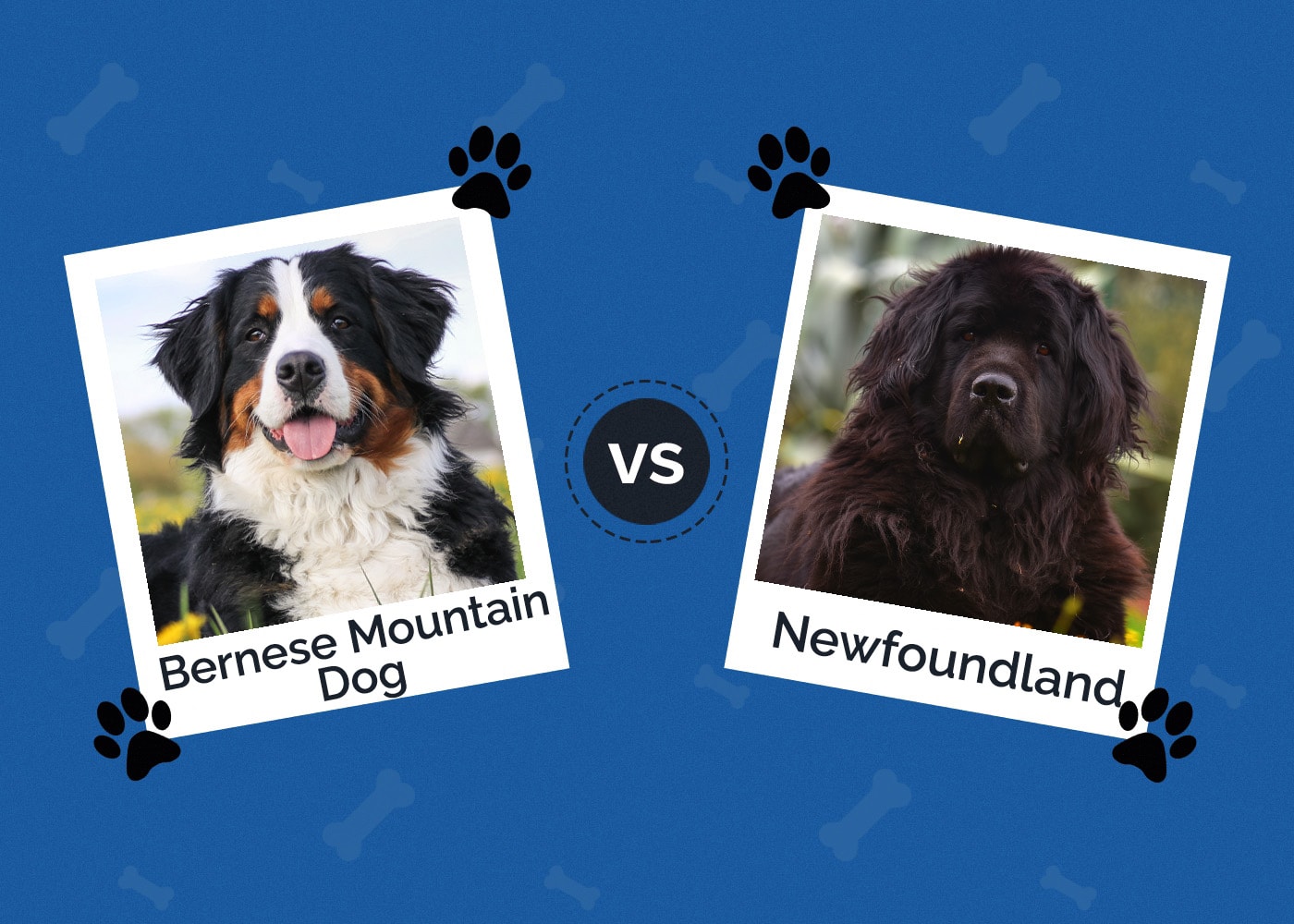
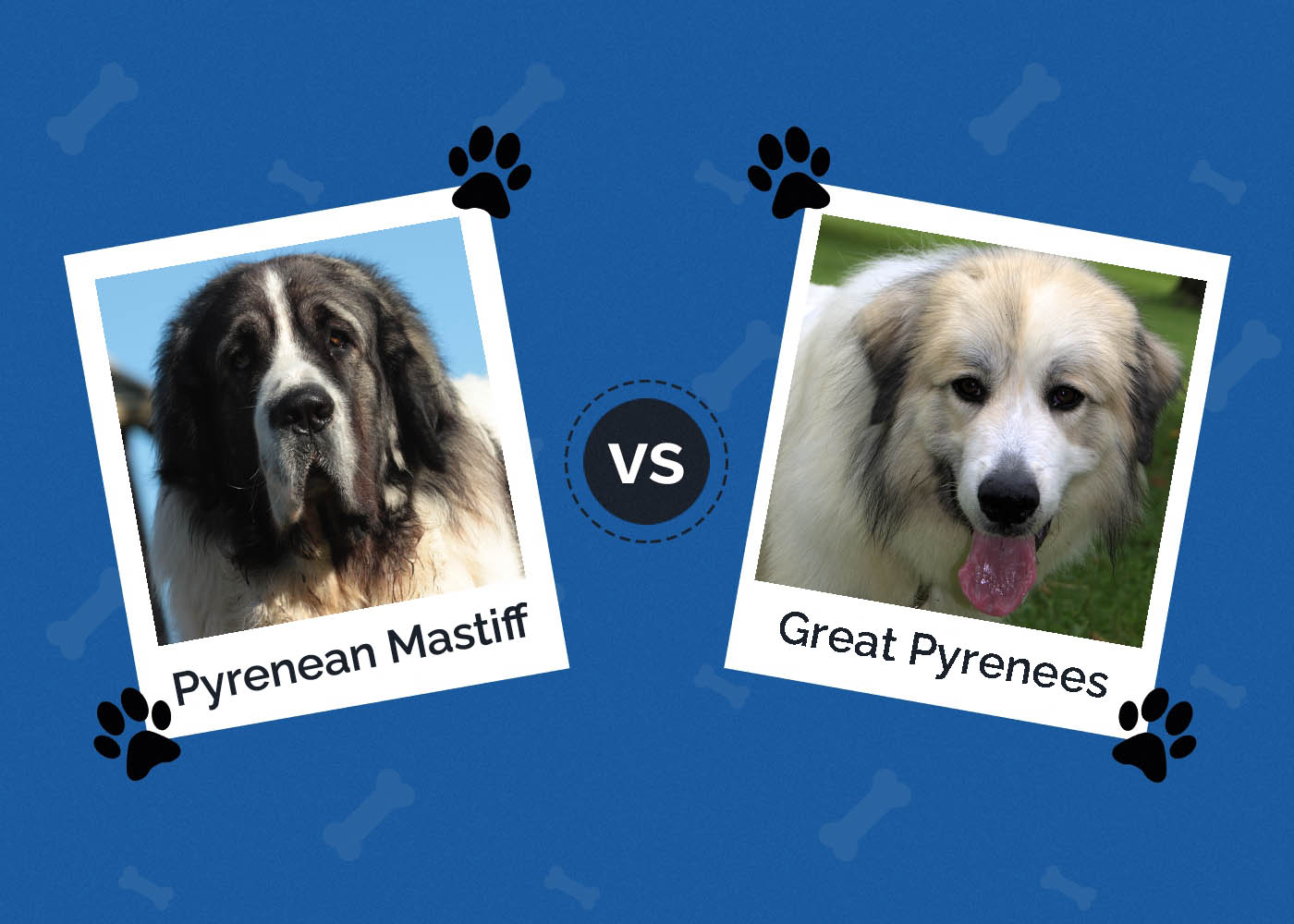
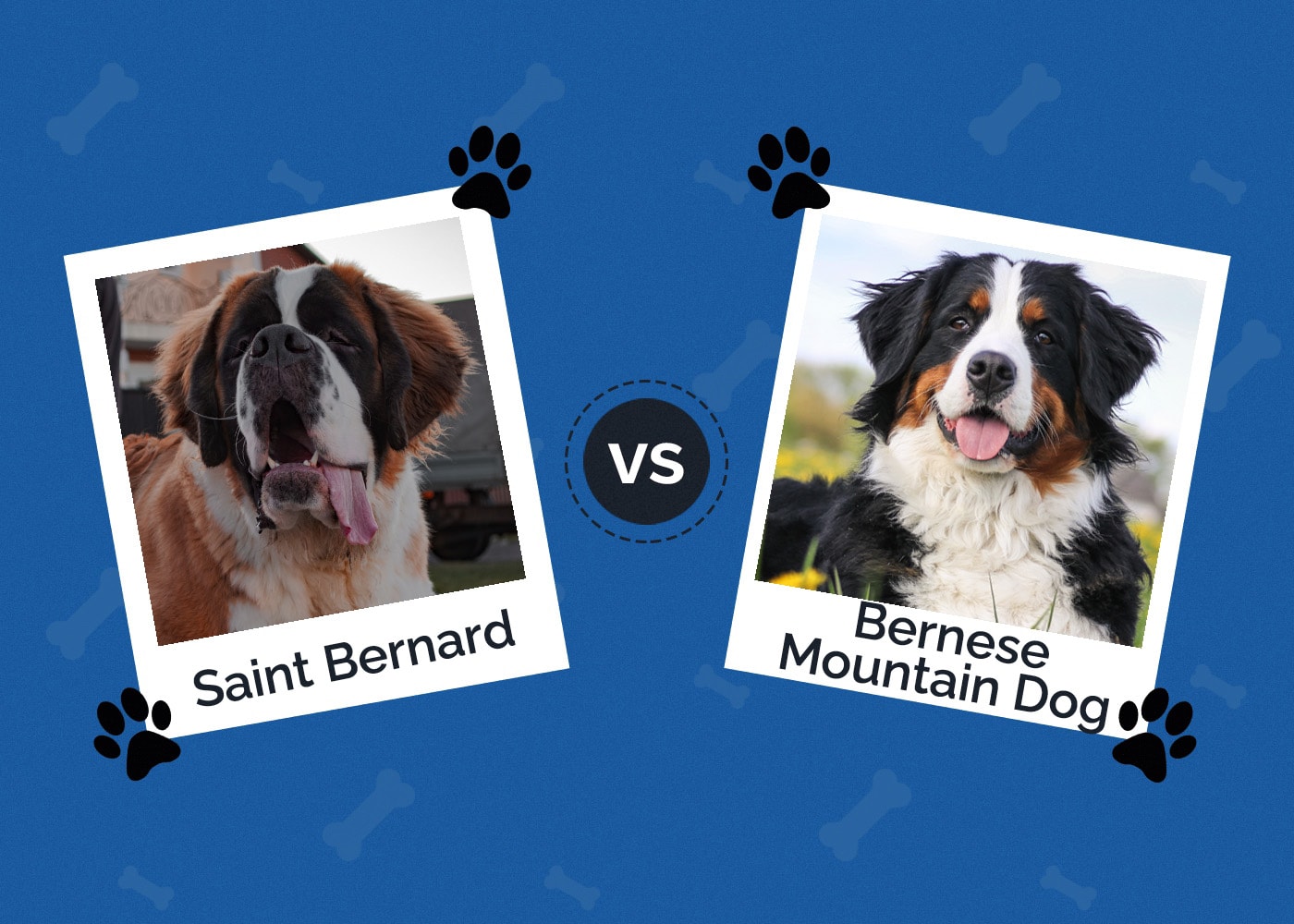
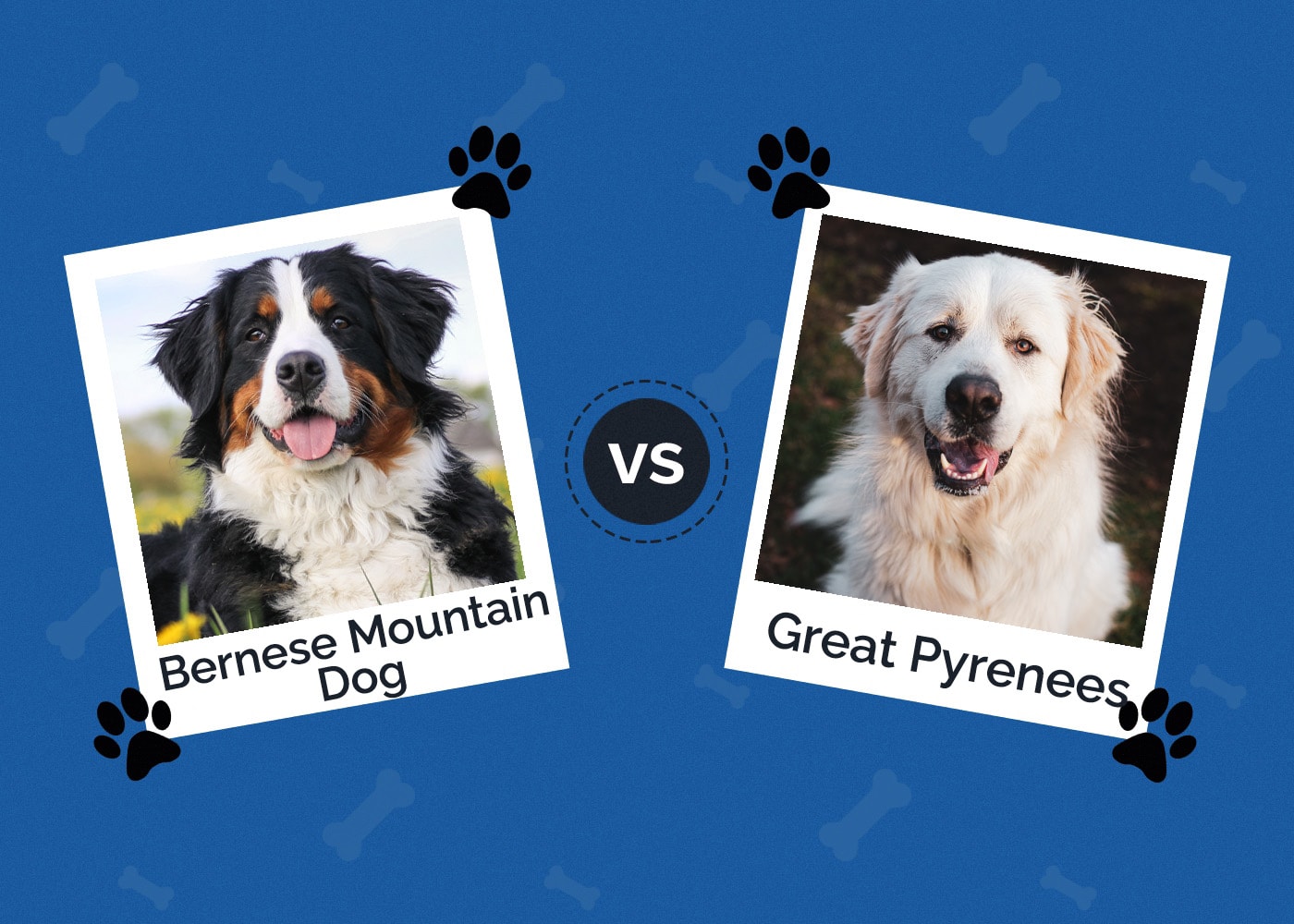
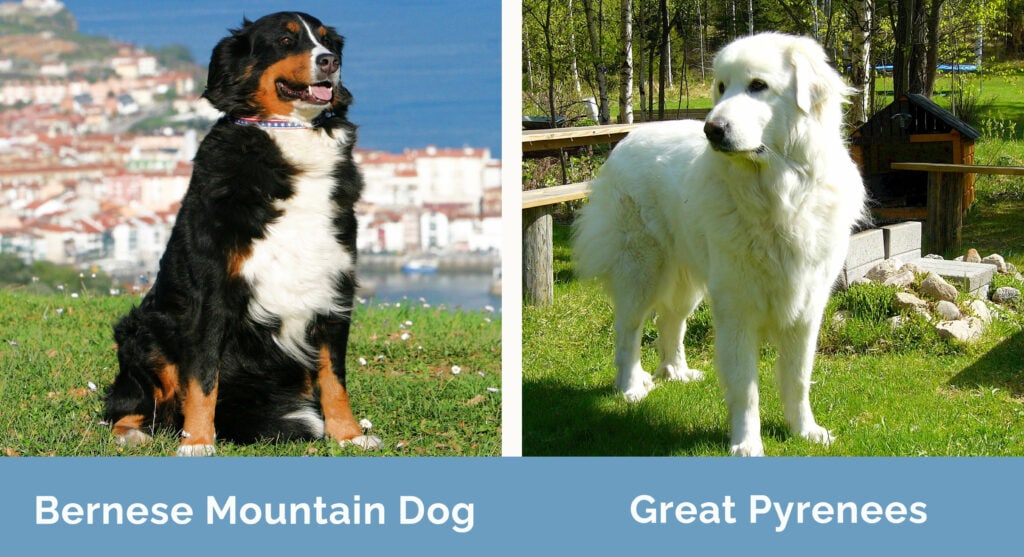
Large mountain dogs are considered the most similar in appearance when comparing dog breeds. In fact, the Bernese Mountain Dog simply looks like a different-colored Great Pyrenees.
These dogs are compared quite often as their differences are scarce. Some may even argue that their only difference is that one evolved in the Alps while the other developed in the Pyrenees Mountains.
However, when you pay attention to each breed’s temperament, training, health, diet, and breeding, you'll find that they are quite different. A family best suited for a Bernese Mountain Dog may not be ideal for a Great Pyrenees.
Keep reading to learn about these dogs’ similarities and differences to determine which is right for your home.

Visual Differences
At a Glance
Bernese Mountain Dog Overview
The Bernese Mountain dog is large, powerful, and bred to work hard. Still, their appearance can be stunning, and they may surprise you with their sweet and affectionate nature. These dogs tend to be even-tempered but won’t back down from a play fight with their owner.
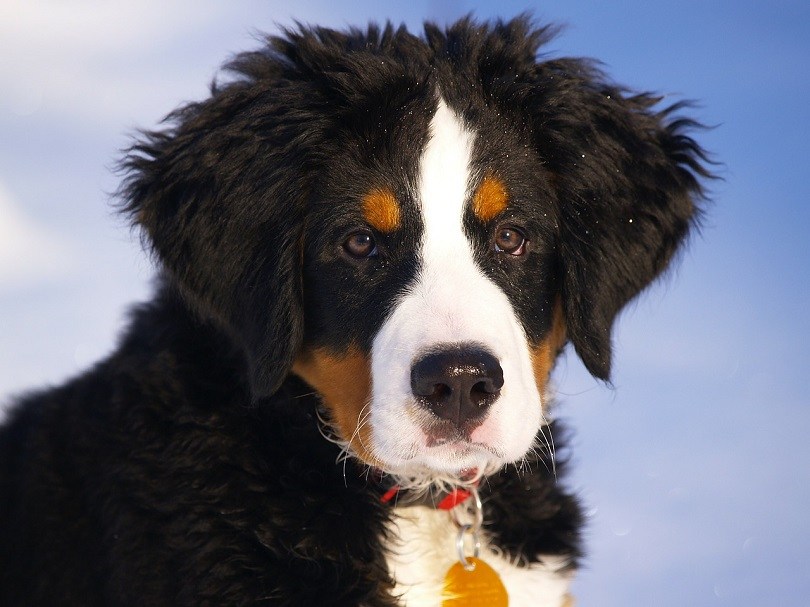
These loyal sturdy workers can stand 27 inches high, which can be enough to intimidate an intruder when needed. They have a thick, long, and silky coat in three standard colors: rust, white, and black.
These distinctive markings set the Bernese Mountain Dog apart from the Great Pyrenees. They have an intelligence level that puts them high on the list of the most intelligent dogs, adding to their majestic and noble aura.

Personality / Character
The Bernese Mountain Dog is an undeniably hardy animal, thriving in cold weather and staying relentlessly loyal. The intelligence and physical strength of these dogs have historically allowed them to multitask on Swiss pastures and farms.
Additionally, these dogs are known for being family-friendly, making sure to be gentle while playing with young children. In most cases, they become more attached to one lucky family member.
Bernese Mountain Dogs showcase protectiveness but do not get aggressive unless necessary. When it comes to strangers, they tend to maintain an aloof dignity instead of being too friendly or too hostile.
Diet
The ideal diet for your Bernese Mountain Dog is the correct quantity of high-quality dog food. You can also prepare dog food at home with the approval of your vet if you’re not a fan of commercially manufactured dog food.
Regardless of the dog’s stage in life, the diet requirements for a Bernese Mountain Dog are pretty flexible. Some dogs of this breed may be vulnerable to obesity, so it’s best to supervise their weight level and calorie consumption on a daily basis.
When training your Bernese Mountain Dog, leveraging treats can help you get faster results, but make sure not to give them too many. In terms of human food, you’ll need to do your research to find out what’s safe for your dog and what isn’t.
If you are concerned about your dog’s diet or weight, we recommend consulting your vet for a complete checkup. Lastly, your dog should have continuous access to clean and fresh water.
Training
All dogs require some level of obedience training and early socialization, but it’s especially crucial for large dogs like the Bernese Mountain breed. Luckily, these dogs are pretty intelligent and eager to please their owners, so training them can be a breeze.
Plus, they’re incredibly openhearted and affectionate, so it’s crucial to train them gently instead of opting for harsh procedures. A gentle reprimand should be enough to make them learn most manners.
More importantly, we don’t recommend leaving your Bernese Mountain Dog alone for long periods, as it can result in anxiety or undesirable behaviors.

Health & Care
Bernese Mountain Dogs don’t have too many severe health issues. If you buy from a responsible breeder, you can ensure that the dog has been screened for common health conditions, such as blood disorders, progressive retinal atrophy, hip/elbow dysplasia, or even cancer.
Since the Bernese Mountain Dog is a large breed, it’s somewhat vulnerable to bloating, which can evolve into a life-threatening condition. As a Bernese Mountain Dog owner, you’ll need to learn the symptoms of bloating and what to do to prevent the issue.
You should also check their ears regularly for infections and ensure clean teeth with the help of dog-safe toothpaste.
Breeding
When breeding a Bernese Mountain Dog, it’s worth noting that you’re putting the female counterpart’s life at risk. It’s not unheard of for female Bernese Mountain Dogs to die during or after birth, regardless of the vet’s and breeder’s expertise and care.
Of course, it can be devastating to lose a companion dog under such circumstances. Bernese Mountain Dogs are not the easiest to breed, as some breed naturally while others may face trouble bringing a healthy litter to its full term.
In some cases, they are bred but don’t end up giving birth as they may resorb the pups. In the worst-case scenario, they may give birth to puppies with severe congenital disabilities. So, it’s safe to say that pregnancy and delivery are complicated for a Bernese Mountain Dog.

Suitable For:
If your home is quite active and your family members are especially interested in outdoor activities and play, a Bernese Mountain Dog may be the ideal pet for you. They’ll also thrive if you live in a colder climate, but families in hotter areas can make it a better environment by providing shade and AC.
The best part about Bernese Mountain Dogs is that they’re great with kids, so they’ll spend a lot of time gently play-fighting with your children.
Pros
- Sweet, affectionate, and loving
- Friendly with strangers
- Great with kids
- Friendly with other dogs and animals
- Intelligent and easy to train
- Playful personalities
- Protective and faithful
Cons
- Training is crucial
- Short lifespan
- Various health concerns
- Doesn’t do well in hot climates
- Heavy shedders
- Need lots of space

Great Pyrenees Overview
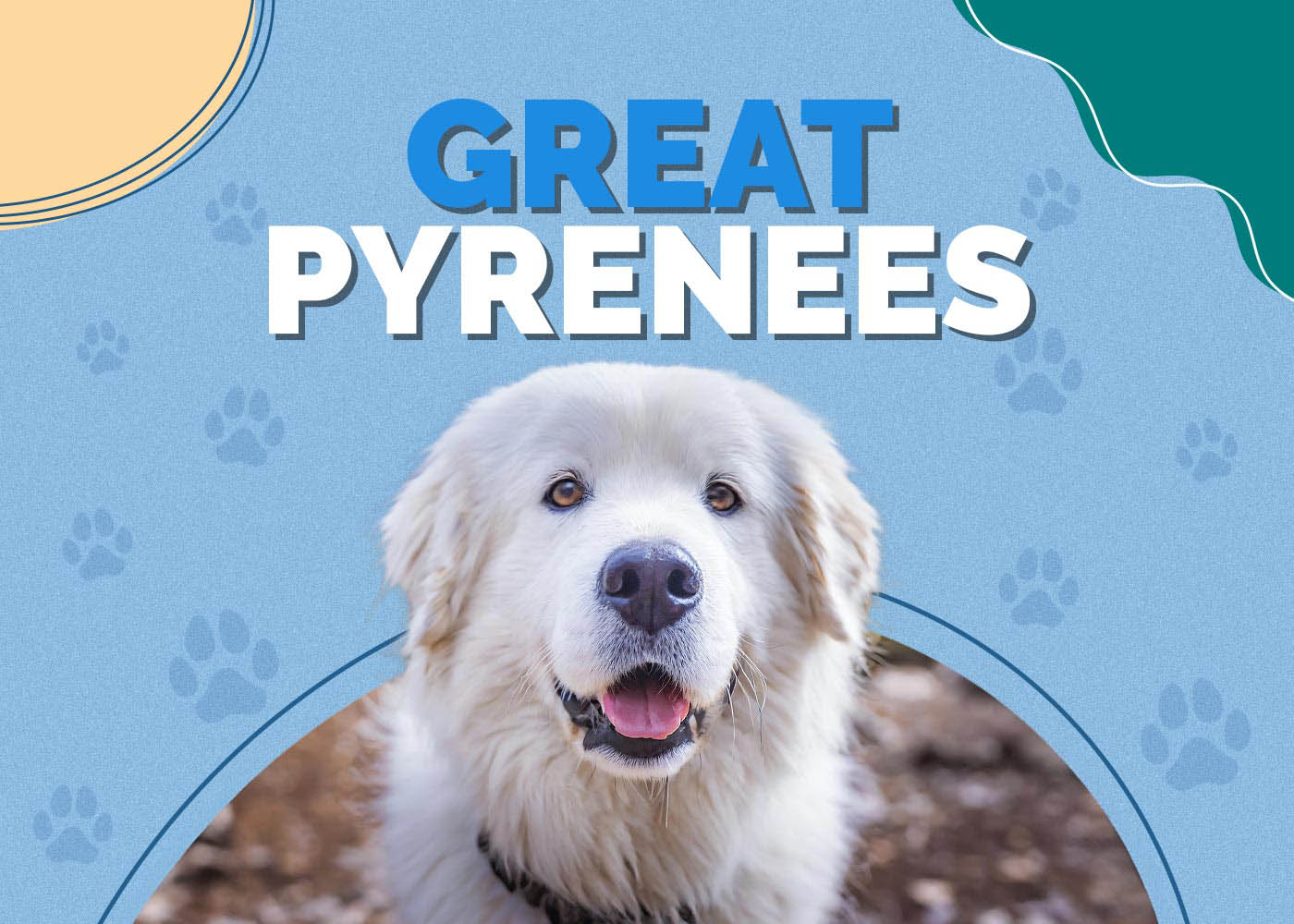
The Great Pyrenees are known for their large and thick coats and their powerful working abilities. These dogs were initially bred to deter predators and sheep-stealing wolves on the top of snowy mountains.
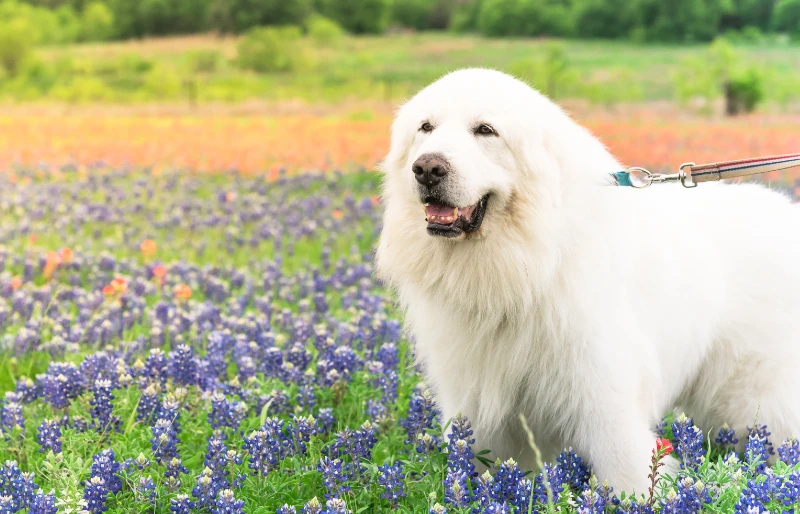
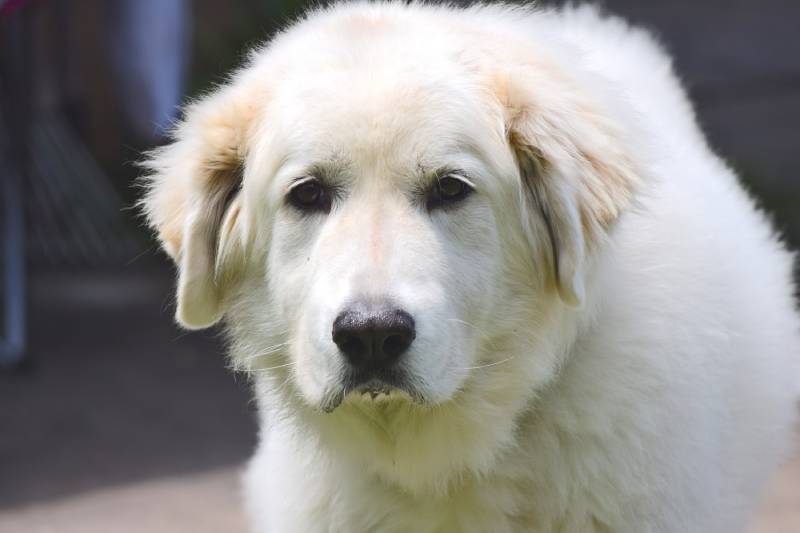
Pyrenees have a famously majestic aura with big and robust bodies standing up to 32 inches high. Plus, they can often weigh up to 100 pounds. Aside from being weatherproof, their lush coat is also entirely white. In some cases, it can be white with a few gray, tan, badger, or reddish-brown markings.

Personality / Character
The Great Pyrenees has a mellow yet vigilante temperament, making for a great companion while still protecting your home and family. These dogs typically showcase Zen behavior, but when threatened, they can spring into motion to display their protective mode.
Diet
According to most owners of the Great Pyrenees, these dogs tend to eat relatively less compared to other dogs of similar sizes. Of course, they’re still territorial over their food, so they’ll scarf down what’s left in their bowl before they opt for sharing with other dogs.
An adequate amount of low-protein, high-quality dry dog food is the ideal diet for these dogs, according to most experts. You must ensure that their food is specifically formulated for large breeds, or they may face issues like gastric dilatation-volvulus (GBV) or bloat.
In this condition, the dog’s stomach twists and distends, causing incredible pain due to unknown reasons. Experts suggest feeding them multiple small meals every day and avoiding vigorous exercise before and after mealtime.
Training
The Great Pyrenees is known for its independent thinking and ability to work without supervision. They’re great at protecting their flock, and their intelligence level allows them to train with ease.
Most importantly, they don’t enjoy staying, heeling, and sitting, so they’ll always appreciate having a task on hand. However, when they’re bored, they’ll definitely let you know with extremely slow responses.
Experts also recommend puppy training classes and early socialization for your Great Pyrenees to help them better adjust to their requirements.

Health & Care
If you find an ethical breeder, they’ll ensure that your Great Pyrenees don’t have any health issues. According to the Great Pyrenees Club of America, all dogs of this breed must be tested for the common health conditions they face.
That includes luxating patella, hip/elbow dysplasia, eye disorders, immune-mediated disorders, and neurological disorders. This breed may also be prone to cancer and bloat, which is a life-threatening condition causing the dog’s stomach to twist and distend.
As an owner of the Great Pyrenees, you must research the symptoms of bloat and keep an eye out for them.
Breeding
Breeding a Great Pyrenees is a sensitive procedure that requires expertise and careful consideration. This breed typically does not have genetic problems like other large breeds since their past breeders have responsibly picked their breeding pairs.
Without the careful and expert breeding of this dog, genetic problems will soon manifest in its offspring.

Suitable For:
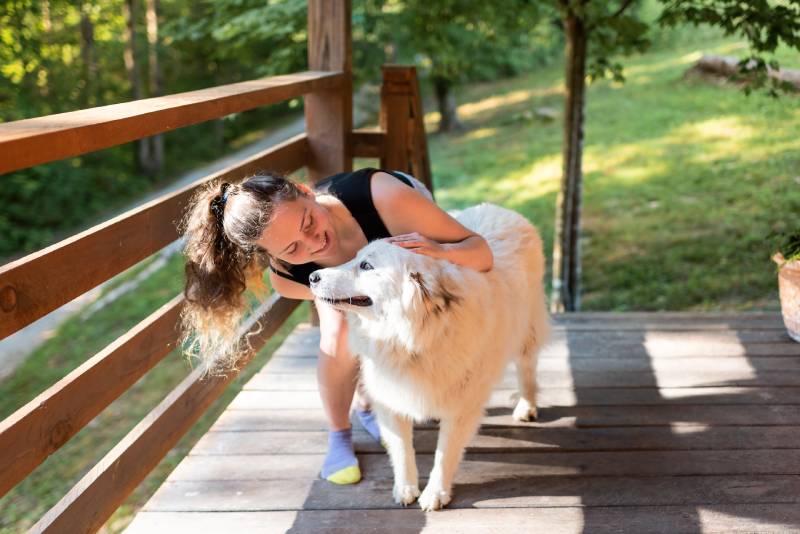
If you have some experience with parenting puppies, a Great Pyrenees will be an excellent pet for you. As long as you don’t mind heavy shedding and have enough time to devote to training, they can grow up to be great family pets.
Plus, they’re great with children and love running around on cool, open land.
Pros
- Great with families
- Devoted and loyal
- Only needs moderate exercise
- Serious and steady
- Will protect other animals in the family
- Easy-going temperament
Cons
- Can be destructive
- Bark a lot
- Heavy shedders
- Take up a lot of space
- Deep, booming barks
- Require supervision
- Aggression toward other animals

Which Breed Is Right for You?
The main similarity between these breeds is their size, as they’re both pretty large. This means they’re not an ideal fit for those living in small or cramped spaces. Additionally, their susceptibility to bloat and cancer requires detailed attention to their diet and training.
If you don’t have prior experience with taking care of dogs, a Bernese Mountain Dog may be a better option since they’re relatively low-maintenance and well-behaved. Meanwhile, the Great Pyrenees can be pretty independent and stubborn, so you can’t trust them to behave when you’re not around.
Additionally, both dogs are great at protecting their families and properties since they have loyal and vigilant natures. But the Great Pyrenees tend to be more aggressive and hostile toward strangers, so they can protect you from a potential attack.
Featured Image Credit: (L) Eve Photography, Shutterstock | (R) Beatrice Foord-St-Laurent, Shutterstock
Get Hepper In Your Inbox


Pet care tips from our vets and experts, straight to your inbox.
You may opt-out at any time. View our Privacy Policy for more information.

Jeff is not only a writer but also a tech professional with lots of experience leading teams at various Fortune 100 startups. Jeff's hobby is photography but his real passion are his pets, whom he loved to spend time with.
Join the conversation
Ask a question, share your story, or send private feedback.