Hepper blog

Search our database of over 9,984 posts with up-to-date information from our experts and veterinarians.

Hepper is reader-supported. When you buy via links on our site, we may earn an affiliate commission at no cost to you. Learn more.

Can Bearded Dragons Eat Worms? Vet-Approved Facts & FAQ

By Chantelle Fowler · Reviewed & fact-checked by Dr. Amanda CharlesVet Approved
Dr. Amanda Charles
Reviewed & Fact-Checked byDr. Amanda CharlesVeterinarian
Dr. Amanda Charles qualified as a vet in 2002 after graduating from the University of Liverpool and has been in small animal practice ever since. She has a postgraduate Certificate in Dermatology. She loves empowering pet parents by giving them up-to-date and accurate information and thrives off the variety that being a vet brings.Outside of work, Amanda has two very active young sons and an equally active Cocker Spaniel and Ragdoll cat, all of whom keep her very busy!View authorThe information is current and up-to-date in accordance with the latest veterinarian research. Read about our vets
Share
Ask us a question in the comments
Can Bearded Dragons Eat Worms? Vet-Approved Facts & FAQ

As omnivores, bearded dragons need both plant and animal-based foods like insects. If you’re searching for the best source of protein for your dragon, you may wonder whether worms are a suitable option.

Bearded dragons can definitely eat worms; many are so nutritious that they can be offered as a staple. However, not all worms are healthy for reptiles. Read on to find out what worms are great feeder insects, which worms to avoid, and which to use only as treats.

What Worms Can Bearded Dragons Eat?

Your beardie can eat several different species of worms, but not all are appropriate for every bug feeding.
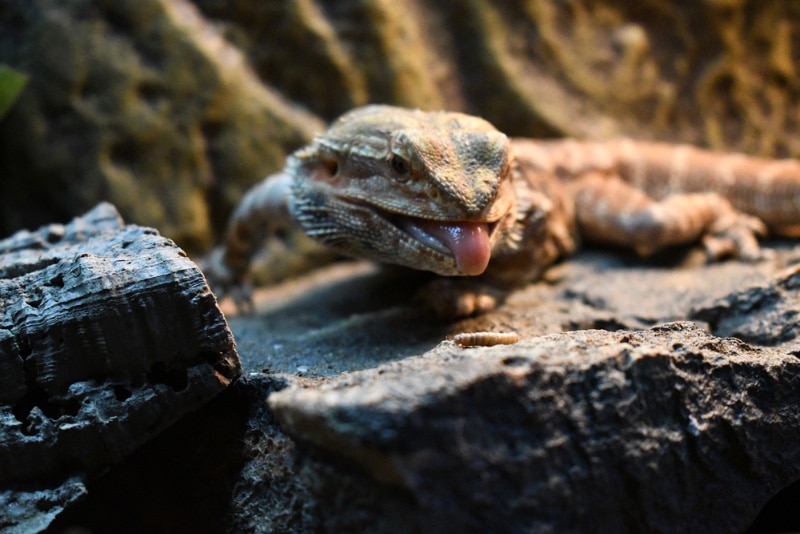
bearded dragon eating a mealworm
Image Credit: Madison Lickiss, Shutterstock

Best Staple Worms

  • Black soldier fly larvae (BSFL), also known as phoenix worms, contain the perfect balance of calcium to phosphorus, so you don’t need to dust these guys with any supplement before feeding. They can be stored at room temperature or in the fridge if you want them to last longer. If storing them in the refrigerator, keep them in the door or use a wine cooler to ensure the temperature isn’t too cold.
  • Hornworms are bright green insects that can entice even the pickiest beardie to eat his protein. They’re rich in calcium and can be big and juicy, giving your dragon the hydration he needs. Because they’re low in fat and have little to no exoskeleton, they’re easy to digest. However, beardies fed too many hornworms may experience runny stools due to the high water count. For this reason, we don’t recommend relying solely on hornworms to meet your beardie’s protein needs.
  • Silkworms are a great source of essential amino acids and polyunsaturated fat. They’re a great source of calcium and can be grown to your desired size. The silkworm’s soft body is easy to swallow and digest. They’re pretty easy to care for as they can live without food for a week and a month or longer if provided food.

Best Treat Worms

  • Superworms are high-fat worms chock full of protein and other nutrients your reptile needs. They are best suited as a treat for adult beardies only. Their tough exoskeleton can make digestion tough for baby and juvenile beardies and may pose an impaction risk.
  • Butterworms are high in protein but also in fat. They’re great as an occasional treat for both adult and baby beardies but shouldn’t be used as a staple.
  • Waxworms are another high-fat insect that shouldn’t be a staple in your pet’s diet. Your beardie is likely to love them, so keep some on hand for the occasional treat.
  • Mealworms are a safe treat for adult beardies, but they shouldn’t be given to hatchlings or juveniles due to their high-fat content and phosphorus levels. We recommend dusting them with a calcium powder before feeding.
  • Red Wigglers are small worms closely related to earthworms. They’re often used for composting as they can supplement soil with castings and have great aerating skills. They’re high in protein and lower in fat than other worms but don’t offer much in terms of nutritional value other than that.
  • Earthworms aren’t toxic, but most beardies don’t particularly care for their taste. Additionally, they’re high in fat and carry parasites that can make your lizard ill, especially if you offer wild-caught earthworms.
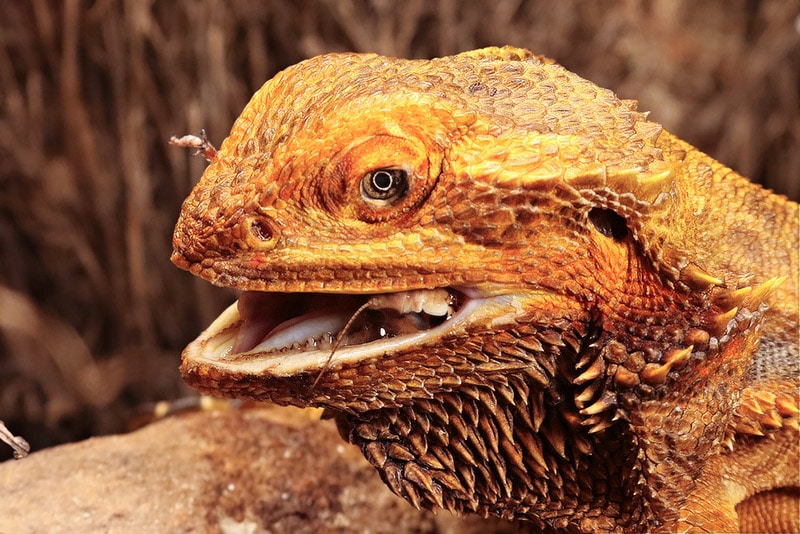
bearded dragon eating an insect
Image Credit: Jan Hejda, Shutterstock

What Worms Should I Not Feed My Bearded Dragon?

You should never offer any wild-caught worms to your bearded dragon. This is true even if you find wild versions of the safe staple worms mentioned above. Wild worms may carry parasites or be contaminated with harmful chemicals such as fertilizers and pesticides that can harm or even kill your beardie.

How Often Should Beardies Be Fed?

The frequency you feed your beardie will depend entirely on his age. It’s always best to consult with your vet to formulate the best diet plan for your pet but as a rough guide:

  • Hatchlings (between zero to six months) should be offered insects twice a day and a nutritious salad daily.
  • Juveniles (between six and 12 months) should get insects once a day and a nutritious salad daily.
  • Adults (older than 12 months) should only get insects between one and three times per week and, you guessed it, a nutritious salad daily.

As your beardie ages, you may find he is less inclined to eat his protein, much preferring his salads. This is normal, as adult dragons don’t need as much protein or calories from insects when they’re older.
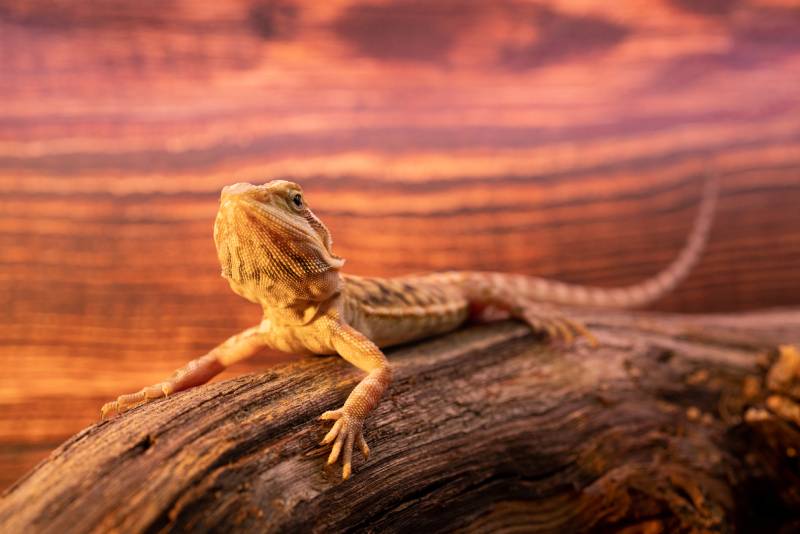
leatherback translucent bearded dragon
Image Credit: Tenshi, Shutterstock

How Many Insects Should My Beardie Get?

We can’t provide you with an exact number of bugs to feed as it depends entirely on several factors, including how big the bugs are, what bugs you’re feeding, and your beardie’s age.

A good rule of thumb is to offer your dragon as many bugs as he can eat within five to ten minutes. After this time, remove the leftovers and save them for the next feeding.

What Other Insects Are Good for Bearded Dragons?

Worms aren’t the only insects you should be feeding your beardie. The following bugs are also great feeders you can offer alongside the ones we mentioned above:

Remember, variety is the spice of life, not only for your diet but for your dragon’s, too. So make sure you’re switching up the feeder insects you’re offering to keep him interested in his protein!

Conclusion

The right worms can be a healthy part of your bearded dragon’s diet. Try to choose worms from the staple insect lists above, and only use fattier options like superworms, waxworms, and butterworms sparingly. These bugs are too high in fat to be offered too often as they can contribute to obesity and its related health problems.

Sources

Featured Image Credit: Jozsef Dotzi, Shutterstock

Get Hepper In Your Inbox

Pet care tips from our vets and experts, straight to your inbox.

List

Select all that apply.

You may opt-out at any time. View our Privacy Policy for more information.

Chantelle Fowler
Authored by

Chantelle Fowler

Join the conversation

Ask a question, share your story, or send private feedback.
Rate this post
Required to post. Only our editors see your rating.
Who should see this?

A human reviews every comment before it appears. Your email is never published.

Picked to go with this article

Can Bearded Dragon Eat Mealworms? Vet-Reviewed Nutrition Facts & FAQ

Can Bearded Dragon Eat Mealworms? Vet-Reviewed Nutrition Facts & FAQ

Bearded dragons are omnivores, meaning they need a diet of both plant and animal (insect) material. You have probably seen several types of insects at your loc…

Chantelle Fowler
By Chantelle Fowler ·
Can Bearded Dragons Eat Superworms? Vet-Approved Feeding Facts

Can Bearded Dragons Eat Superworms? Vet-Approved Feeding Facts

Ever watch your bearded dragon eye a wriggly superworm in sheer anticipation? It's a sight that'll make you chuckle! After all, mealtime should always be an ex…

Melody Russell
By Melody Russell ·
Can Bearded Dragons Eat Wax Worms? Vet-Approved Nutrition & Alternatives

Can Bearded Dragons Eat Wax Worms? Vet-Approved Nutrition & Alternatives

Can bearded dragons munch on wax worms? The answer is yes, bearded dragons can eat wax worms, but as you keep scrolling, you will realize that the answer is st…

Melody Russell
By Melody Russell ·
What Do Bearded Dragons Eat as Pets? Vet Reviewed Diet

What Do Bearded Dragons Eat as Pets? Vet Reviewed Diet

Bearded Dragons are omnivorous, meaning they consume a mixture of animal protein and veggies. In the wild, the exact animals and veggies the Bearded Dragons wo…

Kristin Hitchcock
By Kristin Hitchcock ·

Keep reading

More stories you might like

Can Bearded Dragons Eat Hornworms? Vet-Approved Nutrition Guidelines

Bearded Dragons are great pets, but sometimes it’s hard to determine what you need to feed your bearded friend. If you’ve been wondering if they can eat hornwo…

Patricia Dickson
By Patricia Dickson ·
Can Bearded Dragons Eat Hornworms? Vet-Approved Nutrition Guidelines

How Many Crickets to Feed a Baby Bearded Dragon: Vet-Reviewed Nutrition & Feeding Guide

Bearded dragons are omnivores, which means they consume plant- and animal-based foods. However, baby bearded dragons need more animal-based foods because these…

Visnja Radosavljevic
By Visnja Radosavljevic ·
How Many Crickets to Feed a Baby Bearded Dragon: Vet-Reviewed Nutrition & Feeding Guide

Can Bearded Dragons Eat June Bugs? Vet-Reviewed Facts & Diet Tips

A portion of a bearded dragon’s diet needs to consist of live insects. Commonly, this includes Dubia roaches and crickets, while mealworms and superworms are c…

Nicole Cosgrove
By Nicole Cosgrove ·
Can Bearded Dragons Eat June Bugs? Vet-Reviewed Facts & Diet Tips

Can Bearded Dragons Eat Nightcrawlers? Vet-Reviewed Nutrition Facts & FAQ

At first glance, nightcrawlers look like they could be the perfect food for Bearded Dragons. They are large and fat and usually cheap. But can Bearded Dragons…

Grant Piper
By Grant Piper ·
Can Bearded Dragons Eat Nightcrawlers? Vet-Reviewed Nutrition Facts & FAQ

Can Bearded Dragons Eat Cockroaches? Vet Approved Facts & Safety Guide

As the owner of a bearded dragon, one of your main tasks after creating a safe home for your pet is feeding the right food. Since these lovely lizards mainly e…

Gregory Iacono
By Gregory Iacono ·
Can Bearded Dragons Eat Cockroaches? Vet Approved Facts & Safety Guide

Can Bearded Dragons Eat Darkling Beetles? Vet-Verified Diet Facts & FAQ

Bearded Dragons are omnivores that need a diet combining animal and plant matter. Typically, this means feeding live insects as well as fresh greens. Typical i…

Nicole Cosgrove
By Nicole Cosgrove ·
Can Bearded Dragons Eat Darkling Beetles? Vet-Verified Diet Facts & FAQ

Can Bearded Dragons Eat Rolly Pollies? Vet-Approved Facts & Healthy Alternatives

Bearded dragons are omnivores, and fairly easy to please in the food department. They enjoy a wide range of vegetables and insects, but what about rolly pollie…

Kit Copson
By Kit Copson ·
Can Bearded Dragons Eat Rolly Pollies? Vet-Approved Facts & Healthy Alternatives

Can Bearded Dragons Eat Beetles? Vet-Approved Feeding Facts

Bearded dragons are omnivores that as adults need a diet consisting primarily of vegetables with some insect protein. Most lizards that eat invertebrates will…

Chantelle Fowler
By Chantelle Fowler ·
Can Bearded Dragons Eat Beetles? Vet-Approved Feeding Facts