Hepper blog

Search our database of over 9,984 posts with up-to-date information from our experts and veterinarians.

Hepper is reader-supported. When you buy via links on our site, we may earn an affiliate commission at no cost to you. Learn more.

Can Bearded Dragons Eat Olives? Vet-Approved Feeding Facts

By Chris Dinesen Rogers · Reviewed & fact-checked by Dr. Karyn KanowskiVet Approved
Dr. Karyn Kanowski
Reviewed & Fact-Checked byDr. Karyn KanowskiVeterinarian
Karyn has lived in the UK for the past 10 years after moving from Queensland, Australia. In 2010, she graduated from The University of Queensland School of Veterinary Science, and also holds a Bachelor’s degree in Zoology. Karyn is passionate about using evidence, experience, and owner collaboration to provide the best solutions for pets, and believes in making reliable information about animal health accessible to all. She shares her home with 5 cats, 4 dogs, and 1 husband, and when she is not practising as a veterinary surgeon, she spends her time writing, gardening, and cleaning up pet hair!View authorThe information is current and up-to-date in accordance with the latest veterinarian research. Read about our vets
Share
Hepper_Can Bearded Dragons Eat_Olives

Juvenile bearded dragons typically eat a diet heavy in insects to provide them with the necessary protein and other nutrients to support growth and development. As they mature, the proportion of animal-based foods shifts from 80% to around 50%. The other 50% needs to be made up of mostly leafy greens, with some vegetables and a small amount of fruit. Olives are safe to offer your bearded dragon as an occasional treat, but there are better options.

The Nutritional Value of Olives

There’s no denying the nutritional value of the humble olive. They form a central part of the Mediterranean diet, which is considered to be one of the healthiest on the planet, offering significant benefits—for people.

Olives and Fat

Olives are around 10% fat, which compared to some of the other foods they eat, is actually quite low. Plus, it’s one of the “good” types; monounsaturated fat, which in humans, can have positive effects on cardiovascular health. However, the daily diet of a bearded dragon should only consist of around 3–6%  fat. Being that around half of a bearded dragon’s diet comes from eating live foods like crickets and mealworms, which are approximately 30% fat, anything on top of this is completely unnecessary.
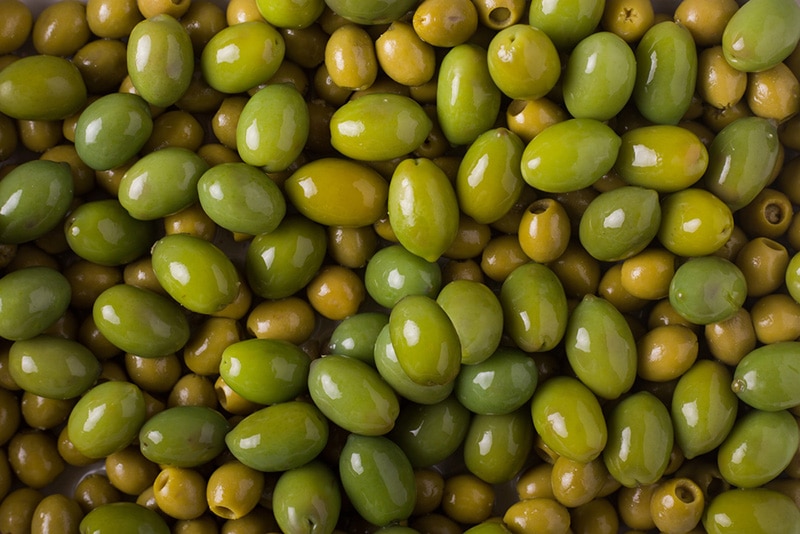
olives close up
Image Credit By: Avdeyukphoto, Shutterstock

Olives and Sodium

Bearded dragons only require around 0.2% sodium in their diet. Olives are particularly high in sodium, which is what appeals to those who enjoy eating them! But a lot of sodium for a small creature like a bearded dragon can be dangerous, potentially causing dehydration and electrolyte imbalances.

The Calcium-to-Phosphorus Ratio

An important consideration when selecting any food for your bearded dragon is the ratio of calcium (Ca) to phosphorus (P). Calcium is essential for bone and muscle health and development, and deficiencies can lead to serious, if not fatal, complications. Phosphorus will bind calcium, preventing it from getting where it needs to go, so if a food contains more phosphorus than calcium, this essentially cancels out the calcium content. Therefore, it is important to feed your beardie foods that have a Ca:P of at least 1.5:1. Ratios of 2:1 or greater are ideal.

With a ratio of approximately 29:1, olives excel on this particular front.

What’s The Verdict?

Nutritionally speaking, if you feel so compelled, you can safely offer your bearded dragon a small amount of olives on rare occasions. No more than one olive per month, pit removed, cut into bite-sized pieces. But if you are looking for some better options to offer your bearded dragon as a treat, take a look at the comparisons below to see why, despite their favorable Ca:P, olives aren’t a great choice.

per 100gOlivesPapayaBlackberriesStrawberries
Fat11g0.26g0.49g0.22g
Sodium735mg8mg1mg<2mg
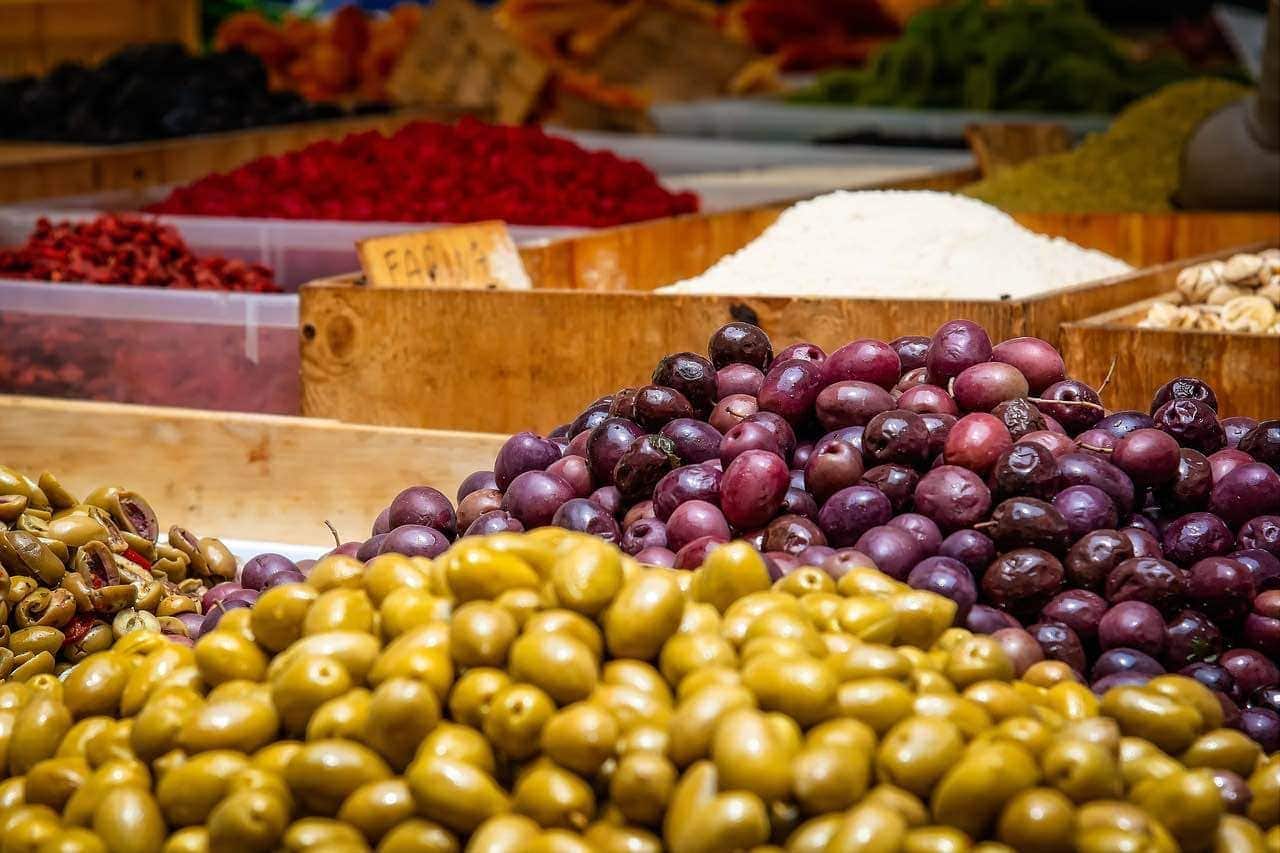
olives
Image Credit: Peter H, Pixabay

Final Thoughts

Bearded dragons evolved to be able to consume a wide variety of foods as a survival strategy. These lizards likely won’t encounter high-fat, plant-based foods in the wild and have not made the adaptive shift to digest them.

While olives are not poisonous to your pet, the high fat and sodium content make a solid case to restrict them to special treats. As always, introduce new foods slowly and observe your pet’s reaction before offering them again.

See Also: 

Sources

Featured Image Credit: michaelmep, Pixabay

Get Hepper In Your Inbox

Pet care tips from our vets and experts, straight to your inbox.

List

Select all that apply.

You may opt-out at any time. View our Privacy Policy for more information.

Chris Dinesen Rogers
Authored by

Chris Dinesen Rogers

Join the conversation

Ask a question, share your story, or send private feedback.
Rate this post
Required to post. Only our editors see your rating.
Who should see this?

A human reviews every comment before it appears. Your email is never published.

Picked to go with this article

Can Bearded Dragons Eat Blackberries? Vet-Approved Nutritional Facts & FAQ

Can Bearded Dragons Eat Blackberries? Vet-Approved Nutritional Facts & FAQ

Bearded dragons are popular pet lizards that are best known for their namesake beards (which are very prominent in males). When it comes to being a responsible…

Sarah Psaradelis
By Sarah Psaradelis ·
What Do Bearded Dragons Eat as Pets? Vet Reviewed Diet

What Do Bearded Dragons Eat as Pets? Vet Reviewed Diet

Bearded Dragons are omnivorous, meaning they consume a mixture of animal protein and veggies. In the wild, the exact animals and veggies the Bearded Dragons wo…

Kristin Hitchcock
By Kristin Hitchcock ·
Can Bearded Dragons Eat Cranberries? Vet Approved Nutrition Advice

Can Bearded Dragons Eat Cranberries? Vet Approved Nutrition Advice

Bearded Dragons are incredible companions; if you have owned one, we're sure you will agree. But if you're new to the world of reptiles and still have more to…

Oliver Jones
By Oliver Jones ·
What Type of Fruit Can Bearded Dragons Eat? Vet-Approved Treats

What Type of Fruit Can Bearded Dragons Eat? Vet-Approved Treats

Feeding your bearded dragon isn’t like feeding a cat or dog. It has very particular dietary needs, and they don’t sell canned beardie food at the pet store to…

Chantelle Fowler
By Chantelle Fowler ·

Keep reading

More stories you might like

Can Bearded Dragons Eat Grapes? Vet-Approved Benefits & Risks

Grapes are a delicious, widely available treat for humans, but can bearded dragons eat grapes? They can, but they should be limited to treats as part of a bala…

Nicole Cosgrove
By Nicole Cosgrove ·
Can Bearded Dragons Eat Grapes? Vet-Approved Benefits & Risks

Can Bearded Dragons Eat Asparagus? Our Vet Answers

Asparagus isn’t for everyone, but if you love it, you may wonder if you can share it with your reptilian friend. While asparagus is safe for bearded dragons, i…

Dr. Luqman Javed
By Dr. Luqman Javed ·
Can Bearded Dragons Eat Asparagus? Our Vet Answers

Can Bearded Dragons Eat Peas? Vet Approved Facts & Feeding Tips

It's no secret that Bearded Dragons enjoy a nice, juicy insect. However, they can also snack on a medley of Beardie-safe fruits and vegetables. If you're looki…

Ashley Bates
By Ashley Bates ·
Can Bearded Dragons Eat Peas? Vet Approved Facts & Feeding Tips

Can Bearded Dragons Eat Sage? Vet-Reviewed Nutrition Facts & FAQ

Bearded Dragons are omnivores that, in the wild, eat a combination of insects and plant matter. As pets, they are ideally given similar insects to those eaten…

Nicole Cosgrove
By Nicole Cosgrove ·
Can Bearded Dragons Eat Sage? Vet-Reviewed Nutrition Facts & FAQ

Can Bearded Dragons Eat Raisins? Vet Approved Health & Nutrition Facts

As omnivores, bearded dragons need to eat a variety of plant and animal material to thrive. While most of their plant intake should come from vegetables, beard…

Chantelle Fowler
By Chantelle Fowler ·
Can Bearded Dragons Eat Raisins? Vet Approved Health & Nutrition Facts

Can Bearded Dragons Eat Dragon Fruit? Vet-Approved Benefits, Preparation, & FAQ

Docile, curious, and social, Bearded Dragons make good pets and have become popular in the United States over the last few years. Bearded Dragons, affectionate…

Gregory Iacono
By Gregory Iacono ·
Can Bearded Dragons Eat Dragon Fruit? Vet-Approved Benefits, Preparation, & FAQ

Can Bearded Dragons Eat Cucumbers? Vet-Verified Benefits & Dangers

When people talk about having pets in the home, cats and dogs are the instant thought. Not everyone is into cats and dogs or allowed these pets in their homes.…

Melissa Gunter
By Melissa Gunter ·
Can Bearded Dragons Eat Cucumbers? Vet-Verified Benefits & Dangers

Can Bearded Dragons Eat Oranges? Vet-Approved Diet, Risks & FAQ

Ever pondered about the similarities you might share with your Bearded Dragon? Consider this: If you've ever looked at a juicy orange and thought, "That seems…

Melody Russell
By Melody Russell ·
Can Bearded Dragons Eat Oranges? Vet-Approved Diet, Risks & FAQ