Hepper is reader-supported. When you buy via links on our site, we may earn an affiliate commission at no cost to you. Learn more.
Can Cats Drink Orange Juice? Vet-Approved Facts & Tips


In this article
We love a good glass of orange juice, particularly when it’s freshly squeezed and accompanies an especially satisfying breakfast. If your cat seems to be showing interest in your juice, is it safe to offer them some? Can cats drink orange juice? The short answer is no. While occasional orange juice can be nutritionally healthy for humans, it can make your cat sick. We’ll have a look at why you shouldn’t give your cat citrus fruit of any kind and what you should do if your cat actually drinks any.

The Healthy Orange
Oranges are members of the citrus family of fruit and are one of the world’s most popular fruits. They grow on trees in the warmest parts of the world: South Africa, the Mediterranean, Australia, and parts of the United States (who doesn’t think of Florida when they think of oranges?).
Oranges are jam-packed with thiamine, fiber, antioxidants, folate, and of course, vitamin C.
Some of the health benefits of oranges for us humans include:
Is there a downside to eating oranges or drinking orange juice? There actually is.

Problems With Oranges in People
Oranges might cause heartburn because they contain ascorbic and citric acids, all of which are organic but acidic. And, of course, orange juice is a more concentrated version of the orange. It contains less fiber and much more natural sugar (1 cup of orange juice contains as much sugar as two whole oranges). This can contribute to health problems and weight gain, particularly if the orange juice has added sugar. It’s usually best to stick with whole oranges or orange juice in moderation. And always opt for orange juice without any added sugar.
But what about cats? We’ll start by looking at a cat’s typical diet.
A Cat’s Diet
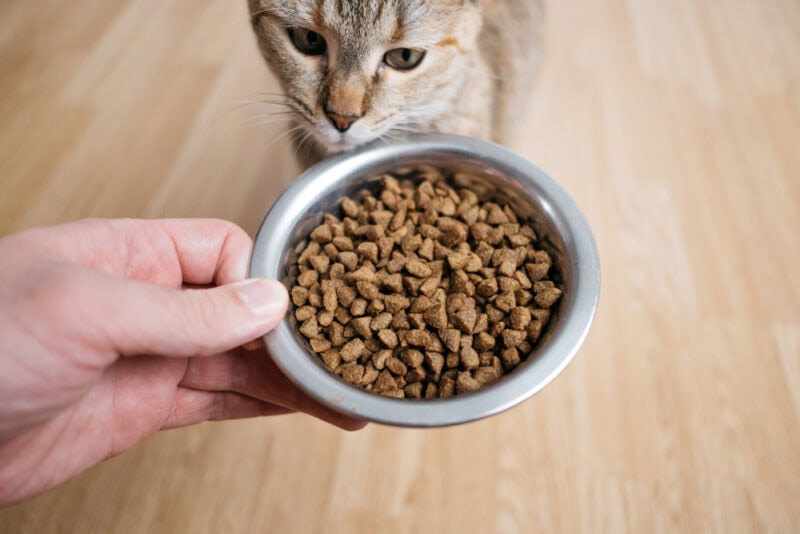
Cats are meat eaters. In fact, they are obligate carnivores, which means that they get all of their nutritional needs from animal products. Cats cannot be vegetarian, as they will become quite ill and will not thrive or remain healthy without a source of meat. In fact, a cat's digestive system is not designed to digest plant material—the nutrients from meat are what allow them to live.
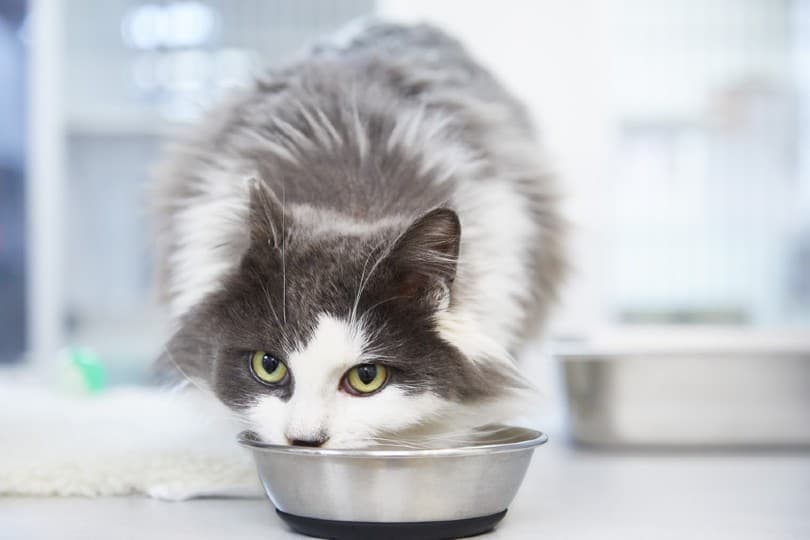
So, what happens if your cat drinks orange juice?
The 5 Downsides of Orange Juice for Cats
1. Psoralens
Psoralen is a naturally occurring compound that is found in a number of plants, which includes all citrus fruits. Psoralens actually cause the skin to become light-sensitive, and the juice of the orange can technically cause the skin to become a little more sensitive to sunlight and, consequently, could burn easily.
Some studies show that if you consume a lot of orange juice, it slightly increases the chance of malignant melanomas. It doesn’t confirm that psoralens are harmful to cats, but it’s always better to be safe than sorry. There are limited reports and data about orange or psoralen toxicity in cats, but according to the ASPCA, there may be digestive, neurological, and skin signs, especially when it comes to ingesting plant material.
2. Citric Acid
Oranges are chock full of citric acid, which can be quite toxic for your cat. Eating just a little bit of orange can lead to irritation and upset stomach, while central nervous system depression is possible in case of higher amounts.

3. Essential Oils
Orange peel is full of essential oil, which is what gives it its distinctive and amazing aroma. However, essential oils are quite toxic for cats. Cats lack certain enzymes in their liver that assist in eliminating and metabolizing drugs, medications, and essential oils.
Citrus fruit smells are commonly used as a deterrent for cats. If your cat engages in naughty behaviors, such as chewing cords or scratching your expensive sofa, some people have resorted to spraying these areas with citrus essential oils mixed with water, as cats naturally dislike the scent, but we would not recommend this. Coming in contact with essential oils that are very concentrated can cause serious respiratory signs if inhaled, or digestive and neurological signs if ingested.
Some of the essential oil compounds, such as limonene, are contained in insecticidal pet shampoos, and there are reports of cats getting seriously ill due to the application of these products, with neurological and skin issues that lead to sepsis. Never use dogs or unverified shampoos for cats. Unfortunately, at the moment, we only have limited data on the level of toxicity of citrus fruits in cats, but we know enough to be extra careful.
4. Sugar
Oranges are naturally sweet, but orange juice, as previously mentioned, has more sugar than an orange. The same reason a lot of orange juice might prove unhealthy for us will also work against a cat. Excess sugar can cause a stomach upset in the short term and lead to weight gain long term.
5. Allergies
This is likely very rare and we cannot find any reports of it in the veterinary literature, but theoretically, some cats may develop an allergic reaction to oranges. Particularly, dermatitis due to food allergies.
Signs
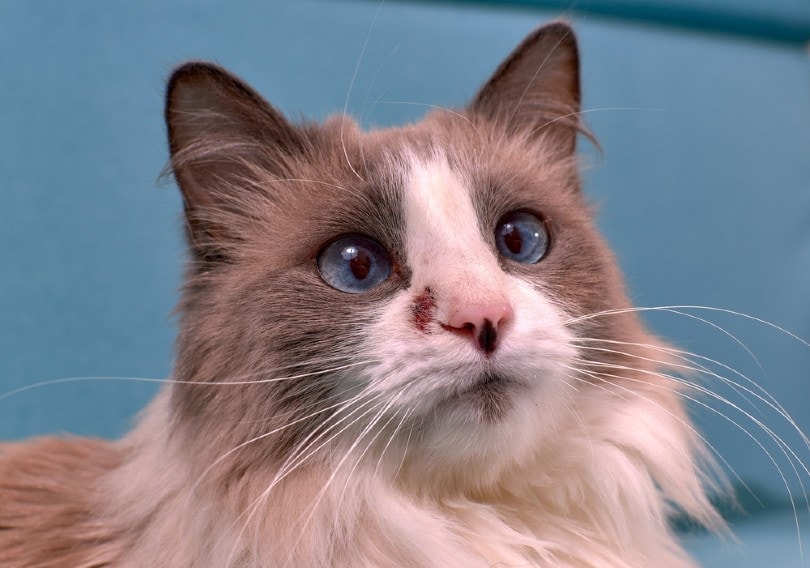
Some of the signs that might occur if your cat ingests orange juice or any other citrus fruit might include:
If your cat has been around essential oils or ate any part of the rind of a citrus fruit, some of the signs and health issues may include:
The fruit itself isn’t as problematic as the skin, leaves, or seeds. If you suspect your cat might have ingested any of these parts of a citrus fruit, take them to your vet as soon as possible, particularly if you notice any of the above signs.

Conclusion
The good news is that the majority of cats are repelled by the smell of anything citrus, so the chances of your cat eating an orange or drinking orange juice are pretty slim. The fruit of the orange itself in tiny amounts will probably not hurt your cat, but if you suspect your cat has ingested any of the rind or seeds, contact your vet and keep a close eye out for any of the worrisome signs.
Cats actually make their own vitamin C, so they won’t benefit from eating citrus in any way, and in most cases, they’ll run away at the smell of it regardless. So, while drinking a glass of orange juice might be an enjoyable treat for you, do not attempt to give any to your cat, as it will do more harm than good.
Related Read:
Sources
Featured Image Credit: stevepb, Pixabay
Get Hepper In Your Inbox


Pet care tips from our vets and experts, straight to your inbox.
You may opt-out at any time. View our Privacy Policy for more information.
Kathryn was a librarian in a previous lifetime and is currently a writer about all things animals. When she was a child, she hoped to work in zoos or with wildlife in some way, thanks to her strong love for animals. Unfortunately, she's not strong in the sciences, so she fills her days with researching and writing about all kinds of animals and spends time playing with her adorable but terribly mischievous tabby cat, Bella. Kathryn is hoping to add to her family in the near future – maybe another cat and a dog.
Join the conversation
Ask a question, share your story, or send private feedback.