Hepper is reader-supported. When you buy via links on our site, we may earn an affiliate commission at no cost to you. Learn more.
Can Cats Eat Cheese Puffs? Vet-Approved Facts & FAQ


In this article
Many cats are curious and want to try the same snacks that humans enjoy. It is common for house cats to develop a taste for cheese puffs because of their savory flavor and crunchy texture. While cheese puffs aren’t toxic to cats, it’s still not recommended to feed them to cats. Cheese puffs don’t fit the profile of a cat’s natural diet and add no nutritional value. It’s best to refrain from feeding them this snack and to choose a healthier alternative instead.

Are Cheese Puffs Safe for Cats to Eat?
Cheese puffs don’t contain toxic ingredients, but they can still cause cats to get sick. Contrary to popular belief, not many cats can actually digest milk very well. Most cats lose the enzyme that breaks down milk as they age and eventually become lactose intolerant.
If your cat eats a cheese puff or another dairy containing product, they may show signs of gastrointestinal upset like vomiting, diarrhea, or flatulence. If your cat shows signs of an upset stomach, make sure to monitor their condition and contact your veterinarian if signs are severe or persist for more than 48 hours.
Even if your cat isn’t lactose intolerant, it’s best to avoid giving them cheese puffs. Cheese puffs are typically high in sodium and usually contain artificial flavors, colors, and preservatives. These types of ingredients can be ambiguous and cause cats to get sick, especially if they already have a sensitive stomach or chronic digestive issues.
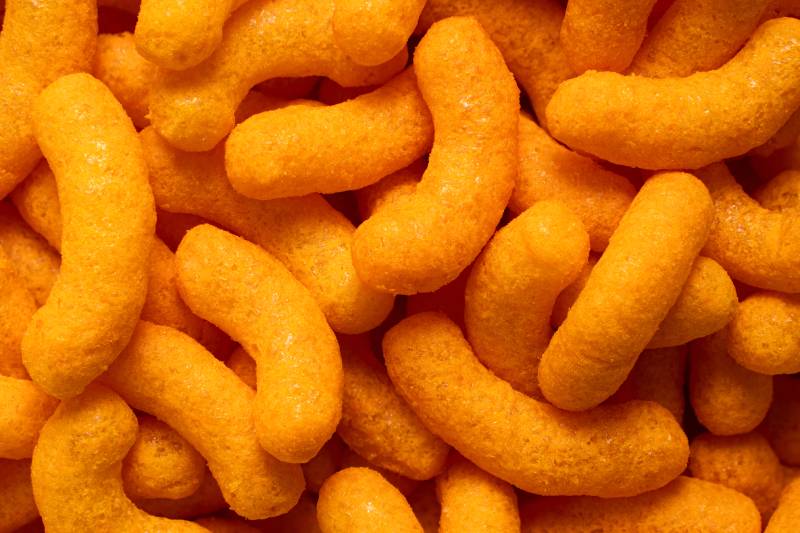
Lastly, cheese puffs don’t have any nutritional benefits for cats. Cats eat a primarily carnivorous diet, and they need to eat a lot more protein than carbohydrates. Cheese puffs typically have corn meal, or another type of flour listed as their first ingredient. They also contain a lot of oil and are often deep-fried. Overall, they mainly consist of carbohydrates and fat, which don’t fit into a cat’s need for healthy proteins and moderate amounts of fat.
What Happens if My Cat Eats Cheese Puffs?
In most cases, your cat won’t experience any health issues from eating a bite of a cheese puff unless they have a sensitive stomach or applicable food allergies. However, it’s still important to prevent your cat from developing a taste for cheese puffs and giving them as treats.
Since cheese puffs are a high-calorie snack that’s rich in fat, your cat will quickly experience weight gain if they consistently snack on cheese puffs. Obesity in cats is a serious issue in the US, as nearly 60% of domestic cats in North America are overweight 1. Obesity can greatly reduce a cat’s length and quality of life, putting them at increased risk of developing other health issues, including diabetes, cancer, heart disease, osteoarthritis, and urinary bladder stones.
What Should I Do If My Cat Ate Cheese Puffs?
If your cat gets into your snack stash and steals a few cheese puffs, make sure to monitor their condition and look for signs of gastrointestinal upset. You can also refresh your cat’s water bowl to help them stay hydrated.
Make sure to contact your veterinarian if your cat is showing ongoing or severe signs of illness. This may include profuse diarrhea, vomiting, tummy pain or weakness. Your veterinarian may have you bring your cat to their clinic to do a physical exam and run some tests depending on the signs they are showing.
In Conclusion
Cheese puffs shouldn’t be a part of your cat’s regular diet. They don’t have health benefits, and some cats can get sick from eating them. It’s best to stick to giving your cat treats that are specifically formulated for cats, and make sure to store cheese puffs in a safe, unreachable location for your cat. If your cat does end up sneaking a bite of cheese puffs, keep an eye out for signs of an upset stomach, and contact your veterinarian right away if signs persist or worsen.
Related Reads:
Sources
Featured Image Credit: Natallia Ploskaya, Shuttetstock
Get Hepper In Your Inbox


Pet care tips from our vets and experts, straight to your inbox.
You may opt-out at any time. View our Privacy Policy for more information.
Jessica is a freelance writer who spends most of her day reading and writing while her fluffy Cavapoo, Nora, naps beside her. She loves and appreciates pets and animals because there’s so much to learn from them, and they do so much for people. As a dog mom, she understands the special relationship that pet parents have with their pets. So, she loves sharing helpful information that people can use to better understand their pets. When she’s not writing, you can find her walking dogs, tending to her plant babies, or drinking her nth cup of coffee.
Join the conversation
Ask a question, share your story, or send private feedback.