Hepper is reader-supported. When you buy via links on our site, we may earn an affiliate commission at no cost to you. Learn more.
Can Cats Eat Orchids? Vet-Reviewed Health & Safety Guide


In this article
Orchids are safe to keep around cats, even if they end up nibbling on them in small amounts. This is great news for both cat and orchid lovers, as cats and orchids can co-exist in the same household!
If you are interested in learning more about how safe orchids are for cats and which types of orchids your cat can nibble on without experiencing any toxic effects, then this article has all the answers you need. However, you should still discourage your cat from eating parts of the orchid plant and flowers, as it may give them a stomach upset, and it could ruin your orchid.

Are Orchids Safe for Cats to Eat?
Orchids are part of the Orchidaceae family and can be safely grown in a home where cats are present. While there may be many different varieties available, none of these orchids have been reported as being harmful to your cat through contact or ingestion.1
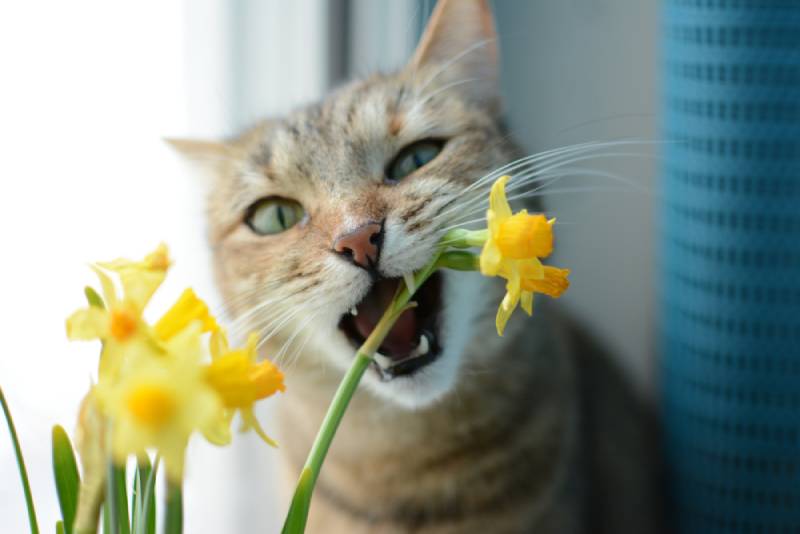
Cats are naturally curious creatures, and they use their sense of smell and taste to get a better understanding of their environment. It's not uncommon for cats to try to eat the plants around them. The scent of the plant may draw them in, and they will want to test if it is edible or not.
While eating orchids might give your feline friend an upset stomach, the ASPCA assures cat owners that orchids are not toxic to cats, and this includes all varieties of orchids commonly grown outdoors or in households where cats have easy access to them.
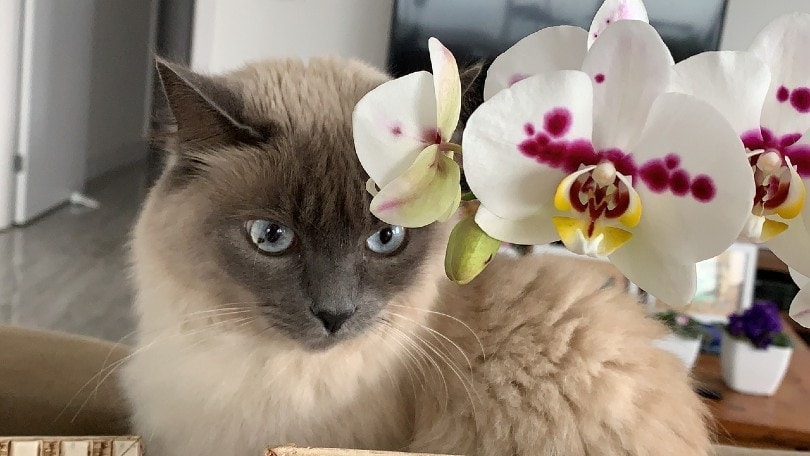
Orchids are safe and non-toxic to cats, and they will usually not eat more than a palm-sized amount of the plant because it doesn’t taste good.
Are Orchids Poisonous to Cats?
The unfortunate thing about these beautiful house plants is that they may be treated with fertilizers, growth regulators, and other chemicals to keep the plant healthy and encourage blooming. When a cat eats an orchid with these chemicals, it can become very sick and even require veterinary treatment to combat some of the signs. This is where orchids get a bad reputation, as cat owners may have experienced their cat eating a new orchid that they bought with active chemicals and fertilizers either in the plant itself or on the plant.
Even though orchids are safe for cats, it’s still in your cat’s best interest to keep them away from these plants. You will not always be able to identify if and what types of pesticides or herbicides have been used on the orchid. Fertilizers, pesticides, and herbicides are harmful to cats, especially in large quantities.
Pesticides, herbicides, and fertilizers may have been used on the plant before you purchased the plants. Even if you do make an effort to not use these chemicals on the plant, if you have not raised the plant from a seedling and grown it in organic soil, then it is likely that the plant nursery used these chemicals on the plant beforehand. Some herbicides and pesticides can last in soil for several months or even years.
Toxicity Reports
There are no known toxicity or poisoning reports from cats consuming small portions of orchids (both the flowers and leaves), but that does not make it ideal to let your cat routinely eat the plant. Not only does this ruin the beauty of the plant and damage its leaves or flowers, but it can also cause your cat to suffer from minor gastrointestinal problems.
Prevention
To further eliminate the possibility of your cat encountering herbicides and pesticides, you can choose an orchid variety that does not require further protection against pests or require fertilizers to aid in the plant’s growth. If the roots are covered by a layer of soil and bark, you can rather apply a non-toxic root fertilizer to roots and then keep your cat away from the plant for a few weeks while the fertilizer is still being absorbed by the orchid.
You can also opt to use natural and non-toxic fertilizers on your orchids. This might be a pricier option, but it is worth it for the well-being of your feline friend. Some non-toxic and natural fertilizers will say pet and child-friendly on the label, so speak to your local nursery associate to help you find a safe alternative.
Are All Orchids Safe for Cats to Eat?
All types of orchids from the family Orchidaceae are safe for cats, based on info provided by the ASPCA. The parts of the orchid plant that are safe for cats to nibble on are the leaves, stems, flowers, and roots. However, it is still best for cats not to eat any at all, as they may get an upset stomach.
The following popular varieties are orchids are safe for cats:
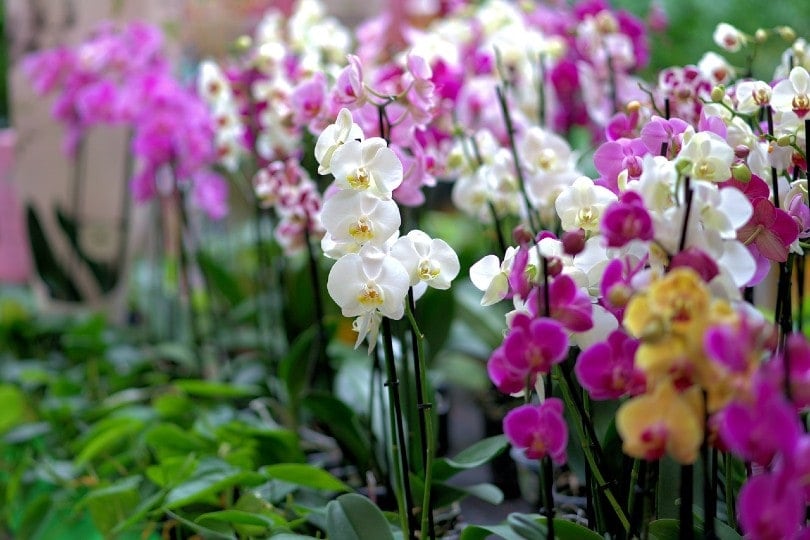
The Moth or Moon (Phalaenopsis) orchid is the most common variety of orchid sold in grocery stores and plant nurseries. Since this orchid is so popular, most of the reports on whether orchids are safe for cats stem from this variety. Less information is known about the other varieties, but cat owners and the ASPCA have reported no negative reactions from cats consuming them.
What Happens if a Cat Eats an Orchid?
For the most part, nothing should happen. Cats regularly chew and nibble on orchids and experience no side effects. However, to be on the safe side, there are a few steps you should take in case your cat does have a bad reaction.
The first step would be to take a picture of the plant so that you can show the veterinarian how much of the orchid your cat has eaten. Then you should carefully monitor your cat’s behavior for the next few hours. If they vomit or have diarrhea after eating the orchid, consult with your vet to see if they would recommend getting them checked out. Some stomach discomfort is likely going to occur.
However, if your cat is acting lethargic, is drooling, refusing to eat, excessively itching, and has a swollen mouth and tongue, accompanied by prolonged vomiting and diarrhea, then your cat could be suffering from an allergic reaction or poisoning from a chemical that was used on the orchid. You should immediately consult with your cat’s veterinarian for a treatment plan. Take pictures of the plant and if possible, the potential fertilizer or chemical that could have been used on the orchid.
How Do You Keep Your Cats Away From Your Orchids?
If you do not want your cat to damage the orchid or if you know the orchid contains chemicals and fertilizers that are still active, then you may want to consider looking into a few methods to keep your cat away from your beloved plant.
- Grow the orchid in a thick mesh or netting as coverage. This will help to keep your cat away from the plants as they cannot access the plant through the mesh or netting.
- Use a ‘cat away’ spray that you can purchase from your local pet store or online. We recommended trying Nature’s Mace cat repellent, which can be purchased online.
- Train your cat using positive reinforcement to stay away from your houseplants.
- Grow your orchids in an area that your cat does not frequently visit or in rooms where your cat is not allowed in.
- Lastly, you can try to offer your cat more toys and enrichment activities to help combat their boredom, especially if your cat is eating your orchids because they are bored and have nothing else to do.

Final Thoughts
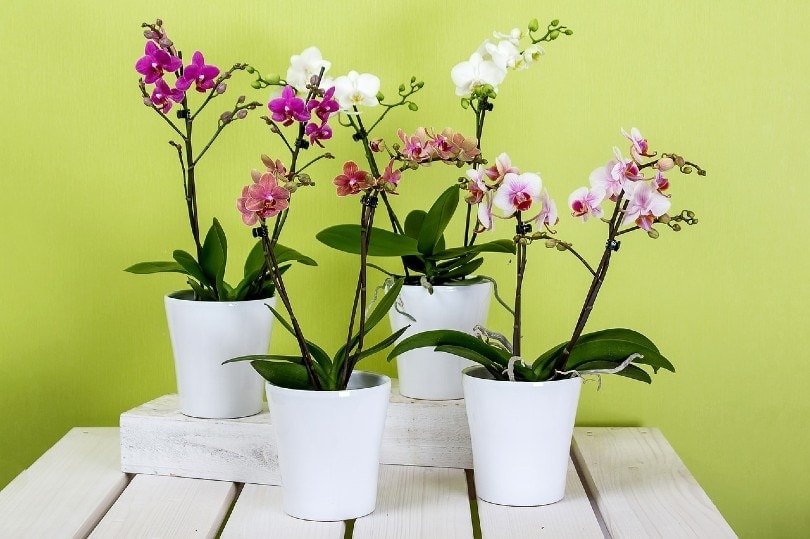
Orchid lovers may be thrilled to know that their cats can safely coexist in a household where orchids are growing. Ensuring that your cat and orchids rarely come into contact with each other can reduce the risk of your cat eating the orchid and getting sick from nibbling on too much or from any potential chemicals.
We hope that this article has helped reassure you that orchids can be safely grown alongside cats if you do not use any chemicals on the orchid, as untreated orchids are safe and non-toxic for pets.
Related Reads:
Sources
Featured Image Credit: sprayworksmkt, Pixabay
Get Hepper In Your Inbox


Pet care tips from our vets and experts, straight to your inbox.
You may opt-out at any time. View our Privacy Policy for more information.
Sarah is residing in South Africa with her partner and pets. She currently is interested in veterinary science and ichthyology, which she wants to study alongside her main passion: pet content writing. Sarah has over 60 fish including goldfish, tropicals, shrimp, and snails. She also keeps hamsters and a tarantula and wishes to provide quality content for readers and allow others to learn from her knowledge and experience. Sarah has much experience in all aspects of pet care, and providing the world with knowledge on ethical pet ownership is her lifelong dream.
Join the conversation
Ask a question, share your story, or send private feedback.