Hepper is reader-supported. When you buy via links on our site, we may earn an affiliate commission at no cost to you. Learn more.
Can Cats Eat Raw Meat? Vet-Reviewed Nutrition Facts & FAQ
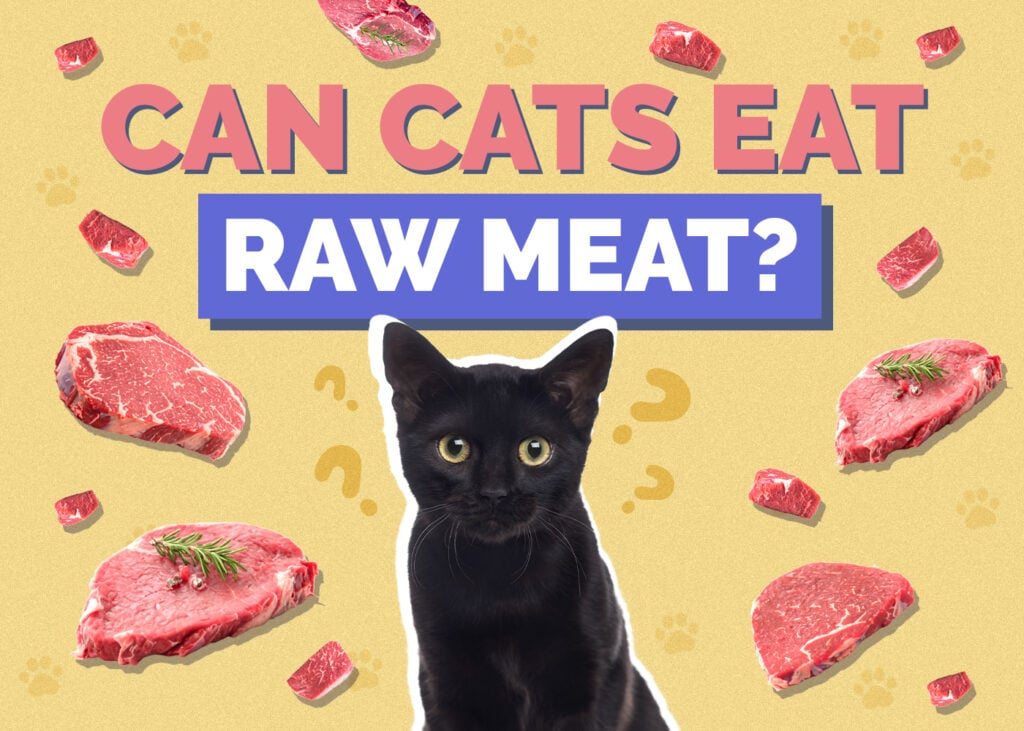
Cats are expert hunters, and with their sharp claws, powerful jaws and teeth, and lithe, agile bodies, they are highly adept at catching and consuming prey. In the wild, cats catch small mammals and birds and eat them raw, so it’s natural to wonder whether we can feed our domestic cats a similar diet.
Can cats eat raw meat and is it safe for them? Feeding raw meat to cats is a controversial topic, and there’s been a great deal of debate among experts as to whether this is the best option for domestic felines. That said, you can feed some types of raw meat to your cats, but there are genuine health concerns and risks to be aware of, for both you and your cat. Veterinary profession officials discourage feeding cats raw meat, as the risks outweigh the benefits, based on current research.
We put together this guide to help you decide whether feeding raw meat to your cat is the best option for you. Let’s dive in!

Raw Diet for Cats
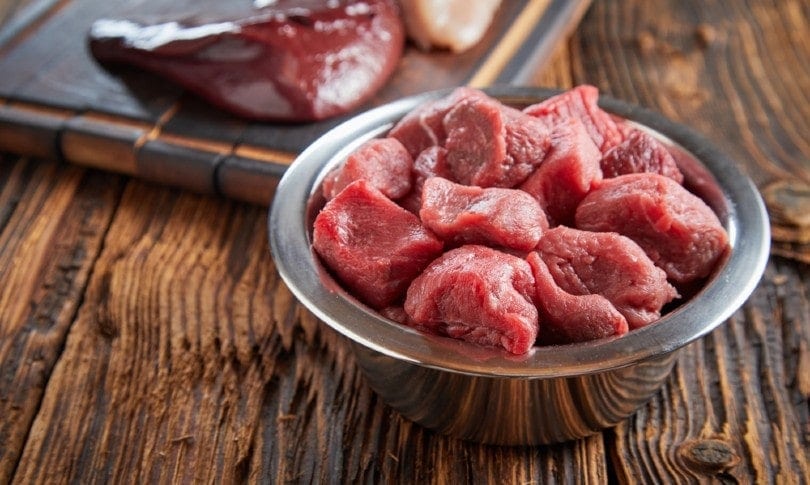
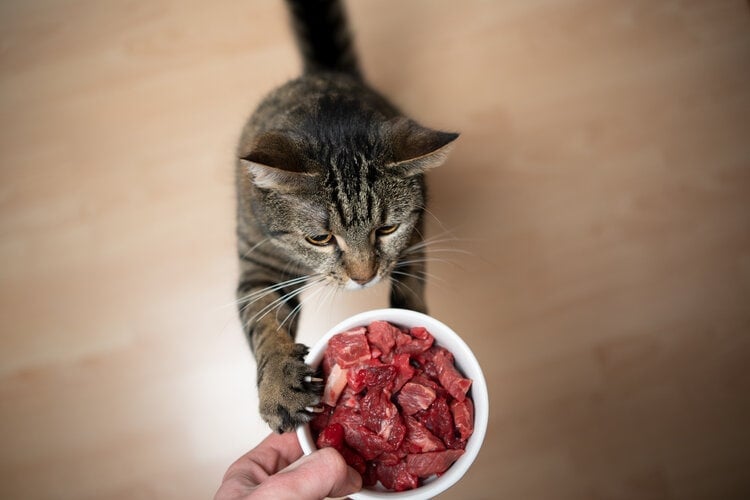
Raw diets for both cats and dogs have become highly popular in recent years, since they offer an alternative to processed pet food that was presumed to be more ‘natural’ or healthier.1 As the name suggests, a raw food diet for cats involves feeding them only raw food or making raw food the majority of their diet. Since cats are obligate carnivores, this means feeding them almost solely raw meat, including muscle meat, organs, bones, and other animal byproducts, such as eggs.
Most of the time, raw food diets are prepared by cat owners themselves at home, but there are a few commercial options available too. Preparing homemade raw meals for your cat can be tricky because getting the correct proportion of nutrients to keep your cat’s diet balanced and complete is a challenge, even for experienced animal nutritionists.
Proponents of this diet use the fact that cats are obligate carnivores and don’t need fruit or vegetables in their diet to prop up their claims. Cats can only have a small amount of carbs in their diet and need a large amount of protein, so on paper, this diet does make sense. Raw meats contain all the nutrients that your cat needs and cooking meats can decrease or change their nutritional value. While this diet seems like a good option for cats, there are valid safety and health concerns.
Related read: Can Cats Eat Hot Dogs?
Safety Concerns of Raw Food Diets
Raw meat may be nutrient-rich, but it does not come without risk. Raw meat may contain pathogens like Salmonella and E.coli, which can cause serious health issues for cats. Chicken meat in particular, even when it is intended for human consumption, is often contaminated with Salmonella, in as many as 21% to 44% of chicken samples purchased from retail locations throughout North America. The risk of you or your cat getting sick is quite high, leading to gastrointestinal upset and Salmonella-related life-threatening sepsis.
Cooking generally removes most of these potentially hazardous pathogens. The opinion of the American Veterinary Medical Association is that raw animal protein shouldn’t be offered to cats (and dogs) before first being subjected to a process to eliminate pathogens, such as cooking and pasteurization, because of the risk of illness to cats (and dogs) as well as humans.
That said, when cats consume raw meat, many pathogens can pass through a cat’s digestive tract without any issues. However, there is also the risk of cross-contamination during preparation, potentially contaminating your food too. Cats can carry these pathogens without developing any signs of illness, while still spreading them in the environment of your home, putting immunocompromised individuals, children, older people, and other animals at risk of contracting these bacteria, viruses or parasites. Bacteria may become resistant against antimicrobials used to treat them, over time, presenting a genuine threat to public health and health of our animals, too. Another potential risk is nutritional deficiencies. Making raw food at home for your cat presents a challenge when it comes to ensuring balanced nutrients, due to the inconsistencies of these nutrients in the ingredients that you use. Organ meats, for example, have a much higher nutrient density pound for pound than muscle meats, and too few organ meats can result in nutritional deficiencies, while too many may be harmful long term. Balance is the key. Small pieces of bone are also always a risk because these can potentially get lodged in your cat’s digestive tract and cause internal damage, gastrointestinal blockage, or lead to constipation.

If you do decide to feed your cat a raw food diet, it’s important to get advice from your vet first and to purchase reputable commercially available raw foods formulated by pet nutritionists to make sure the food is safe and properly balanced.
There are some anecdotal reports on raw food benefits in cats, mostly aimed at digestive and skin health, and research has shown that indeed there is a difference in the microbial gut content in dogs fed raw vs those fed commercial foods. However, we don’t know the long term effects or real significance of this. Unfortunately, at the moment there isn’t sufficient evidence-based research to prove any of the claimed health benefits, so we have to err on the side of caution when considering raw diets. Even commercially prepared diets can be contaminated with bacteria and their fat and protein content can deviate from the declared values in as many as 33% to 45% of cases.
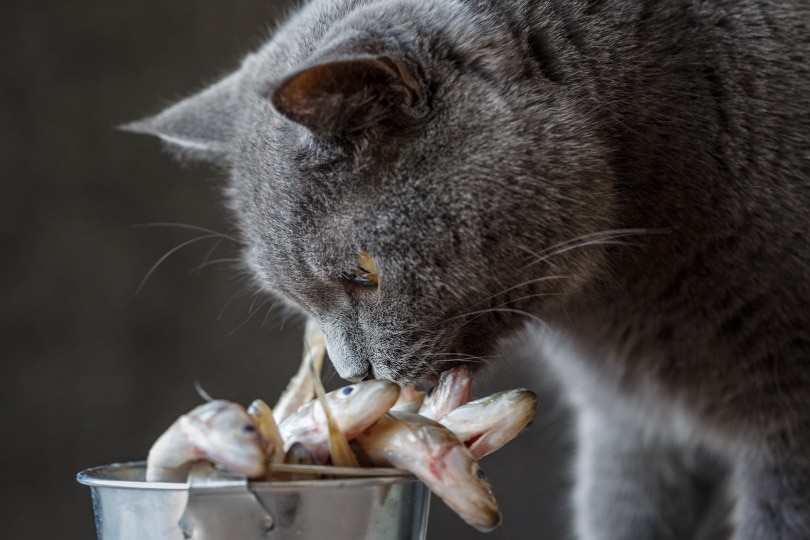
Cats and Raw Fish
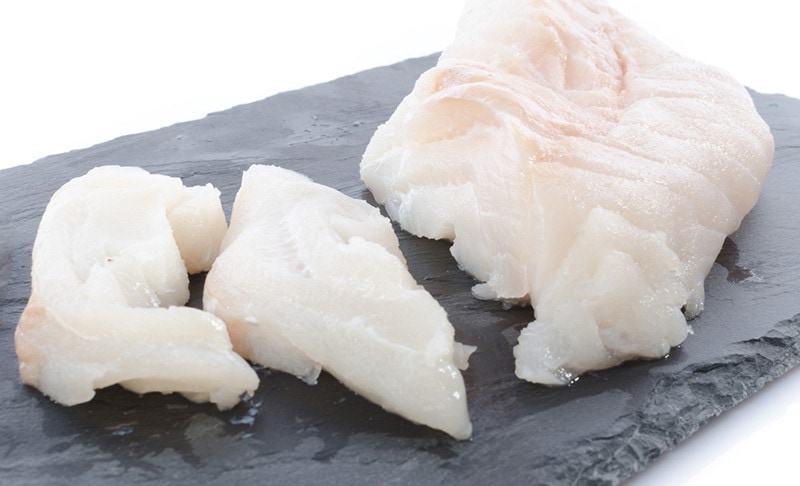
This isn’t a good combination, and we will explain why. It’s all because of thiamine or vitamin B1. Thiamine is essential in many metabolic processes in the body and cats require high levels of thiamine in their diets every day. Enzyme called thiaminase, which is present in some bacteria, shellfish, and certain types of raw fish, such as cod and herring, destroys thiamine, leading to deficiency over time.
The neurological signs associated with thiamine deficiency in cats can appear within 30-40 days of eating food that contains insufficient levels, leading to sudden and rapidly progressive illness. If left untreated, thiamine deficiency can be fatal.
Signs of thiamine deficiency in cats include:
How to Ensure That Your Cats Eat Raw Meat Safely
While some cats can thrive on a diet of raw meat, you need to make sure the food that they’re consuming is safe, nutritionally balanced, and complete. And in all honesty, there may be no way of completely ensuring this. Still, you can do your best to follow these guidelines:

Final Thoughts
Cats can eat raw meat, but it’s important to first speak to your vet, as this may not be appropriate for your cat, and do your research about the nutrients that they need and how to prepare and serve their food correctly. Also, if you’re preparing raw meat for your cat at home, make sure it’s from a reputable source and is as fresh as possible to avoid bacterial contamination. Practice good hand and home hygiene. If you or anyone in your family is pregnant, immunocompromised, or on immunosuppressive medication, or there are children, speak to your doctor about safety and precautions when handling raw meat for your cat.
If you’d like to feed raw meat to your cat but are worried about the risks, it may be a good idea to consult with your doctor first. If given the green light, purchase commercially available raw diets to make sure your pet is getting a balanced and complete diet. It’s always a good idea to consult your vet about the best way to ensure that your cat is getting a balanced diet.
See also:
Sources
Raw diets for dogs and cats: a review, with particular reference to microbiological hazards - PMC
Raw food diets in companion animals: A critical review - PMC
International study indicates shift to raw/home-made food diet for pets over past decade | BMJ
Current knowledge about the risks and benefits of raw meat–based diets for dogs and cats in
Talking the talk—What to say when clients prefer raw diets - Veterinary Practice News
Read the AVMA Raw Meat Policy | Nutrition Nuggets Dog | PetMD
Thiamine Deficiency in Cats: Q & A for Cat Families - The Animal Medical Center
Raw diets for dogs and cats: a review, with particular reference to microbiological hazards - PMC
Raw food diets in companion animals: A critical review - PMC
Raw Feeding – Panacea for some, pitfall for others Debating raw diets - Veterinary Practice News
WHY IS RAW FOOD SO POPULAR? https://pubmed.ncbi.nlm.nih.gov/22063975/
Raw vs. Cooked: The Effect of Cooking on Nutrients - Ask The Scientists
RVC Clinicians identify source of recent spate of thiamine-deficiency cats
Featured Image Credit: PDPhotos, Pixabay
Get Hepper In Your Inbox


Pet care tips from our vets and experts, straight to your inbox.
You may opt-out at any time. View our Privacy Policy for more information.

Nicole is a lover of animals of all sizes but is especially fascinated with the feline variety. She’s the proud mom of Baby, a Burmese, and works every day so he can relax in the sunshine or by the fire. She’s always had a cat in her home and has spent countless days with others, observing behaviors and softening up even the grouchiest of the lot. Nicole wants to share her kitty expertise with you so you and your cat can live happy, healthy, and care-free.
Join the conversation
Ask a question, share your story, or send private feedback.