Hepper is reader-supported. When you buy via links on our site, we may earn an affiliate commission at no cost to you. Learn more.
Can Cats Eat Soup? Vet-Reviewed Facts & Safety Guide


In this article
Cats need to drink between 3.5-4.5 ounces of water for every 5 pounds of their body weight. However, many cats don’t get enough water to stay hydrated for several reasons. For example, their water intake may be lower if they eat dry food rather than wet food or do not like drinking out of a water bowl.
Not all soups are safe for cats. But, if you have a cat that isn’t drinking enough water, feeding them a soup that is safe can potentially be a good way to add water to their diet. It is important to know what kind your cat can consume.

Can Cats Eat Soup?
While soup may be a creative way to introduce more water to your cat’s diet, it takes some research to find some that are safe and healthy for your cat to consume. Here are some factors to keep in mind when selecting soup. They should be seen as an addition to their diet and not their main source of nutrition.
Sodium Levels
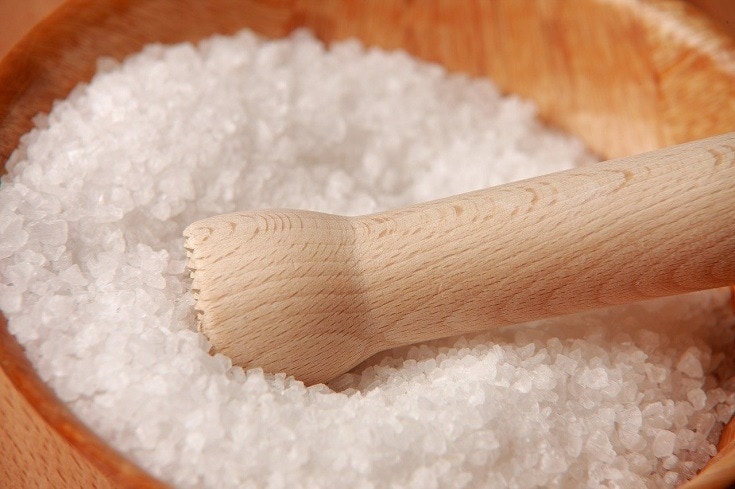
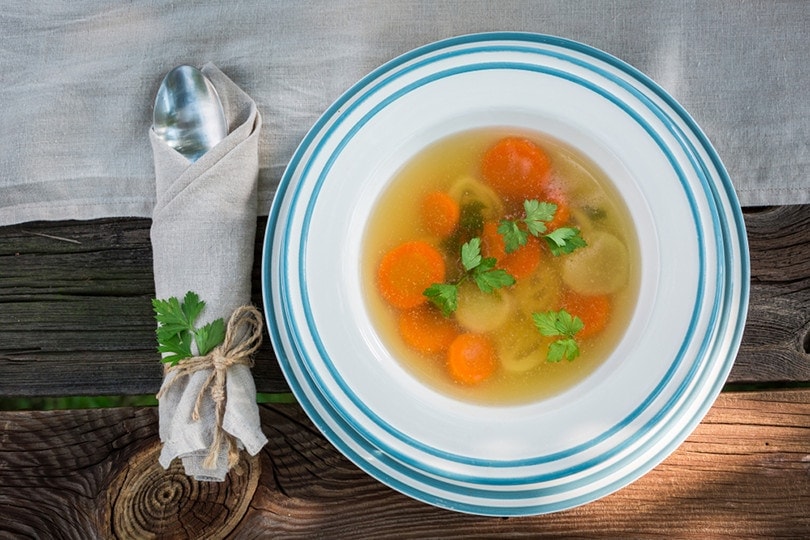
Many canned and commercial brand soups contain high levels of sodium, even those with low-sodium recipes. Cats can experience sodium ion poisoning if they ingest too much salt.
Signs of sodium ion poisoning include the following:
One of the main reasons why commercial soup contains sodium is preservation. Many preservatives have salt bases. Some of the most common preservatives in soups are potassium sorbate, sodium phosphate, and monosodium glutamate (MSG).
Creamy soups can also contain lactic acid, which has antimicrobial properties. Lactic acid is safe for cats to eat, and bacteria that produce lactic acid are a type of probiotic.
Ingredients
When reading through a soup’s ingredient list, look for organic ingredients and avoid toxic foods for cats.
Here are some common soup ingredients that aren’t safe for cats:
Can Soup Replace a Cat’s Meal?
In general, commercial soup isn’t safe for cats to eat because of high sodium levels and unsafe ingredients. If you want to serve your cat soup, your best bet is to give them homemade soup that doesn’t contain too much salt and has no harmful foods.
However, even homemade soup can’t fully replace a cat’s meal. Cats have specific dietary and nutritional needs that homemade soup most likely won’t fulfill. Cats need specific levels of protein, fat, essential vitamins and minerals that they must consume regularly.
Protein
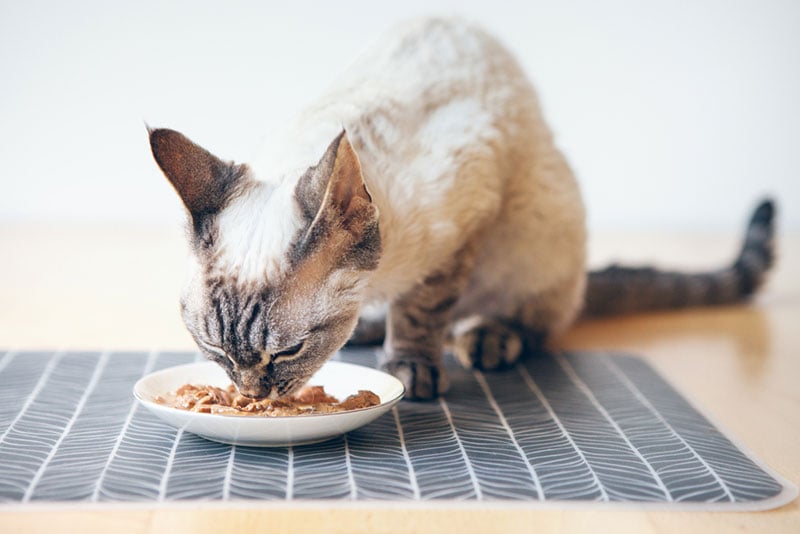
Since cats are obligate carnivores, they require a high-protein diet. Some research shows an adult cat not eating at least 40% protein resulted in a loss of lean body mass over time. Anything less than 26% can be detrimental to a cat’s health over an extended period.
One of the main reasons why cats need to eat animal protein is because animal protein contains high concentrations of taurine. Taurine is an amino acid essential for cats, but they can’t produce it on their own.
Cats with taurine deficiencies will eventually develop feline central retinal degeneration or cardiomyopathy. These conditions can have irreversible effects and even lead to fatal consequences.
Along with taurine, there are 10 other essential amino acids for cats:
Fats
Fat is also important for cats for several reasons. It’s an energy source, and cats also need omega-3 and omega-6 fatty acids for daily bodily functioning. Fats also help transport some nutrients across cell membranes. Cats need moderate amounts of fat in their diet.
Essential Vitamins and Minerals
The Association of American Feed Control Officials (AAFCO) has identified the following essential vitamins that should be included in cat food:
The AAFCO has also listed the following minerals as essential for cats:
Soup Alternatives for Cats
As you can see, cats have specific nutritional needs, and it’s difficult to find a soup that will meet these needs. It can also get overwhelming trying to make sure that soup recipes have the right proportions of essential vitamins and minerals.
If you have an elderly cat that has a hard time eating dry food or a cat that doesn’t drink enough water, you can try a few other things that won’t compromise the quality of their diets.
Transition to Wet Food
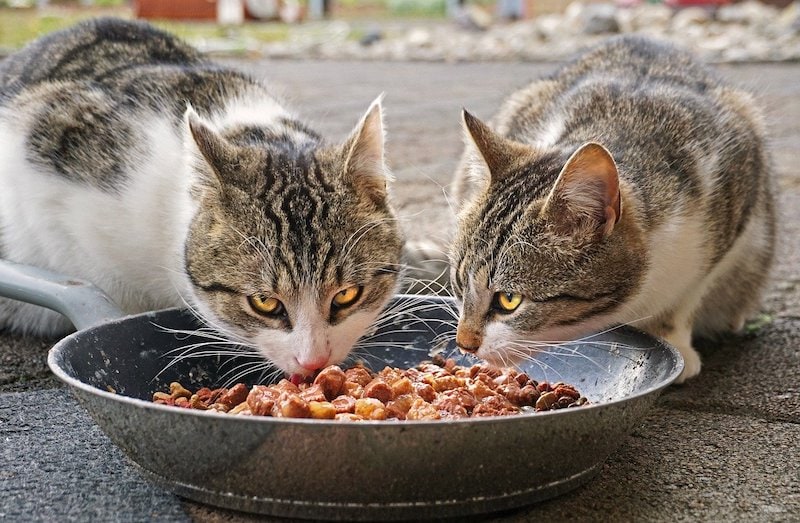
One of the best ways to introduce more water to your cat’s diet is to switch to wet food. Older cats can also benefit from wet cat food because it’s easier to chew and digest.
If you want your cat to switch to wet food, make sure to do a slow and gradual transition. Cats have pretty sensitive stomachs, so a drastic change in their main diet can lead to an upset stomach. It should take at least a week to fully transition your cat to new food.
Add Broth to Meals
Adding broth to your cat’s diet can also enhance your cat’s food while increasing fluid intake. When selecting a broth, make sure to select ones with sodium-free recipes and organic ingredients.
Broths specifically made for cats are also available, and they often contain flakes or shredded meat as an enticing element.
Feed Cat Soup
Several cat food manufacturers make their own versions of soup for cats. So, this eliminates the need to feed soup to cats. Rather than scanning the ingredient lists of soups for humans, you can save so much time just by giving cats soup made specifically for them.
Use Electrolyte Supplements
If your cat tends to get dehydrated, you can try using electrolyte supplements to help them maintain hydration. The only downside with this method is that cats can sniff out supplements and be picky about eating them.
Switch Out Water Bowls
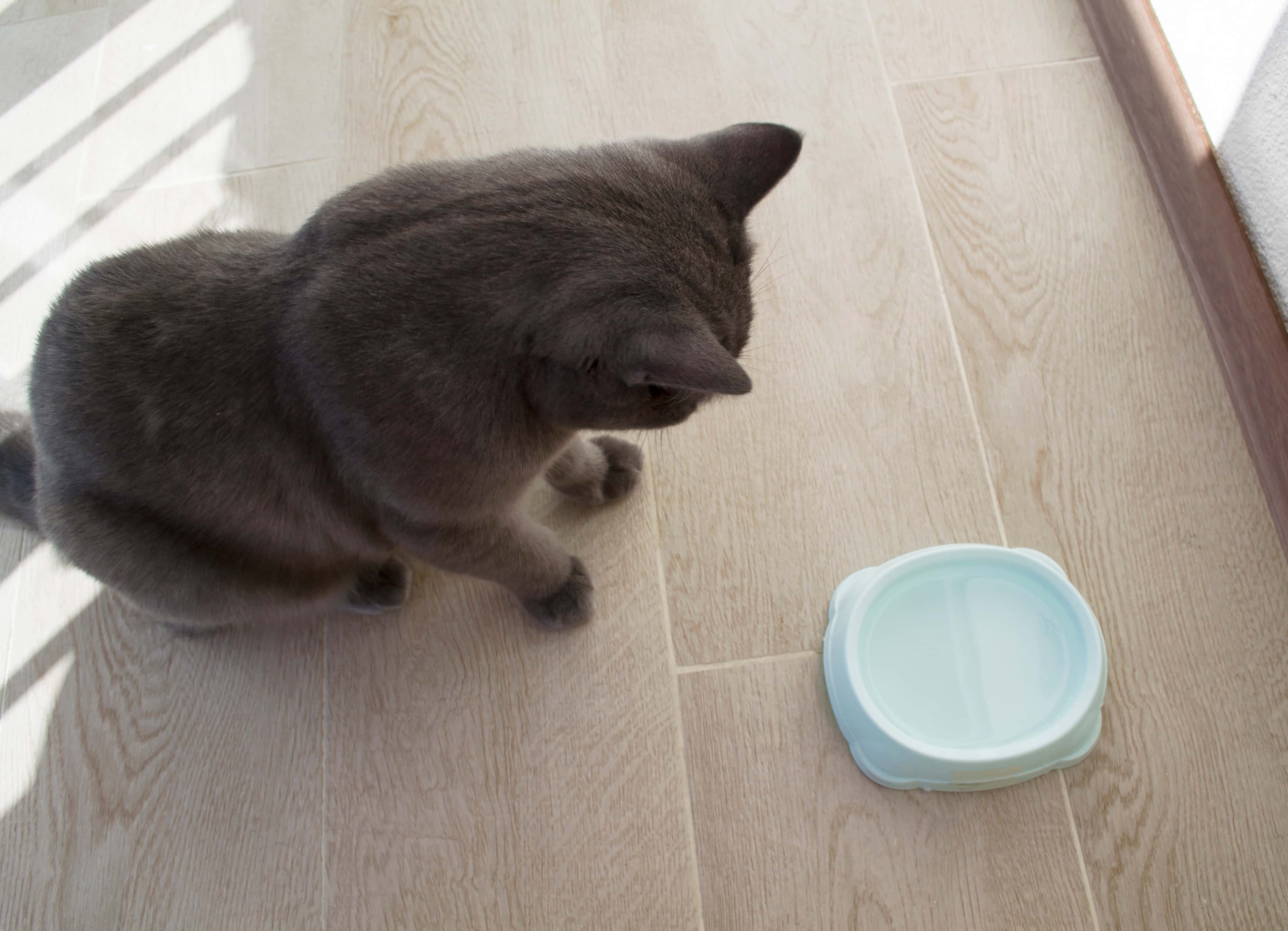
Sometimes, practical changes can be the most effective. A common reason why cats don’t drink out of water bowls is because of their sensitive whiskers. If a bowl is too small, the whiskers can brush against the sides and cause an uncomfortable sensation for your cat.
When selecting a water bowl, make sure to find one that’s wide enough. It should also be filled with enough water so that your cat’s face doesn’t have to go deep into the bowl.
Cats with flat faces will also have an easier time drinking from elevated water bowls.
Use Running Fountain
Many cats prefer to drink running water. Still water may be perceived as contaminated water, and the sound of running water can encourage cats to drink it. Fortunately, there are many affordable options, so you don’t have to spend a fortune trying to get your cat to drink more water.
Now that you know what you can safely feed your cat, it’s just as important to find a bowl that supports their health and well-being. With whisker-friendly bowls and a wide tray to catch any spills, our Hepper NomNom Cat Bowl is our favorite option.

- NO MESS - The 360° tray on this cat food and water bowl set has a raised design to catch and contain stray crumbs and drips. Protect your indoors and floors from wet and messy meals!
- WHISKER FRIENDLY - Shallow and wide metal containers with flat bottoms ensure your kitty can enjoy mealtime free from whisker fatigue!
- CHEW-SAFE MATERIALS - Kittens and cats love chewing on silicone and soft rubber - but it's a choking hazard. Our cat feeding station materials are anti-chew for a 100% safe feeding frenzy!
Final Thoughts
Cats can technically eat soup, but it’s challenging to find a soup that’s safe for them to eat. It also can’t be a meal replacement because it’s difficult to find a soup that meets a cat’s dietary requirements.
Therefore, soup can be a tasty treat for cats, at best. The safest way to feed your cat soup is to give them homemade recipes that are low in sodium and free of harmful foods. However, with pet stores selling soup for cats, there’s really no need to risk your cat’s health by feeding them soup for humans. You can even warm it up so that you and your cat can both enjoy a comforting bowl of soup on a cold winter day.
Related Reads:
Featured Image Credit: Jumpstory
Get Hepper In Your Inbox


Pet care tips from our vets and experts, straight to your inbox.
You may opt-out at any time. View our Privacy Policy for more information.
Nicole is a lover of animals of all sizes but is especially fascinated with the feline variety. She’s the proud mom of Baby, a Burmese, and works every day so he can relax in the sunshine or by the fire. She’s always had a cat in her home and has spent countless days with others, observing behaviors and softening up even the grouchiest of the lot. Nicole wants to share her kitty expertise with you so you and your cat can live happy, healthy, and care-free.
Join the conversation
Ask a question, share your story, or send private feedback.