Hepper is reader-supported. When you buy via links on our site, we may earn an affiliate commission at no cost to you. Learn more.
Can Dogs Eat Grasshoppers? What The Science Says!


In this article
You may have heard of humans eating grasshoppers in Mexico and a few other places around the world. Although these insects don't form part of the average human's diet, they don't seem to pose any threat and aren't poisonous to us. They are often described as tasty and crunchy—and some dogs seem to think so too. If you've found your dog munching on a grasshopper, they should be fine because although they're a bit scary in appearance, they're a relatively safe insect to eat.
However, this isn't always the case, as some grasshoppers might be infected with parasites or be carrying dangerous toxins such as fertilizers and pesticides that are harmful to your dog. Before you make your decision on whether or not your dog should eat grasshoppers on the odd occasion, keep reading to find out why we think your dog enjoys grasshoppers, how to tell if your dog is reacting badly to something they ate, and how your dog may benefit from eating these insects.

Why Does My Dog Eat Grasshoppers?
There isn't a scientific reason why your dog singles out grasshoppers from other insects and chews them to pieces. However, many believe that dogs enjoy catching these insects due to the hunt, as the movements switch on their natural predatory instincts.
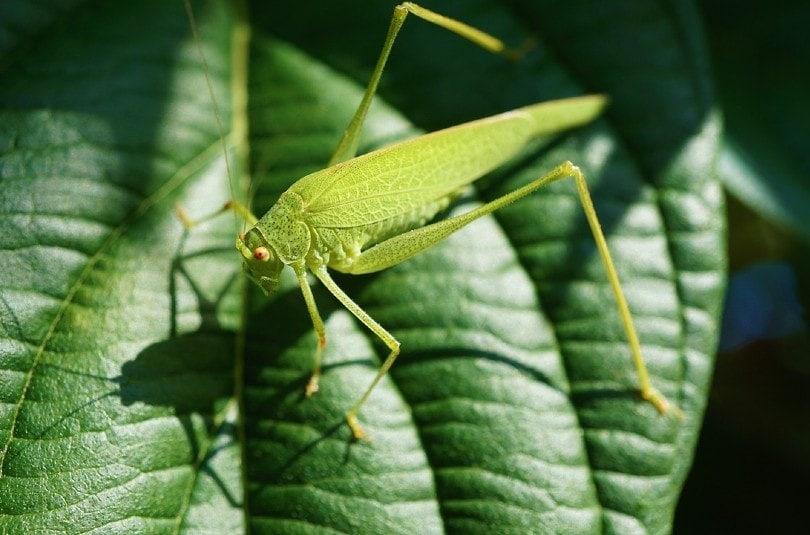
These ancient insects are camouflaged and hard to spot; they also use their powerful hind legs to jump high and far to escape danger. Sometimes they're successful in hiding from or outjumping a playful dog, and other times they aren't.
It's the challenge that many dogs enjoy as they love to chase and catch objects as they do during playtime with you. However, this may not be the only reason. It's also believed that just as humans enjoy the taste and crunch of these unfortunate creatures, dogs do too. This could be why your dog turns their nose up at some insects and not others.

Are There Benefits to Eating Grasshoppers?
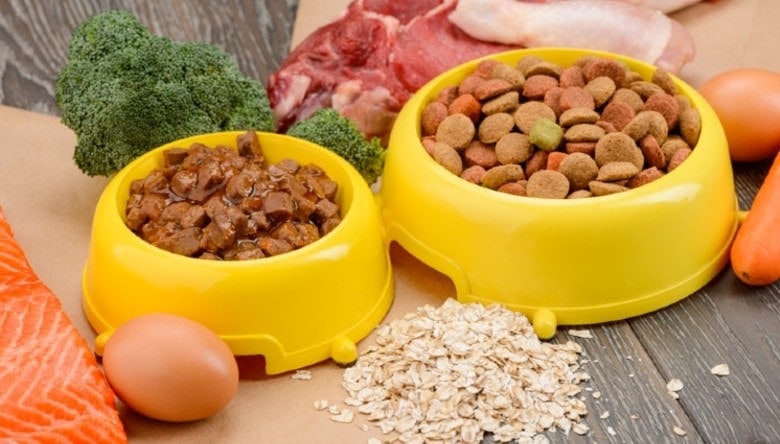
Some dogs have an intolerance to certain animal proteins and react badly when those types of meats are mixed into their food. However, dogs need protein as it is part of a nutritionally balanced diet. Some dog food companies have started to explore novel proteins to add to their recipes instead of the common types, such as lamb, pork, chicken, fish, and beef.
Dogs with allergies to certain proteins often do better on novel protein diets because they've never been exposed to the protein before and, therefore, haven't been able to build up an intolerance towards it.
As the human and animal population continues to grow, a higher demand is placed on protein. Novel proteins are a sustainable ingredient that could help save our planet. A few examples of novel proteins are alligator and kangaroo. Rarer and more sustainable options that are still being tried and tested are seaweed, single-cell proteins, and insects.
That's right, insects, such as grasshoppers, are a great protein source for dogs, and although it is still fairly uncommon, they can be found in some dog foods. It is not as gross as it sounds because the grasshoppers are ground down into a powder and form part of your dog's kibble, so you won't notice the difference in appearance from your dog's kibble made with chicken to their kibble made with grasshoppers.
When Does Eating Grasshoppers Become Dangerous?
As we've mentioned above, grasshoppers are a sustainable ingredient that has nutritional value to dogs, adding a good amount of protein to their diet. Many humans have swapped out common animal protein for insect protein for various reasons, with the practice known as entomophagy.
However, there are risks involved, and allowing your dog to eat wild grasshoppers isn't recommended. Humans and animals that eat food made with grasshoppers are eating ones that were reared on farms and given uncontaminated feed. This eliminates the risk of your dog eating a grasshopper that has come into contact with and is carrying pesticides, heavy metals, or parasites that are harmful to them.
A dog that eats too many grasshoppers from their yard is also at risk of gastrointestinal upset, especially if they have sensitive stomachs. While one or two grasshoppers shouldn't give them problems, eating too many could cause vomiting and diarrhea. However, these symptoms shouldn't last longer than a day, and your pooch should be back to their normal self soon. Of course, if they aren't, you need to get them to a vet.
Lastly, as fun as the challenge of chasing and catching grasshoppers is for your dog, these hard-bodied, pointy-legged insects have the potential to cause a blockage in the intestinal tract, especially if your dog has munched a couple of them. Blockages are of serious concern because they'll prevent food and water from getting into your dog's digestive system, leaving them dehydrated and lacking the nutrients they need.
If the harder parts of the grasshopper's body press into the intestinal wall inside your dog hard enough, it can cause the tissue to die or break, which can ultimately lead to their death. If your dog shows symptoms of an upset stomach, such as vomiting and diarrhea, along with abdomen pain, they may have a blockage and will require immediate veterinary care.


Conclusion
If you've spotted the remains of a chewed-up grasshopper, you probably have nothing to worry about because the insect isn't toxic to dogs. In fact, grasshoppers are considered to be novel proteins and are nutritionally beneficial to dogs and humans. However, eating too many grasshoppers can cause gastrointestinal upset or even a blockage in your dog's intestinal tract.
Grasshoppers used in novel protein diets have been reared in a controlled environment and given only toxin-free, natural feed to consume. Wild grasshoppers, such as those your dog may find in your yard, come with the risk of carrying toxins that are harmful to them and should be avoided. Therefore, grasshoppers shouldn't be ruled out of your dog's diet entirely but should rather be fed as a sustainable protein alternative in your dog's food.
Featured Image Credit: Mylene2401, Pixabay
Get Hepper In Your Inbox


Pet care tips from our vets and experts, straight to your inbox.
You may opt-out at any time. View our Privacy Policy for more information.
Keri-Beth is from South Africa and is a freelance writer who specializes in the pet niche. She has grown up with a range of pets, volunteered at countless pet shelters, and is highly passionate about pet care. Currently, Keri-Beth is raising two dogs - Benji, the Golden Cocker Spaniel, and Gracie, the Boerboel. With so much information out there, Keri-Beth has made it her mission to make pet care as easy and straightforward as possible.
In her spare time, Keri-Beth enjoys camping, photography, and spending time with her husband, who is a professional drummer. She not only has a heart for pets but people too.
Join the conversation
Ask a question, share your story, or send private feedback.