Hepper is reader-supported. When you buy via links on our site, we may earn an affiliate commission at no cost to you. Learn more.
My Dog Ate a Cockroach: Here's What to Do (Vet-Reviewed)


In this article
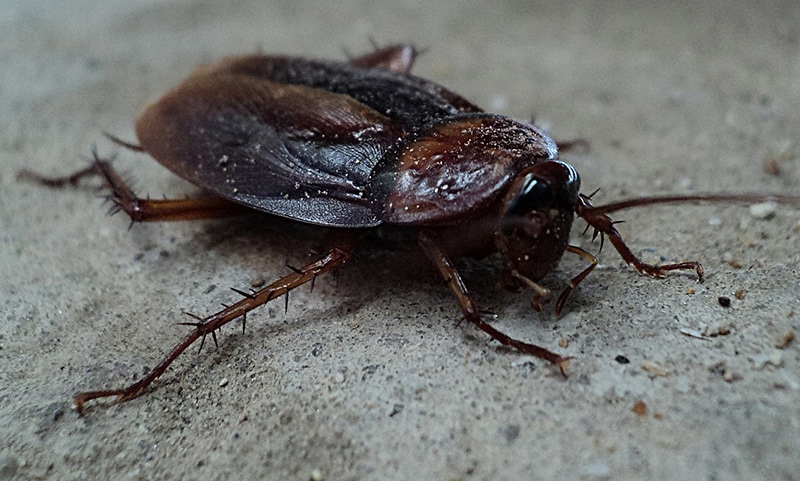
These fast creatures cause many pet parents to squirm and feel a little grossed out. There are various types of cockroaches depending on the area and climate where you live, but the German Cockroach is one of the most frequent ones encountered.
Cockroaches are indeed one of the most common pests, ranking joint 3rd place with termites as the most common pest in North America, so it will be no surprise if you and your dog come across them.
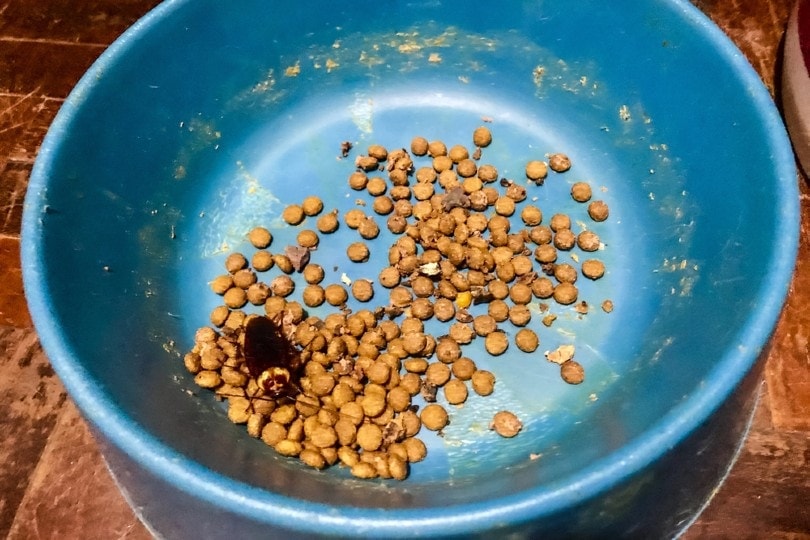
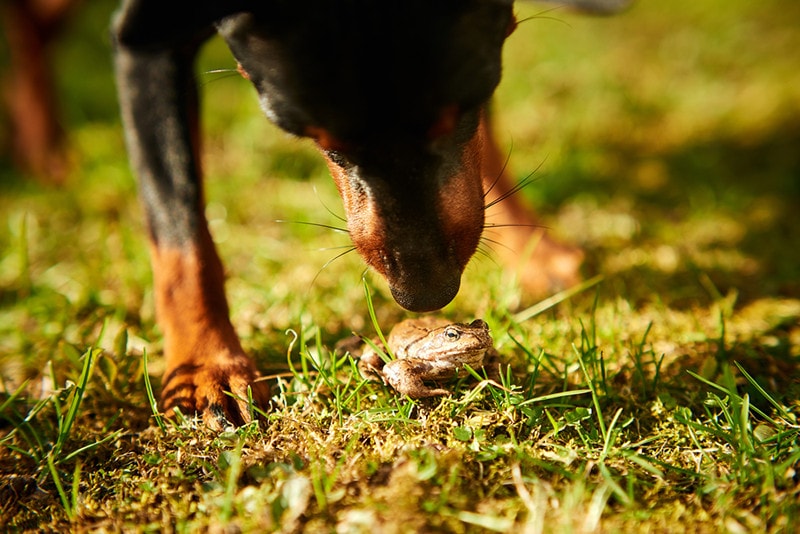
Although dogs have been domesticated for thousands of years, many of their instincts used in the wild, such as catching prey, still remain active. Trapping and eating a roach is therefore a great temptation, a source of fun, and helps to stimulate their brains. Fortunately, eating a cockroach is not harmful or toxic to dogs, but this doesn’t mean you should let them either, as subsequent problems for your dog can occur.

Are Cockroaches Poisonous or Harmful to Dogs?
The cockroach itself is not poisonous to your dog. The concern with dogs eating a cockroach is due to bacteria and parasites the cockroach carries. Research shows they can carry over 30 different types of bacteria. They also contain parasites such as Physaloptera (the stomach worm) and the eggs of roundworms. Both these worms can be transmitted to your dog after they ingest the bug.
A further complication may occur if the cockroach is covered in a poisonous substance aimed at killing it. This opens the possibility for the same poisonous substances to be dangerous to your dog after they have consumed it. However, it's likely your dog would have to eat numerous cockroaches containing the killer poison for it to affect them. That said, it is always wise to check with your veterinarian if you are suspicious or concerned about this.
Dogs can suffer from allergies which most commonly cause itchy skin signs. They can also suffer from food allergies which can also lead to gastrointestinal signs such as diarrhoea. It’s possible that dogs could react negatively to cockroach allergens, either in the environment or if ingested but little research has been done in this area.
What to Do if Your Dog Ate a Cockroach
If your dog has just enjoyed a cockroach as a quick and crunchy snack, little else but monitoring them needs to be done. It is unlikely a reaction will transpire, especially if it is only one roach. Monitoring is recommended though, due to the complications of the cockroach itself containing bacteria, a parasite, or a poison.
Should problems arise, they can be treated by your veterinarian with medication and further monitoring.
- Don’t panic! It is extremely unlikely any issue or health problems will occur, and a dog eating a roach is not uncommon.
- Don’t react negatively to your dog or punish them. They are only following their instincts.
- Watch their digestion. Sometimes eating a cockroach can irritate the gastrointestinal tract, producing signs like nausea, diarrhea or loose feces, vomiting, and abdominal discomfort.
- Monitor them for the signs listed below, and should they show any of the more severe signs or if any continue after a day, contact your veterinarian for advice. If you are concerned at all, check in with your vet rather than sit and wait for any worries.
- Keep up to date with your dog’s vaccine and worming schedules.
- Take steps to limit the number of cockroaches around your home.
- You may also wish to keep the pet poison or poison control phone numbers and information on hand.
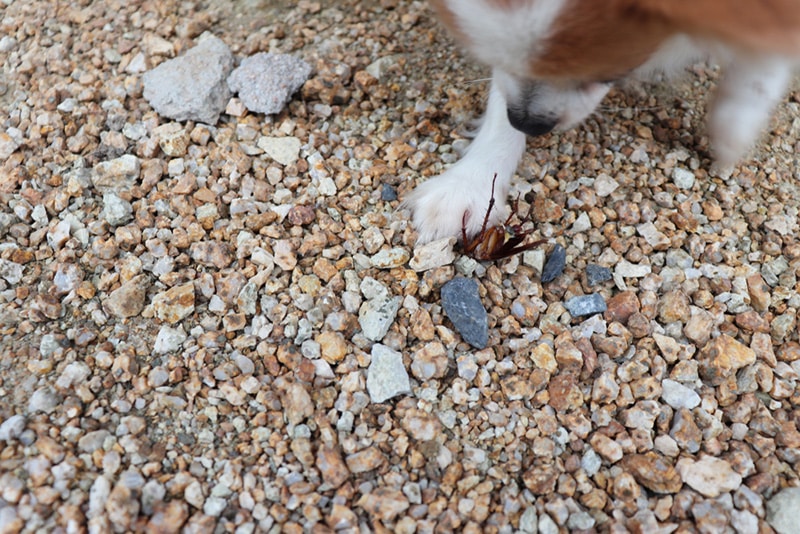
Signs to Watch for After Your Dog Ate a Cockroach
- Nausea
- Drooling and lip-licking
- Dehydration
- Lack of appetite
- Coughing
- Diarrhea
- Vomiting
- Abdominal discomfort and/or guarding
- Tremors or shivers
- High temperature (fever)
- Restlessness
- Uncoordinated gait
Should I Let My Dog Eat Cockroaches?
As you now understand, while there is little harm in your dog eating the odd cockroach, it’s not ideal either. Roaches contain no nutritional value and hold small risks, as discussed. Therefore if it's a behavior you do not want, there are steps you can take to reduce or prevent it.
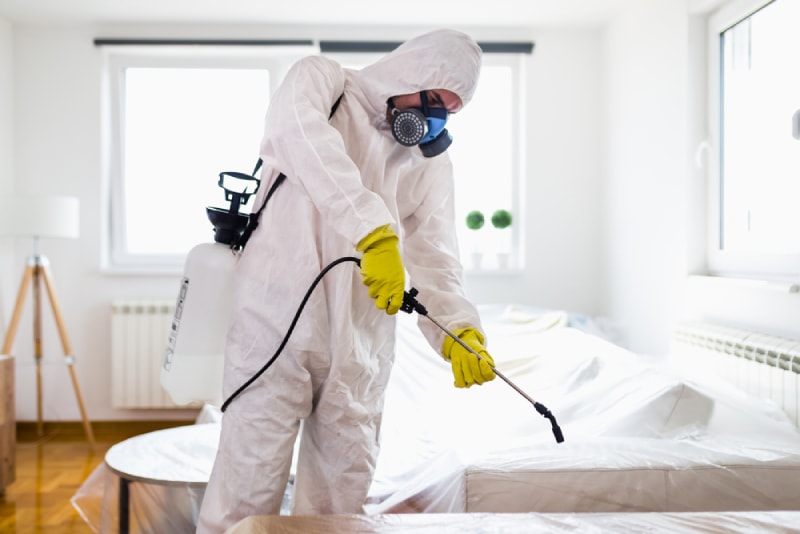
How to Stop Your Dog From Eating Cockroaches
It may not be an activity you’ll be able to stop entirely, but there are many tips and tricks you can implement to prevent it as much as possible. Cockroaches aren’t actually attracted to dogs, but they are attracted to garbage, food, and dirty areas.
Try these methods to help keep them away:
Conclusion
Cockroaches are harmless bugs that look worse and creepier than they are, but they can carry parasites and bacteria. While generally considered safe for dogs to eat, it’s not recommended to let them munch away on these bugs. There are small risks associated with them, as they occasionally pass on these bacteria and parasites or cause a slight tummy upset.
So it’s a pastime you may wish your dog would not continue participating in, and hopefully, the above tips will help prevent it! Always contact your veterinary practice if you have any concerns about your pet after they have eaten cockroaches.
Related reads:
Sources
Featured Image Credit: 1113990, Pixabay
Get Hepper In Your Inbox


Pet care tips from our vets and experts, straight to your inbox.
You may opt-out at any time. View our Privacy Policy for more information.
Annaliese began her career as a veterinary nurse in Edinburgh, later advancing her qualifications with a diploma in advanced veterinary nursing in surgery from London. Her work in small and mixed veterinary practices led her to become a head nurse, where she trained other veterinary nurses, managed the nursing department, conducted nurse clinics, and developed new patient care protocols.
Throughout her career, Annaliese has cared for thousands of patients and their owners, setting higher standards in nursing regimes with a focus on surgery and anesthesia. She co-authored multiple veterinary nursing textbooks and contributed to various mainstream publications in the UK and USA. After more than twenty years in the veterinary and pet care professions, she retired from clinical practice to pursue full-time writing. Having cared for thousands of patients and owners, Annaliese specialized in surgery and anesthesia. She was asked to co-author several veterinary nursing textbooks and contributed to a number of other publications in the UK and USA. After more than two decades in the veterinary and pet care industries, she retired her scrub suit and now works as a full-time writer.
Annaliese Morgan has been a dedicated veterinary nurse for over two decades, having completed a diploma in advanced veterinary nursing in surgery from London and qualifying from Edinburgh. Her professional experience includes managing a nursing department, training other veterinary nurses, providing patient care, and running nurse clinics in both small and mixed veterinary practices.
As an expert in surgery and anesthesia, Annaliese has treated thousands of patients and owners. In addition to being asked to co-author multiple veterinary nursing textbooks, she has written for a variety of publications in the UK and USA. After a long and successful career in the veterinary and pet care professions, Annaliese now dedicates her time to writing full-time. You can find out more about her work at www.annaliesemorgan.com.
Join the conversation
Ask a question, share your story, or send private feedback.