Hepper is reader-supported. When you buy via links on our site, we may earn an affiliate commission at no cost to you. Learn more.
Can Dogs Eat Cicadas? Vet Approved Facts & FAQ



In this article
You may be walking with your dog, enjoying the beautiful nature around you, when suddenly, your dog darts to the side and snatches up a cicada in its mouth. It’s too late to stop the dog from munching and swallowing, so all you can do is wonder, can dogs eat cicadas?
Thankfully, cicadas are not toxic for your dog. If they manage to sneak one while on a walk, they aren’t likely to experience any issues. However, cicadas are not recommended for your dog to eat, and they can cause issues in large quantities.

Cicadas Present Several Risks to Your Dog
Cicadas don’t bite or sting, so you don’t have to worry about them actively harming your dog. However, that doesn’t mean these insects can’t threaten your dog’s health.
The Cicada’s Exoskeleton
Your dog should be fine if it eats a few cicadas, but if it manages to gobble a whole bunch of them, it could suffer digestive consequences. The cicada’s exoskeleton is tough for your dog to digest. The hard, sharp shell can cause mouth and abdominal pain, vomiting, and diarrhea. Sometimes, the diarrhea can be bloody. If you notice any signs that your dog isn’t quite right after eating a cicada, it is best to be in contact with your vet for a check-up.
Allergic Reactions
In rare cases, cicadas may cause an allergic reaction in dogs. Although it isn’t a common response to eating cicadas, it is still a risk that you should be aware of. If you notice facial swelling, hives, or other allergic reactions, contact your vet as soon as possible.

Pesticides
Cicadas may have pesticides on them which can be toxic to dogs so it is best to try to stop your dog from eating them if you can.

Preventing Your Dog from Eating Cicadas
Eating cicadas can present dangers to your dog so it is best to keep them away. But how?
Supervising Your Dog
First, always supervise your dog while outdoors. If your dog is prone to eating anything they find on the ground, keep them on a leash. Avoid trees, shrubs, or other areas where cicadas may be lingering.

Training
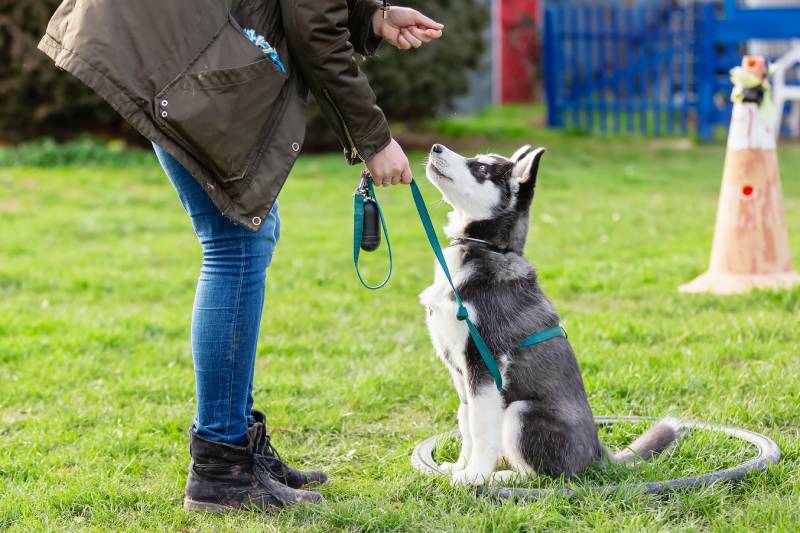
Secondly, train your dog to leave an object on command. By teaching your dog to “leave it,” you can direct them away from cicadas or other potential dangers. Before teaching your dog to leave it, you must teach them the “take it” command. Although it sounds backward, there is a logical reason.
When teaching your dog to “take it,” you are teaching them to look to you for approval before eating something off the ground. This can be useful in normal household situations, such as when you accidentally drop a piece of food on the ground, as your dog will not rush over to snatch it up. Instead, they will wait for your command before eating.
To teach your dog the “take it” command, follow these steps:
As you repeat this process, your dog will learn they are rewarded by ignoring the treat. Once they learn to ignore treats, you can teach them the “leave it” command.
To teach your dog the “leave it” command, follow these steps:
Teaching your dog the “leave it” command is a great way to keep them from munching on cicadas, but it has many more uses. Your dog is surrounded by plenty of potential hazards every day. You can keep your pet safe by commanding them to leave a dangerous object alone.
Be Aware of Other Insects That May Harm Your Pet
Cicadas are not the only insects that may pose a threat to your dog. While on outdoor walks, you should also watch out for the following:
- Caterpillars
- Asian Lady beetles (Harmonia axyridis)
- Walking Sticks (Stick insects)
- Spiders
- Wasps
- Hornets
If you suspect your dog has eaten something they shouldn’t have, contact your vet immediately.
Know When to Take Your Dog to the Vet
Knowing when to take your dog to the vet can be challenging. If you are ever concerned for your dog’s well-being, there is no harm in taking them to the vet. However, if you notice changes in behavior or concerning physical signs in your pet, you must get them checked out immediately.

Frequently Asked Questions
When it comes to our pets’ safety, there is no such thing as too many questions. That is why we will be answering some of the most frequently asked questions regarding dogs and cicadas so you can be well informed on the potential risks.
What Other Risks Do Cicadas Pose to Dogs?
Even if your dog doesn’t eat cicadas, other animals do, and these animals could pose a threat to your pup. Rats, snakes, and other creatures that eat cicadas may be hanging around places with a high cicada population. Some snakes may be venomous, so you must always supervise your dog outdoors.
How Many Cicadas Is Too Much?
The size of your dog will determine the answer to this question. A few cicadas may be fine for a Great Dane but harmful for a Shih-Tzu. It is best to prevent your dog from eating cicadas entirely to be safe.
Are Cicada Killer Wasps Dangerous?
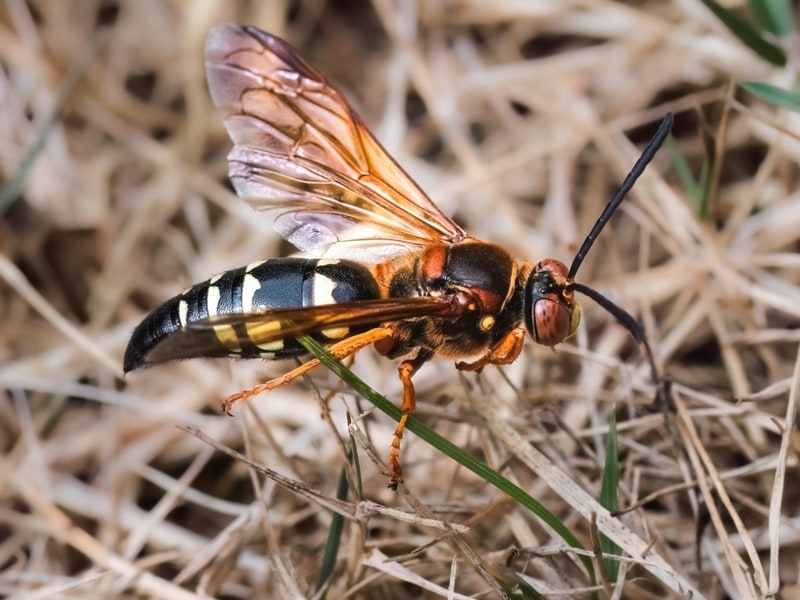
With cicadas come the cicada killer wasps. While they may be more or less harmless to humans, the females can sting your dog if they get too close. If stung in the sensitive part of the mouth, your dog may have an adverse reaction. If you notice signs of facial swelling, contact your vet immediately.
Final Thoughts
Cicadas may not be toxic for your dog, but that doesn’t mean they are a safe treat. Prevent your dog from snacking on the insects by carefully supervising them and keeping them on a leash outdoors. You can also teach your dog the “leave it” command so that they learn to ignore interesting-looking bugs. While eating one cicada may not pose a risk to your dog’s health, eating several of them can. Therefore, if you are ever concerned for your dog’s well-being, do not delay getting veterinary treatment.
See Also:
Can Dogs Eat English Muffins? Vet Approved Nutrition Facts & FAQ
Green Lipped Mussels for Dogs: Vet Approved Benefits, Side Effects & Safety
Sources
Featured Image Credit: Michael G McKinne, Shutterstock
Get Hepper In Your Inbox


Pet care tips from our vets and experts, straight to your inbox.
You may opt-out at any time. View our Privacy Policy for more information.
Pets are Jordyn’s passion, cats especially. Whenever she has the opportunity, she loves to learn about them and share her knowledge with everyone. She is devoted to her tabby cat named Jack and works hard to buy him his favorite treats and toys. Discovering new ways to better care for her pet is always on her to-do list, and she is eager to help pet parents everywhere who have similar pursuits. In her spare time, she loves to read, write, and take long walks. She has a creative spirit, which often helps her to come up with funny cat names.
Join the conversation
Ask a question, share your story, or send private feedback.