Hepper is reader-supported. When you buy via links on our site, we may earn an affiliate commission at no cost to you. Learn more.
Can Dogs Eat Tangerines? Vet-Verified Nutrition Facts & Safety Guide



In this article
Tangerines are bursting with sweet, juicy goodness, and they're healthy snacks for humans, but should you offer tangerines to your dog? Tangerines are a love-or-hate food for dogs. Some dogs do not like the citrus smell and taste. Many other dogs, however, are fruit lovers, and it can be hard to resist their cute, begging faces when they want to share your snack with you.
Although some fruits like grapes and raisins are toxic to dogs, the great news is the flesh of tangerines is not. Indeed, the flesh of all orange varieties, including clementines, satsumas, and mandarins, is safe to feed your dog within reason.

Are Tangerines Good for My Dog?
In moderation, yes, they can be. Tangerines are full of vitamin C and fiber and contain small amounts of folate, thiamine, potassium, magnesium, calcium, and iron. If your dog is on a complete diet, supplementing their food with extra vitamins and minerals shouldn’t be necessary unless your veterinarian has advised otherwise.
Their diet provides all the nutrition they need, but a little extra treat here and there is okay. It also increases the bond between you and your dog. However, treats should make up no more than 10% of their daily calorie requirement.
The importance of choosing a complete diet as their staple meal is a priority to ensure correct nutritional balances are met. It will be stated on the food packaging if it is a complete diet, along with the amount of food to give.
Can I Feed My Dog All Parts of a Tangerine?
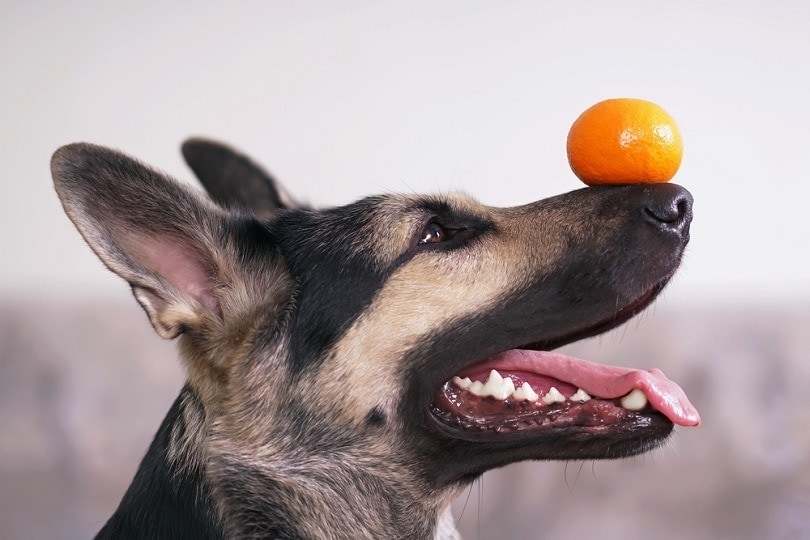
Only the flesh part of tangerines (or any of the orange family) can be safely fed to dogs. The peel or skin can cause obstructions, and it also contains an abundance of citrus oils, which can irritate and upset the digestive tract. Pips and seeds can be a further obstruction risk and a choking hazard.
Only a few pieces should be offered to dogs since eating too much can cause signs such as:
- Vomiting
- Diarrhea
- Nausea
Should any of these signs occur following eating any part of a tangerine, check in with your veterinarian for advice.

When Not to Give Tangerines to Dogs
Most healthy dogs of all ages and sizes can eat small portions of tangerine flesh without adverse side effects. However, tangerines contain high levels of natural sugar, which can increase sugar levels in the body, affecting their health.
If your dog has one of the following issues below, avoid feeding them tangerines. It is also worth checking with your veterinarian if there is any reason your dog can’t eat tangerines, particularly if they are old or have other medical conditions.
- Diabetes
- Gastrointestinal/digestive issues
- Allergies
How Do I Feed Tangerines to My Dog?
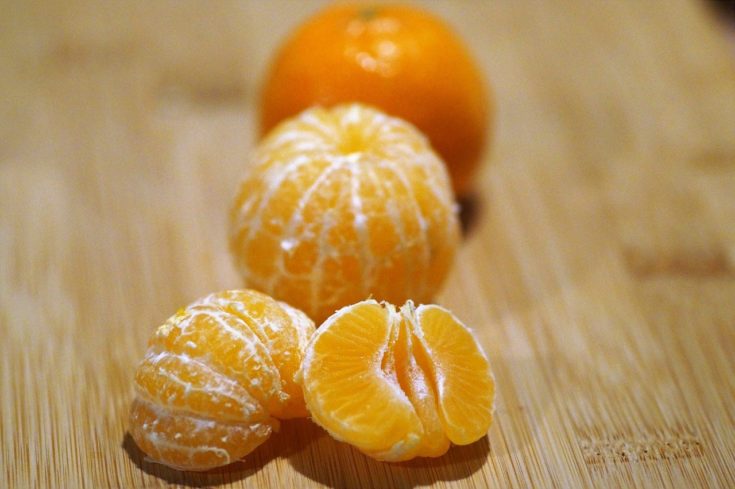
Before serving a portion to your dog, the tangerine must be prepared by washing it and removing all of the peel, including the pith. Pips and seeds should be checked for and removed.

Conclusion
We all know how hard it is to resist your pet when they’re begging for a piece of your tangerine or mandarin orange. While the flesh of a tangerine is safe for dogs to eat, they should not be eating the skin. Plus, you need to prepare it properly so that they aren’t ingesting any unsafe pesticides or chemicals. However, you should always check with your vet first to ensure a particular food is safe for your dog.
Related reads:
Get Hepper In Your Inbox


Pet care tips from our vets and experts, straight to your inbox.
You may opt-out at any time. View our Privacy Policy for more information.
Annaliese began her career as a veterinary nurse in Edinburgh, later advancing her qualifications with a diploma in advanced veterinary nursing in surgery from London. Her work in small and mixed veterinary practices led her to become a head nurse, where she trained other veterinary nurses, managed the nursing department, conducted nurse clinics, and developed new patient care protocols.
Throughout her career, Annaliese has cared for thousands of patients and their owners, setting higher standards in nursing regimes with a focus on surgery and anesthesia. She co-authored multiple veterinary nursing textbooks and contributed to various mainstream publications in the UK and USA. After more than twenty years in the veterinary and pet care professions, she retired from clinical practice to pursue full-time writing. Having cared for thousands of patients and owners, Annaliese specialized in surgery and anesthesia. She was asked to co-author several veterinary nursing textbooks and contributed to a number of other publications in the UK and USA. After more than two decades in the veterinary and pet care industries, she retired her scrub suit and now works as a full-time writer.
Annaliese Morgan has been a dedicated veterinary nurse for over two decades, having completed a diploma in advanced veterinary nursing in surgery from London and qualifying from Edinburgh. Her professional experience includes managing a nursing department, training other veterinary nurses, providing patient care, and running nurse clinics in both small and mixed veterinary practices.
As an expert in surgery and anesthesia, Annaliese has treated thousands of patients and owners. In addition to being asked to co-author multiple veterinary nursing textbooks, she has written for a variety of publications in the UK and USA. After a long and successful career in the veterinary and pet care professions, Annaliese now dedicates her time to writing full-time. You can find out more about her work at www.annaliesemorgan.com.
Join the conversation
Ask a question, share your story, or send private feedback.