Hepper blog

Search our database of over 9,984 posts with up-to-date information from our experts and veterinarians.

Hepper is reader-supported. When you buy via links on our site, we may earn an affiliate commission at no cost to you. Learn more.

Do Frogs Have Ears? Vet-Verified Anatomy Information

By Jana Blagojevic · Reviewed & fact-checked by Dr. Luqman JavedVet Approved
Dr. Luqman Javed
Reviewed & Fact-Checked byDr. Luqman JavedDVM (Veterinarian)
Dr. Luqman grew up with an extreme fondness for animals and turned a childhood dream into reality by becoming a veterinarian. His goals are now focused on helping pet owners understand their pets better in order to ensure the best quality of life for all pets globally. He is passionate about wildlife, exotic pets, pet owner education, and animal welfare. Luqman has 3 years of professional experience working with a variety of animal species. He has skills in demonstrating proper animal husbandry and training some exotic species, such as parrots. Additionally, he has decades of personal experience with keeping many exotic pets: freshwater fish, parrots, songbirds, chickens, ducks, turtles, and hamsters.View authorThe information is current and up-to-date in accordance with the latest veterinarian research. Read about our vets
Share
Ask us a question in the comments
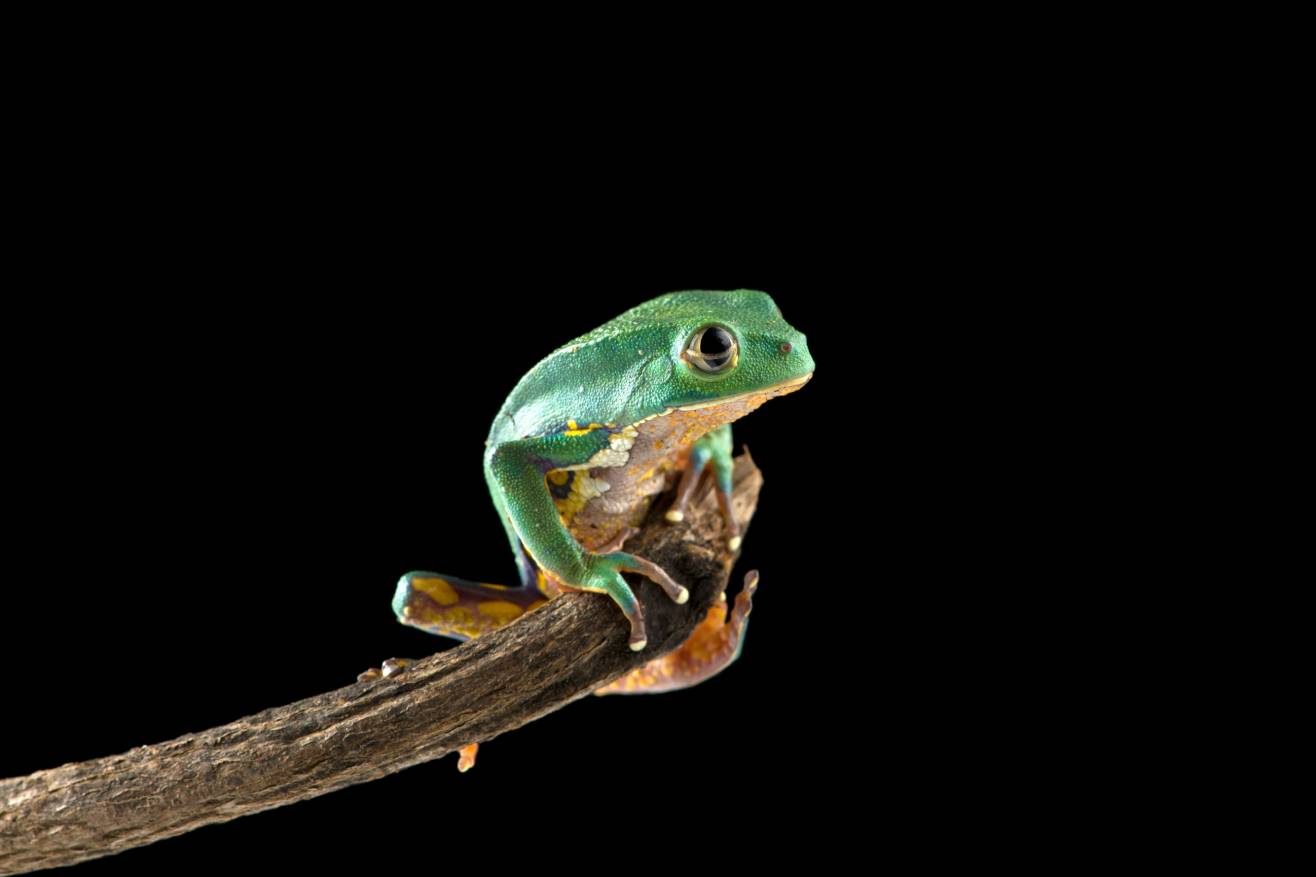
Burmeister Leaf Frog

During your regular walk or jog, you might have noticed that frogs move out of your way and run off into the grass when you get close to them. Sometimes they do this without actually seeing you approach them. How can these tiny creatures hear you without any visible ears?

Frogs have ears and can hear quite well, though specific ear configuration varies by the species. Most amphibians can hear efficiently in the air, underground, and even underwater. Read on to learn more about this unique skill of frogs and other amphibians.

Do Frogs Have Ears?

You've probably noticed that frogs, salamanders, and other amphibians don't have the typical outer ears we are used to seeing, but that doesn't mean they lack ears.

Frogs do have ears. In a technical sense, some frogs can be said to have four ears instead of the regular two!

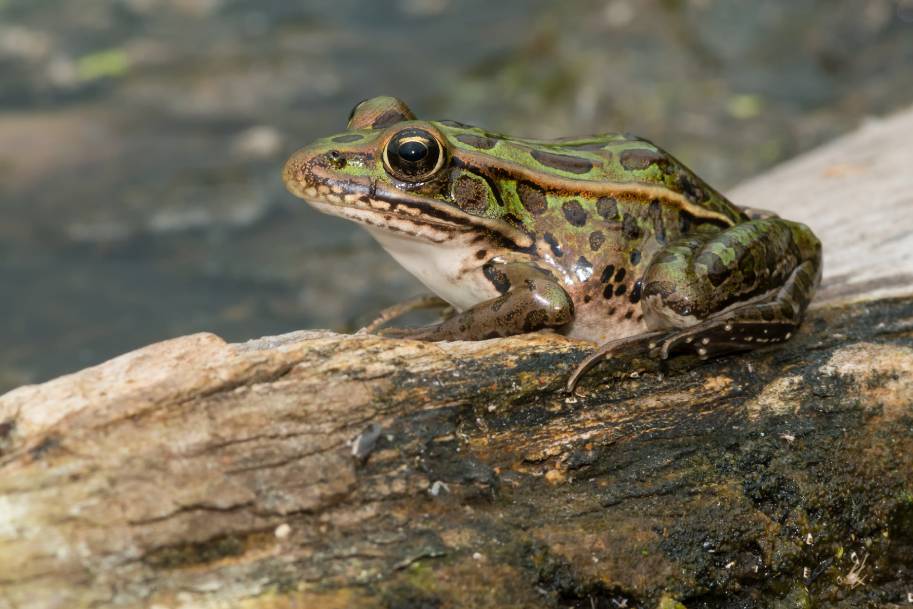
In many frogs, the eardrum (or tympanum) is external and obvious. It appears as a large, flat disc just behind each eye. This eardrum functions much in the same way as the eardrum of humans to capture sound and send it to the frog’s brain for interpretation.
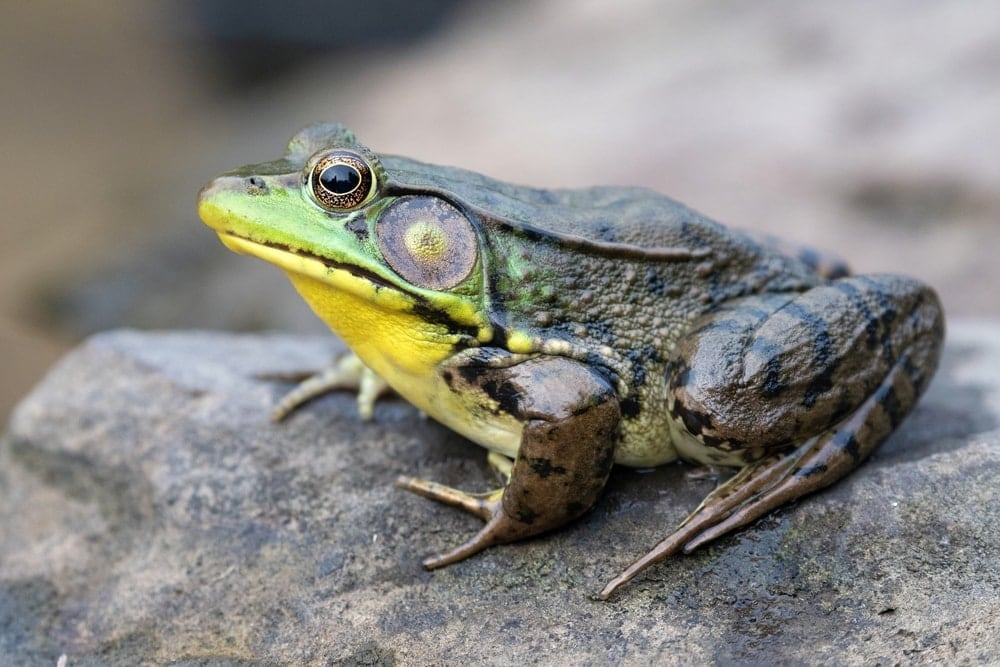
Green Frog Lithobates clamitans on a rock
Image Credit by: surender kr, Shutterstock

However, other frogs don’t seem to have a visible external eardrum, yet they aren’t deaf. This type of frog possesses an entirely different set of internal ears, a unique feature that sets them apart from other animals. At the base of their skull, on each side of their head, are two small openings covered with a tiny disc-shaped bone known as the operculum. Underneath this is a complex network of structures that enable the frog to hear by converting physical sound waves into neurological signals.

Thus, some frogs are thought to have four ears (two tympana and two opercula)! Other frogs are thought to have just two (the opercula).
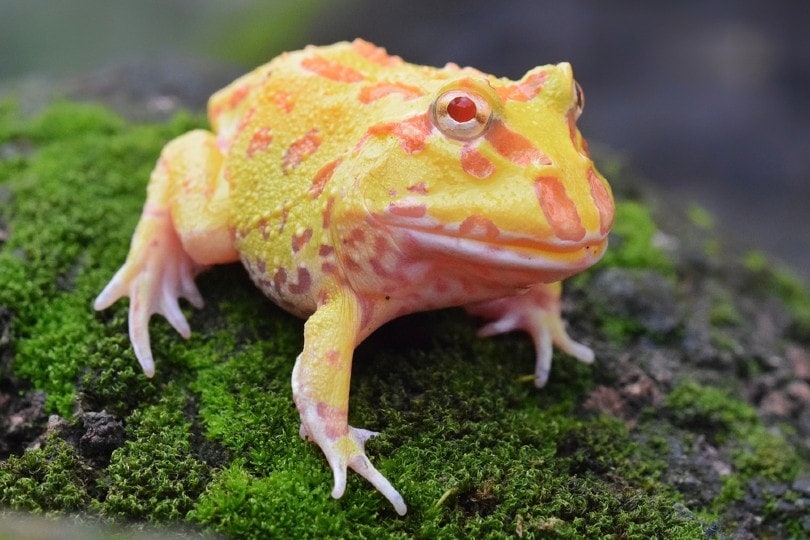
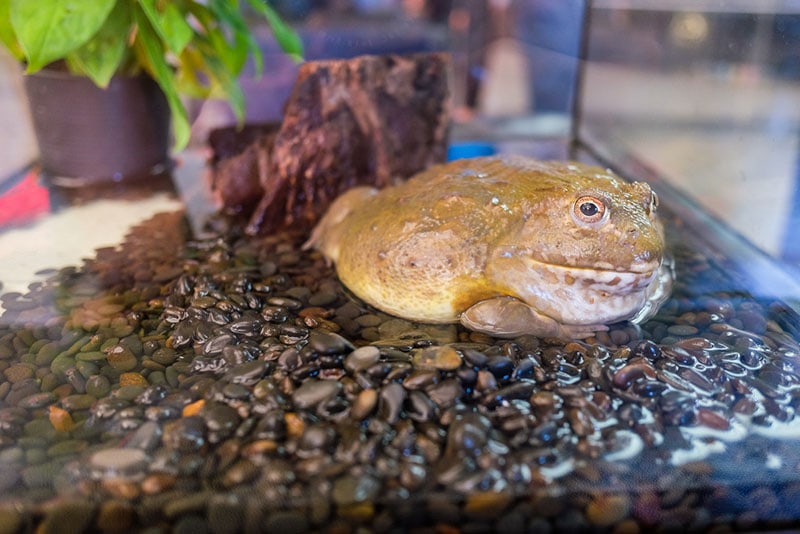
albino pacman frog on top of weeds
Image Credit by: yusuf kurnia, Shutterstock

Why Are Ears Important for Frogs?

  • Communication
  • Responding to mating calls
  • Hearing territorial and distress calls
  • Hearing predators or nearby danger
  • Locating prey

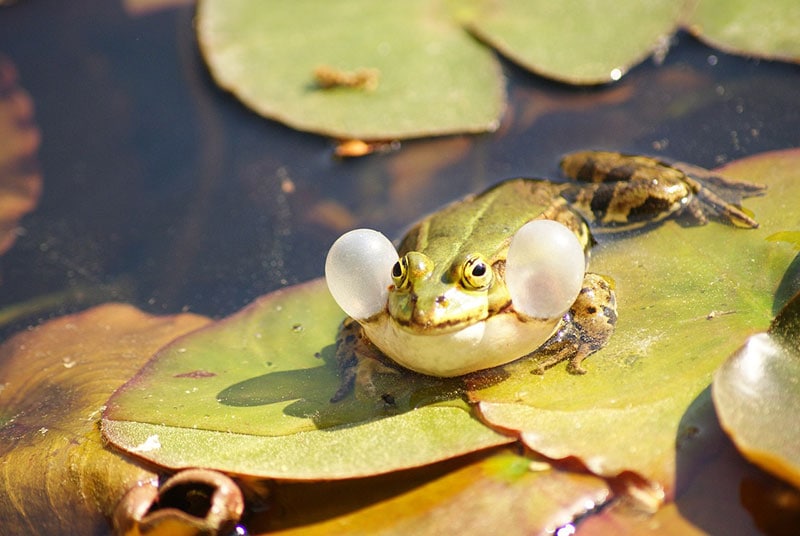
Communication is key even in a frog's life, as with all other living beings. Being able to hear allows frogs to communicate with and call each other. In most cases, males frequently call out for females in an attempt to find a mate. They may also make territorial calls and distress calls that other frogs need to hear to understand what's happening around them.

Of course, besides the ability to communicate and hear each other, frogs rely on their hearing to spot any potential predators. This is particularly useful for survival, as many frogs are preyed on by other animals.
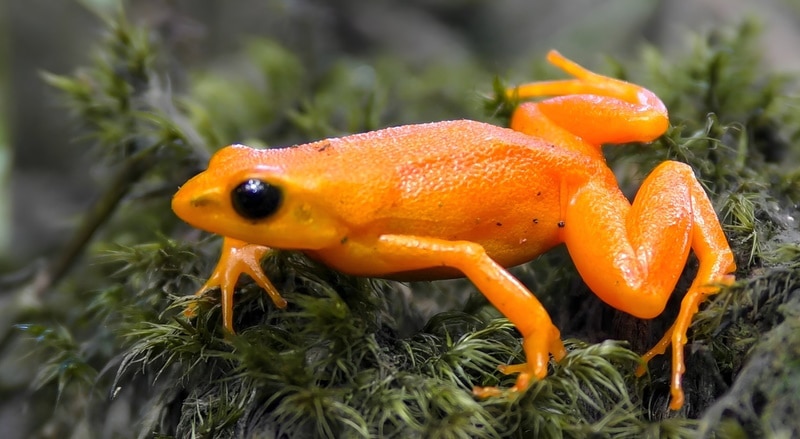
golden matella frog
Image by: Swaroop Pixs, Shutterstock

Frogs That Can Hear Ultrasound

A certain frog called Odorrana tormota was the first known species discovered with a unique ability: communicating by ultrasound! There's a theory that these frogs developed this unique ability while residing in their natural habitat in the Anhui province in China. It is also theorized that they evolved to hear ultrasonic frequencies because the rapidly moving water that they reside near produces a perpetual low-frequency background noise all the time.

These frogs can both produce and hear in ultrasonic frequencies. While most frogs can hear frequencies below 12 kilohertz, this frog can chirp and hear frequencies at 128 kilohertz!

Final Thoughts

Yes, frogs have ears! While difficult to see, frogs actually have ears right behind their eyes. They rely on their hearing to find their way around nature, find food, communicate with each other, and escape danger. Some frogs have even developed the ability to communicate with ultrasound.

Also see:

Sources

Featured Image Credit: PetlinDmitry, Shutterstock

Get Hepper In Your Inbox

Pet care tips from our vets and experts, straight to your inbox.

List

Select all that apply.

You may opt-out at any time. View our Privacy Policy for more information.

Jana Blagojevic
Authored by

Jana Blagojevic

Join the conversation

Ask a question, share your story, or send private feedback.
Rate this post
Required to post. Only our editors see your rating.
Who should see this?

A human reviews every comment before it appears. Your email is never published.

Picked to go with this article

Can Frogs Hear? Vet Approved Facts & FAQ

Can Frogs Hear? Vet Approved Facts & FAQ

Frogs are amazing animals that are fun to find in the wild, as they come in myriad sizes, shapes and colors. One thing that’s not very obvious when you look at…

Ed Malaker
By Ed Malaker ·
Do Turtles Have Ears? Vet Reviewed Issues & Care Guide

Do Turtles Have Ears? Vet Reviewed Issues & Care Guide

When looking at a turtle’s adorable little head, you might find yourself wondering, do turtles have ears? The answer is yes, but also no. Turtles do not have t…

Jordyn Alger
By Jordyn Alger ·
How Many Toes Do Frogs Have? Vet-Verified Anatomical Information

How Many Toes Do Frogs Have? Vet-Verified Anatomical Information

Some swear it’s four, others swear it’s five–but exactly how many toes does a frog have? Frogs have 18 toes in total: five toes on each hind leg, equaling 10 t…

Nicole Cosgrove
By Nicole Cosgrove ·
Are Frogs Nocturnal? Vet-Verified Biorhythm Explanation

Are Frogs Nocturnal? Vet-Verified Biorhythm Explanation

The animal kingdom is full of night owls, moonlight-prowling cats, and—nocturnal frogs? Yes, most frogs are nocturnal critters that prefer to sleep during the…

Codee Chessher
By Codee Chessher ·

Keep reading

More stories you might like

Frog vs Toad: Vet-Reviewed Differences (With Pictures)

At a glance, toads and frogs seem indistinguishable from one another in terms of the sort of animal that they are. As with many types of animals, there is stun…

Eleanor Glaum
By Eleanor Glaum ·
Frog vs Toad: Vet-Reviewed Differences (With Pictures)

Why Do Frogs Croak? Vet-Reviewed Amphibian Communication Facts

If you grow up near a pond or lake, you are likely familiar with the distinctive croaking sounds of frogs that you can hear on a warm summer night. These vocal…

Ed Malaker
By Ed Malaker ·
Why Do Frogs Croak? Vet-Reviewed Amphibian Communication Facts

Can Frogs See Color? Vet Approved Vision Facts & FAQ

In the animal kingdom, most vertebrates have two visual cells in their retinas: rods and cones. Rods allow a creature to visualize in dim lights and provide mo…

Nicole Cosgrove
By Nicole Cosgrove ·
Can Frogs See Color? Vet Approved Vision Facts & FAQ

Do Frogs Feel Pain? Vet-Reviewed Facts & FAQ

Let’s begin by changing the question, “Do frogs feel pain?” to, “Do frogs experience pain?” When we frame it this way, the answer becomes simple: It’s a resoun…

Genevieve Dugal
By Genevieve Dugal ·
Do Frogs Feel Pain? Vet-Reviewed Facts & FAQ

Do Frogs Have Hair? Amphibian Anatomy & Vet Approved Facts

We brush and bathe our pets, as it is essential to take good care of their hair for their comfort and health. But if you're interested in amphibians, specifica…

Kathryn Copeland
By Kathryn Copeland ·
Do Frogs Have Hair? Amphibian Anatomy & Vet Approved Facts

11 Interesting Tree Frog Facts: Vet-Verified Info With Pictures

Tree frogs are among the most popular frogs on the planet and are found everywhere except the snowy landscapes of Antarctica. They are also among the most dive…

Nicole Cosgrove
By Nicole Cosgrove ·
11 Interesting Tree Frog Facts: Vet-Verified Info With Pictures

Do Frogs Drink Water? Frog Hydration Explained

There are over 6,000 different species of frogs found in various kinds of habitats. Some frogs spend most of their lives living in water, while other frogs, li…

Jessica Kim
By Jessica Kim ·
Do Frogs Drink Water? Frog Hydration Explained

What to Feed Frogs: 8 Vet-Approved Food Ideas

Frogs are predators and can't survive on prepackaged kibble as your pet dog can. Instead, they mainly live off various insects that you are likely to find in t…

Kerry-Ann Kerr
By Kerry-Ann Kerr ·
What to Feed Frogs: 8 Vet-Approved Food Ideas