Hepper is reader-supported. When you buy via links on our site, we may earn an affiliate commission at no cost to you. Learn more.
Can Guinea Pigs Eat Alfalfa Hay? Vet-Reviewed Facts & Safety Guide


Some guinea pigs can eat alfalfa hay, but only eat if they’re 6 months old or less, pregnant, or nursing. Alfalfa hay is particularly high in calcium, which can cause bladder and kidney stones. It is also calorically dense as it is a legume hay rather than a grass hay. Timothy hay (a grass hay) is much more suitable and balanced for adult guinea pigs, and is safe in infinite amounts.
Hay is essential to a guinea pig’s diet, but alfalfa hay is only appropriate for adults in specific circumstances. Below, we’ll discuss the guinea pig’s diet and what you should feed them to keep them happy and healthy!

Is Calcium Good for Guinea Pigs?
Calcium is a crucial part of a guinea pig’s diet since it aids in the formation and maintenance of healthy bones and teeth. As their teeth are constantly growing, they must be kept strong and healthy. The muscles, heart, and nerves all require calcium to function.
Some guinea pigs require more calcium than others; for example, a growing guinea pig will need more than a fully grown adult, as will a lactating or pregnant guinea pig. The average guinea pig needs about 8 grams of calcium per kilogram of food, although this can vary slightly depending on the amount of phosphorus and magnesium in the diet.1 It is thought to be best to distribute calcium throughout the day so they aren’t ingesting too much at once.
What Happens if Your Guinea Pig Is Calcium Deficient?
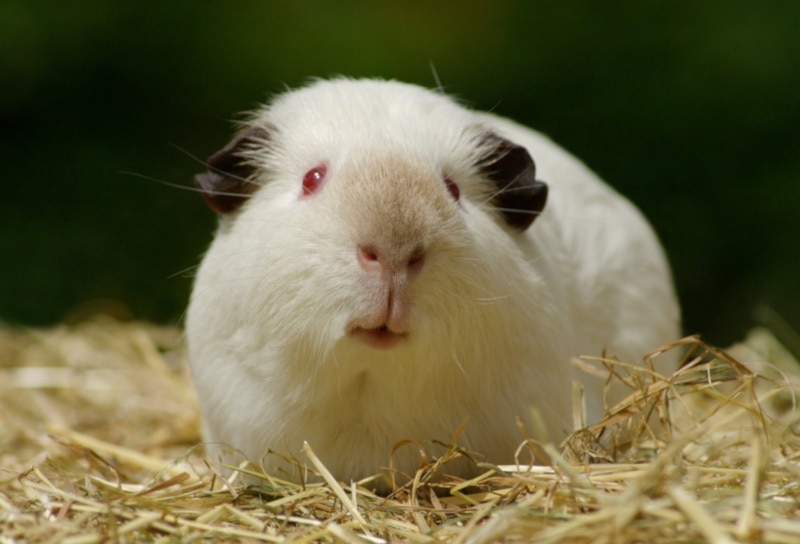
Your guinea pig will generally show signs if they’re suffering from calcium deficiency, such as loss of appetite, depressed behavior, or dehydration. More severely, you might also notice convulsions and muscle spasms; in some cases, a guinea pig might even die suddenly without showing any signs.
Chronic calcium deficiency will result in enamel hypoplasia, brittle bones and will have a negative effect on a guinea pig’s overall health, such as reduced physical activity or the inability to eat comfortably.
What Happens if Your Guinea Pig Has Too Much Calcium?
Too much calcium in your guinea pig’s diet can result in hypercalcemia which can quickly become dangerous. Cavies that have consumed too much calcium will have thick, white urine with hard, granular calcium deposits within it. These deposits look like sand grains and can be painful to pass.
The bigger these deposits are, the more worrying, so you must contact your veterinarian as soon as you notice anything unusual about their urine. Additionally, you should take your guinea pig to the vet if you see blood in their urine.
Larger stones might get stuck and clog up your guinea pig’s bladder or urethra, making it impossible to urinate. This is incredibly dangerous and can end up being fatal.
The 4 Things Guinea Pigs Should Eat
Getting your guinea pig’s diet right is crucial, as it is with any pet. Guinea pigs are herbivores, and they eat plants and plant-based foods. They also are known to develop preferences early on and don't adapt well to change, whether it’s a change to the type of food they’re being served, its presentation, or appearance.
If you need to change their diet, it should be done gradually. They require a high-fiber diet to keep their guts moving and their teeth short. Vitamin C is also a critical requirement as, just like primates, guinea pigs cannot produce their own vitamin C and require it in their diet. If vitamin C is not supplemented, guinea pigs can and often do develop scurvy.
The best diet for your guinea pig is one that mimics their natural diet as closely as possible.
1. Hay and Grass
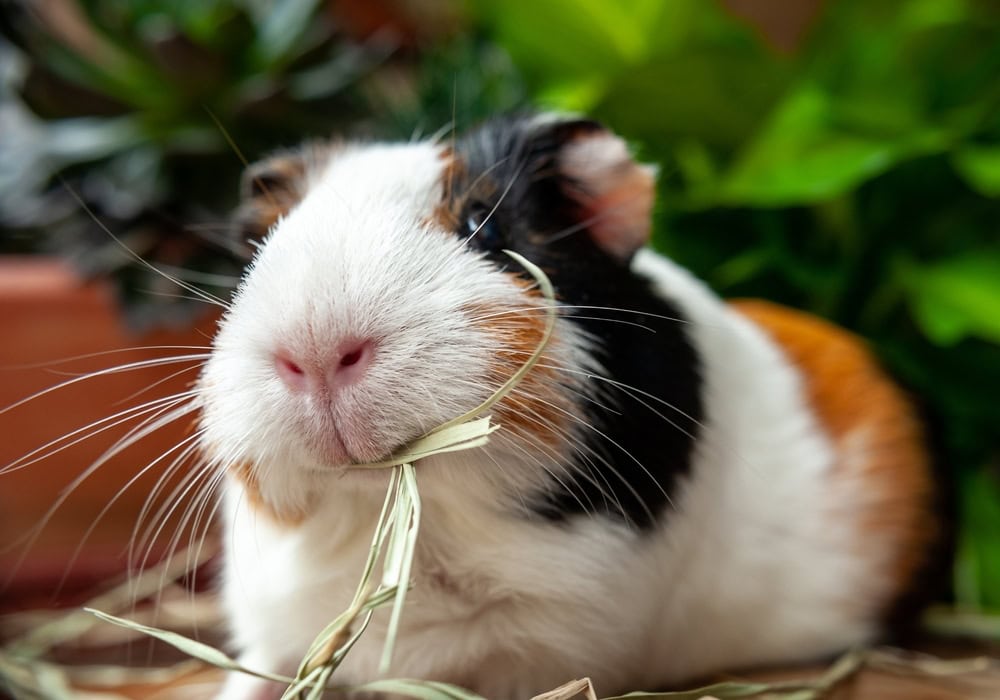
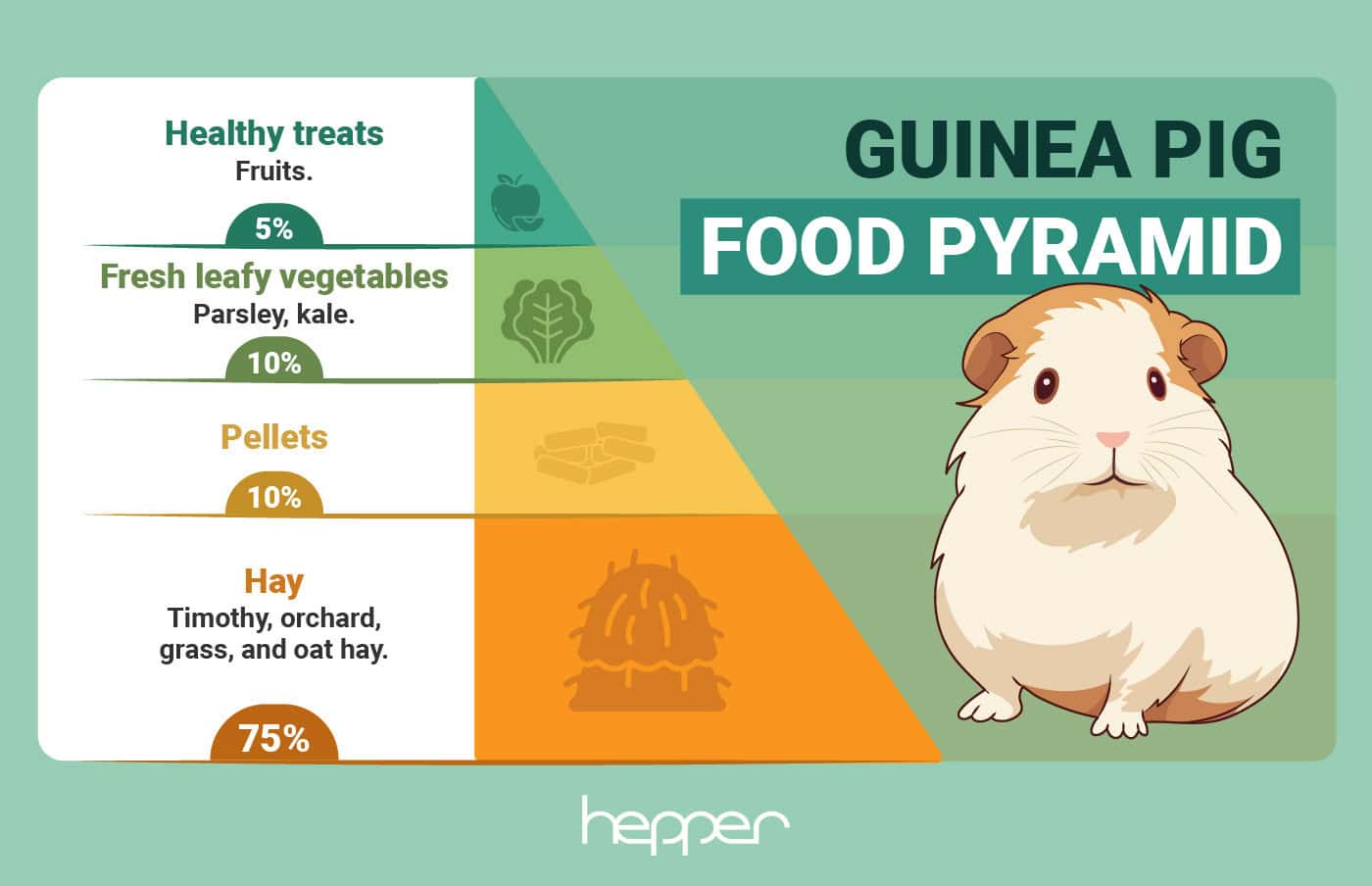
Around 85–90% of your guinea pig’s diet should be made up of grass hay, such as Western Timothy Hay, which provides the necessary fiber to keep your guinea pig’s gastro-intestinal tract moving in a healthy way, while not being too calorie dense. Unlike pellets, you can’t overfeed your guinea pig hay. Ensure your guinea pig has constant access to fresh, grass hay.
2. Fresh Vegetables
A ½ cup of fresh vegetables in the morning and evening is sufficient for one guinea pig. It’s best to rotate five or six different greens into their diet; those particularly high in vitamin C will be especially valuable.
Some of the healthiest veggies for guinea pigs include bell peppers, spinach, kale, broccoli, parsley, and red tomatoes, minus the leaves and vine, as they are poisonous.
3. Pellets
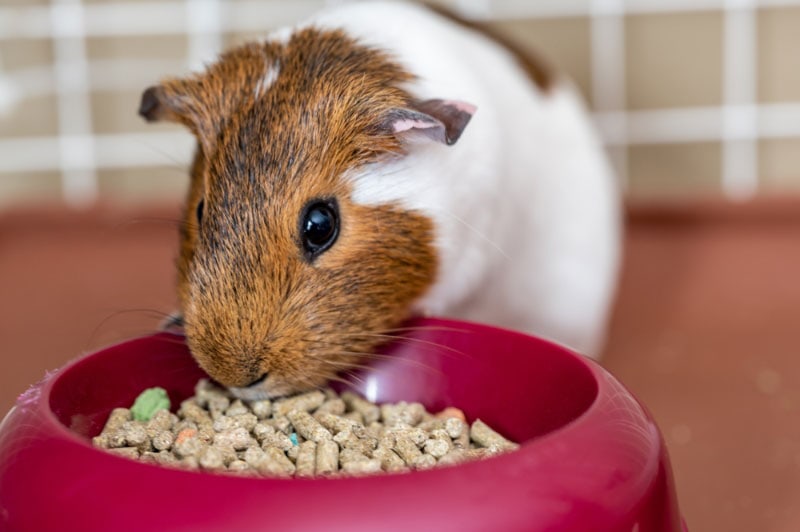
We recommend serving 1/8th of a cup of guinea pig pellets daily per adult guinea pig. Pellets should be fed alongside their hay and fresh food but shouldn’t be the main part of the diet.
Avoid muesli-style mixes, which are generally low in fiber and high in sugar, which causes weight gain, dental problems, and stomach issues.
4. Additional Requirements
Guinea pigs should have access to fresh, clean water at all times. Fresh fruit is an excellent option as a treat, but it should only be served in small amounts, occasionally, as they are high in sugar and can cause your guinea pig to put on weight.
These fruits are safe to serve as a snack:
Final Thoughts
Guinea pigs can eat alfalfa hay, but since it is high in calcium, it’s more suitable for young or pregnant guinea pigs. It is safe if they’re pregnant, nursing, or under 6 months old, and it is recommended that it is mixed in with Timothy hay for these animals. However, if your guinea pigs are not young, pregnant or lactating, Timothy hay is a better option.
Too much calcium in your piggy’s diet can result in kidney or bladder stones, which are painful and can be fatal. If you are unsure what you should feed your guinea pig, your vet can give you the best advice to ensure they continue to be happy and healthy and live as long as possible.
Sources
Featured Image Credit: Vladimir Konstantinov, Shutterstock
Get Hepper In Your Inbox


Pet care tips from our vets and experts, straight to your inbox.
You may opt-out at any time. View our Privacy Policy for more information.
Kerry-Ann lives in Scotland and wishes her garden was bigger so she could have her very own Highland cow. But her dogs probably wouldn’t like that very much. She has a La Chon called Harry who was poorly with a liver shunt when he was a puppy. It wasn't likely he would make it into adulthood, which was difficult, but he beat the odds and is a healthy old man now. She also has a Pug called Maddie who is a big foodie. She’s small, sassy, and every day she finds a new way to mess with her brother.
When she isn’t writing you can find Kerry-Ann going for long walks when the weather isn't bad, reading, or watching cartoons when she should be tidying her house. She would one day like to be a tourist in her own country and travel through the Highlands with her family.
Join the conversation
Ask a question, share your story, or send private feedback.